![[Collection of five paper fans].](https://schierenberg.nl/media/cache/product_main/79031/79031_x.jpg)
Fans
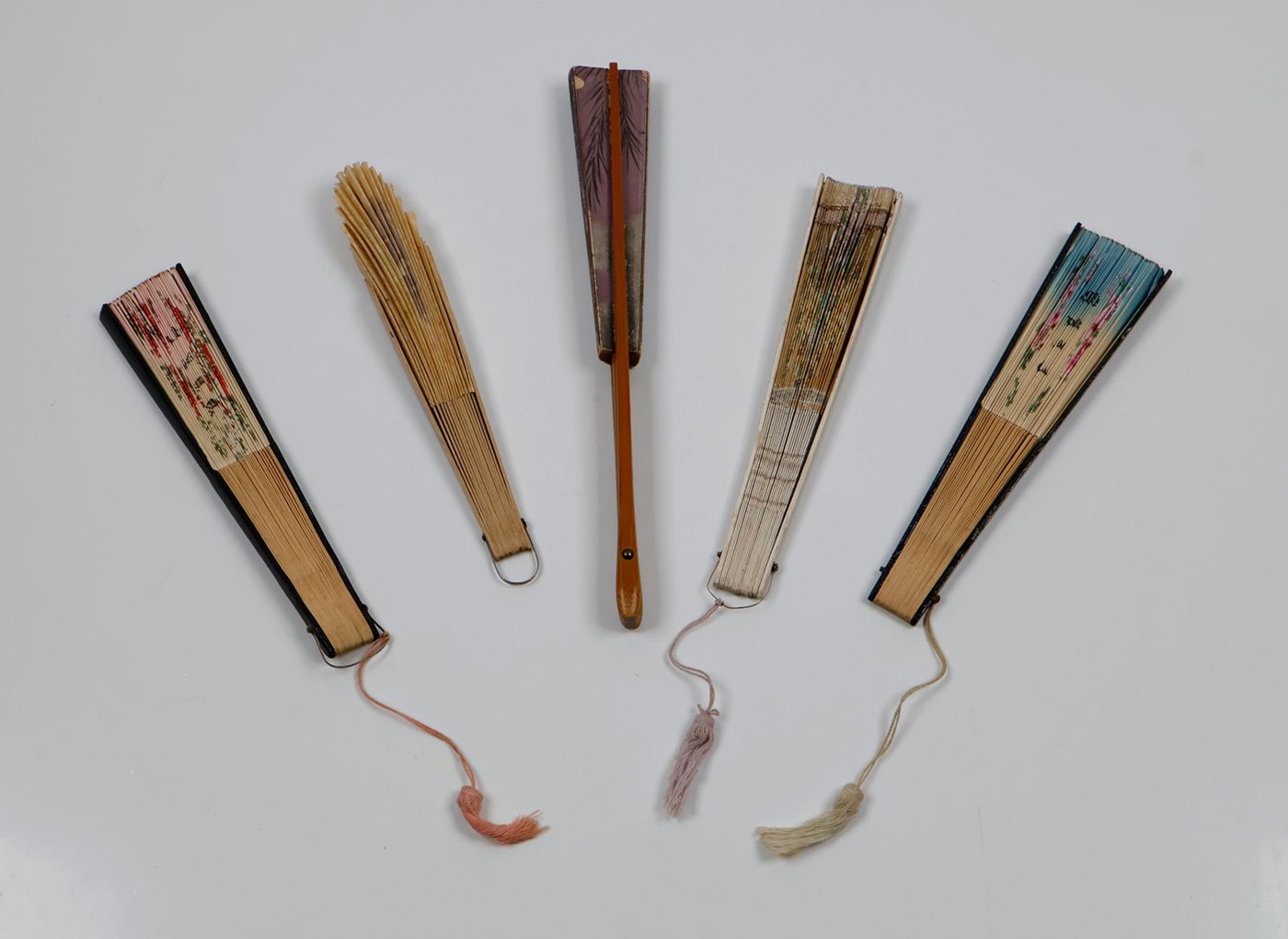
[Collection of five paper fans].
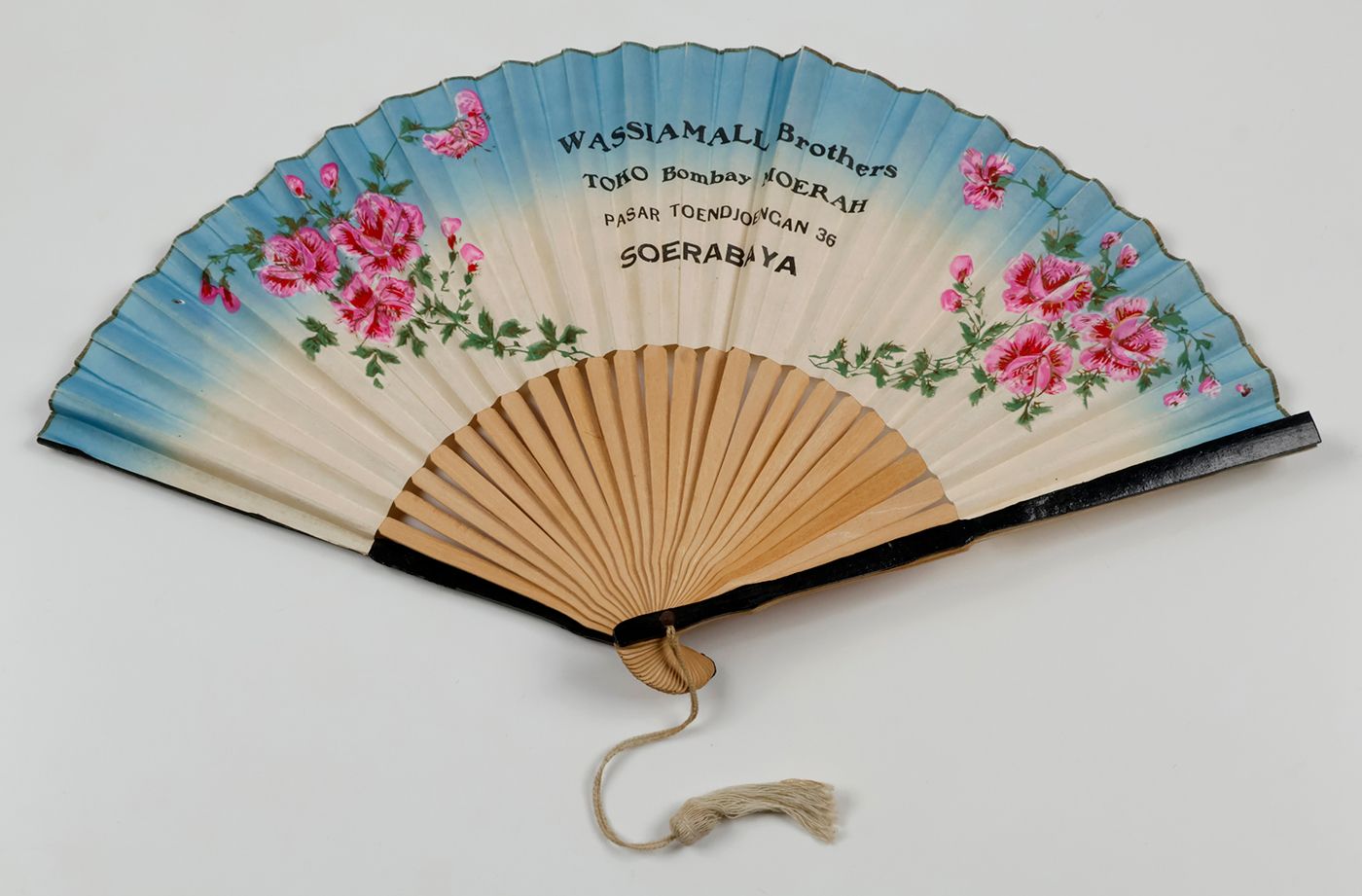
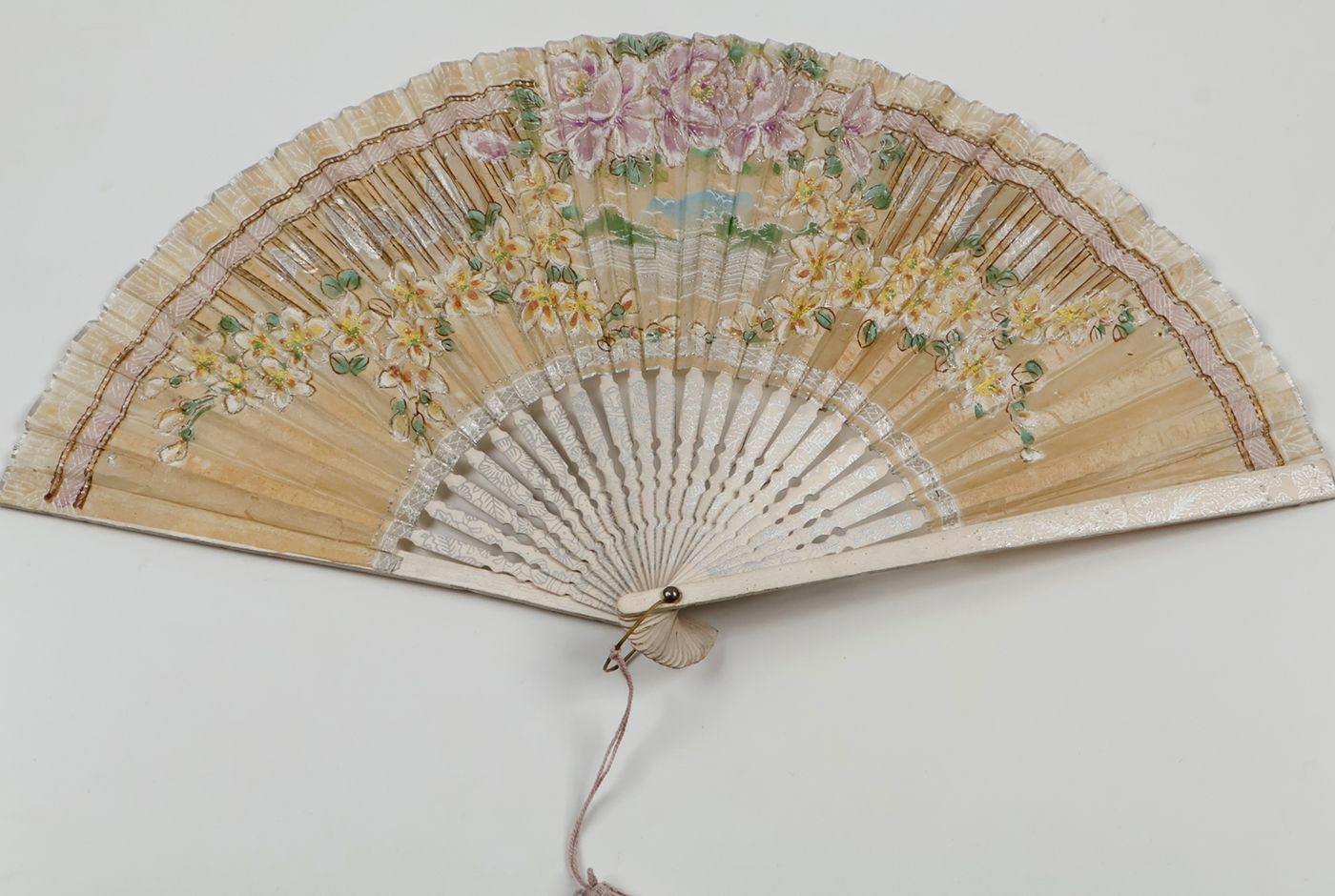
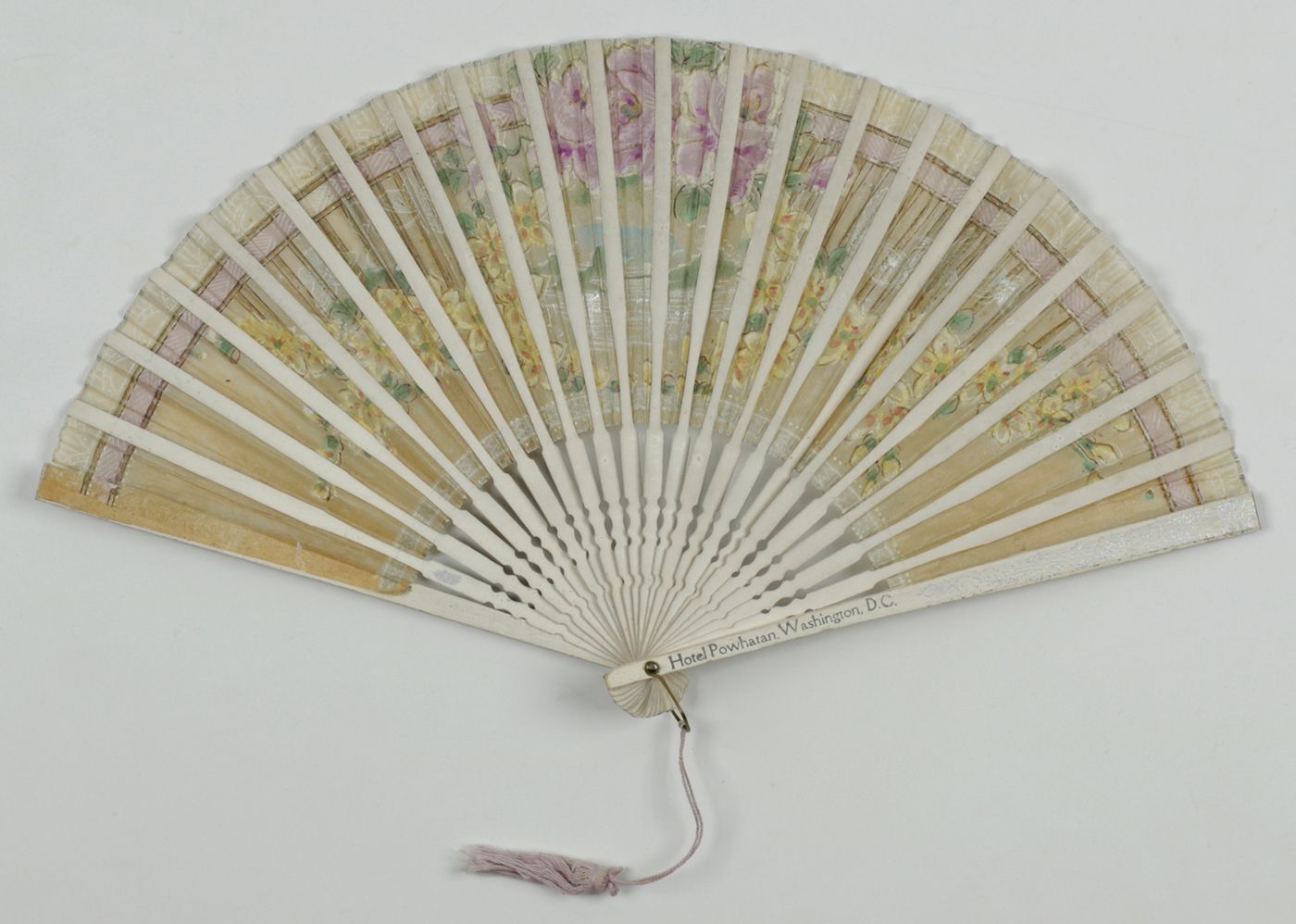
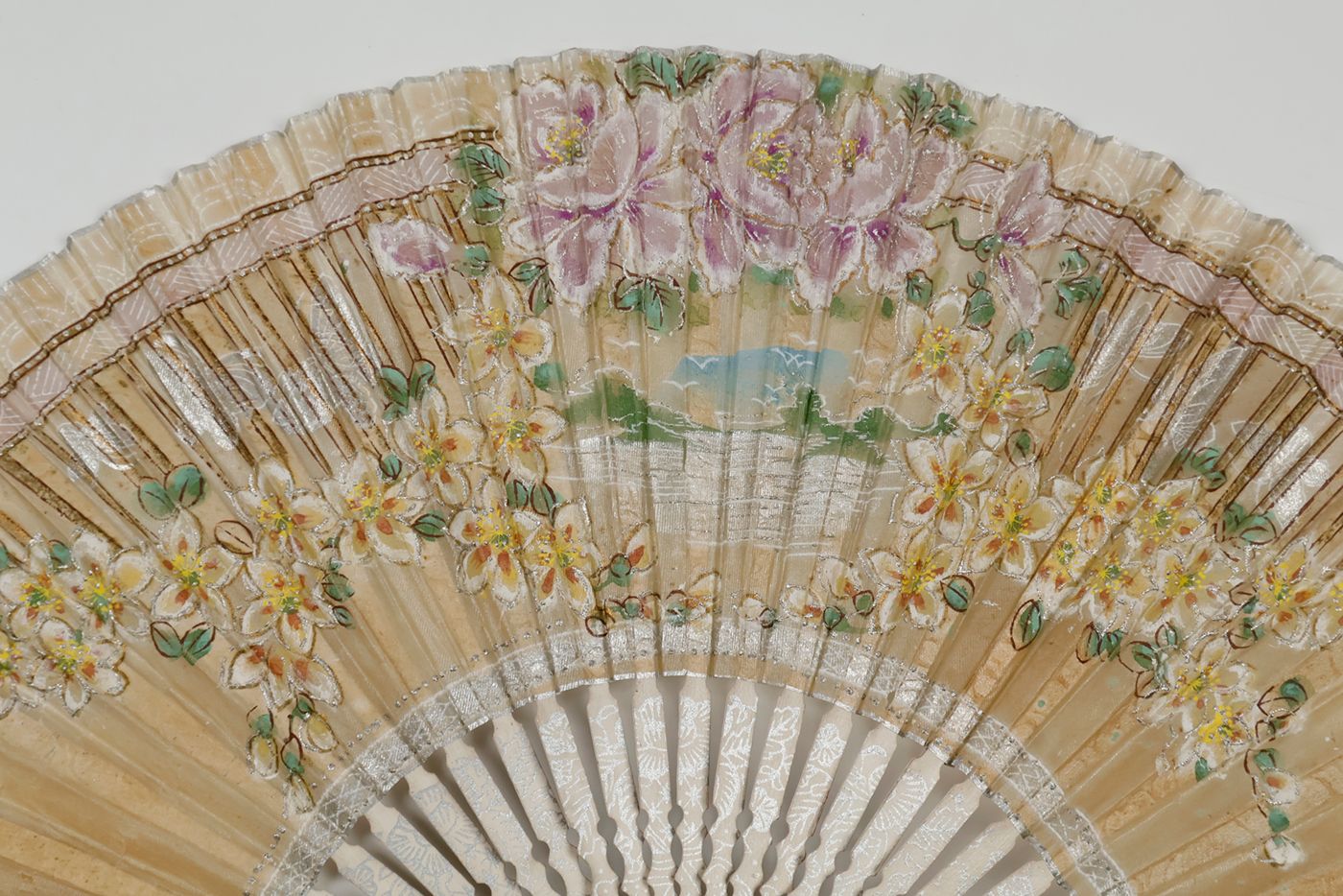
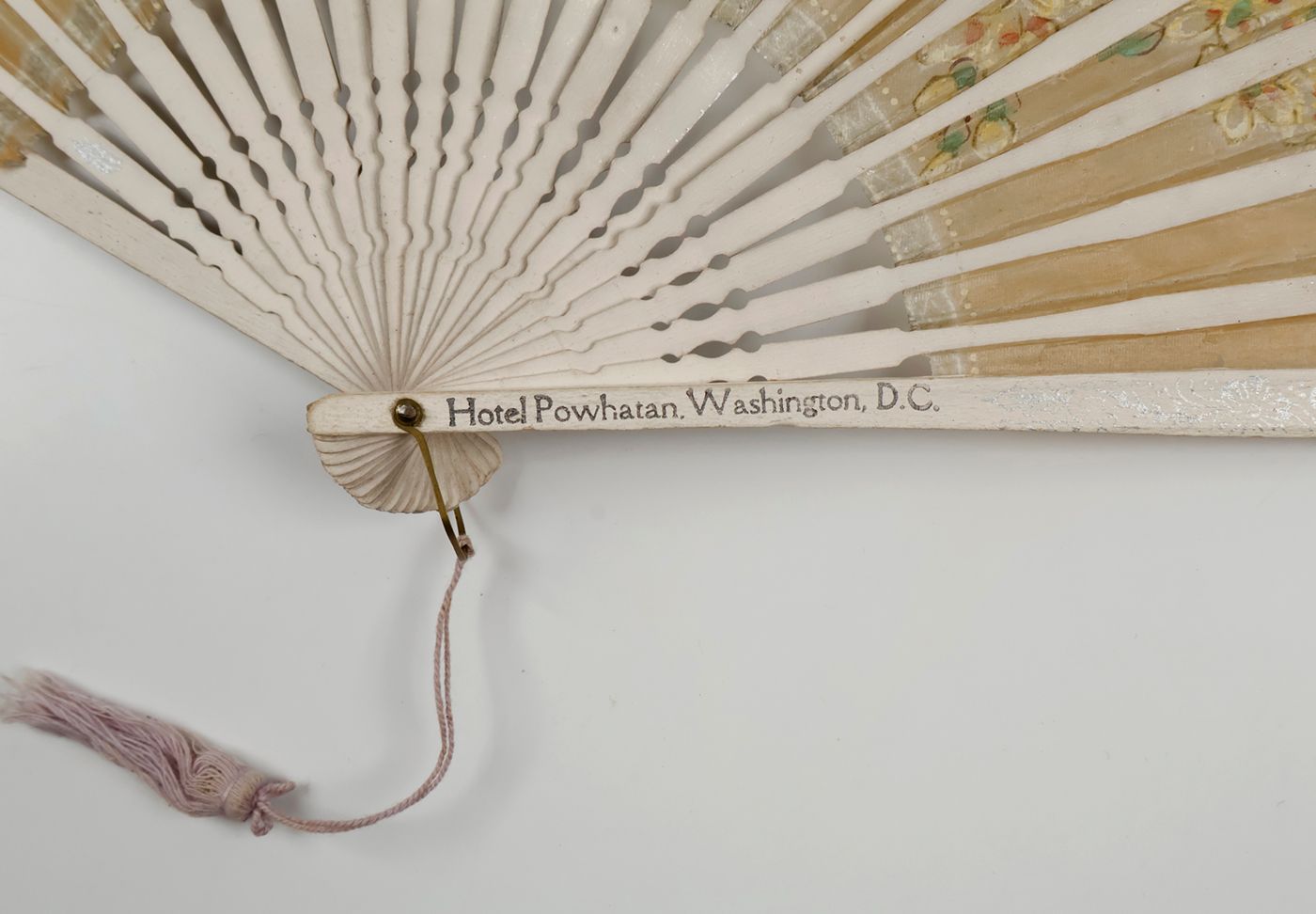
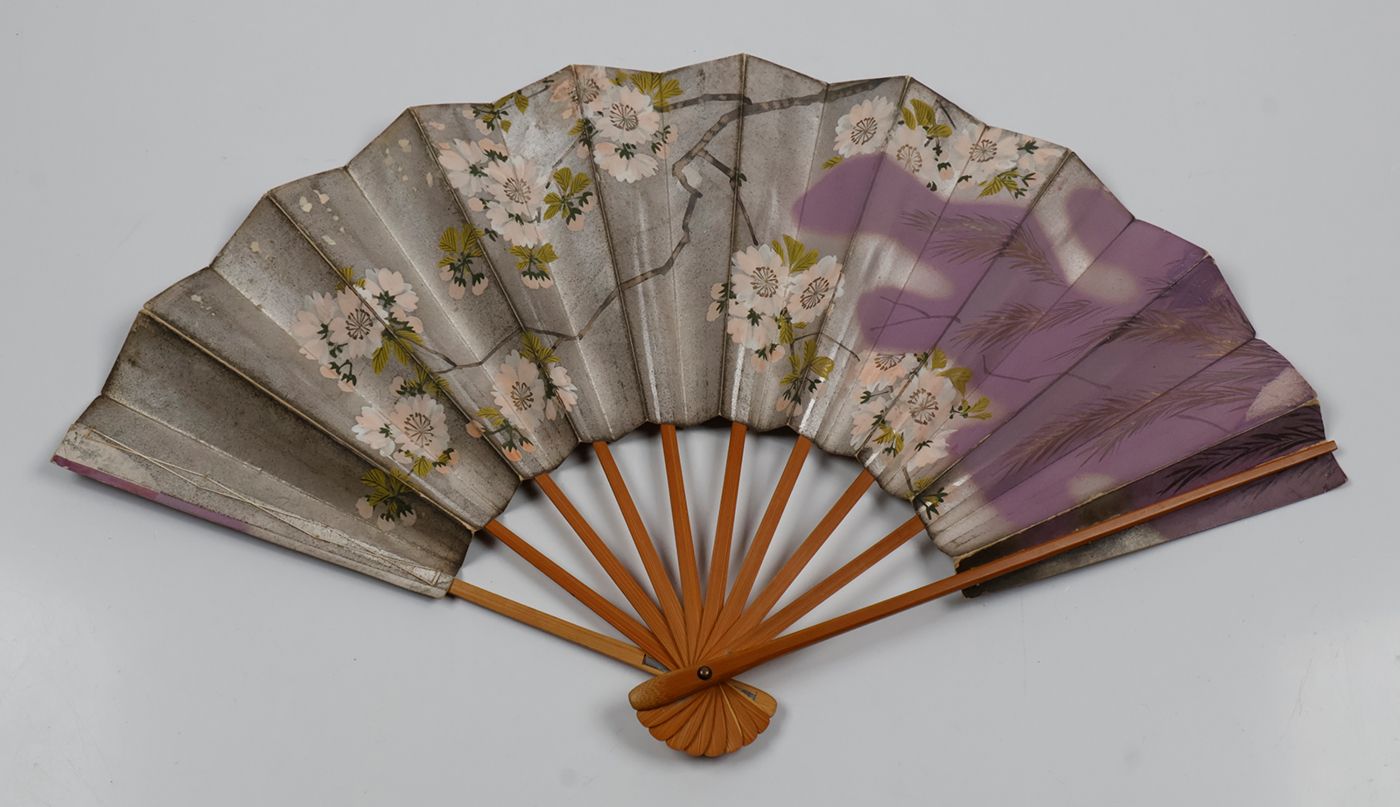
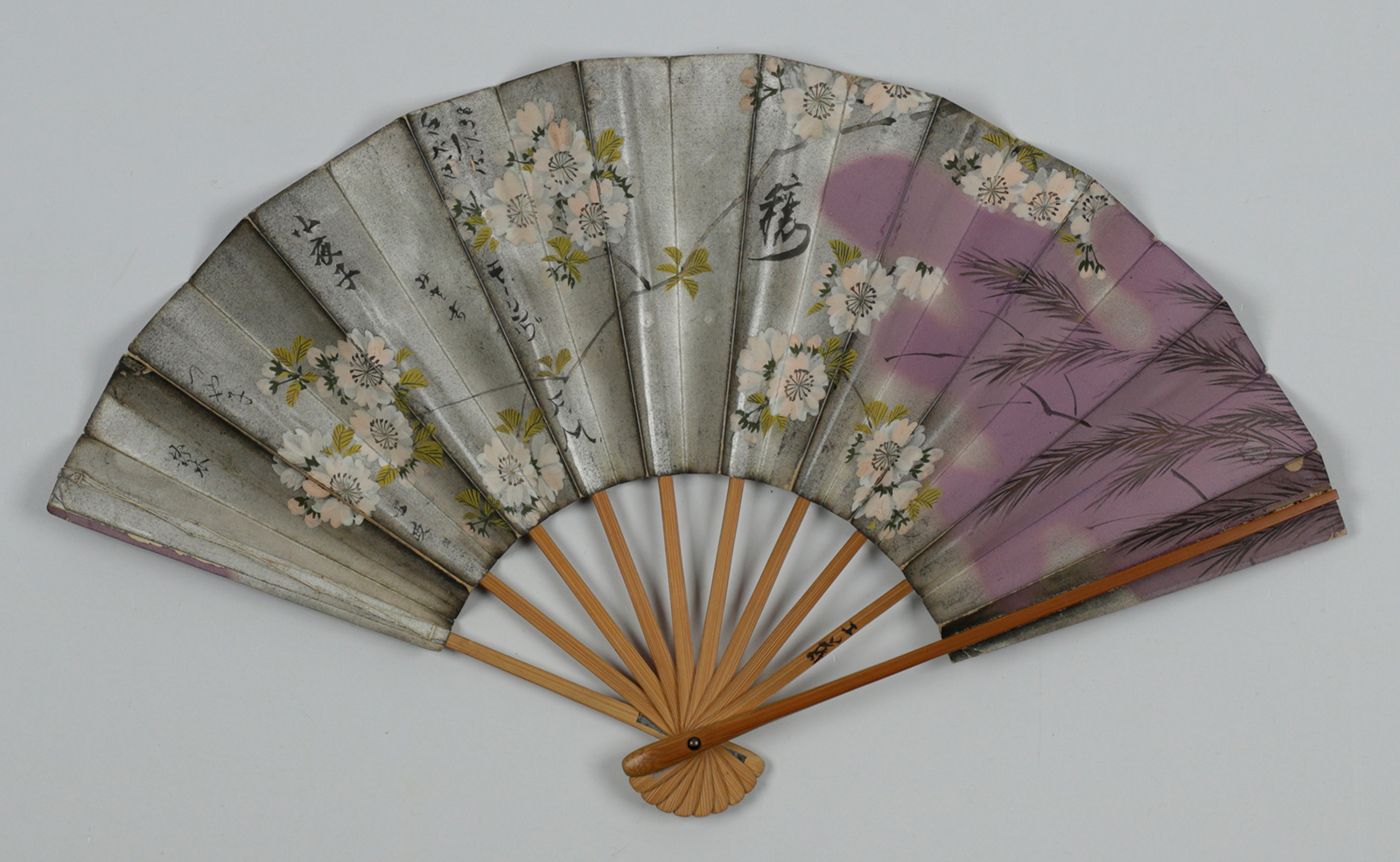
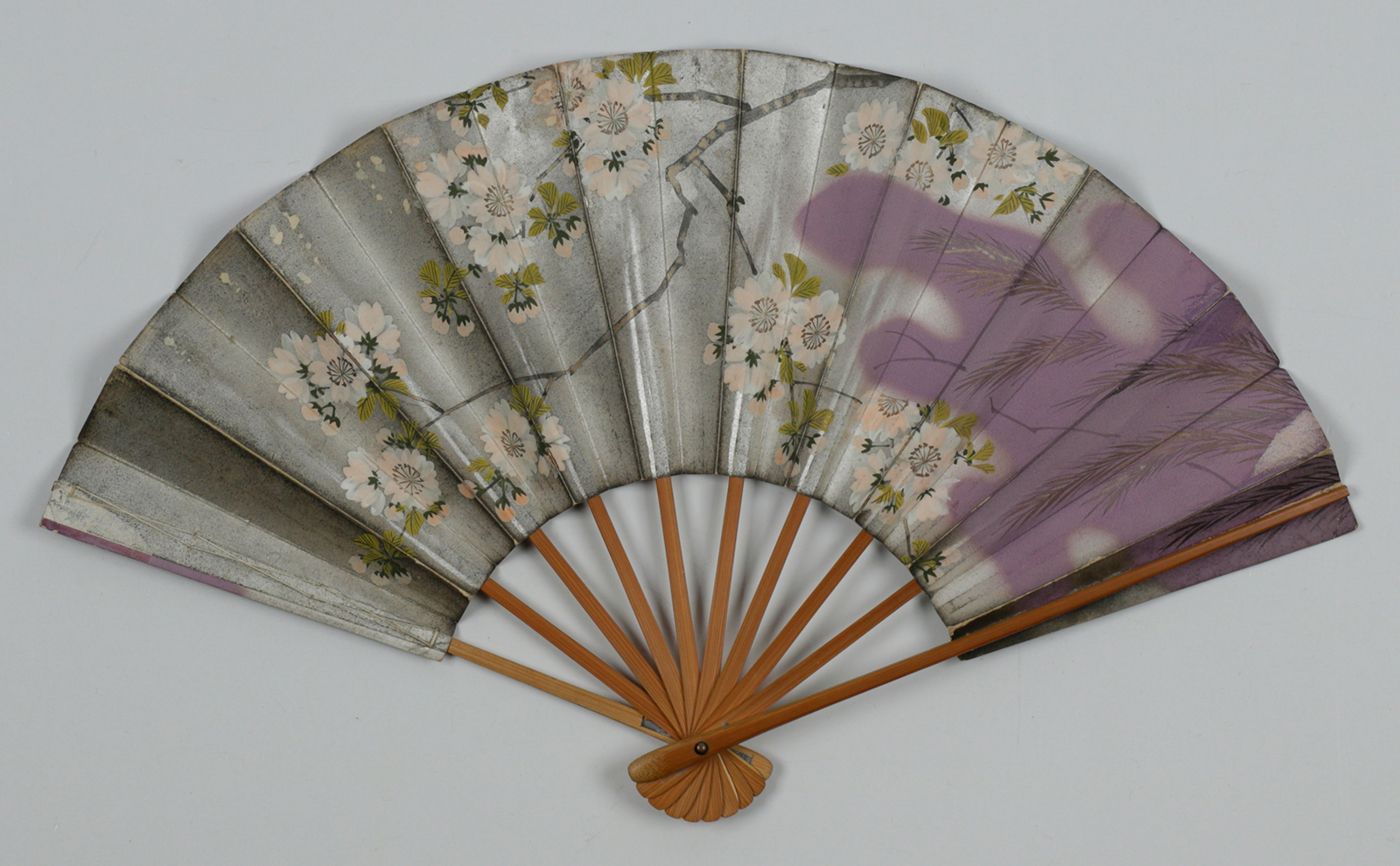
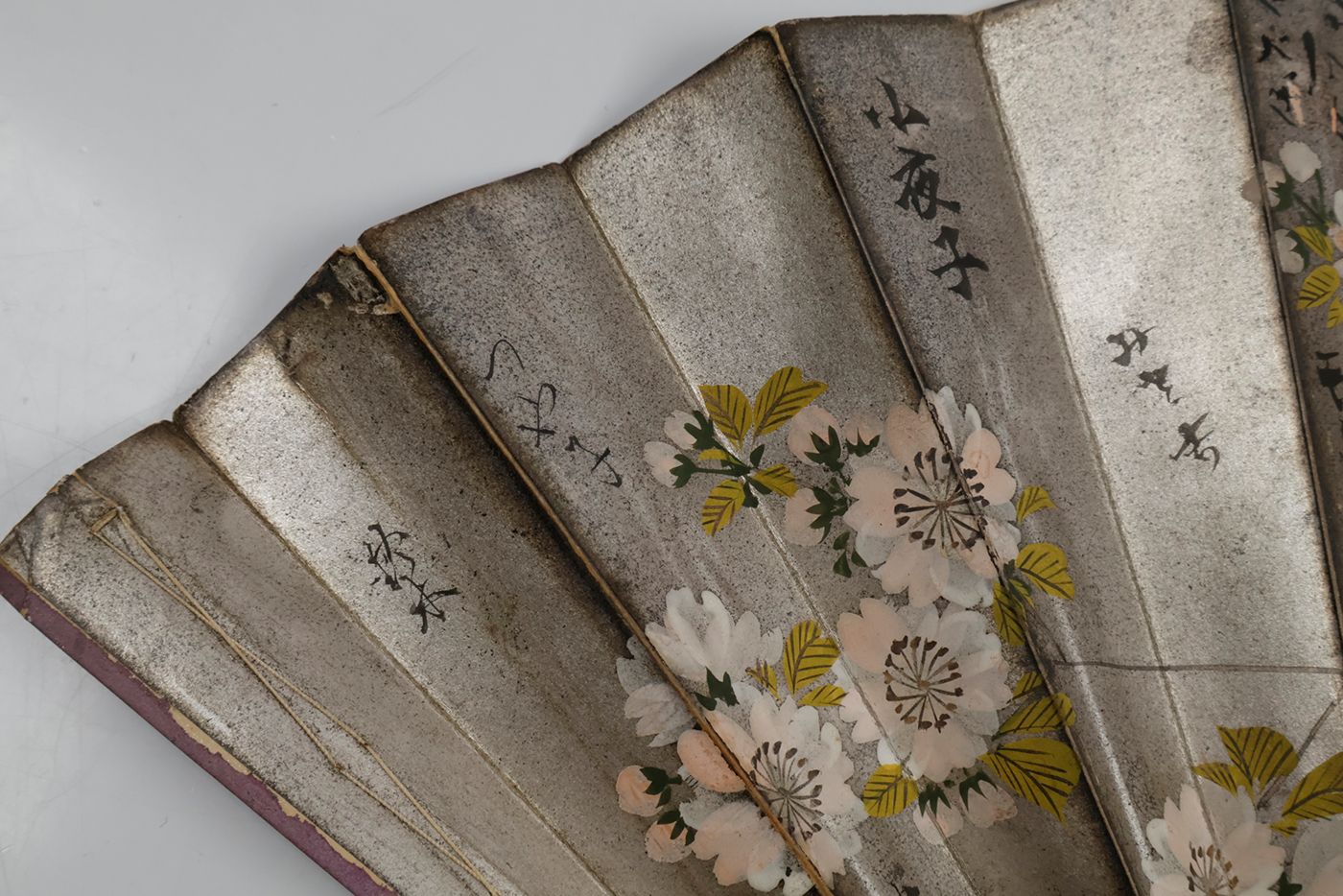
Indonesia, U.S.A, and France, various manufacturers, ca. 1900-1950. All made of wood. 1. Indonesia, Soerabaya, Wassimal Brothers, Toko Bombay Moerah. Pasar Toendjoengan 36 (21.3 x 2.8 x 1.1 cm, 28 ribs), floral pattern on outer ribs back side; 2. Idem, however, with a 26 instead of 28 ribs, a metal shackle, and a different floral design. 3. Washington, DC, Hotel Powhatan (21.3 x 2.4 x 1.1 cm; 23 ribs); outer ribs silver-printed, translucent rice paper, with floral pattern, heightened with silver and gold. 4. Clermont-Ferrand, Taillerie de Royat, 35 Rue Neuve près la Place Jaude. (21.1 x 1.9 x 2.0 (widest); 16 ribs. With a photoprint titled Taille des agates, showing factory workers processing agate gemstones. 5. (28.8 x 2.0 x 3.9 [widest point] cm); ten ribs. Floral patters over a silver background. Pochoir on both sides. With calligraphed Chinese texts referring to tea.
A wonderful collection of fans from America, Europe, and Asia. The first and second from the former Dutch East Indies, now Indonesia. Both with Dutch spelling (with oe instead of u), hence from before 1950. The third is from before 1977, but probably much older: "Designed by architect Frank Pierce Milburn, the Powhatan Hotel was built in 1911. It was located two blocks west of the White House on Pennsylvania Avenue, located on 18th Street between Pennsylvania Avenue and H Street. It, along with other hotels no longer in existence, was one of the better hotels in the city. It had an excellent view of the city from its roof deck which appears to have been popular. By the time buildings grew up around it obscuring its views, the Powhatan was dated. Ultimately, it was razed in 1977." (dckaleidoscope.wordpress website). The fourth was made in France for the upscale gem cutting firm Royat in Clermont-Ferrand, in the Auvergne region of central France. "The Royat gem-cutting workshop was founded in 1899 by Joseph Demarty, an engineer and mineralogist. In 1900, it became an industrial company: the Société Anonyme des Pierres Précieuses d’Auvergne (Auvergne Precious Stones Company). Demarty chose Royat, where wealthy individuals flocked from around the world to benefit from the spa treatments. The workshop prospered and opened branches in Cannes, Biarritz, and Paris. The Royat gem-cutting workshop offered jewellery and everyday objects in its stores, using precious stones such as amethyst and fluorite from Auvergne, opal, jade, and agate. The workshop was established on the site of two mills on the Tiretaine River and used waterwheels to power the red sandstone grinding wheels used to rough-cut the stones. The architect Jean Guillot (1889-1961), who designed several villas and apartment buildings in the city, constructed the new buildings in a rationalist style combining concrete, limestone, metal, and brick. They housed the workshops, offices, store, and the director's apartment. Since its closure in 2004, the stonecutting workshop has remained frozen in time: the machines and tools are preserved in the workshops and on the workbenches. The entire site was inventoried by the Henri-Lecoq Museum as part of the PASTEC (Scientific and Technical Heritage) mission launched by the Ministry of Culture." (Clermont-Ferrand website). The fifth fan, from China, or, possibly, Indonesia, with large Chinese populations, especially in large towns such as Jakarta, and Surabaya. The first with slight wear (narrow gap in one fold; otherwise, excellent; the second excellent. The third with short tears, and slight paper loss, here and there, otherwise very good. The fourth with the first rib partly split, ends of paper a bit frayed and chipped, otherwise very good. The fifth is arguably the best, both in terms of quality of the material and craftmanship, and in the state of preservation, with only some minor wear to the fold's edges. In all a remarkable, diverse collection.

![image for [Collection of five paper fans].](https://schierenberg.nl/media/cache/product_thumb/79031/79031_x.jpg)