[Paper Peepshow]
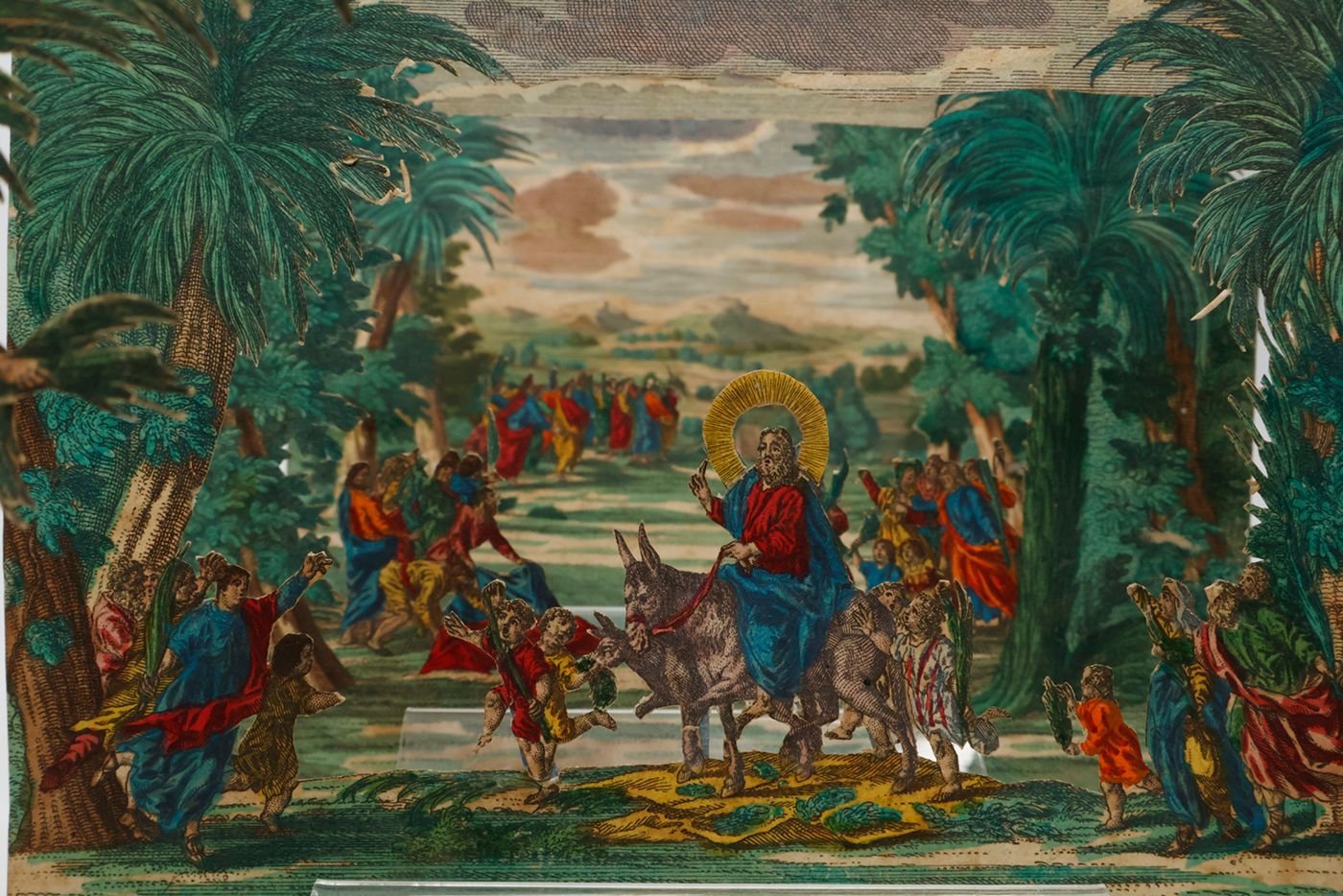
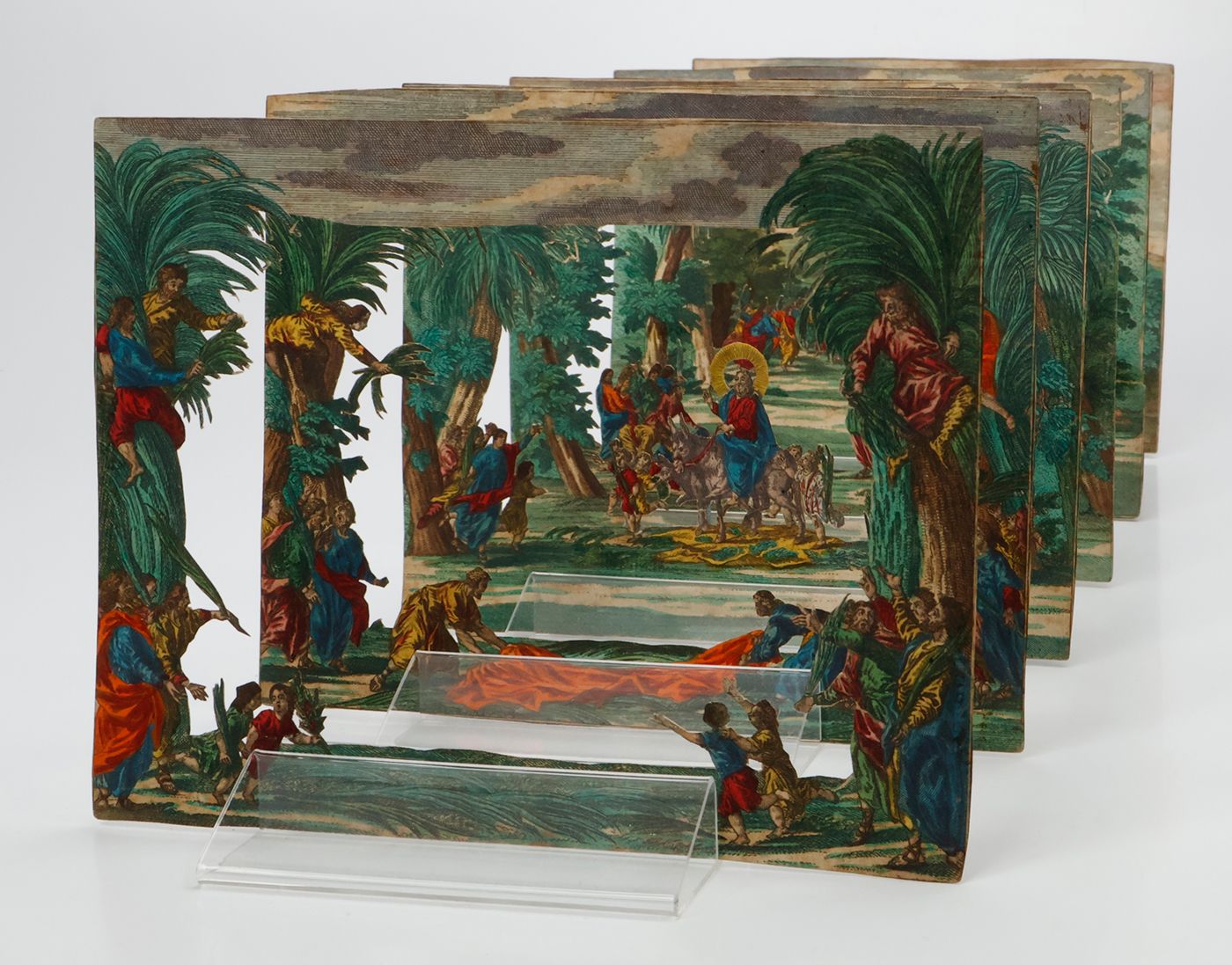
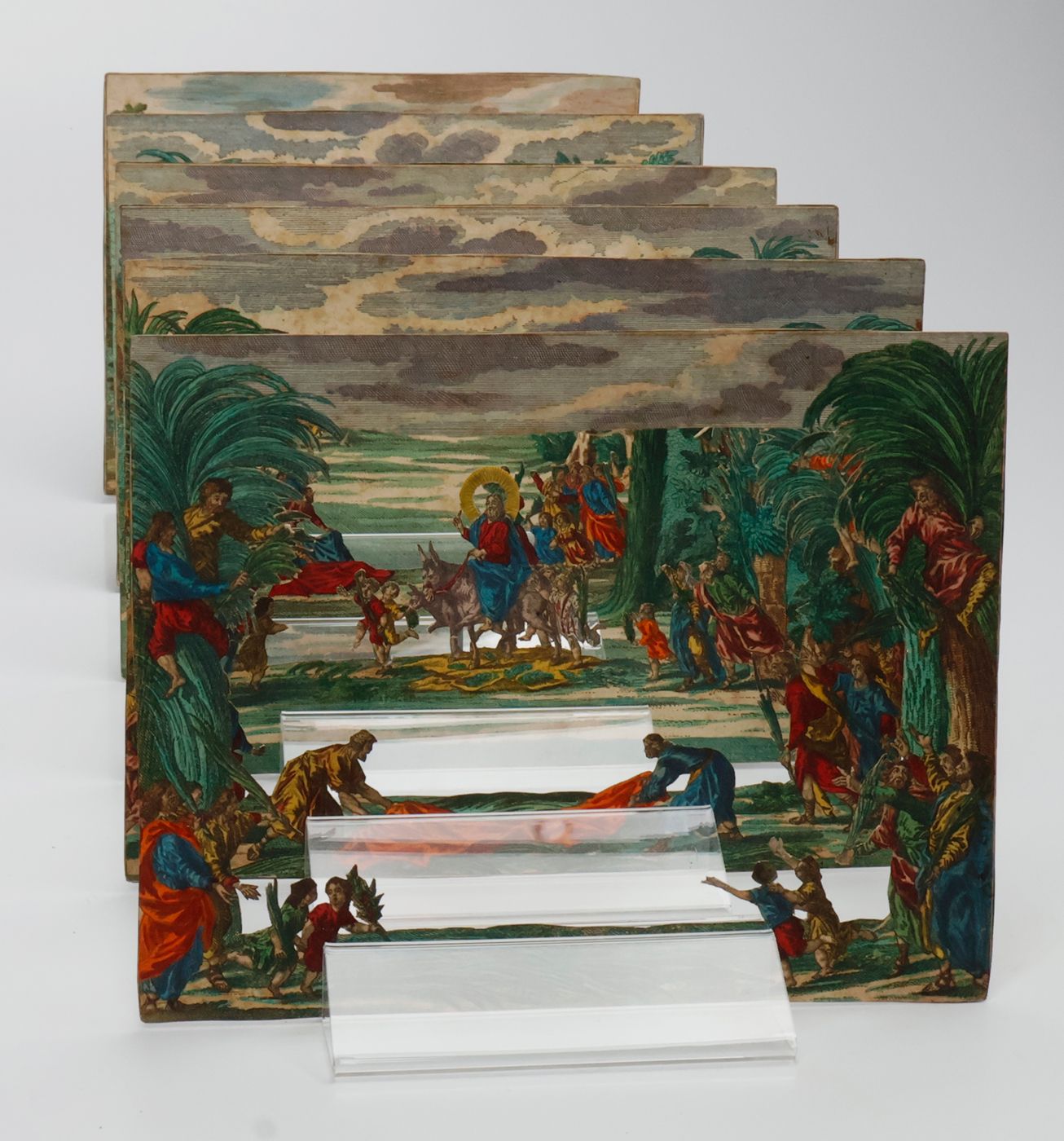
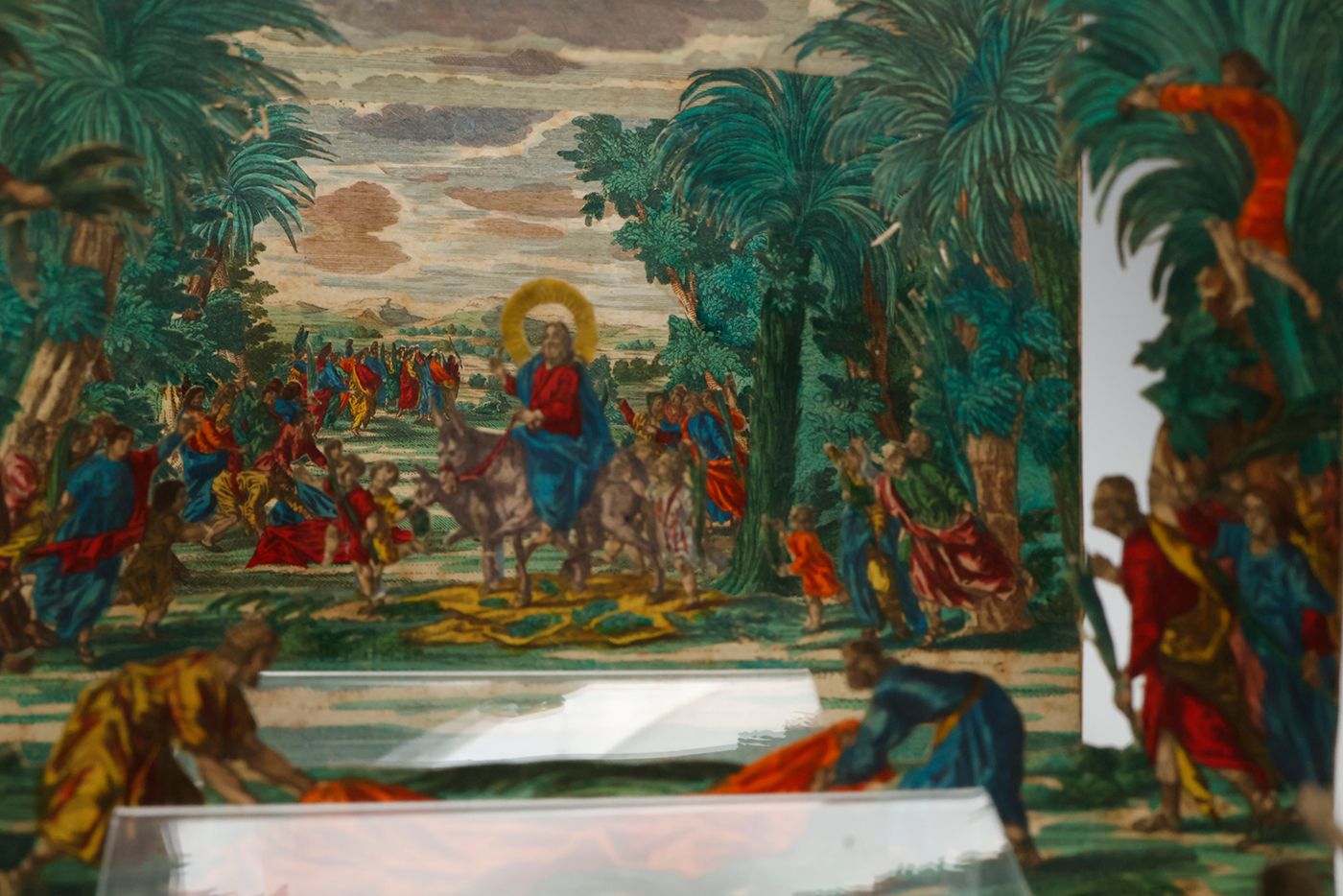
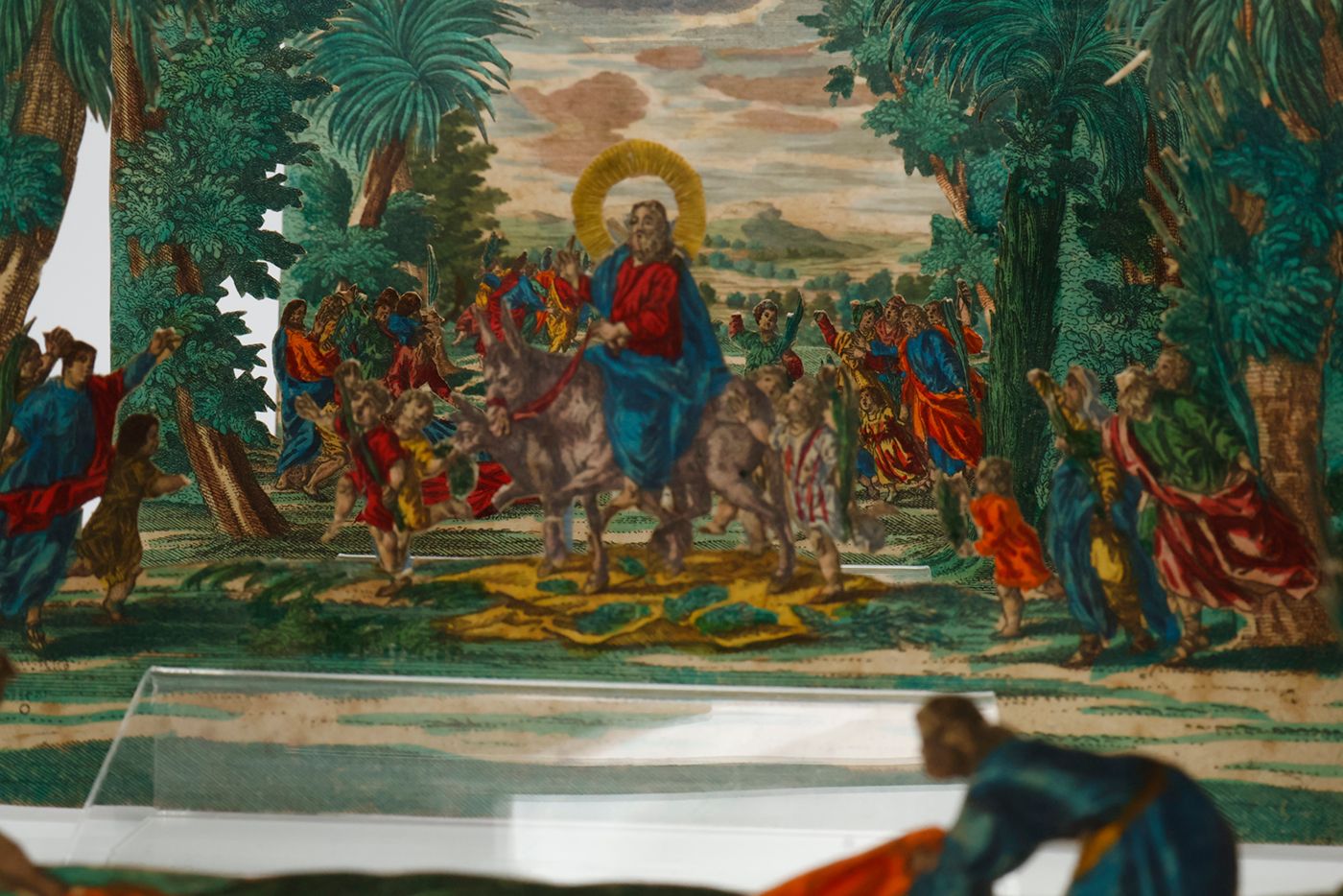
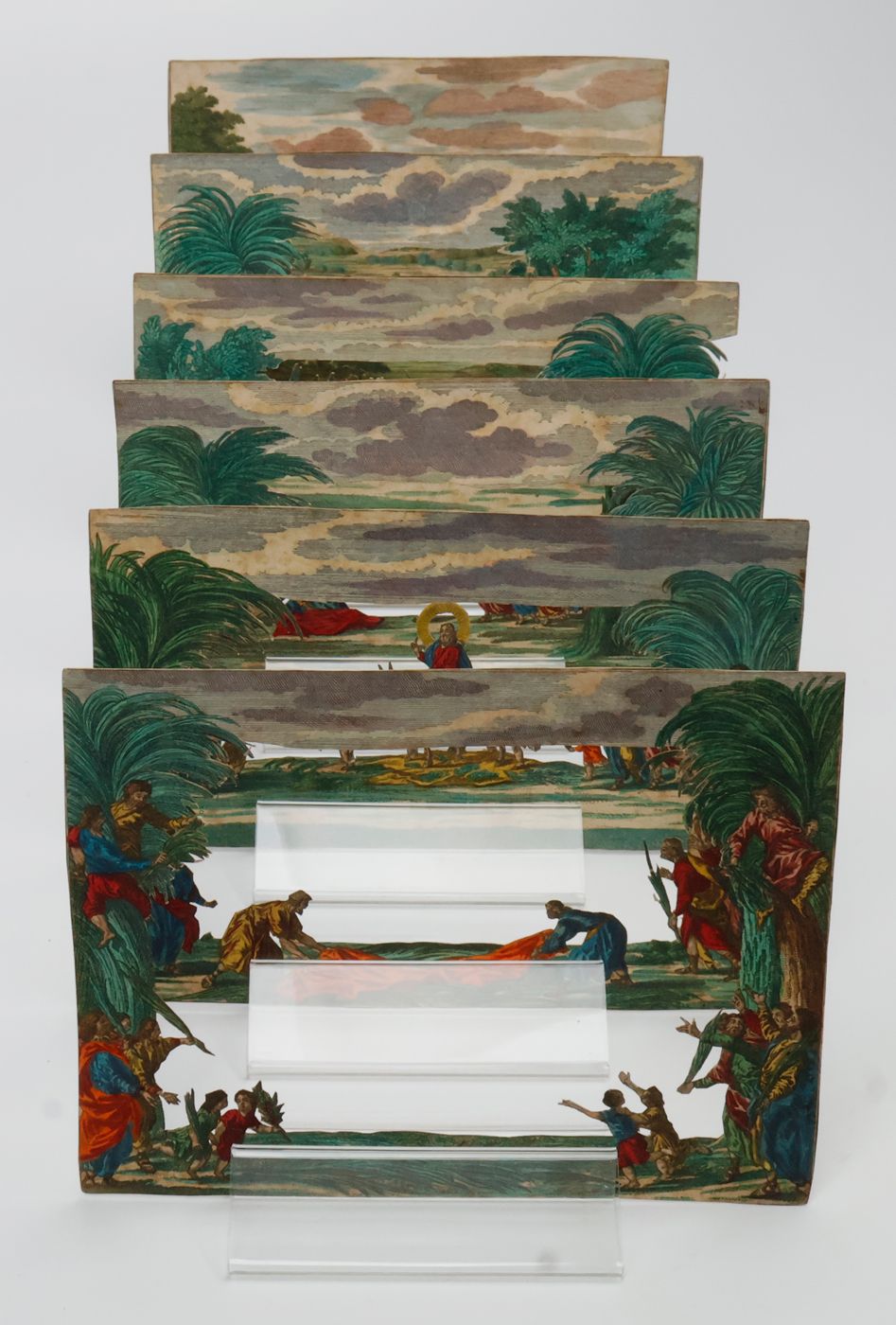
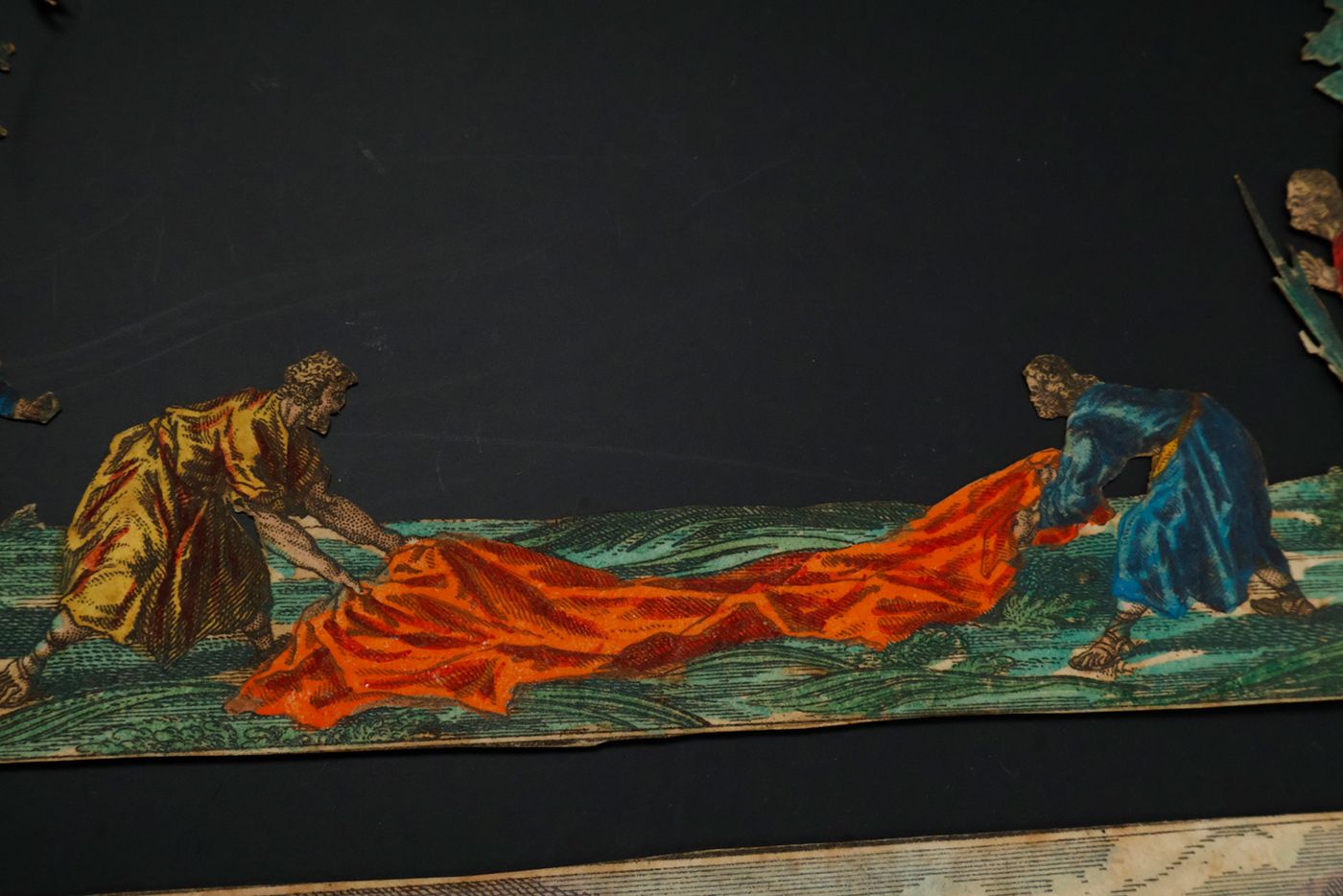
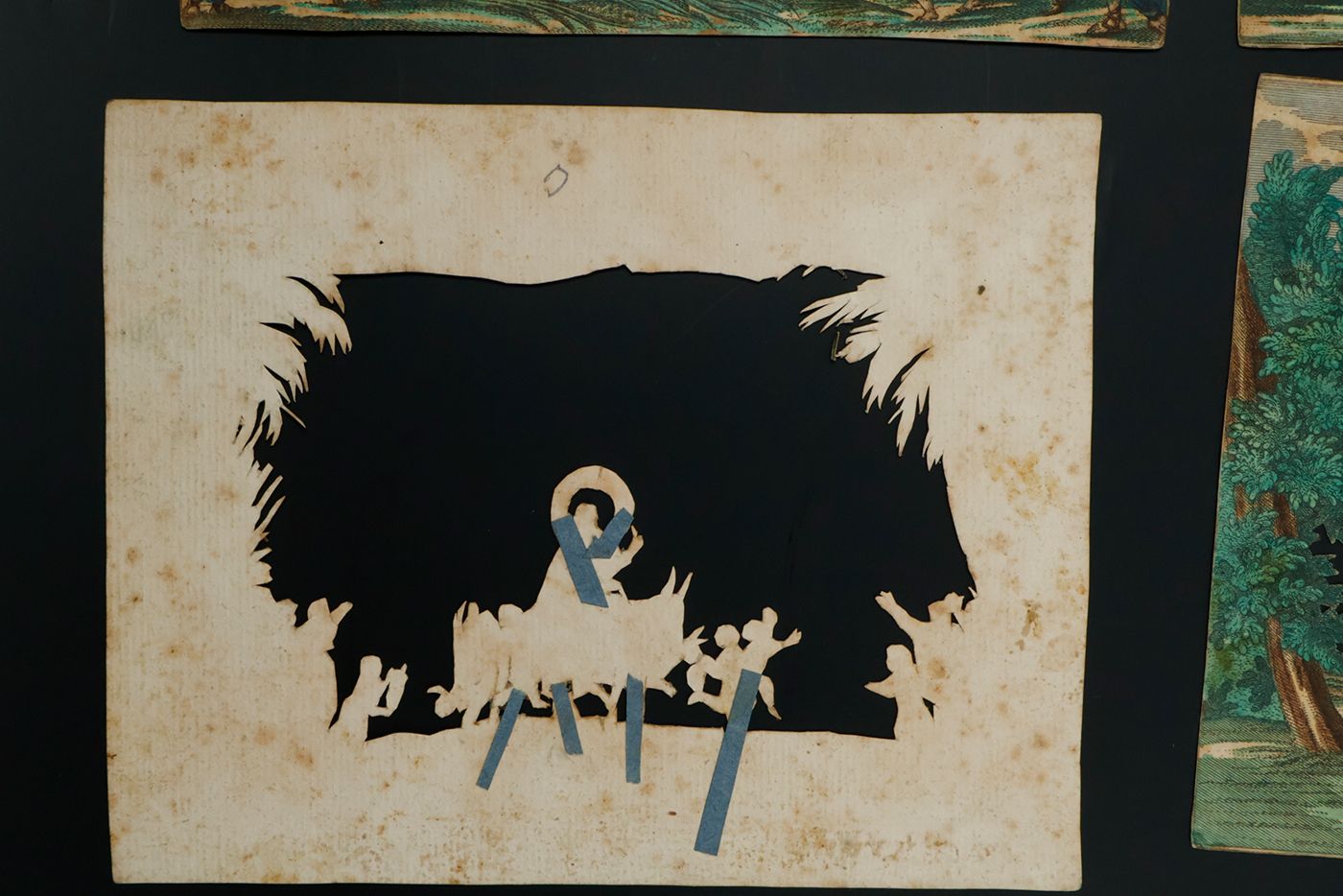
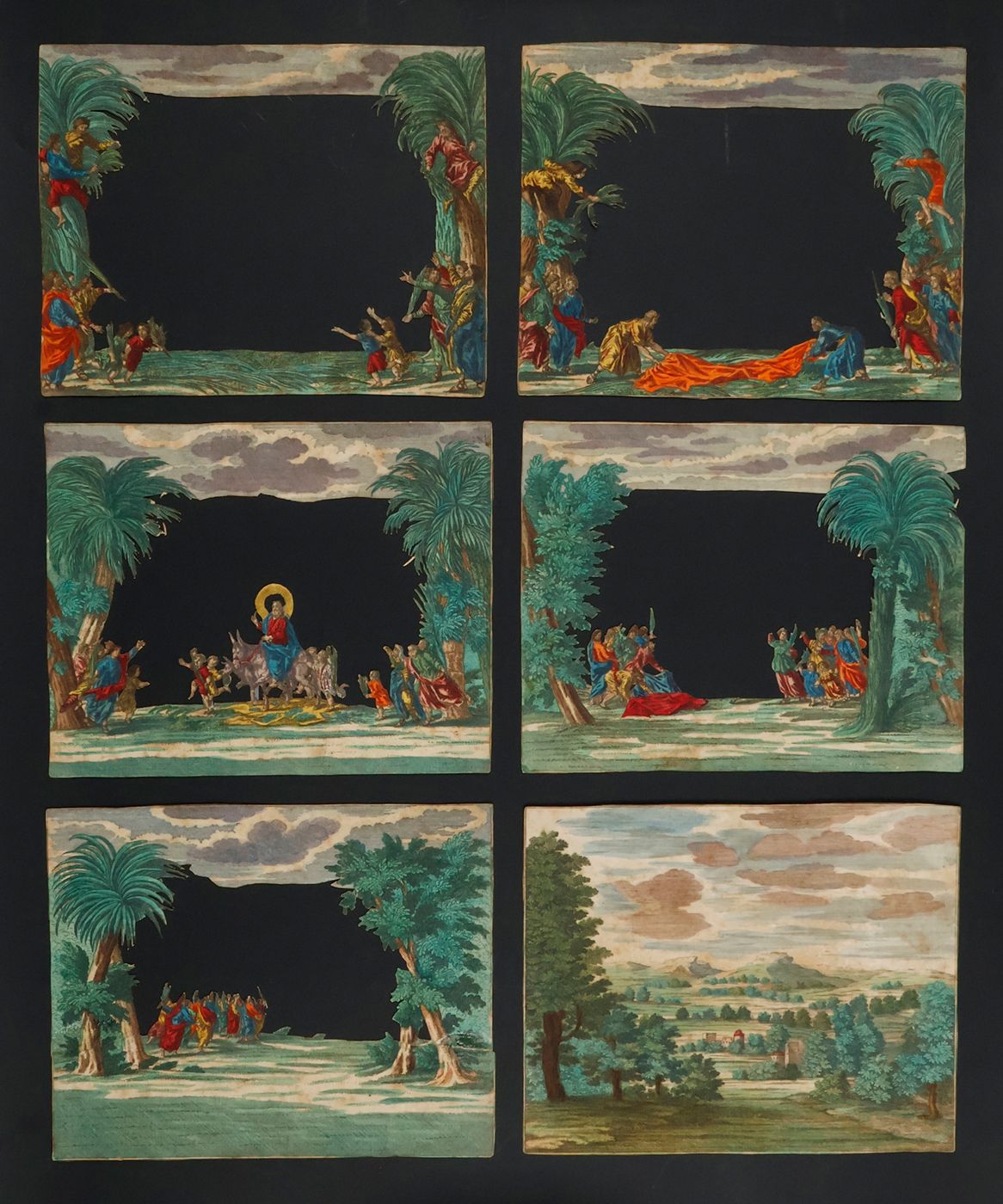
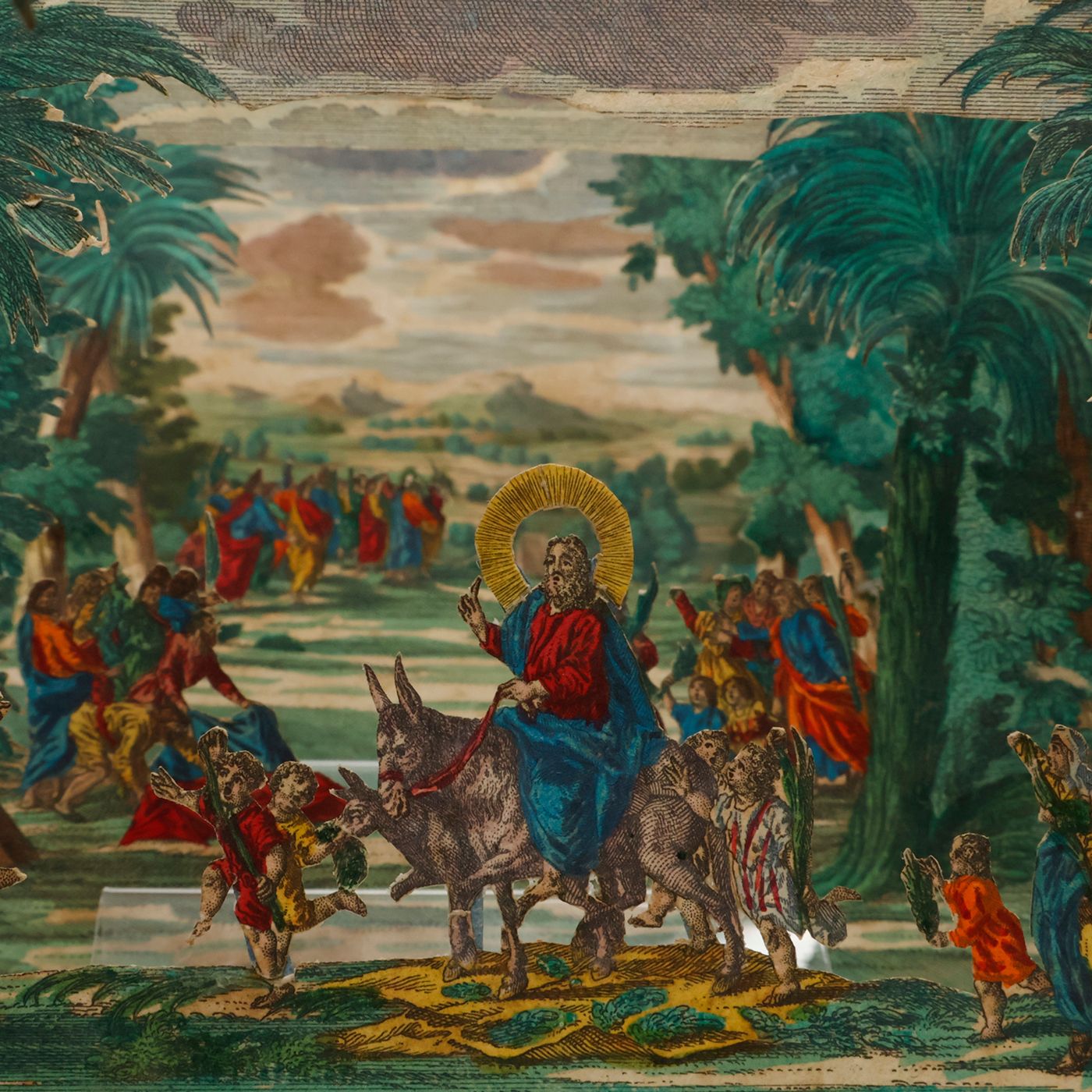
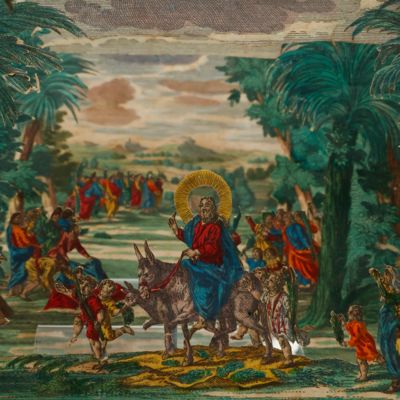
Jesus Christ triumphal entry into Jeruzalem.
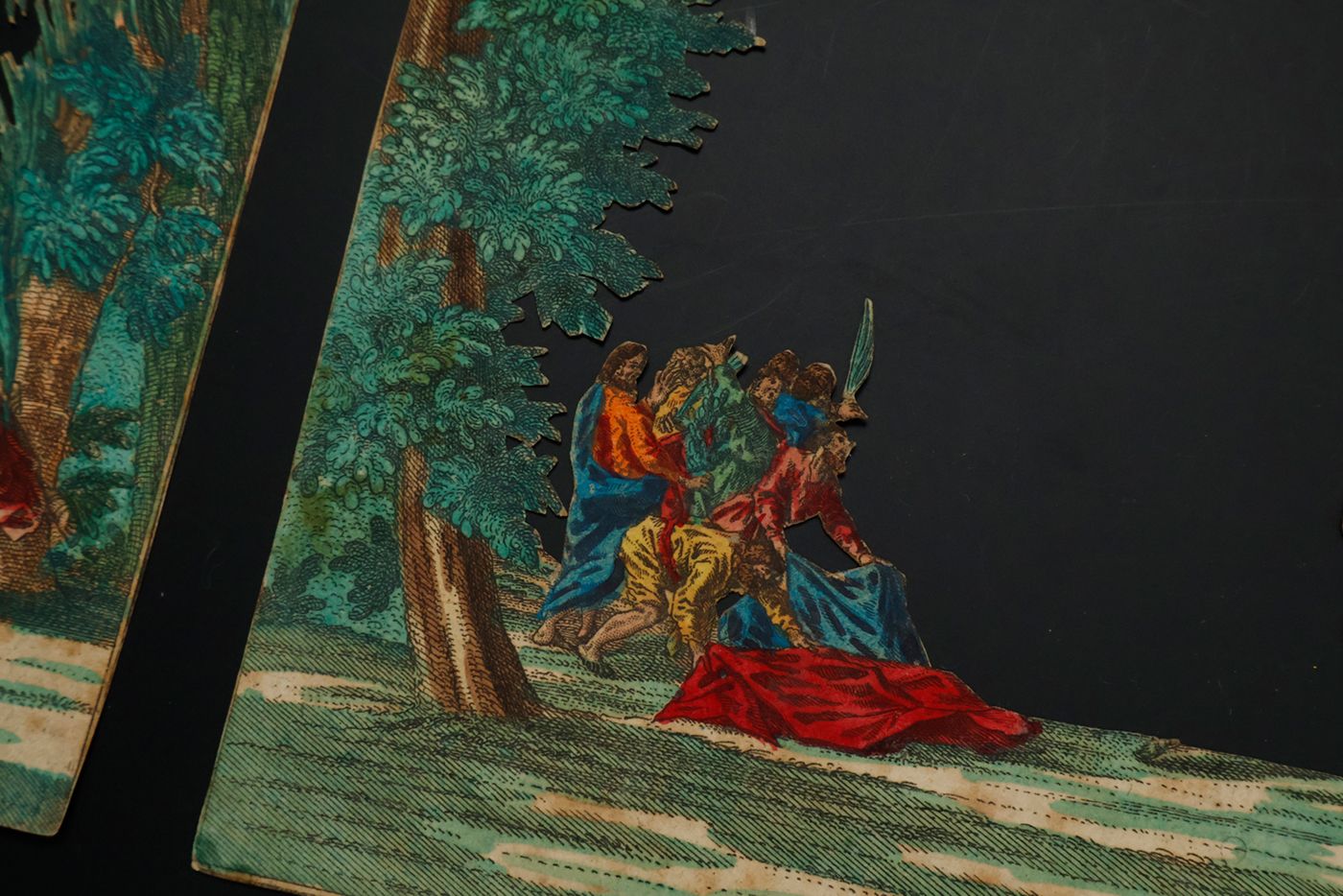
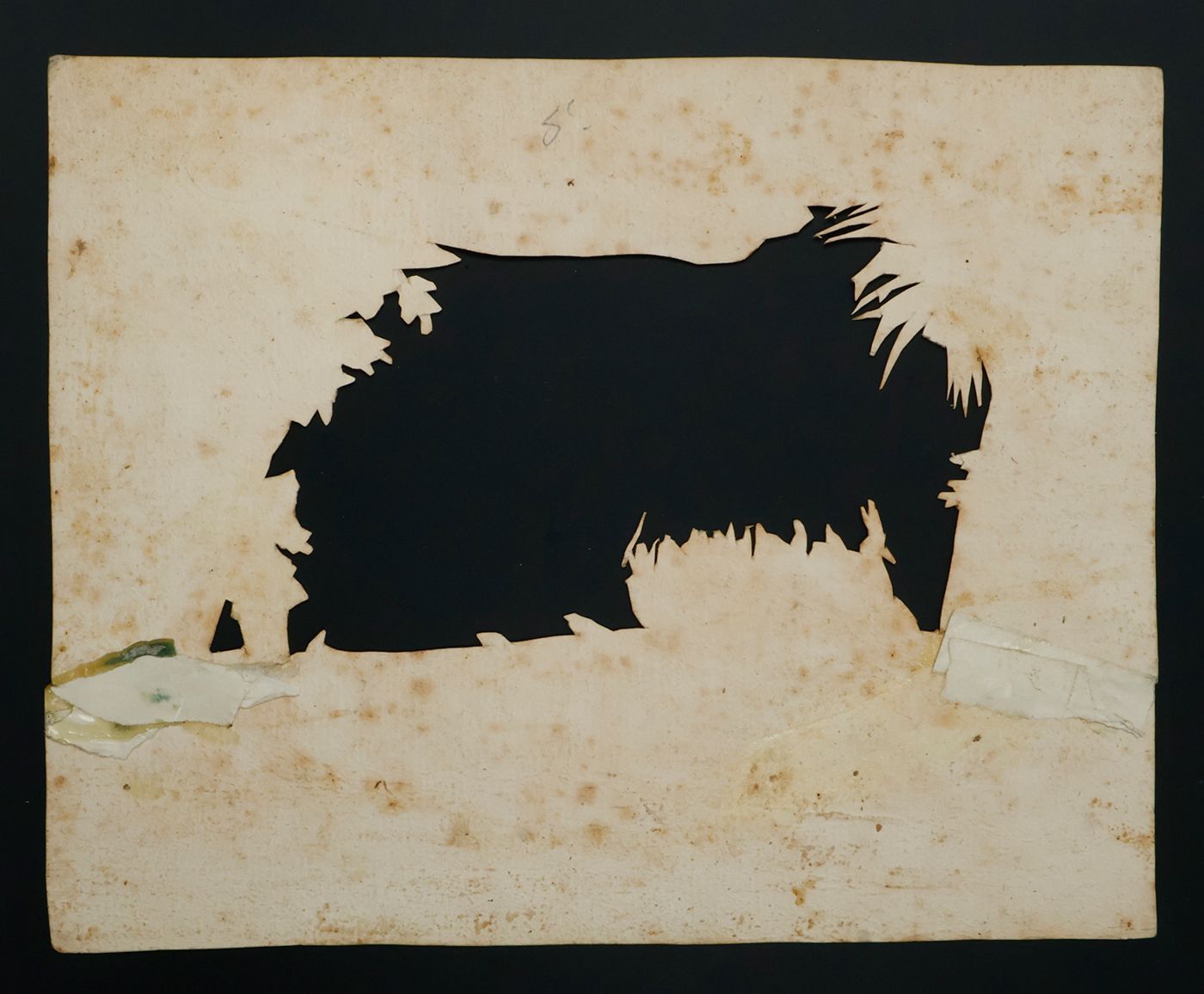
[Augsburg, M. Engelbrecht, ca. 1740]. Six (of seven) large, oblong cardboard sheets (ca. 16.0 x 20.0 cm), with fine hand-colouring, being five cards with delicate cut-outs and one backpanel, together forming a single scene. Rear panel numbered, in print, N. 51 in the lower margin.
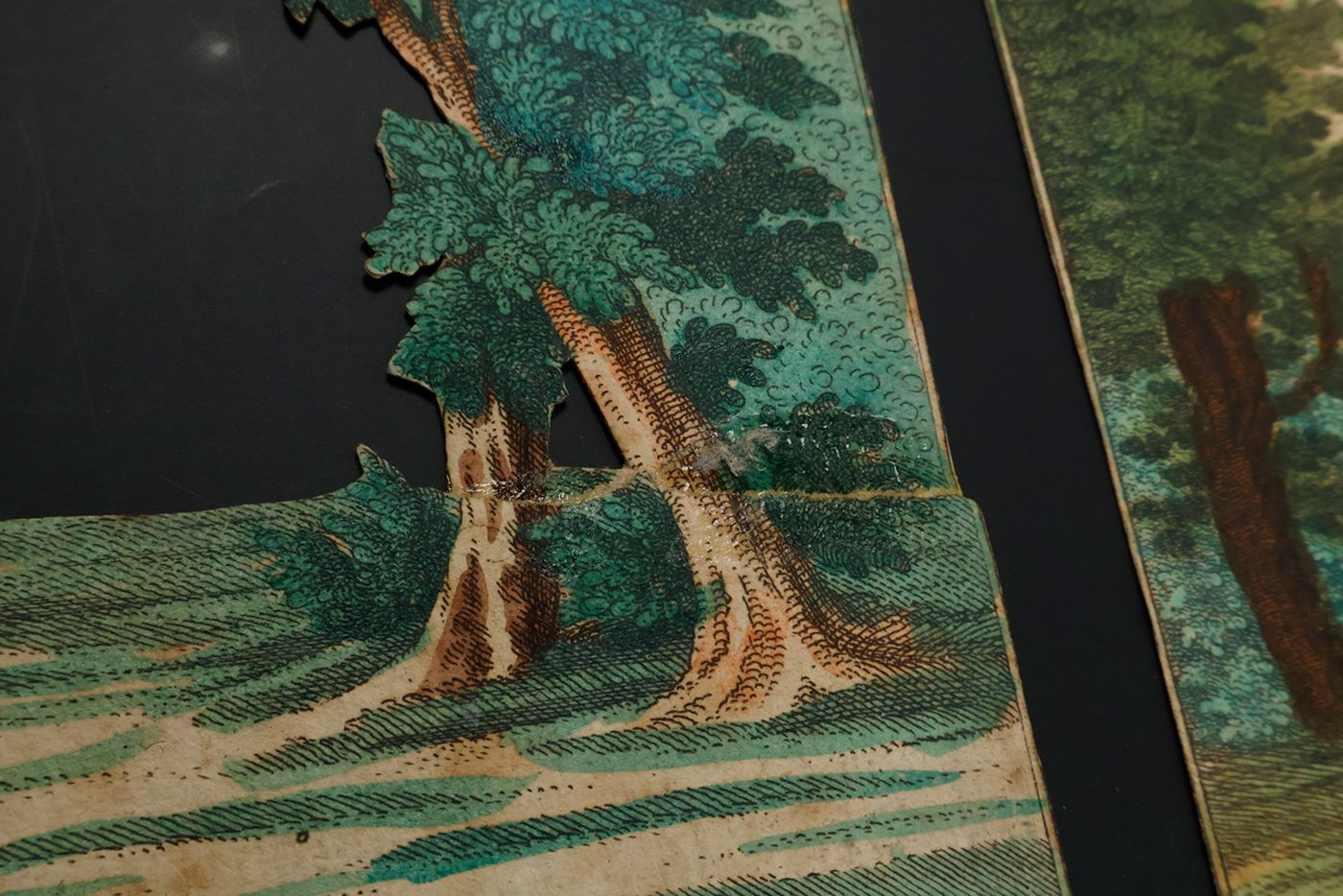
The triumphal entry into Jerusalem is a narrative in the four canonical Gospels describing the arrival of Jesus in Jerusalem a few days before his crucifixion. This event is celebrated each year by Christians on Palm Sunday. According to the gospels, Jesus arrived in Jerusalem to celebrate Passover, entering the city riding a donkey. He was greeted by a crowd acclaiming him by waving palm branches and laying cloaks on the ground to honor him. This episode introduces the events of the Passion of Jesus, leading to his crucifixion and resurrection. The event is described in Matthew 21:1-11, Mark 11:1-11, Luke 19:28-44 and John 12:12-19 (cf. Wikipedia). Given the age and subject, we assume that this item was produced by the Augsburg firm of M. Engelbrecht. "Martin Engelbrecht (1684-1756), a native of Augsburg was the son of a colour merchant. He began his career as an artist by the attachment to a local publishing house but had by 1708 moved to Berlin where he was engaged in the designs after Eosander von Goethe of the Silberbüfett im Ritterall at Berlin and of a porcelain cabinet in Charlottenberg. Returning to Augsburg he was involved in illustrating a wide variety of works after various artist mainly on subjects connected with the decorative arts. However in 1711 Engelbrecht was again in Berlin working at a fine art publishers with his older brother Christian Engelbrecht (1672-1735). They decided to start their own independent publishing house at Augsburg in 1719 where they produce a wide variety of graphic works. It was with peepshows Martin Engelbrecht excelled having the unique position of no other publishing house or place of publication to compete against him. Engelbrecht was kept busy with the many other special graphics and employed two artists, Jeremias Wachsmuth (1711-1771) and Johann David Nessenthaler (1717-1766), to produce designs for the peepshows. Wachsmuth’s work can be found as early as 1731, and those by Nessenthaler starting from 1737. With Martin Engelbrecht's death in 1756 the business continued to thrive under the management of Engelbrecht's daughters and sons-in-law, and continued on well into the nineteenth century." (Marlborough Rare Books Catalogue, List XLV, 2009. pp. 33-34). A peepshow of this size usually consists of seven cardboards, therefore, we assume that the first cardboard (which, usually, is the least detailed) is lacking. Fifth cardboard with rather clumsy repairs, showing glue remains and reinforcements at the back. Otherwise, very good with bright and beautiful colouring.

![image for The yellow-ridged toucan ( <em>Ramphastos vitellinus culminatus</em>). From: <em>Histoire naturelle des oiseaux de paradis et des rolliers, suivie de celle des Toucans et des Barbus</em> [Plate 5. Le grand Toucan à gorge orange].](https://schierenberg.nl/media/cache/product_thumb/78969/78969_x.jpg)