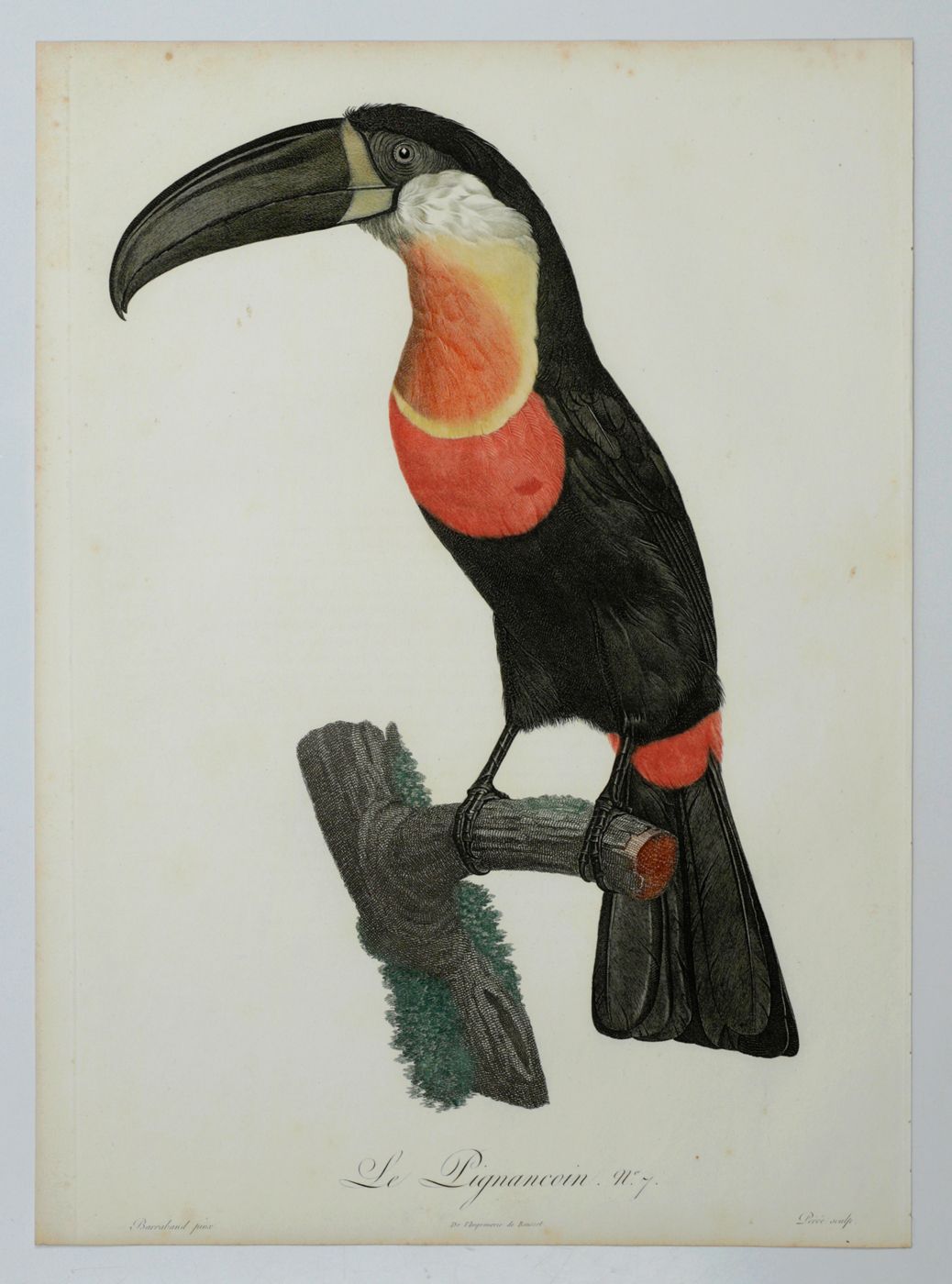
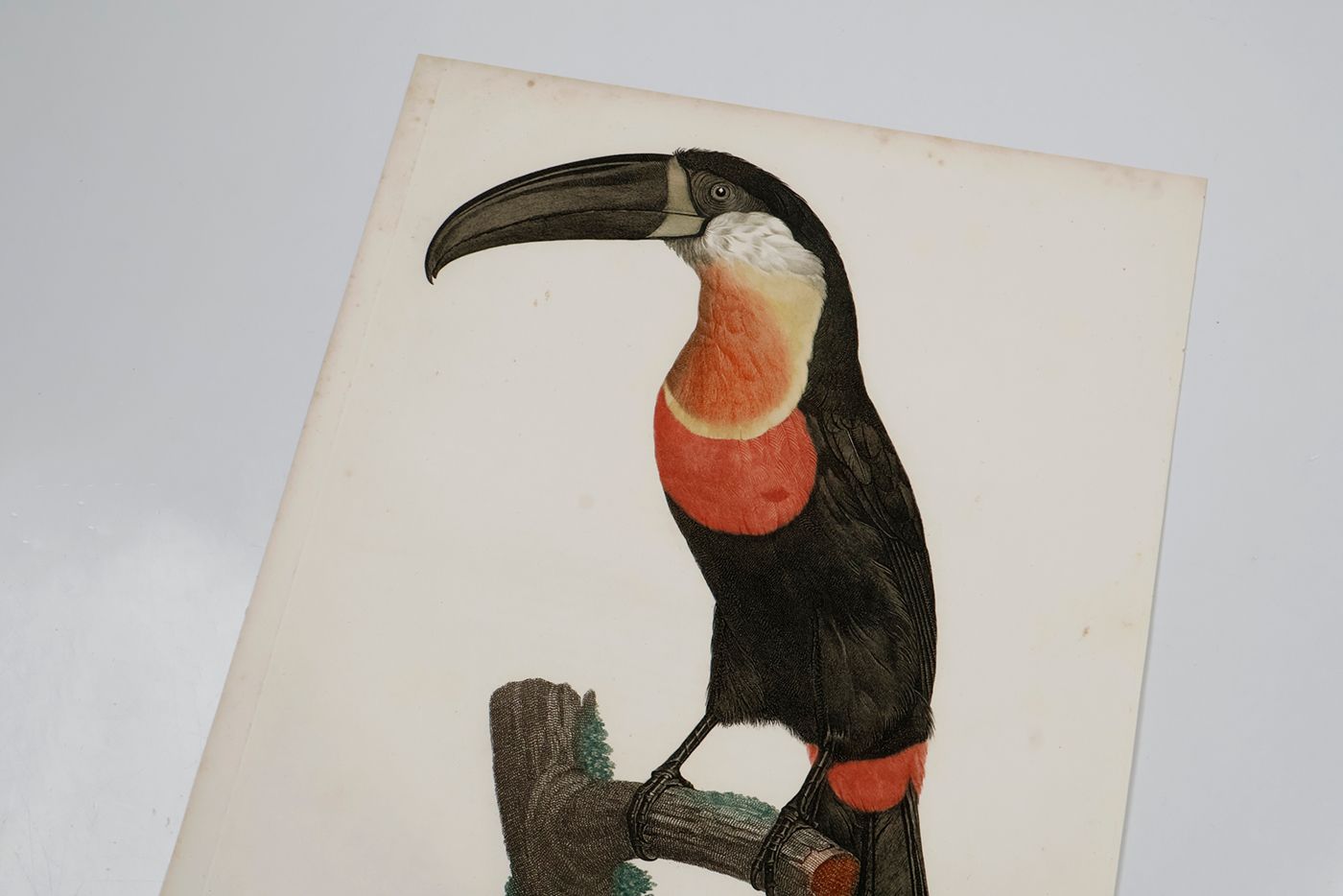
![The channel-billed toucan ( <em>Ramphastos vitellinus</em>). From: <em>Histoire naturelle des oiseaux de paradis et des rolliers, suivie de celle des Toucans et des Barbus</em> [Plate 7. Le Pignancoin].](https://schierenberg.nl/media/cache/product_main/78964/78964_x.jpg)
Barraband, J. [in F. Levaillant]
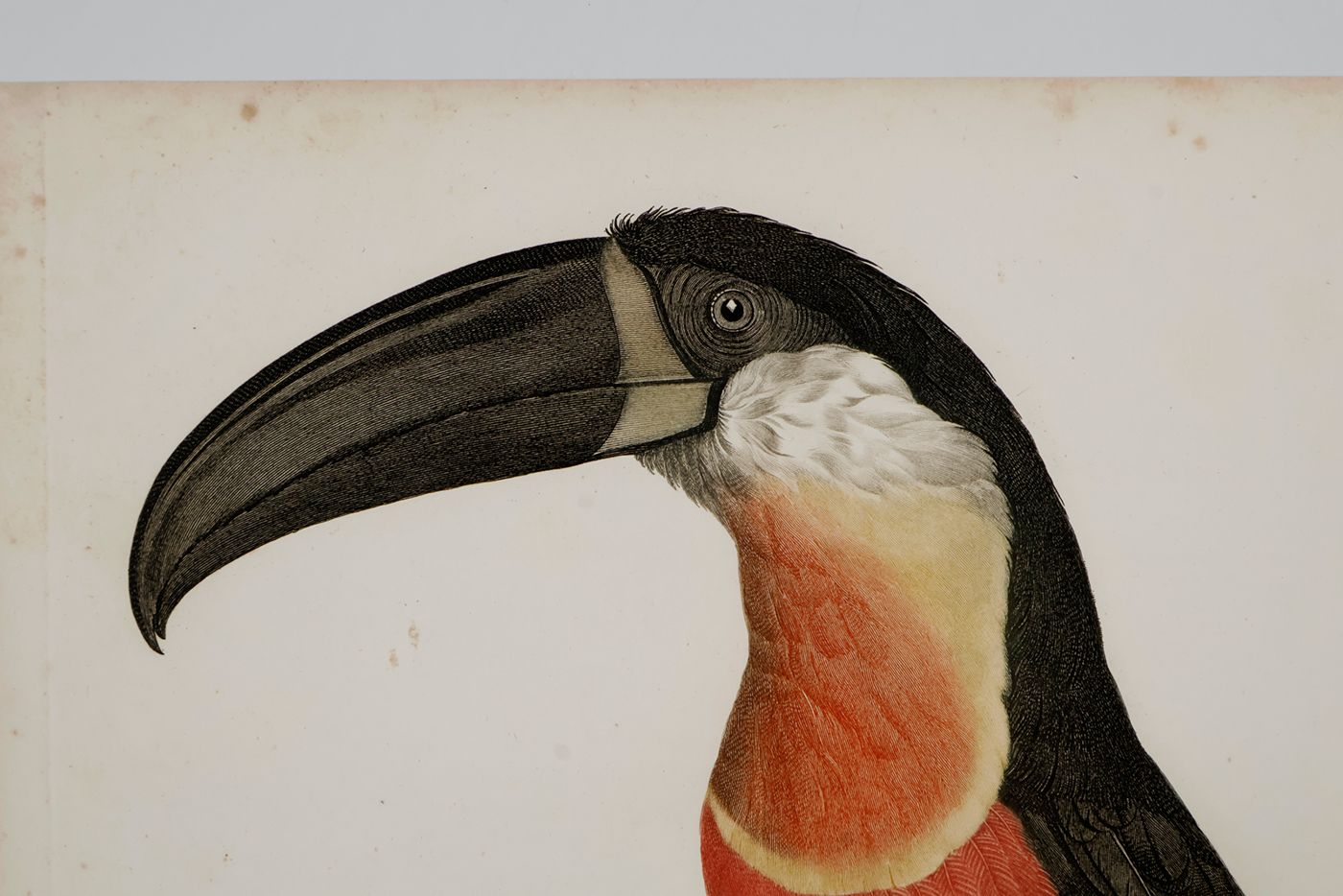
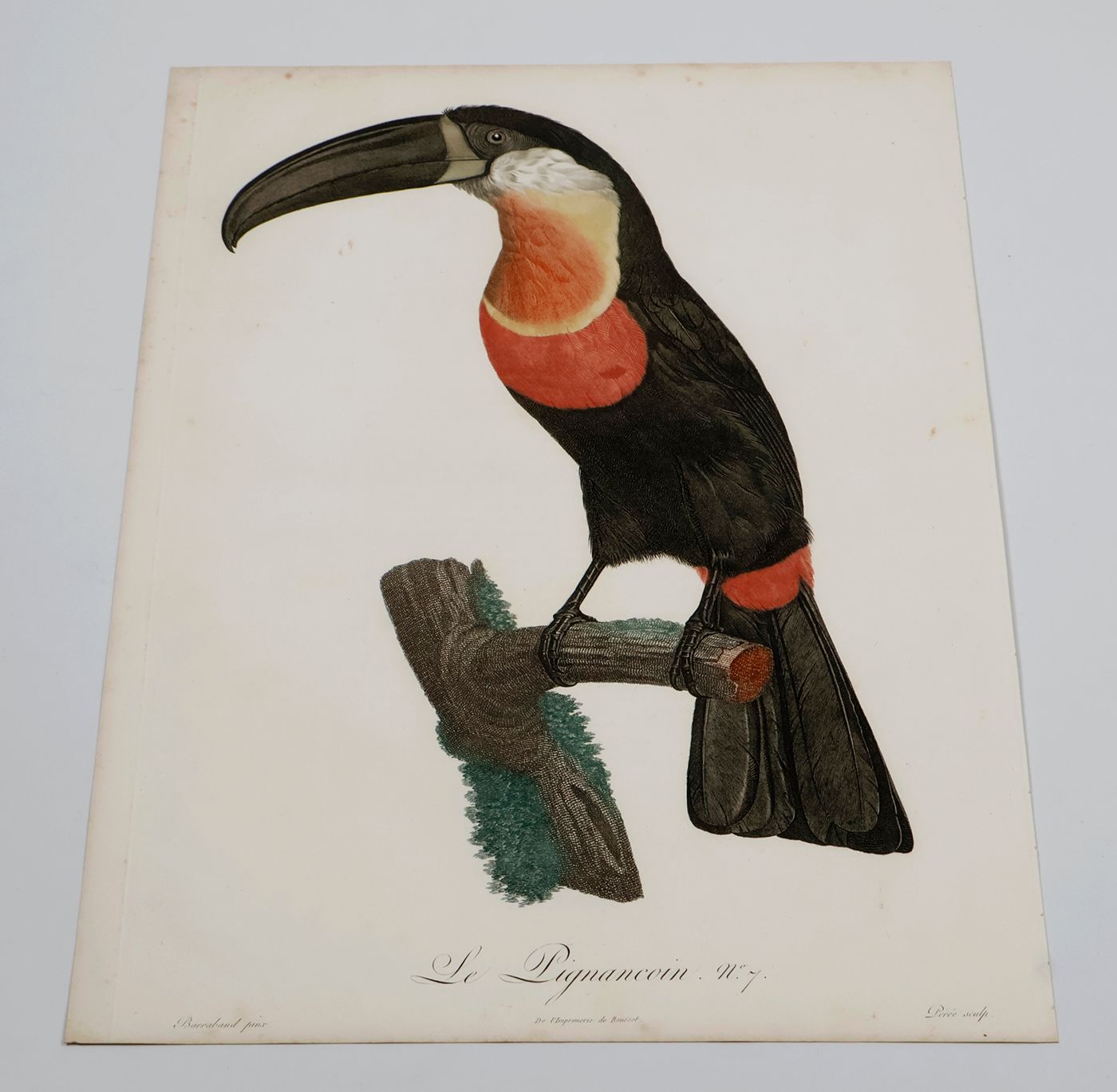
The channel-billed toucan ( Ramphastos vitellinus). From: Histoire naturelle des oiseaux de paradis et des rolliers, suivie de celle des Toucans et des Barbus [Plate 7. Le Pignancoin].
Paris, Denné le jeune, Perlet, [1801-] 1806. Single sheet. Very large folio (50.8 x 37.9 cm). Colour-printed by Langlois and Rousset, finished by hand.
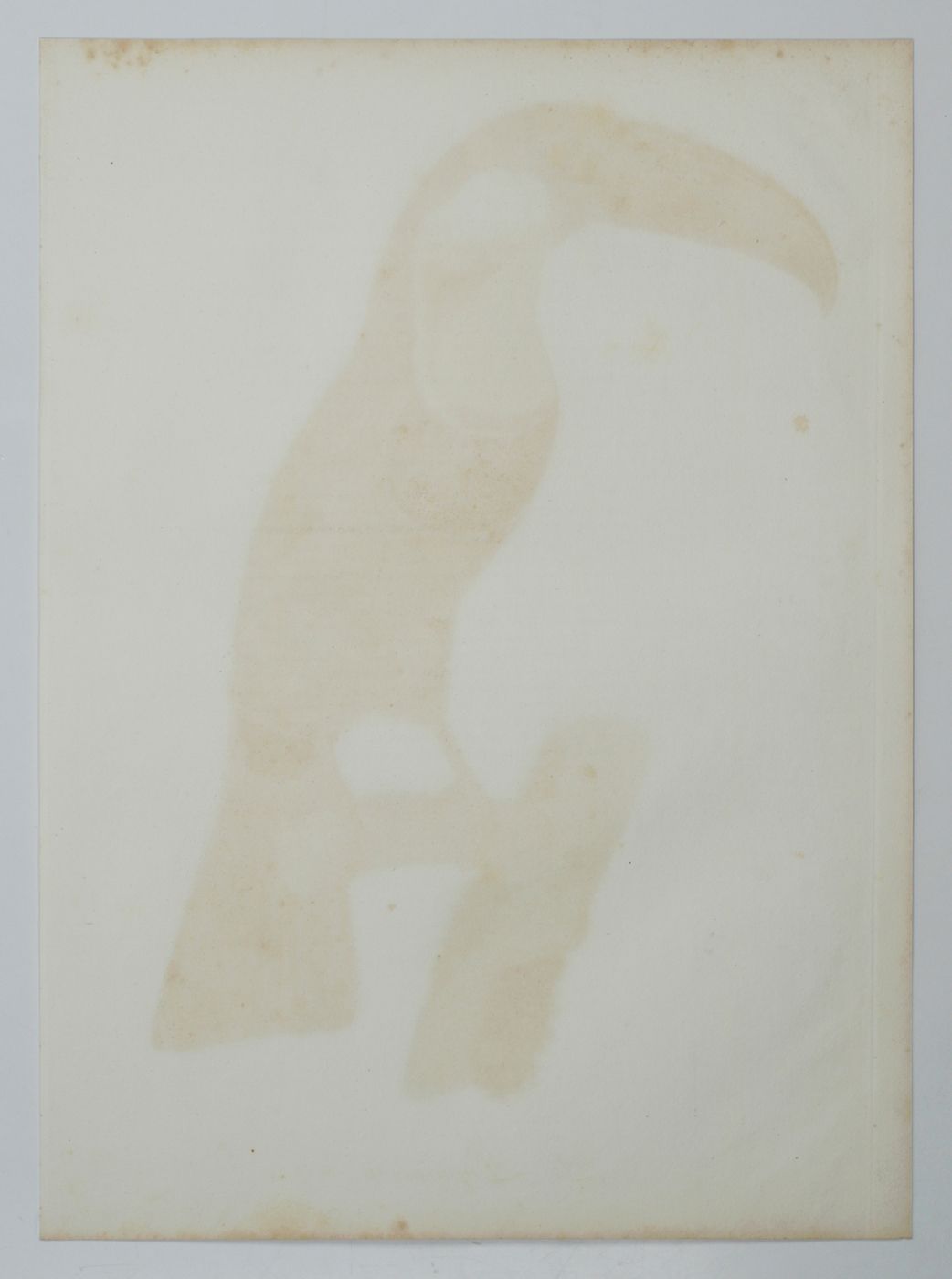
A fine, copper-engraved plate, in very good condition, of one of the world's most spectacular birds, the channel-billed Toucan. This original plate is the work of one of the period’s foremost bird illustrators, the French artist Jacques Barraband (1767-1809). Barraband's works are esteemed especially for their realism. Although his illustrations were based on mounted specimens, they were considered the most accurate made during the early 1800s. His birds are never stiff, nor are they artistic rather than accurate, as in, for example, the work of Audubon. The channel-billed Toucan from Neotropical rain-forests occurs from Trinidad south to Brazil and Colombia. Known by ornithologists as Ramphastos vitellinus, this specimen has a feather colour pattern resembling the Ariel Toucan, sometimes regarded as a separate species. Originally published in a work by the French explorer and ornithologist François Levaillant (1753-1824), Histoire Naturelle des Oiseaux de Paradis et des Rolliers, suivie de Celle des Toucans et des Barbus. Levaillant's book is known to be prone to foxing, but this plate forms a rare exception, with only some very minor spotting in the outer margins, otherwise, excellent, clean, the colours lively and bright. Anker, 304; Nissen IVB, 559; Ronsil, p. 298; Sitwell, p. 118; Zimmer, p. 393.

Recently Viewed
![image for The channel-billed toucan ( <em>Ramphastos vitellinus</em>). From: <em>Histoire naturelle des oiseaux de paradis et des rolliers, suivie de celle des Toucans et des Barbus</em> [Plate 7. Le Pignancoin].](https://schierenberg.nl/media/cache/product_thumb/78964/78964_x.jpg)
![image for Een oud schipper, van Monickendam.... [Rare Pamphlet on the Eighty Years' War].](https://schierenberg.nl/media/cache/product_thumb/74163/74163_x.jpg)
![image for Farbige Räume und Bauten. [German Art Deco interior designs]. [AND] Farben für Mappe "Farbige Räume u. Bauten".](https://schierenberg.nl/media/cache/product_thumb/72403/72403_x.jpg)
![image for The yellow-ridged toucan ( <em>Ramphastos vitellinus culminatus</em>). From: <em>Histoire naturelle des oiseaux de paradis et des rolliers, suivie de celle des Toucans et des Barbus</em> [Plate 5. Le grand Toucan à gorge orange].](https://schierenberg.nl/media/cache/product_thumb/78969/78969_x.jpg)
![image for The Fauna of British India, including Ceylon and Burma. Published under the authority of the Secretary of State for India in Council. Mollusca. Parts I-IV. [Complete].](https://schierenberg.nl/media/cache/product_thumb/75128/75128.jpg)
![image for Catalogue of the birds in the collection of the British Museum. Volume XXVI [26]. Catalogue of the Plataleae, Herodiones, Steganopodes, Pygopodes, Alcae and Impennes in the Collection of the British Museum. Plataleae (Ibises and spoonbills) and Herodiones (Herons and storks) by R. Bowlder Sharpe Steganopodes (Cormorants, gannets, frigate-birds, tropic-birds, and pelicans), Pygopodes (divers and grebes), Alcae (Auks), and Impennes (Penguins), by W. R. Ogilvie-Grant.](https://schierenberg.nl/media/cache/product_thumb/71094/71094_x.jpg)
![image for The yellow-throated toucan ( <em>Ramphastos ambiguus</em>). From: <em>Histoire naturelle des oiseaux de paradis et des rolliers, suivie de celle des Toucans et des Barbus</em> [Plate 9. Le Tocard].](https://schierenberg.nl/media/cache/product_thumb/78965/78965_x.jpg)
![image for Mintakönyv 1909 [Sample Book 1909].](https://schierenberg.nl/media/cache/product_thumb/79044/79044_x.jpg)
![image for Abbildungen neuer oder unvollständig bekannter Amphibien, nach der natur oder dem Leben entworfen, herausgegeben und mit einem erläuterenden Texte begleitet. [Atlas].](https://schierenberg.nl/media/cache/product_thumb/74796/74796_x.jpg)
![image for [Alert voyage] Report on the zoological collections made in the Indo-Pacific Ocean during the voyage of the HMS Alert 1881-1882.](https://schierenberg.nl/media/cache/product_thumb/75370/75370.jpg)
![image for Description géologique du département de la Seine-Inférieure. [Text and Atlas].](https://schierenberg.nl/media/cache/product_thumb/76991/76991.jpg)
![image for Aluminium-Papiere. Glatt, beklebt und gepägt. [Aluminium papers. Smooth, laminated, and embossed].](https://schierenberg.nl/media/cache/product_thumb/78995/78995_x.jpg)
![image for Encyclopédie Méthodique. Art Militaire. I-IV. [= I-III + Supplément] [Complete text, and plates].](https://schierenberg.nl/media/cache/product_thumb/78570/78570_x.jpg)
![image for [Jugendstil gouache] "Roter mohn" [Poppy].](https://schierenberg.nl/media/cache/product_thumb/72461/72461_x.jpg)
![image for Ergebnisse der Plankton-Expedition der Humboldt-Stiftung. Die Cephalopoden der Plankton-Expedition. Zugleich eine monographische Übersicht der Oegopsiden Cephalopoden. Hierzu ein Atlas von 48 Tafeln. [The complete Cephalopoda].](https://schierenberg.nl/media/cache/product_thumb/75299/75299_x.jpg)
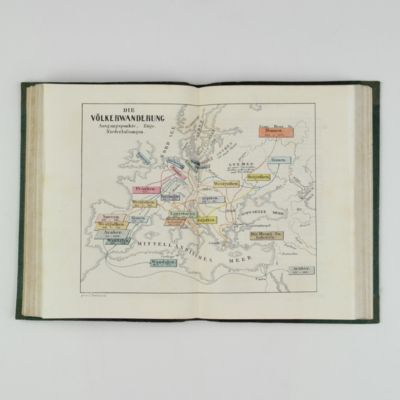
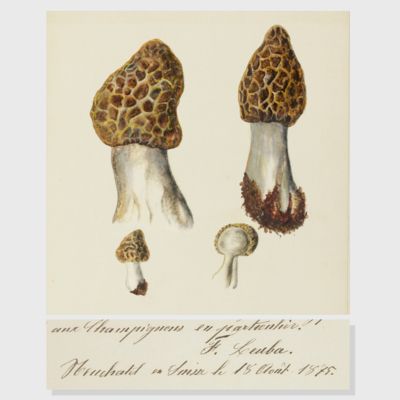
![image for [Four large plates of Helicidae (s.l.)]](https://schierenberg.nl/media/cache/product_thumb/69767/69767_x.jpg)
![image for Iles Taïti. Esquisse historique et géographique précédée de considérations générales sur la colonisation française dans l'Océanie. Première Partie - Deuxième Partie. [Complete].](https://schierenberg.nl/media/cache/product_thumb/70847/70847_x.jpg)
![image for Catalogue of the birds in the collection of the British Museum. Volume XVIII [18]. Catalogue of the Picariae in the Collection of the British Museum. Scansores, containing the family Picidae.](https://schierenberg.nl/media/cache/product_thumb/71216/71216_x.jpg)
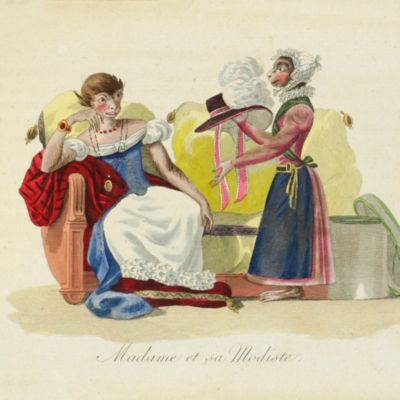
![image for A monograph of the British Jurassic Gasteropoda. Gasteropoda of the Inferior Oolite. Parts 1-9. [Complete].](https://schierenberg.nl/media/cache/product_thumb/78413/78413_x.jpg)
![image for Encyclopedie Methodique. Histoire naturelle des vers. Tome premier. Tome troisième. [Texts].](https://schierenberg.nl/media/cache/product_thumb/78637/78637_x.jpg)
![image for The Percy Sladen Trust Expedition to Lake Titicaca in 1937 under the leadership of Mr. H. Cary Gilson, M.A.. Reports 1-6, VII-XII, XIII-XX. [Complete].](https://schierenberg.nl/media/cache/product_thumb/77064/77064.jpg)