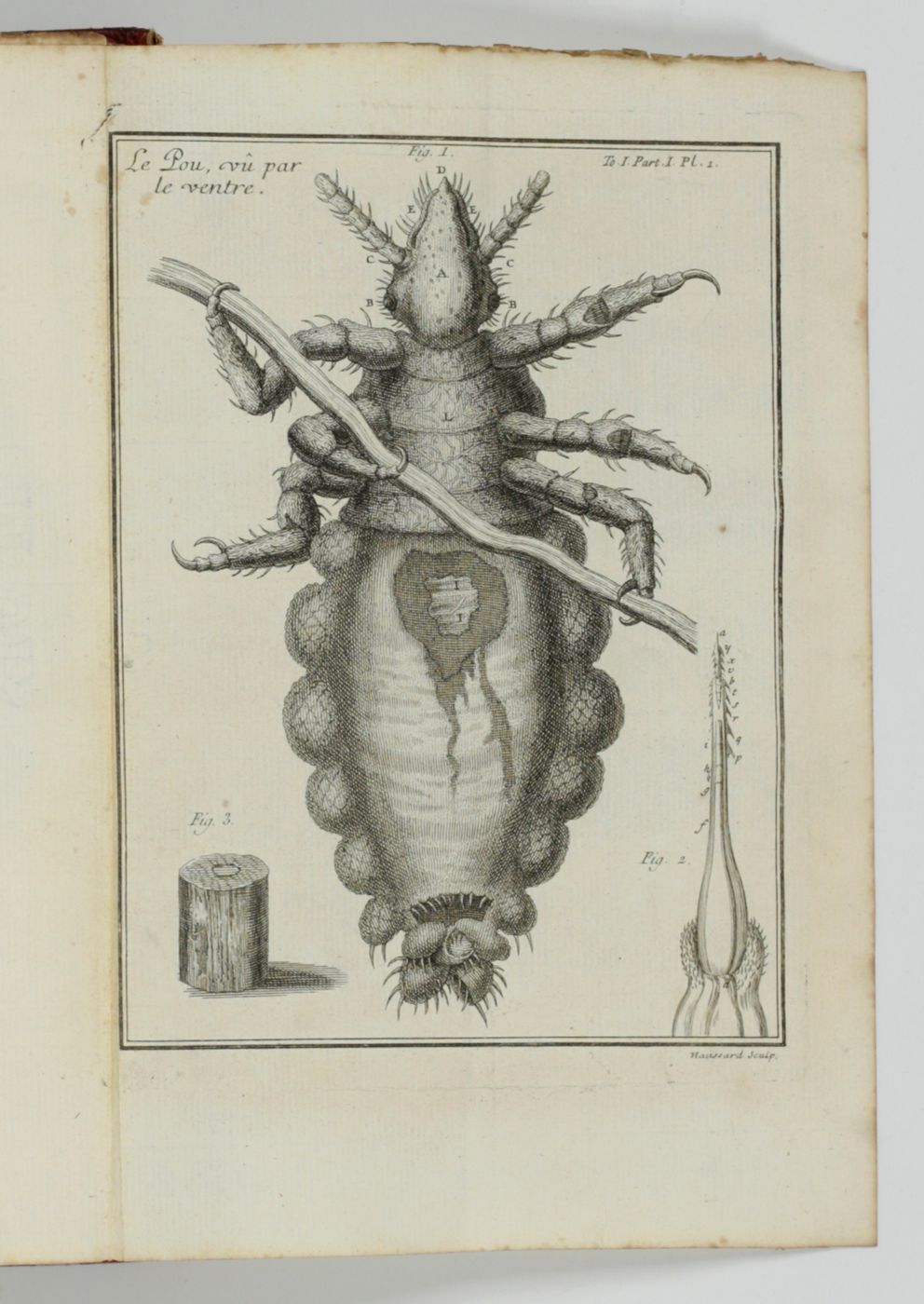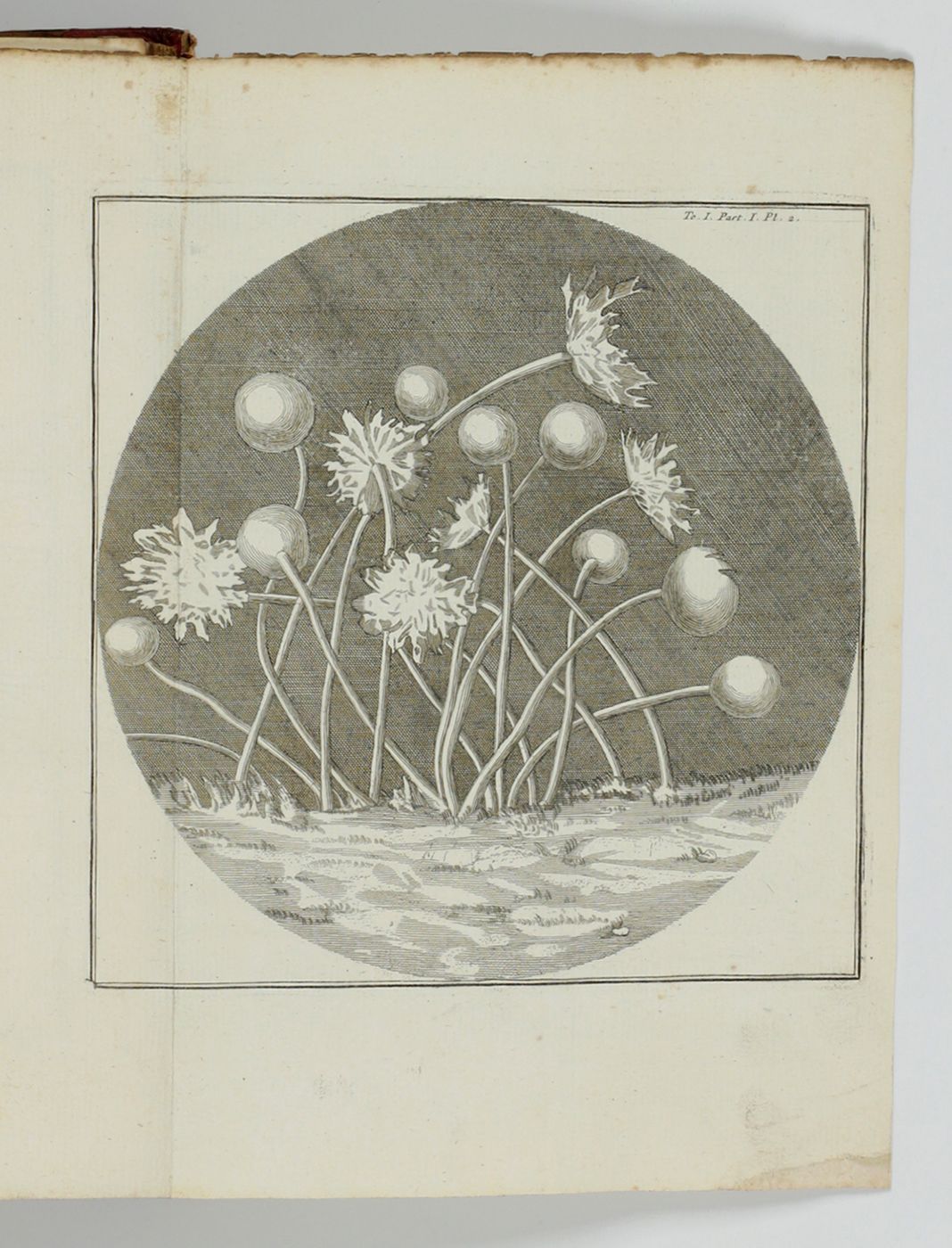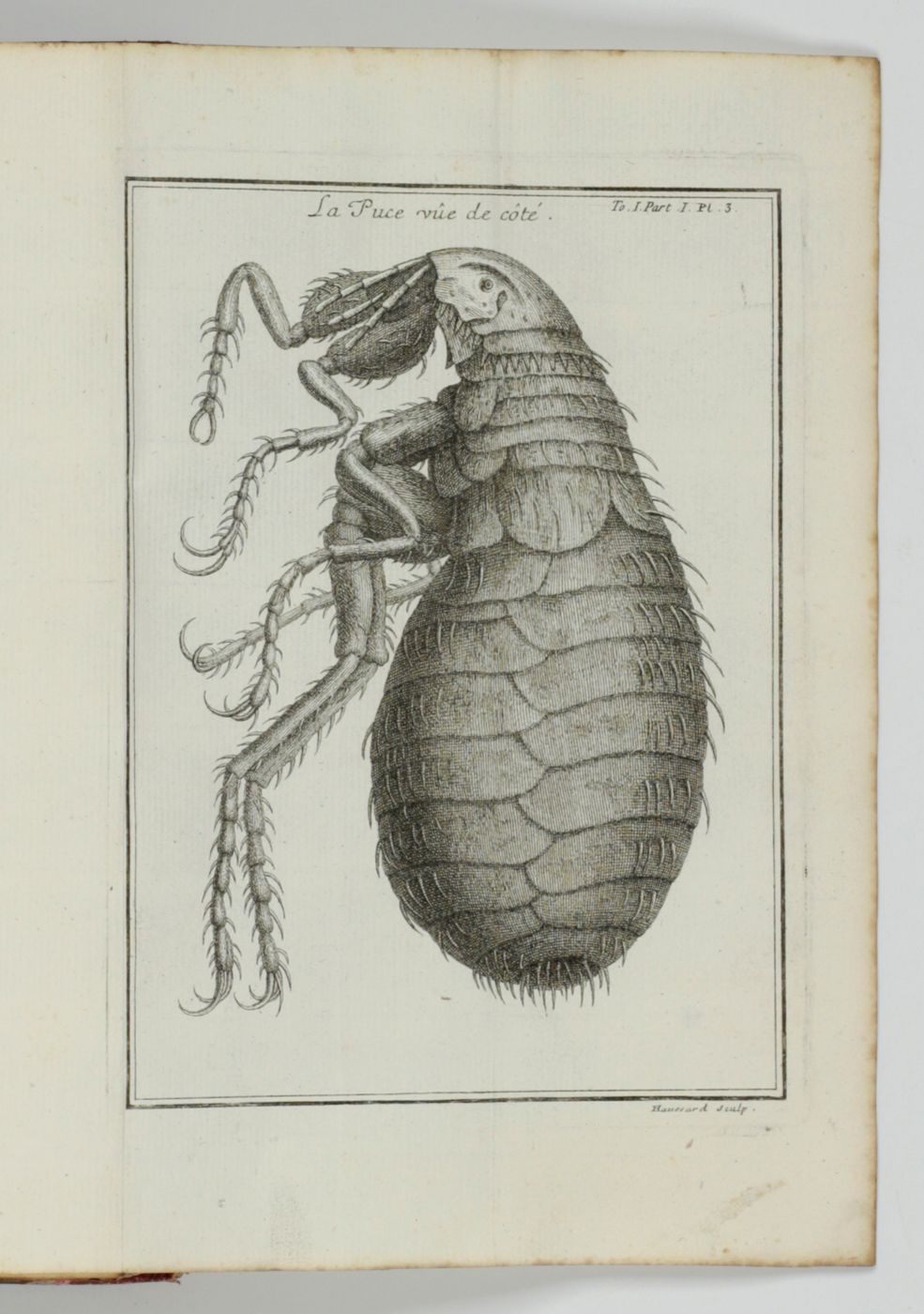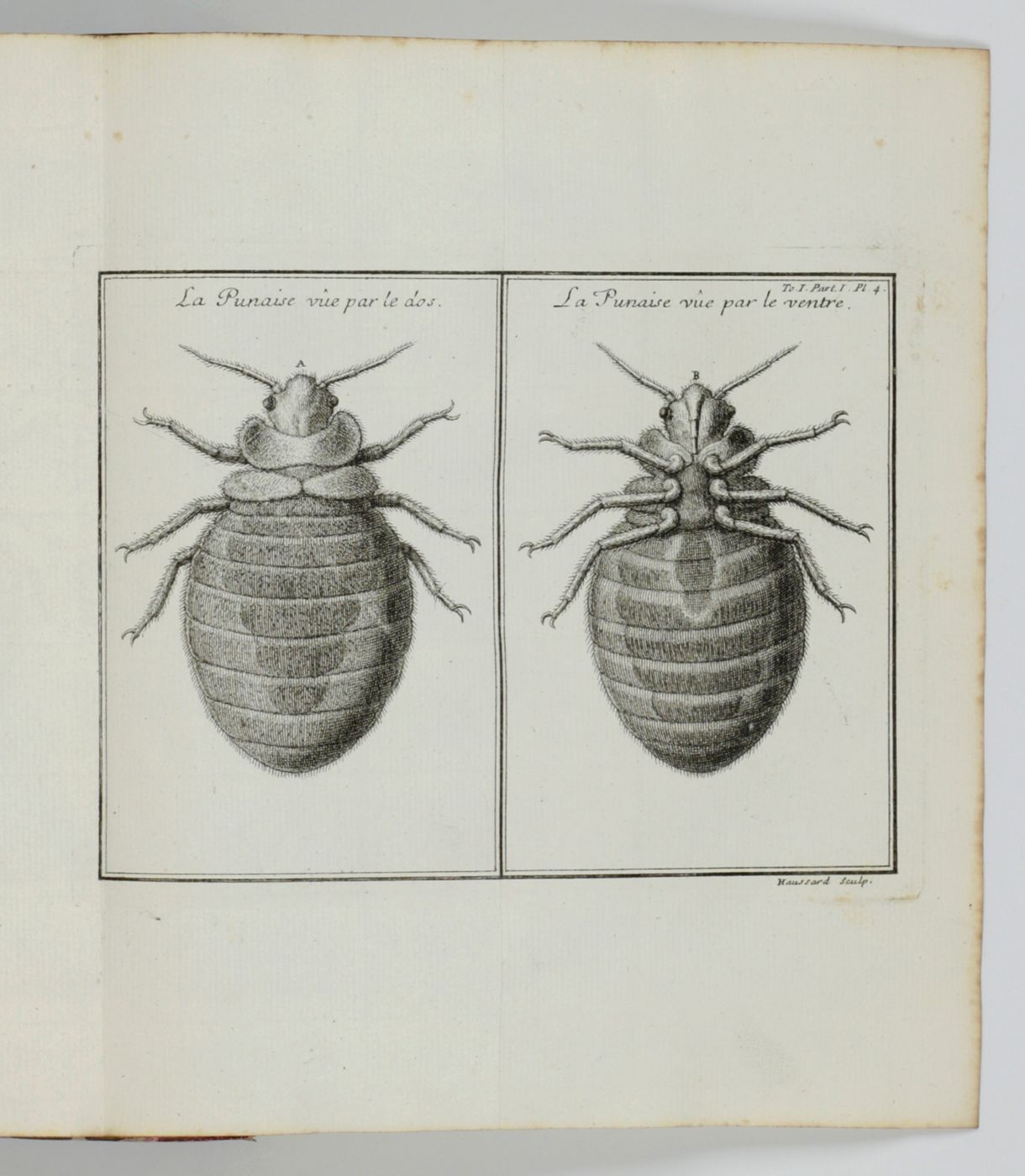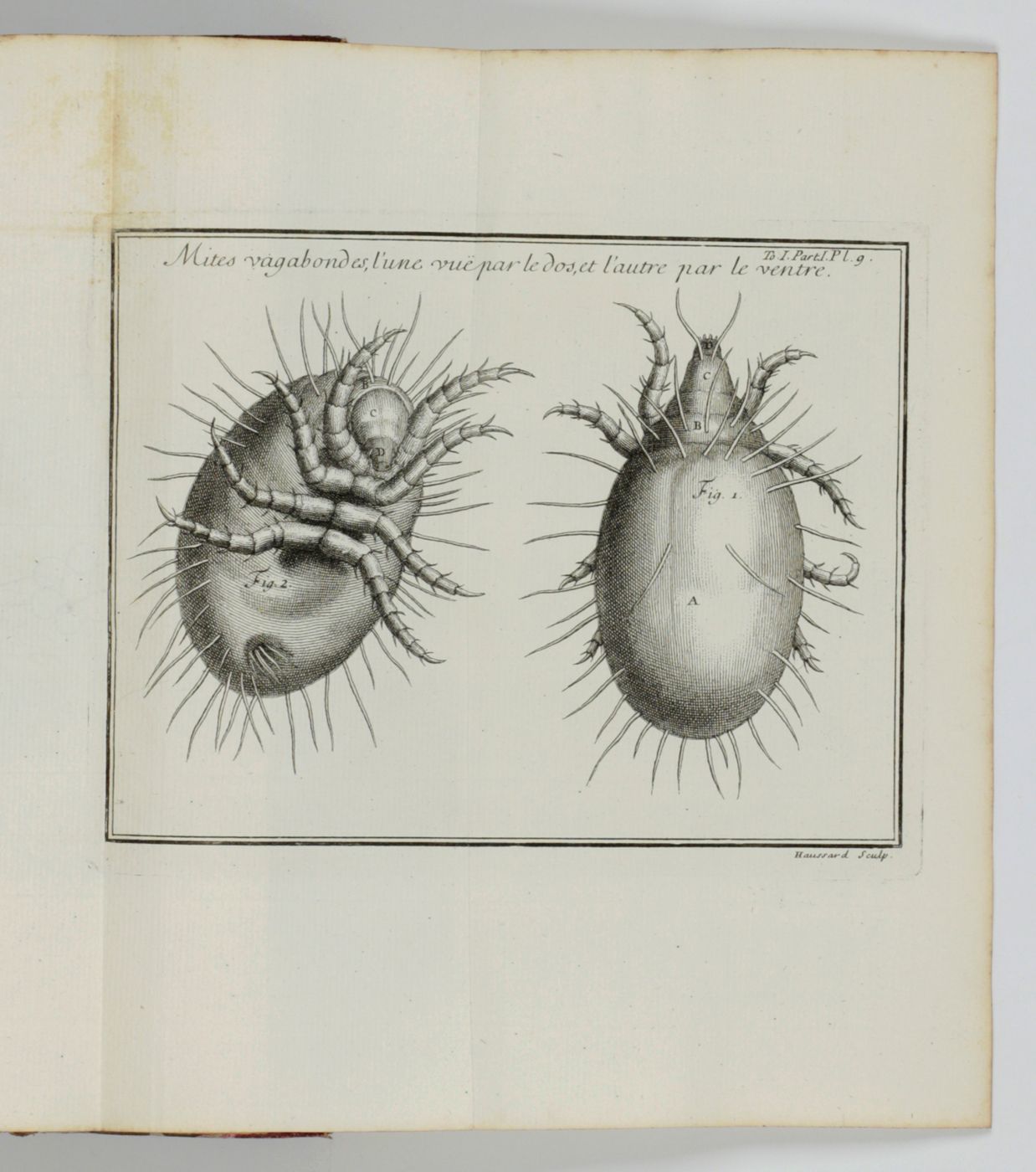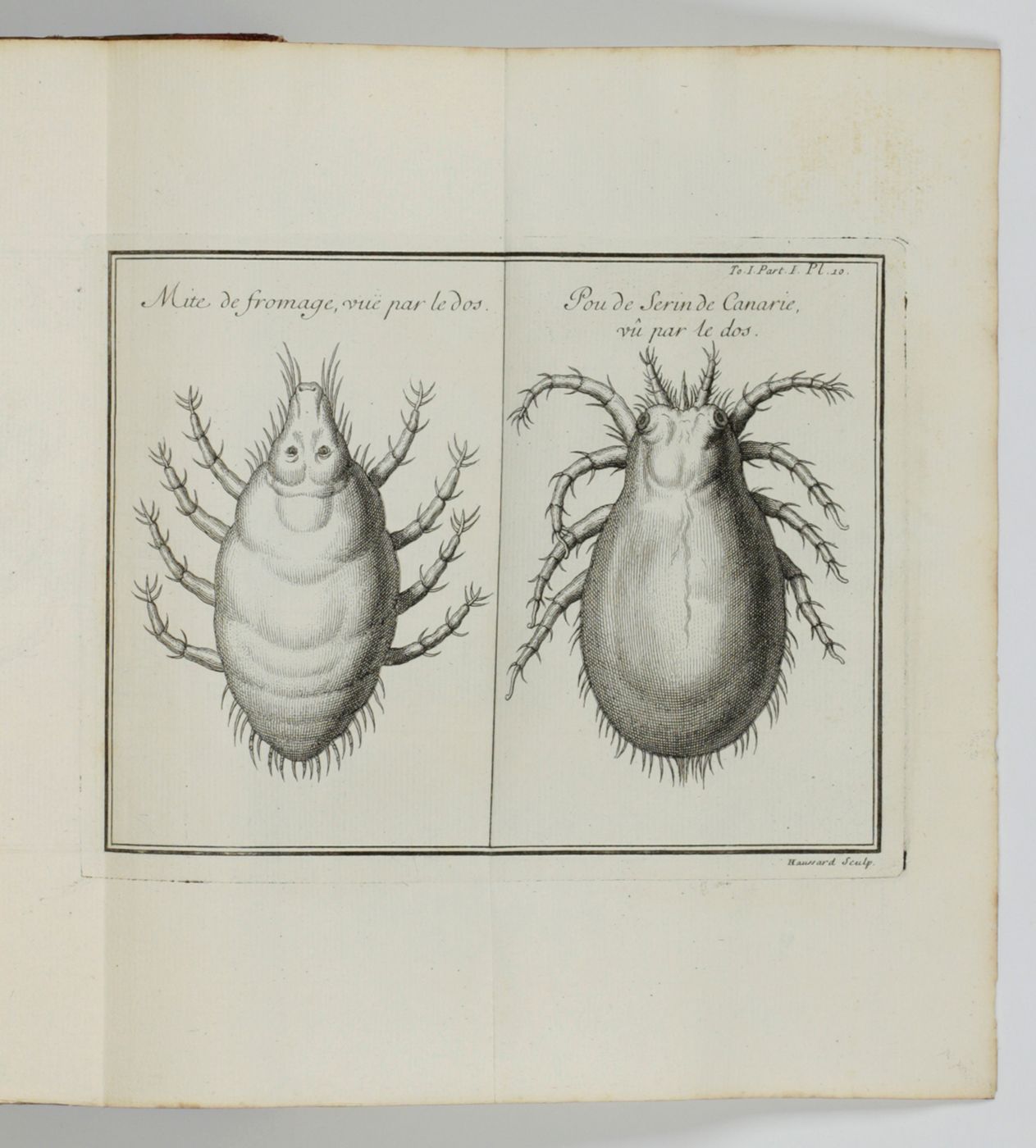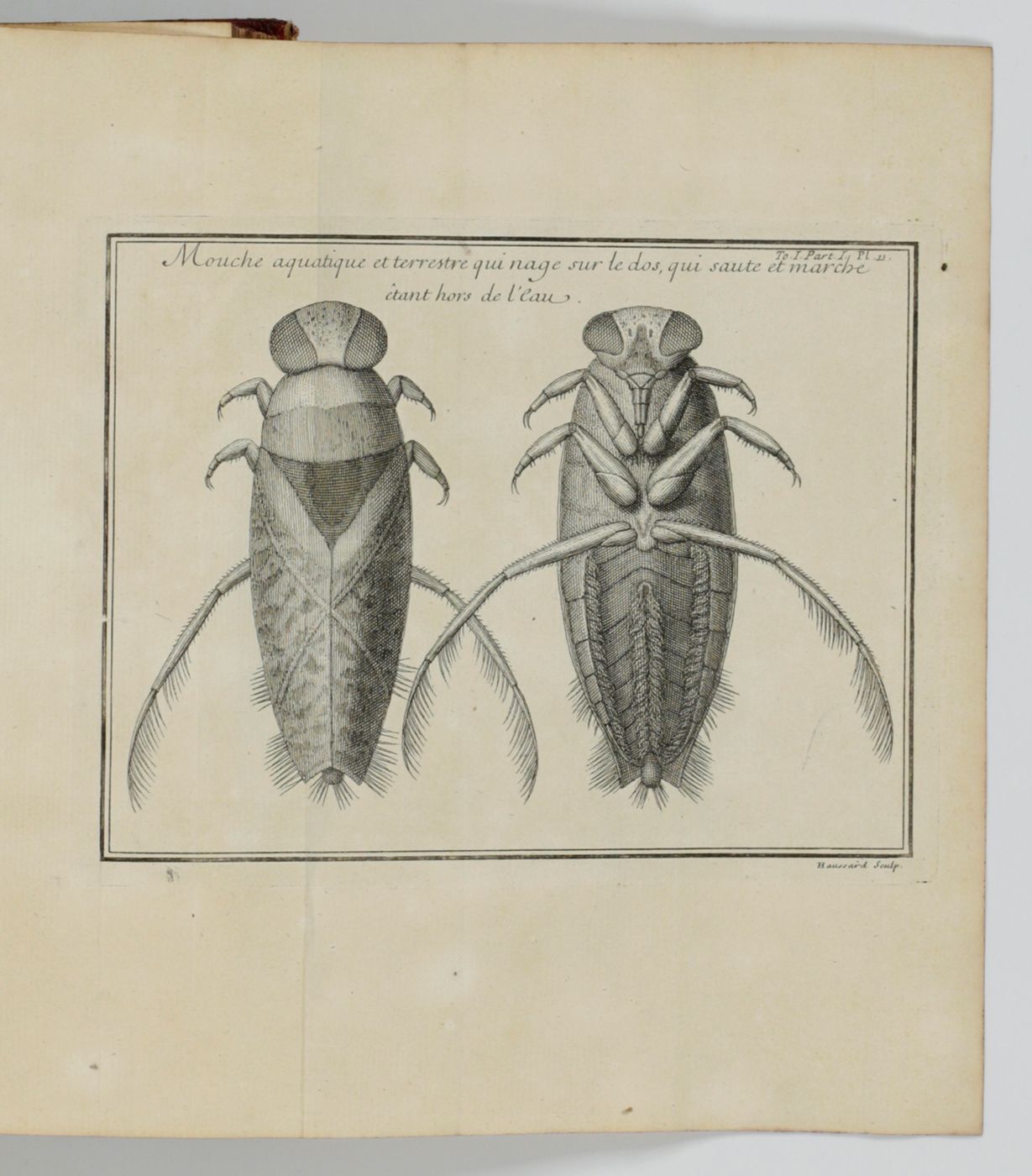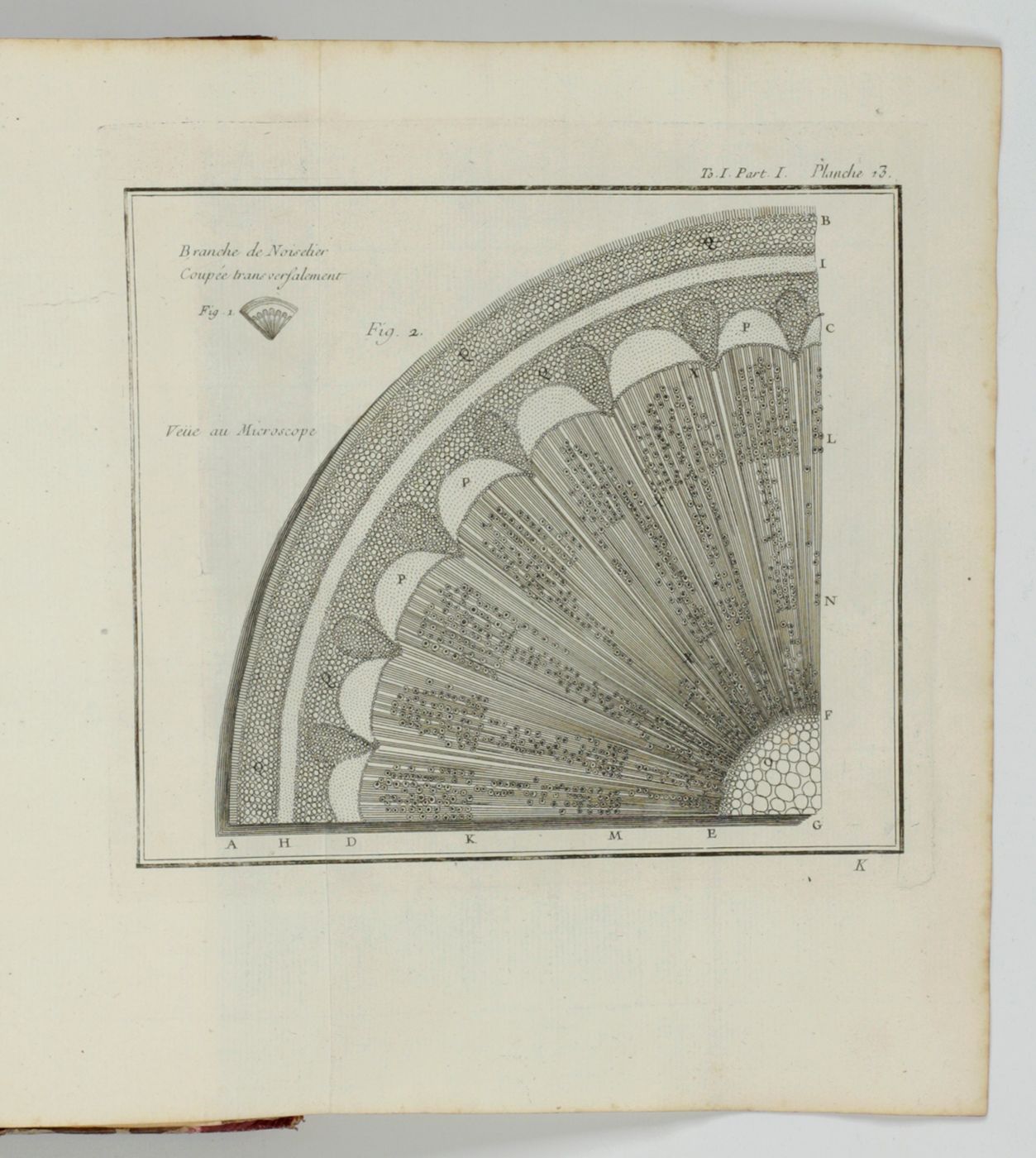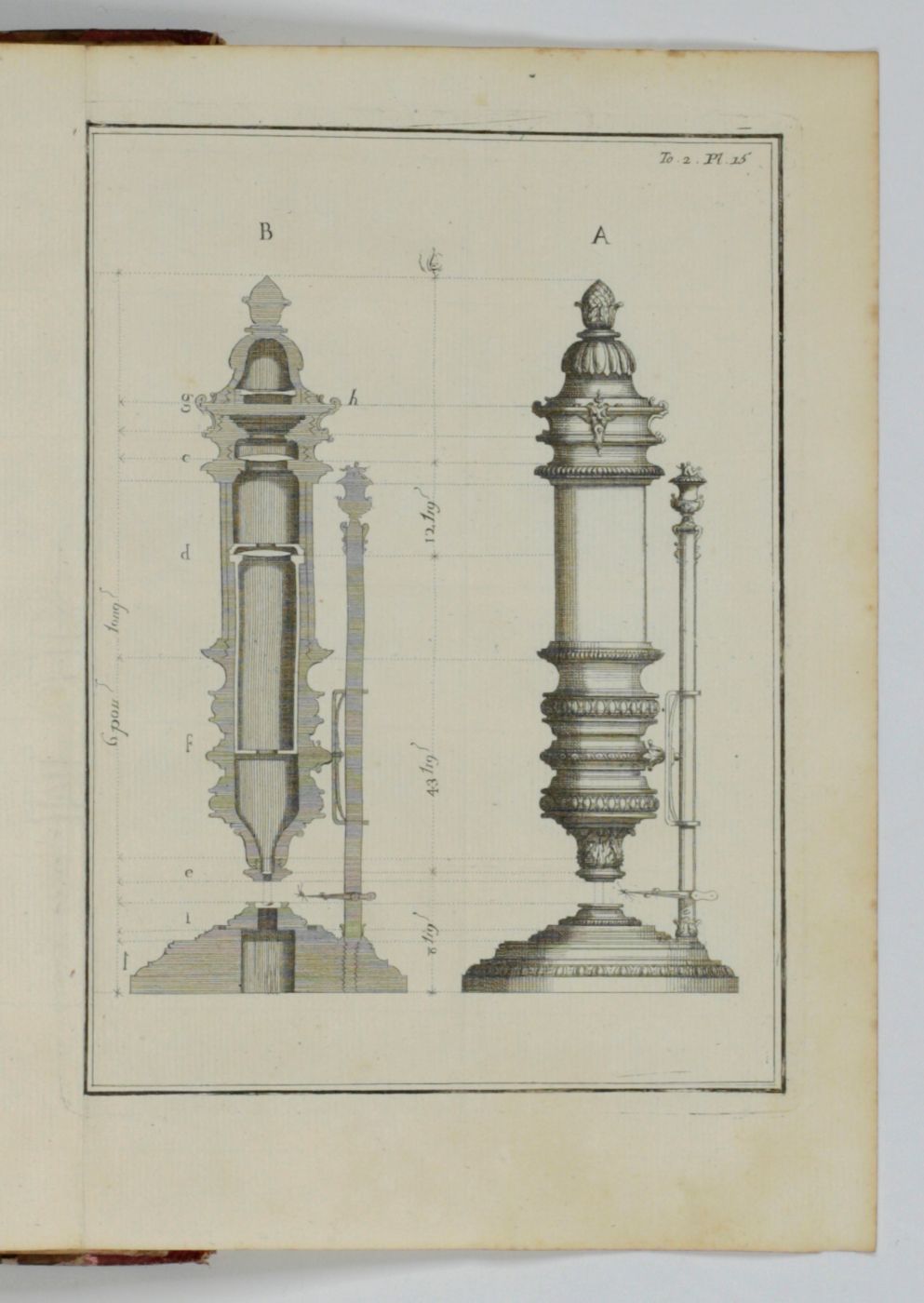
Joblot, L.
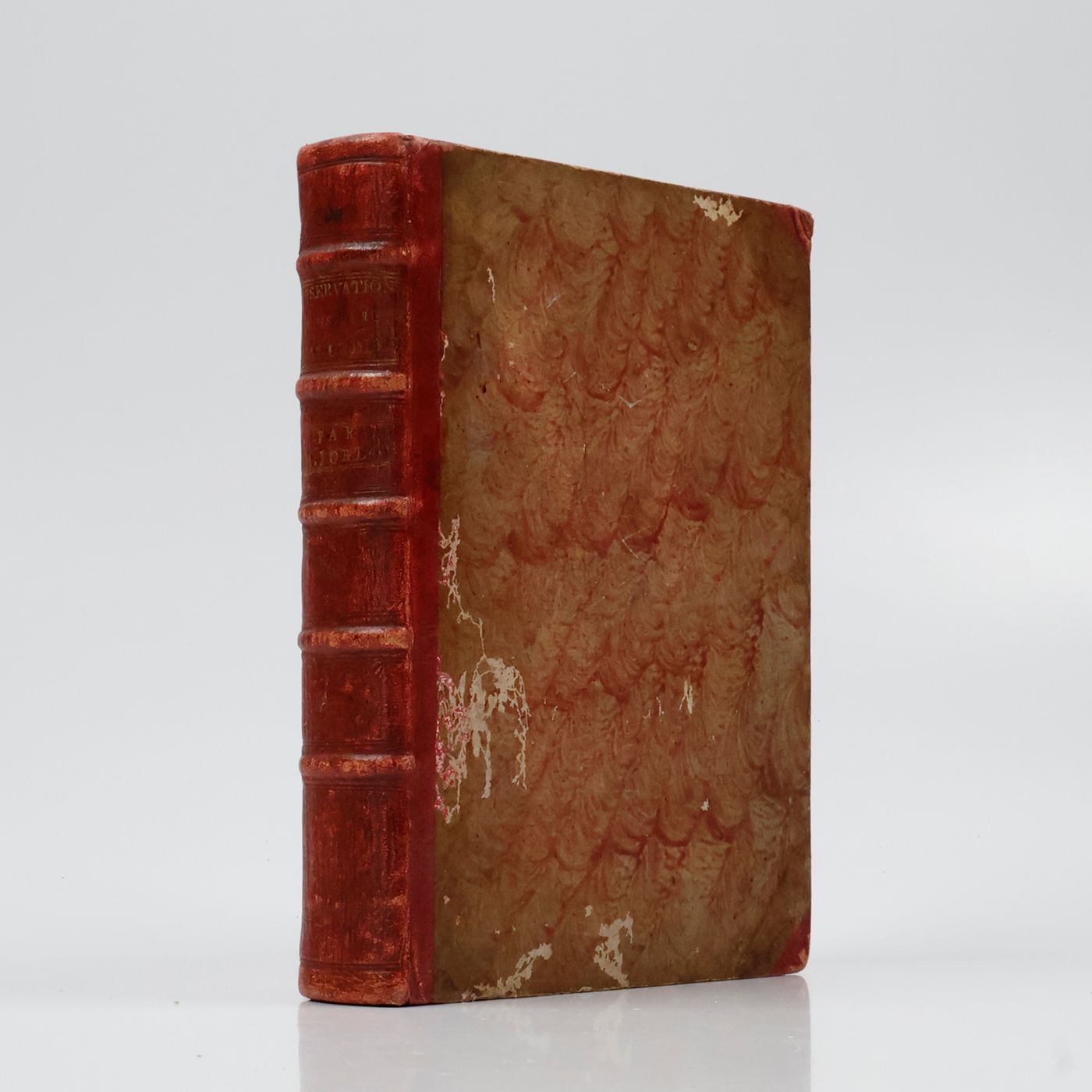
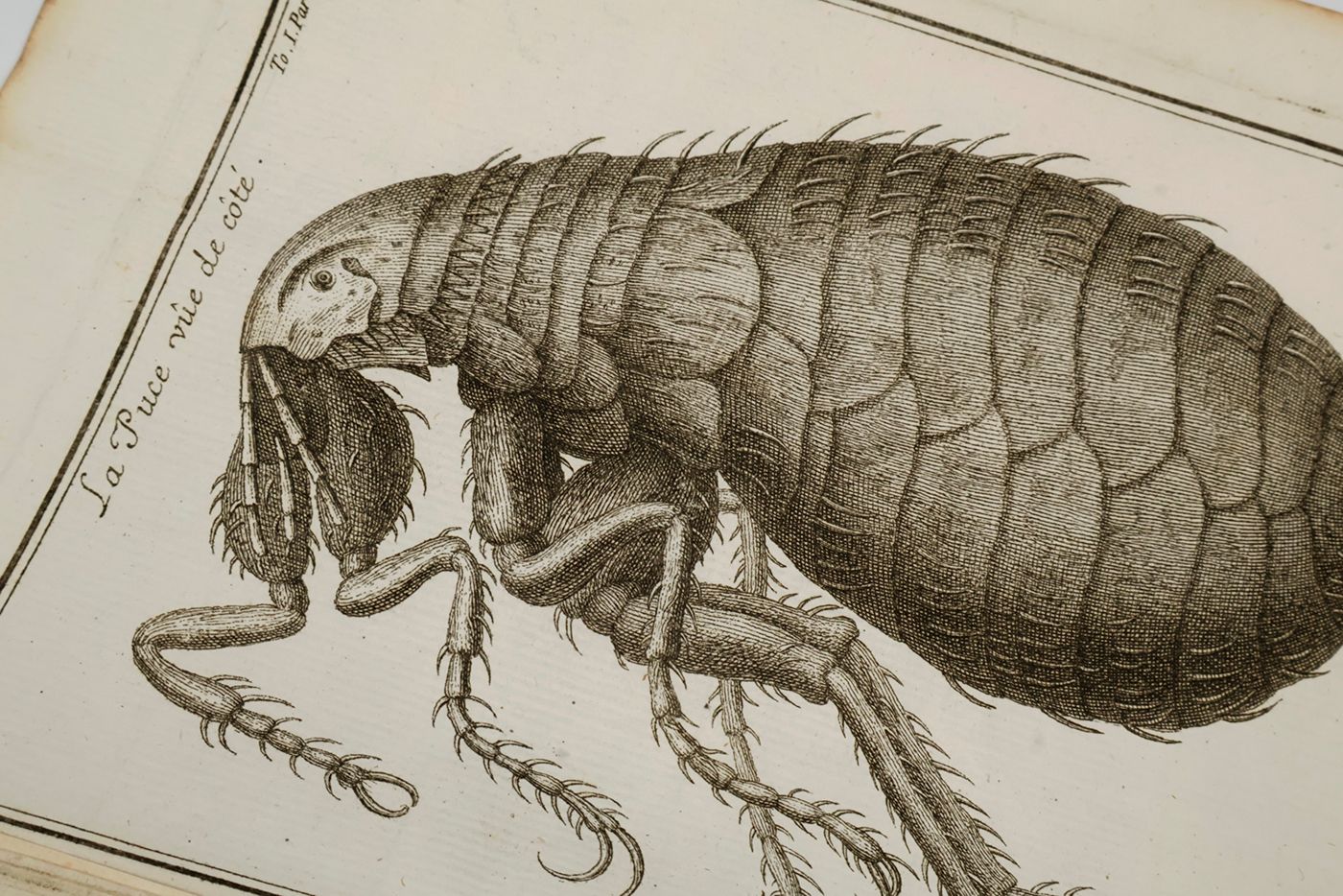
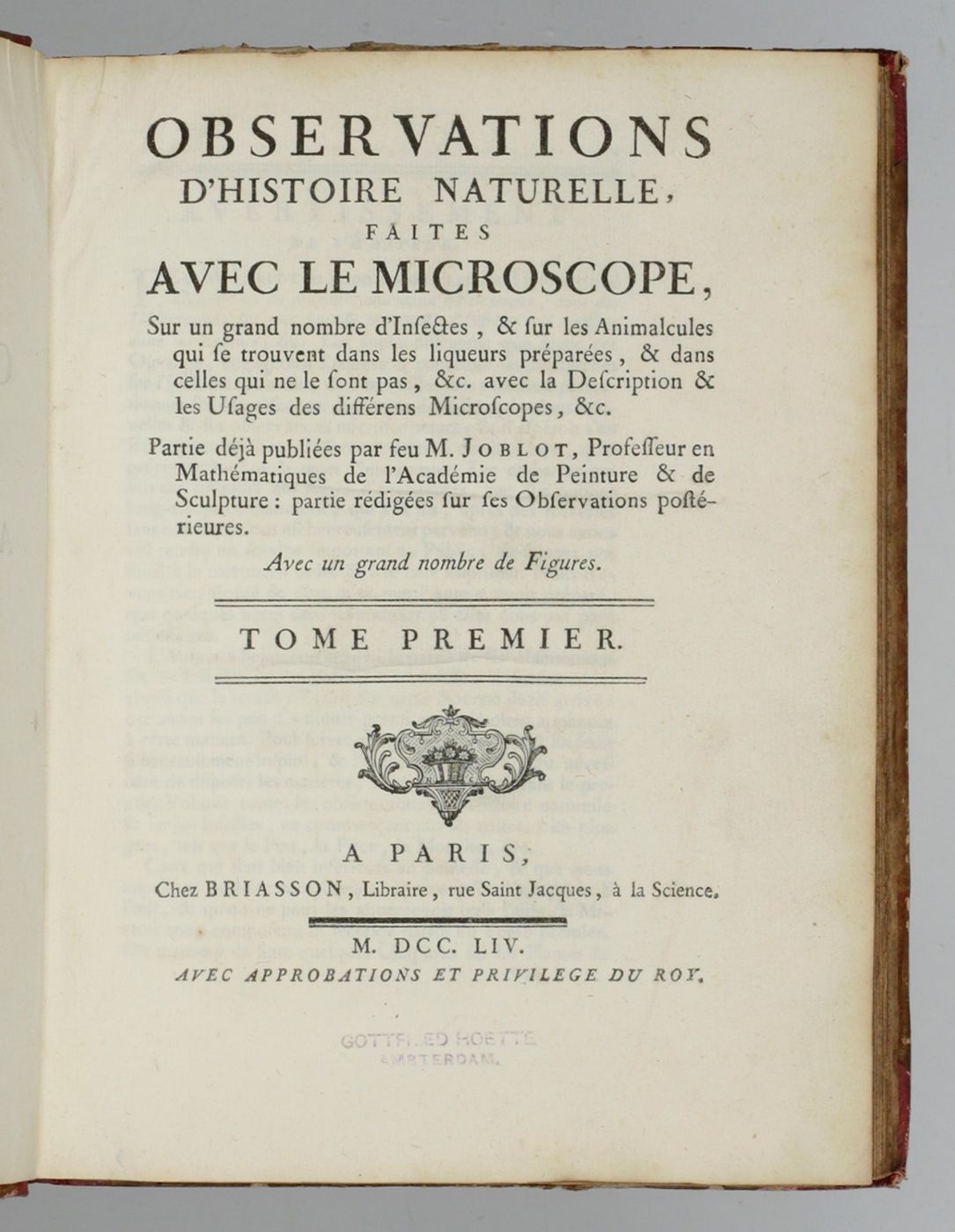
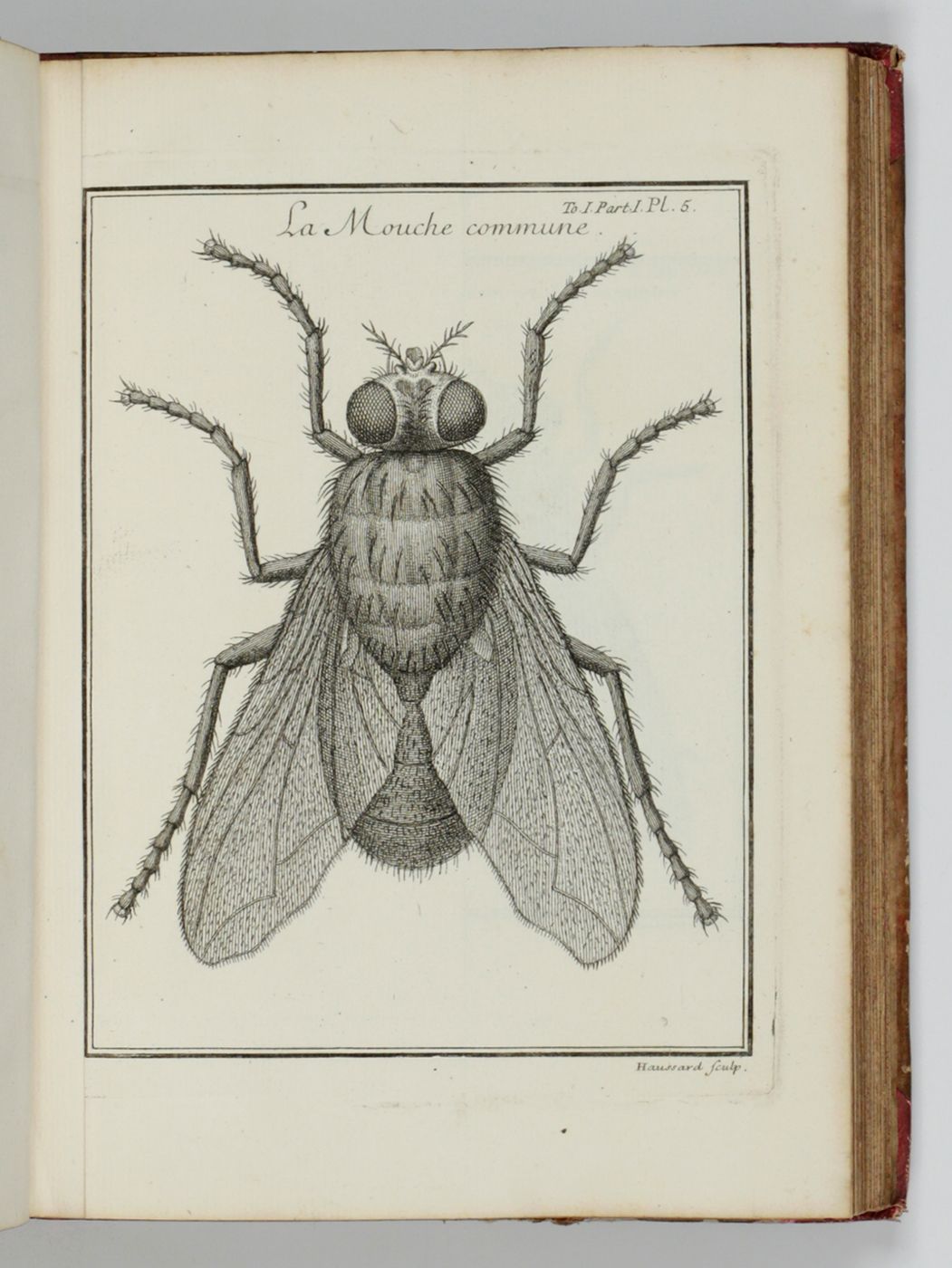
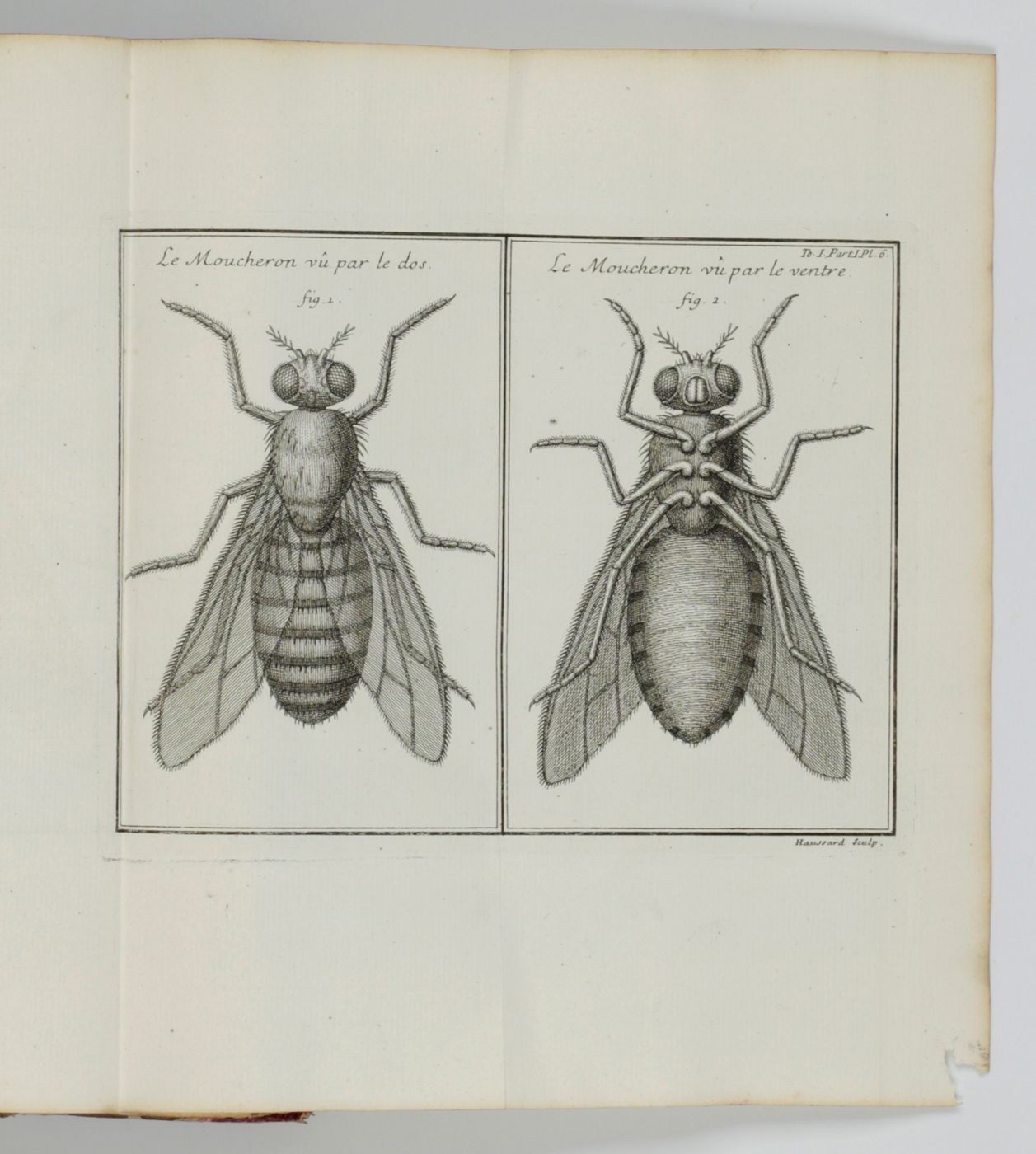
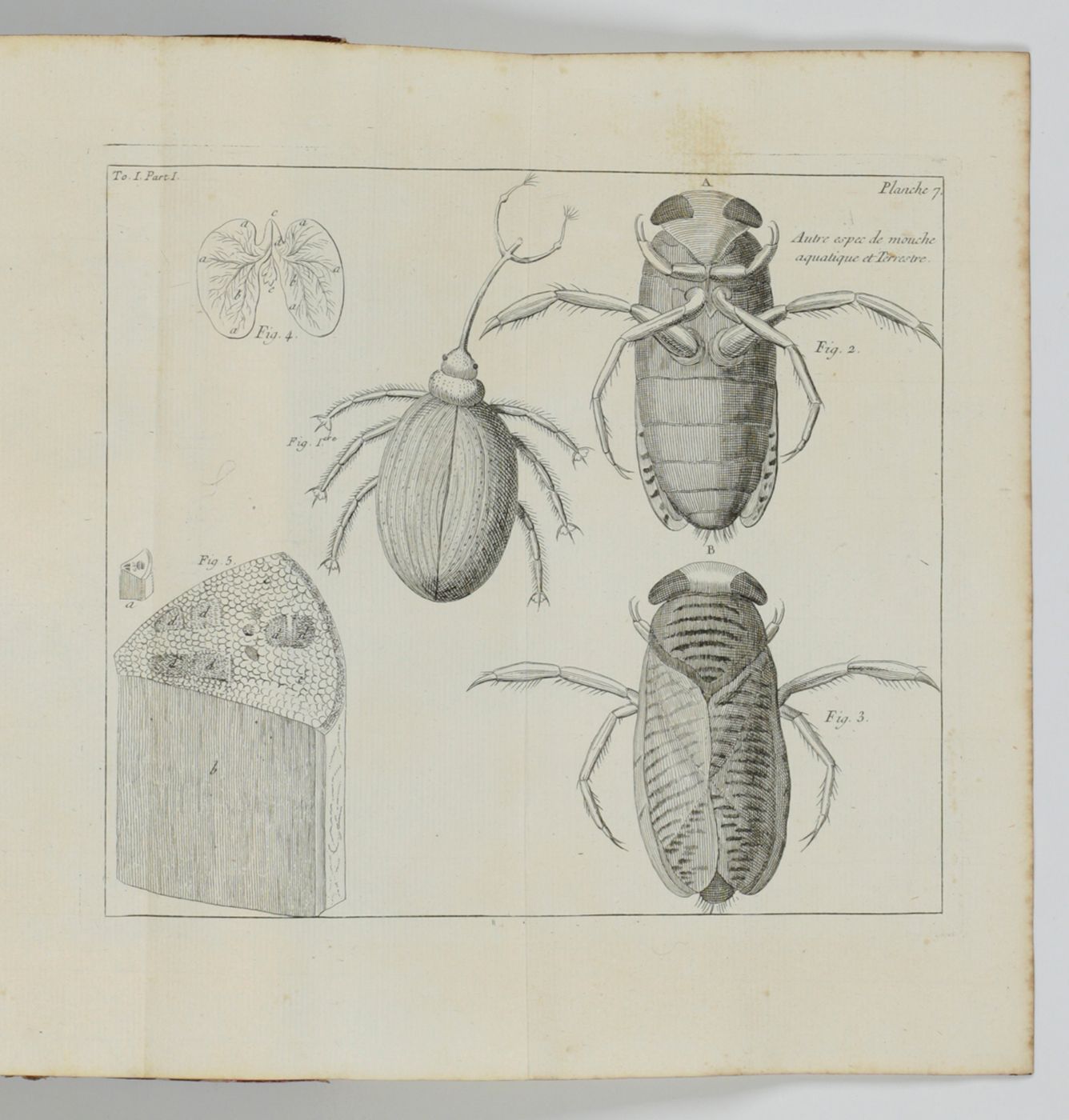
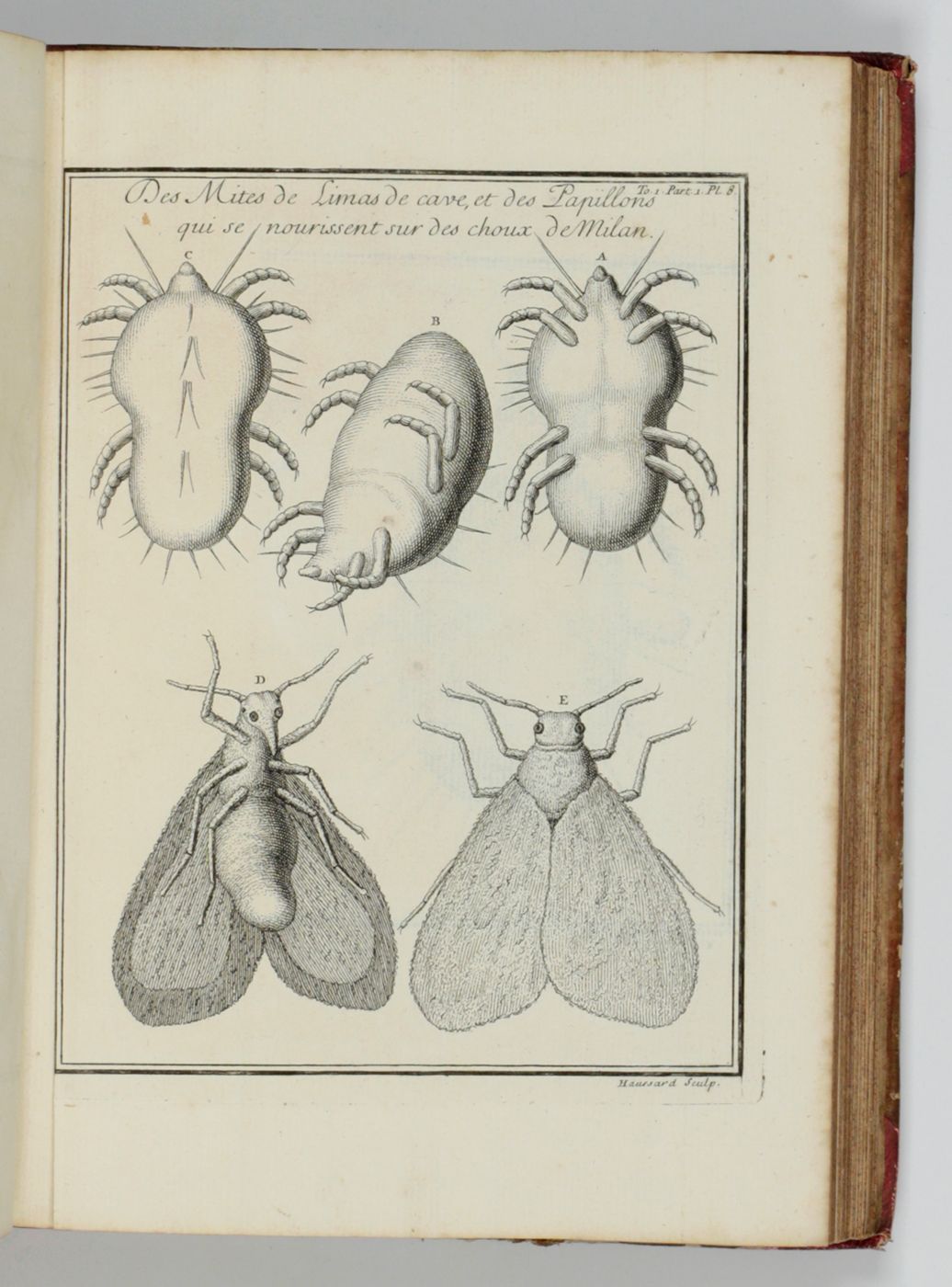
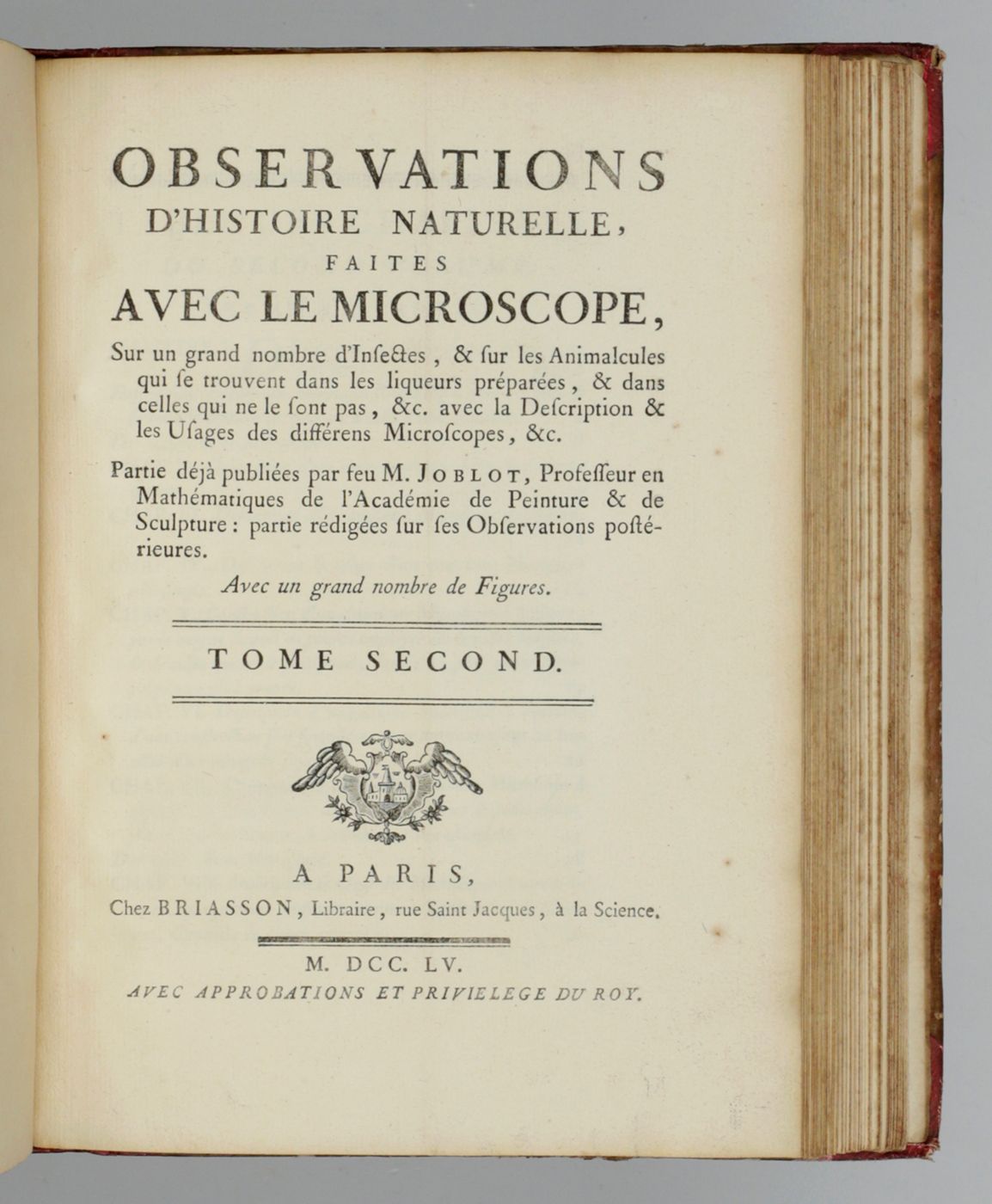
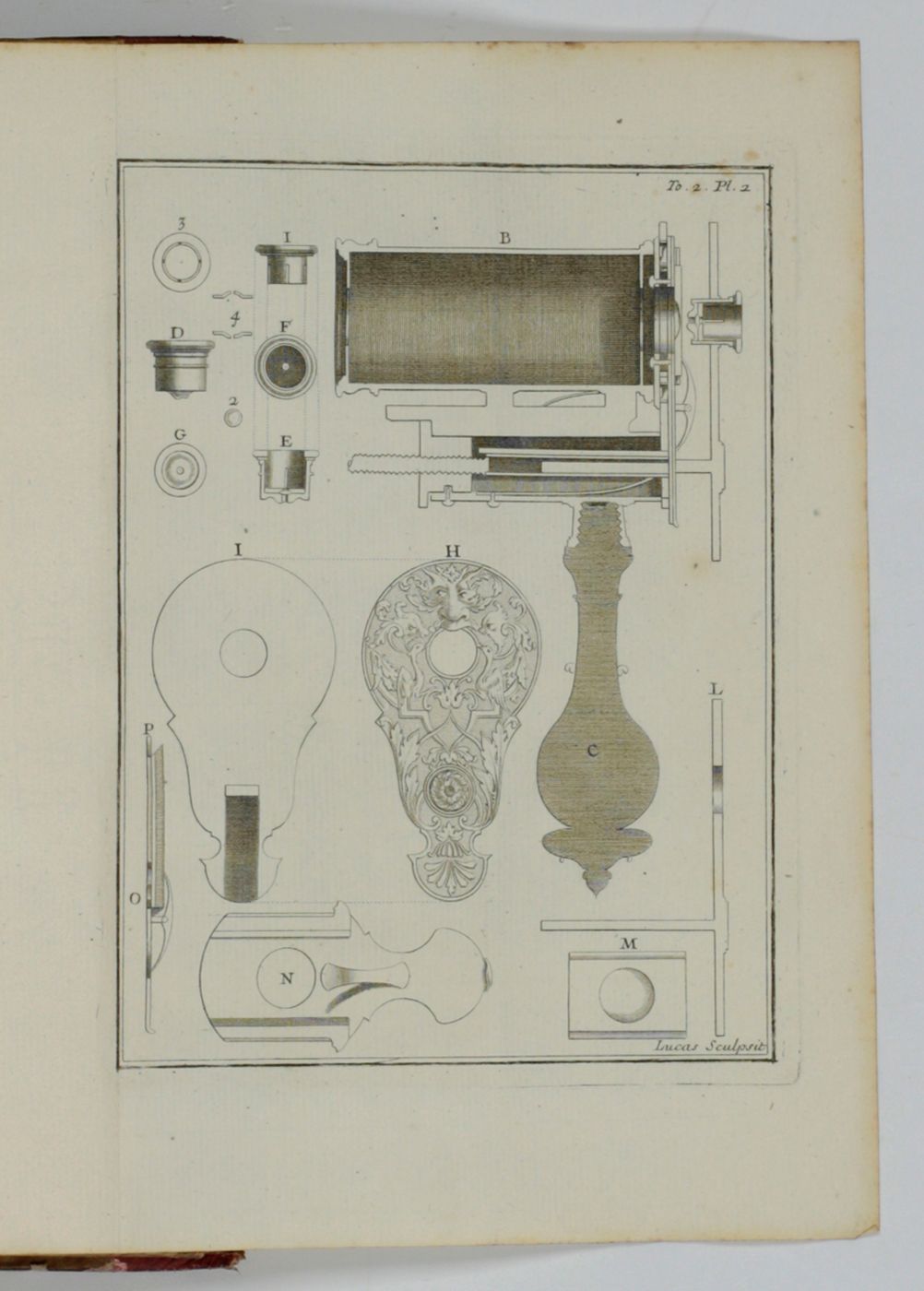
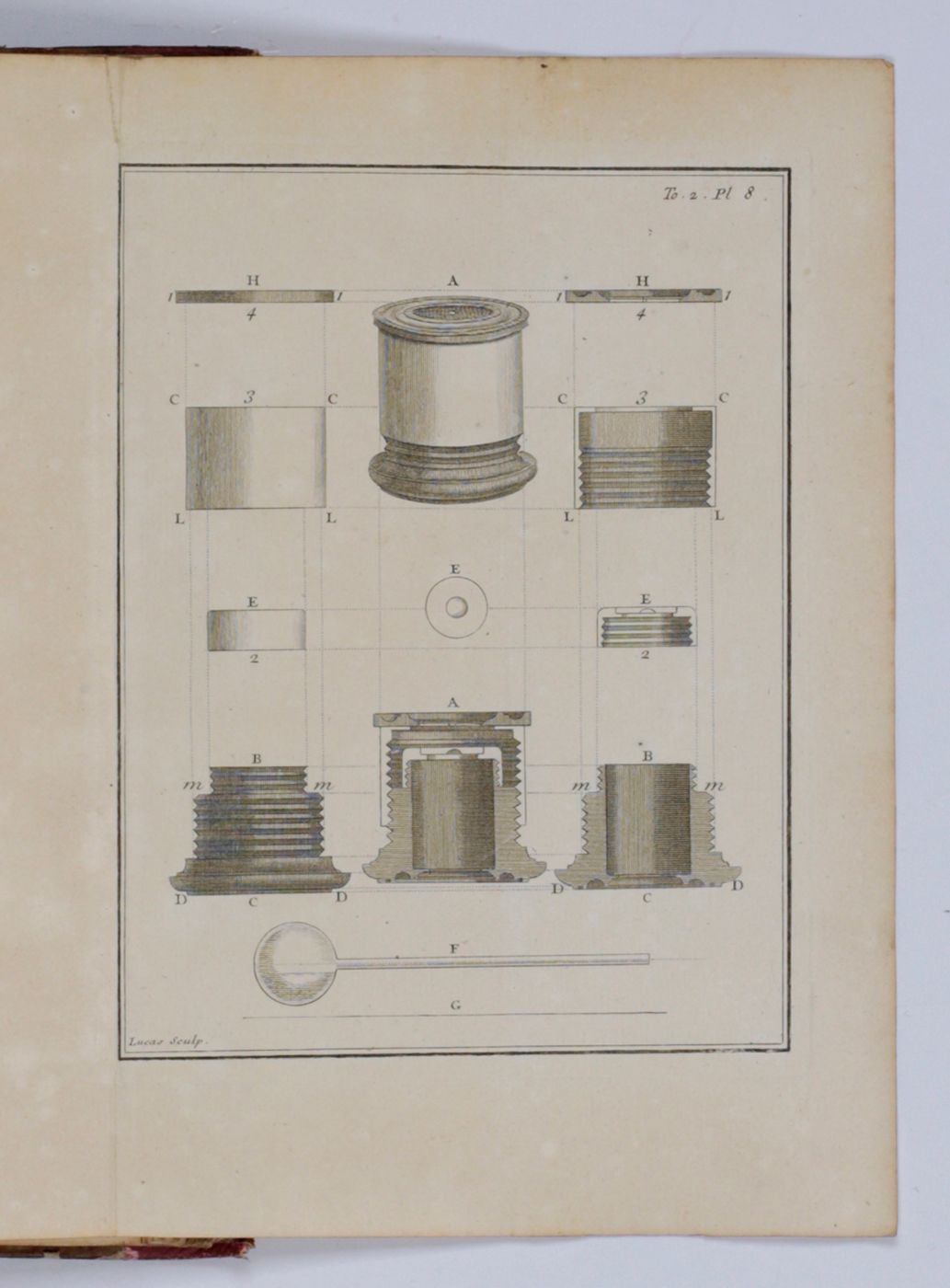
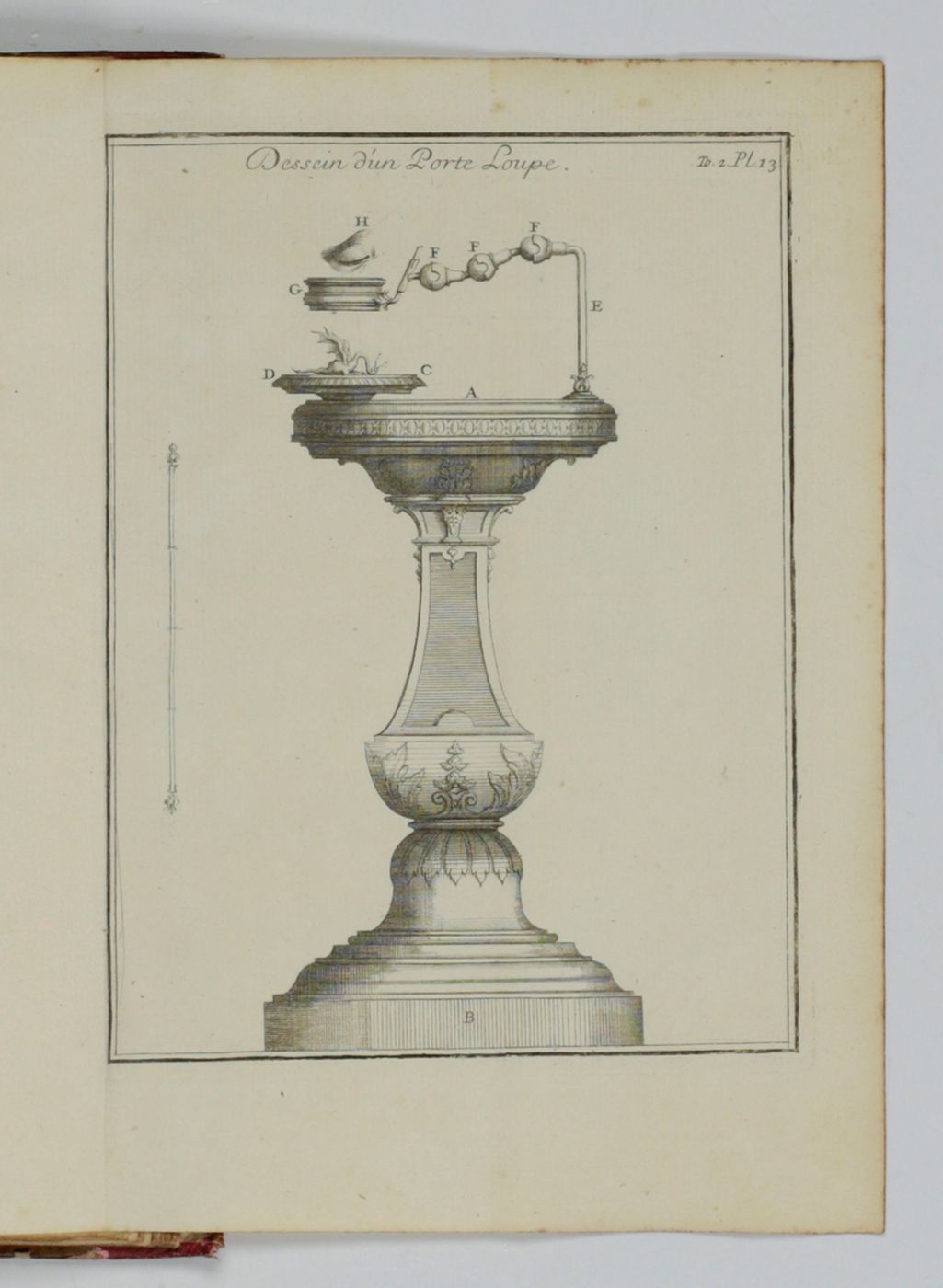
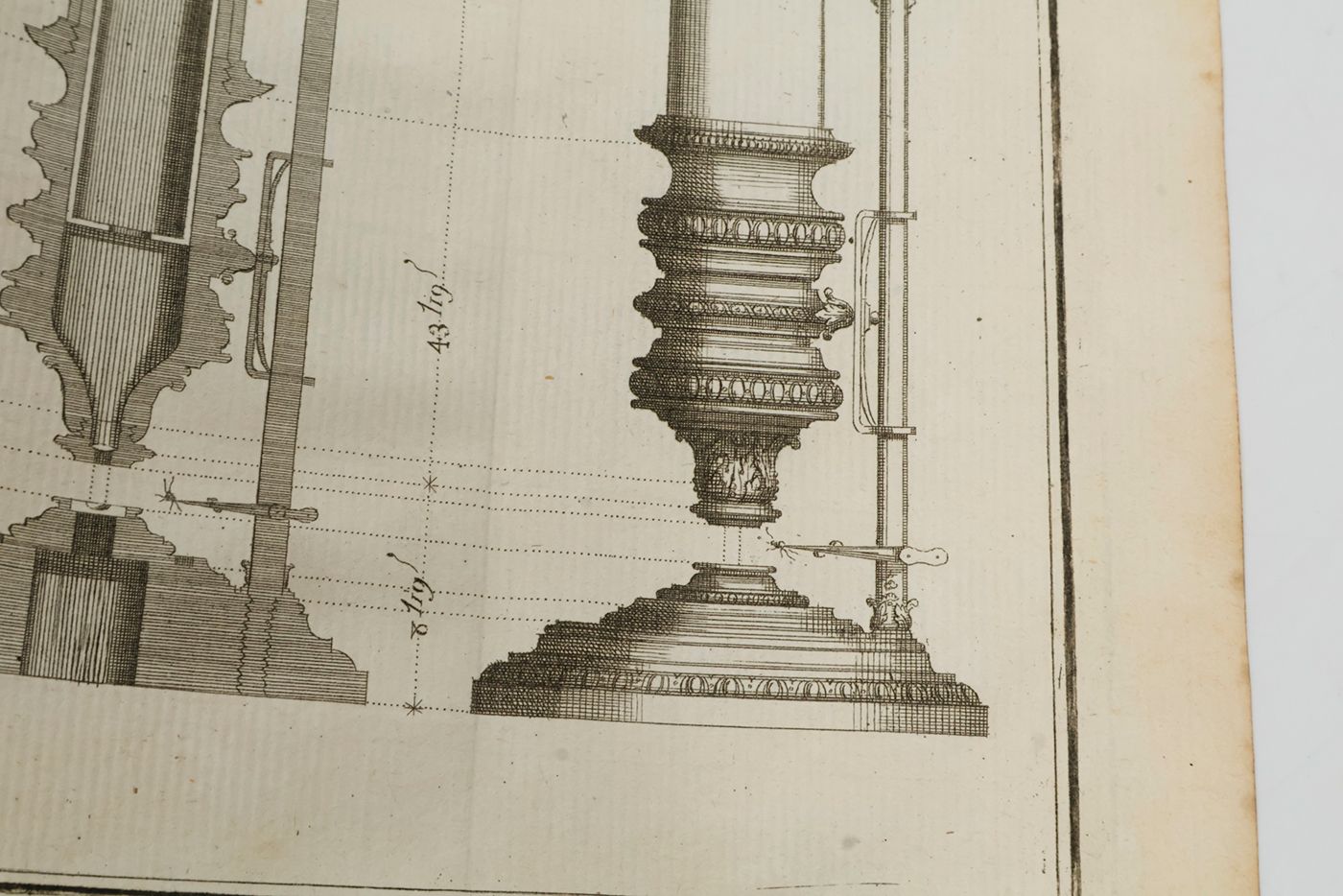
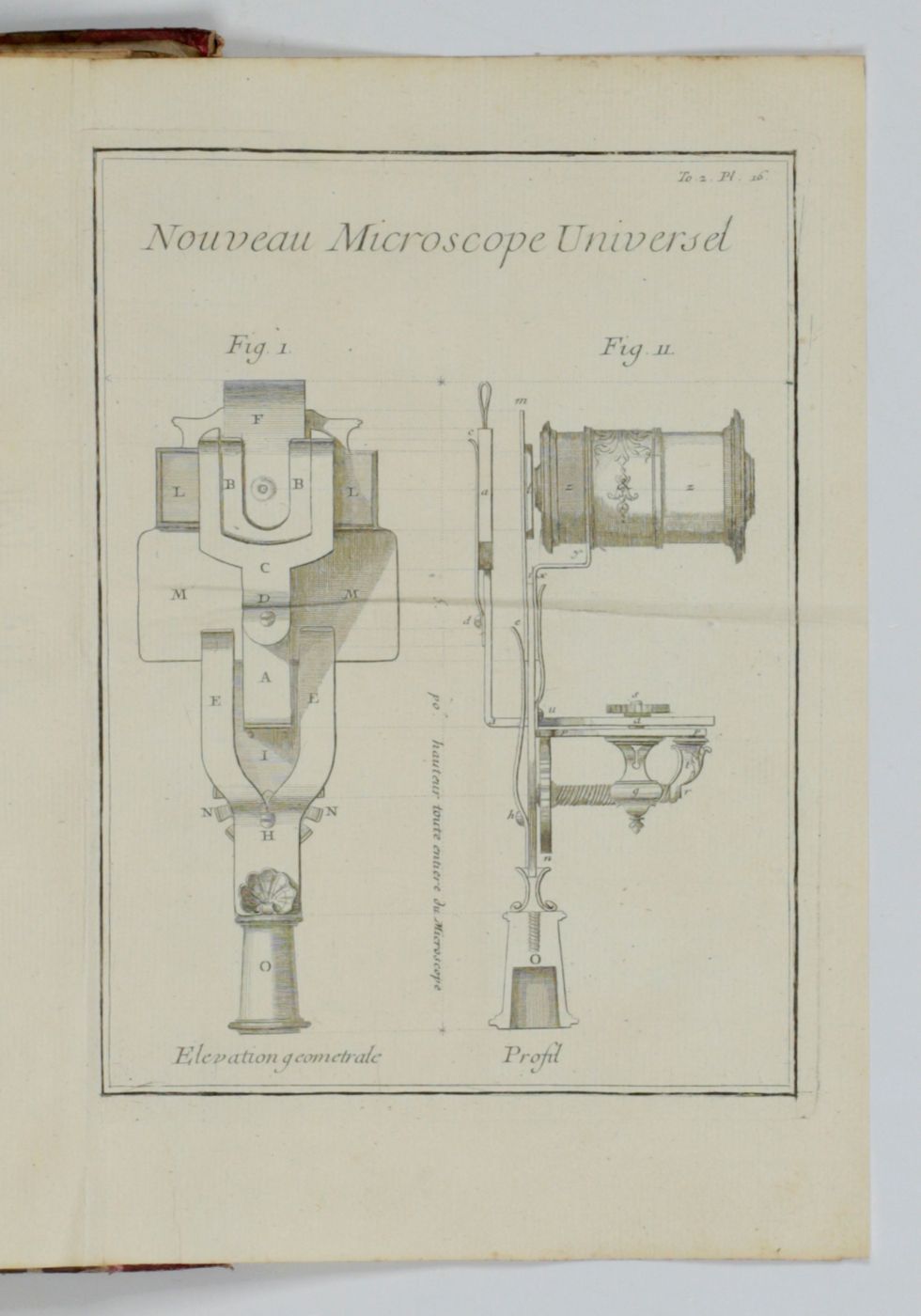
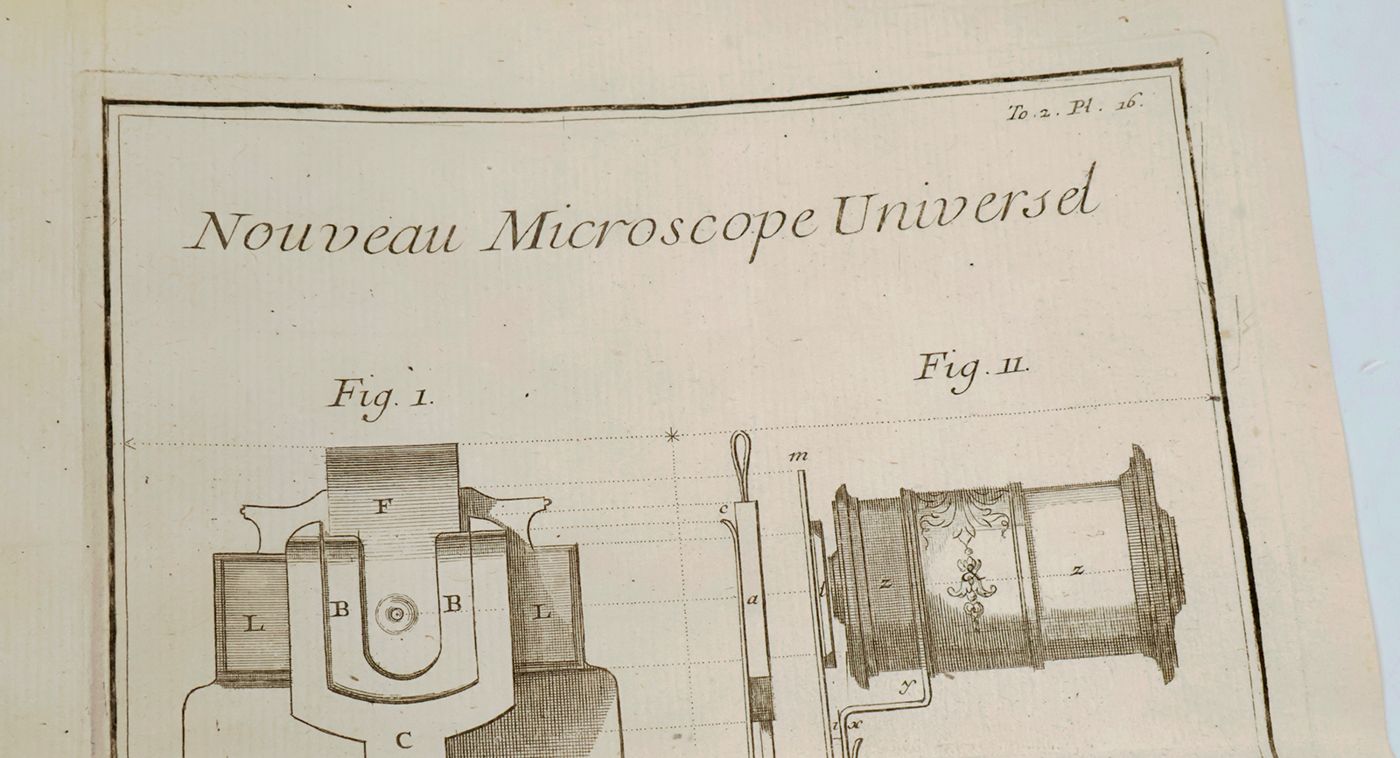
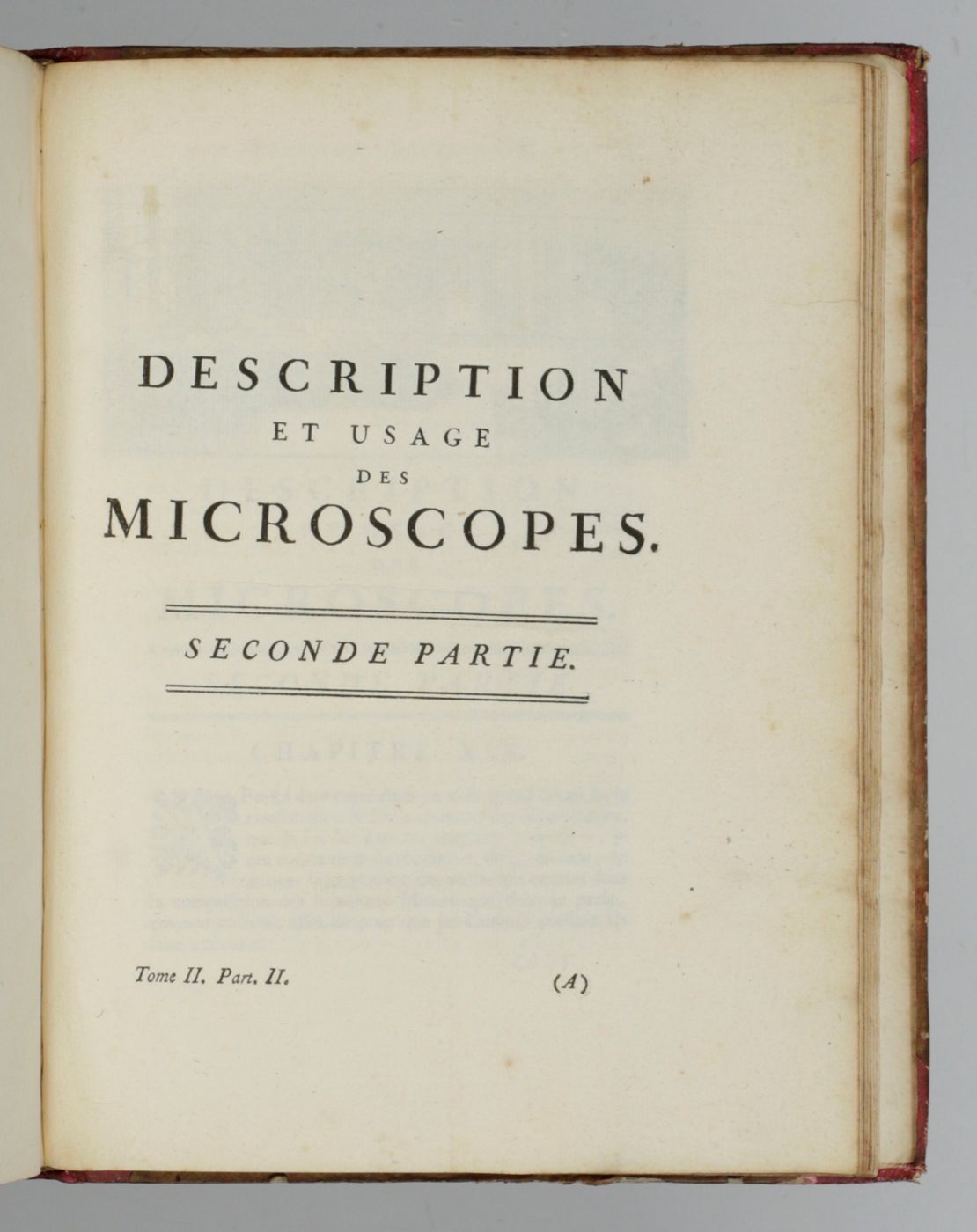
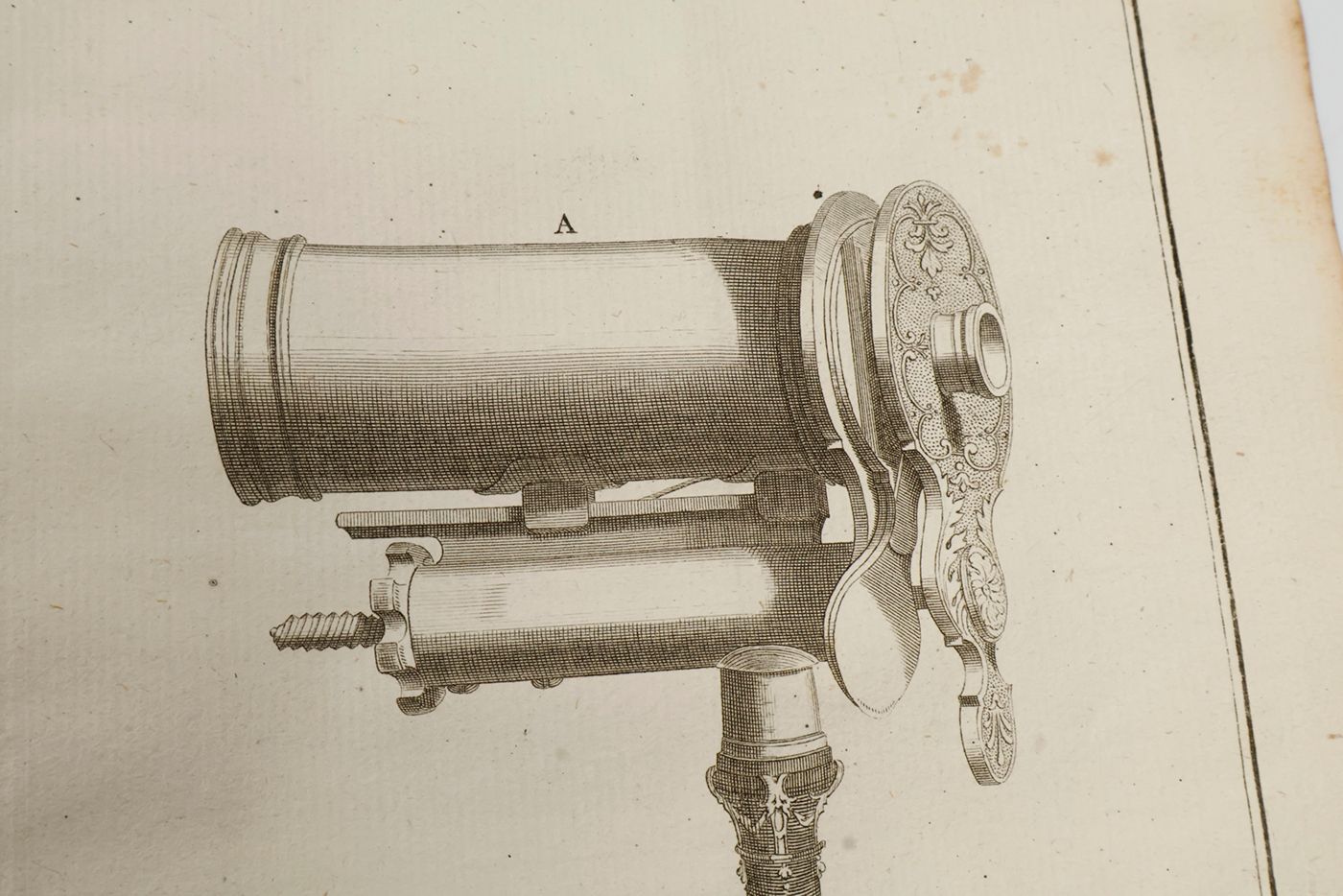
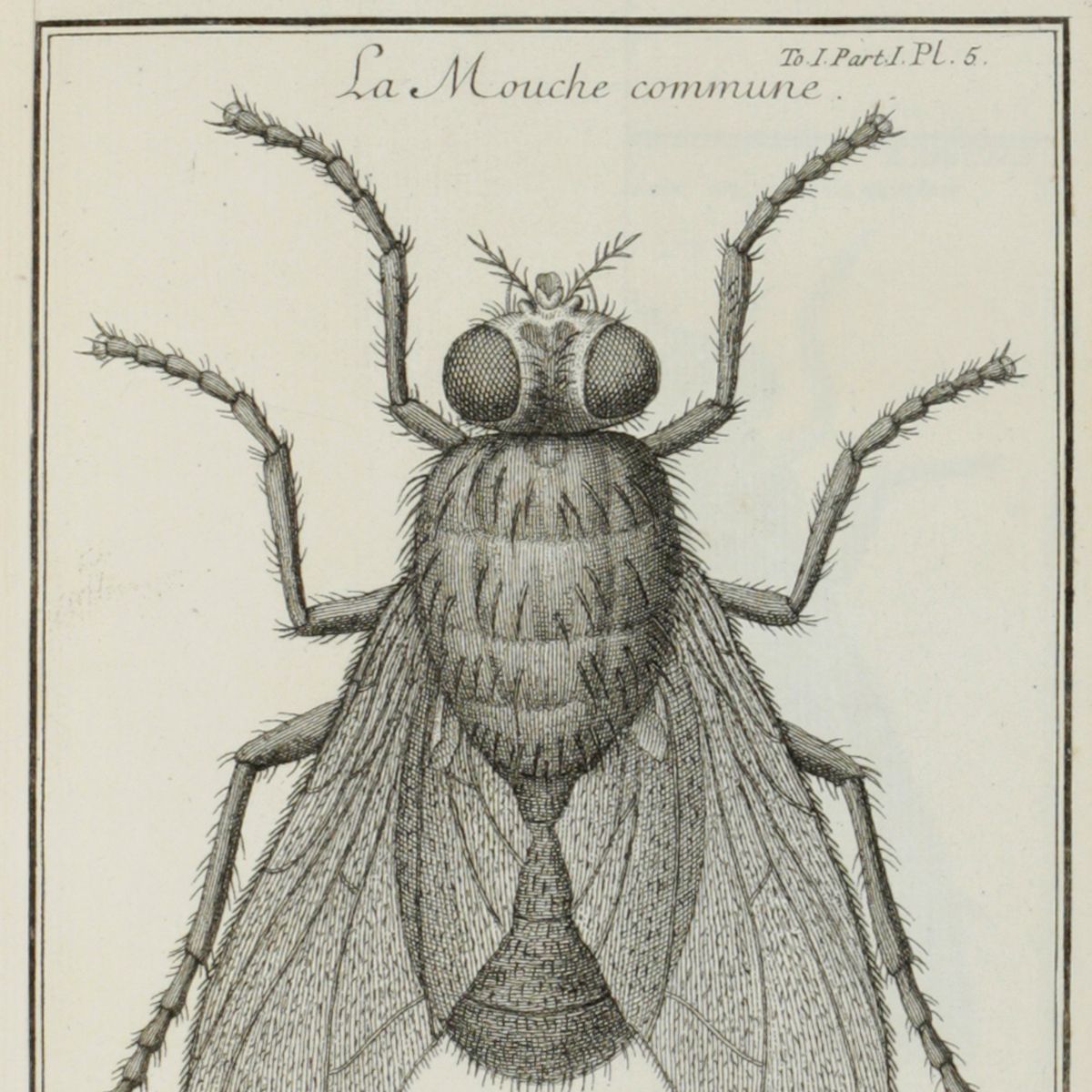
Observations d'histoire naturelle, faites avec le microscope, sur un grand nombre des insectes, & sur les animalcules qui se trouvent dans les liqueurs préperées, & dans celles qui ne sont pas, &c. avec la description & les usages des différens microscopes, &c. Partie déjà publiées par feu M. Joblot, professeur en mathématiques de l'Académie de Peinture & de Sculpture: partie rédigées sur ses observations postérieures. Avec un grand nombre de figures.
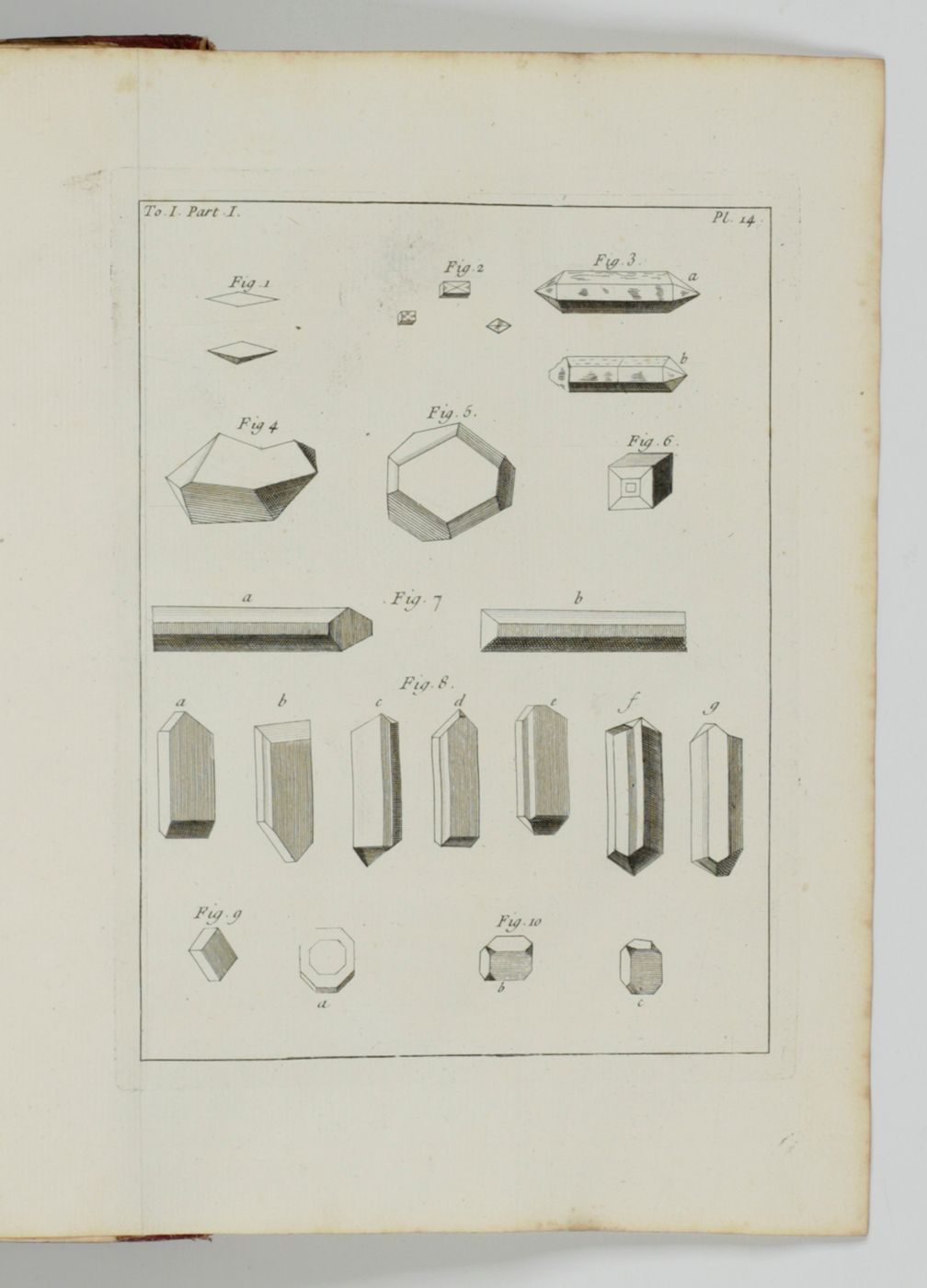
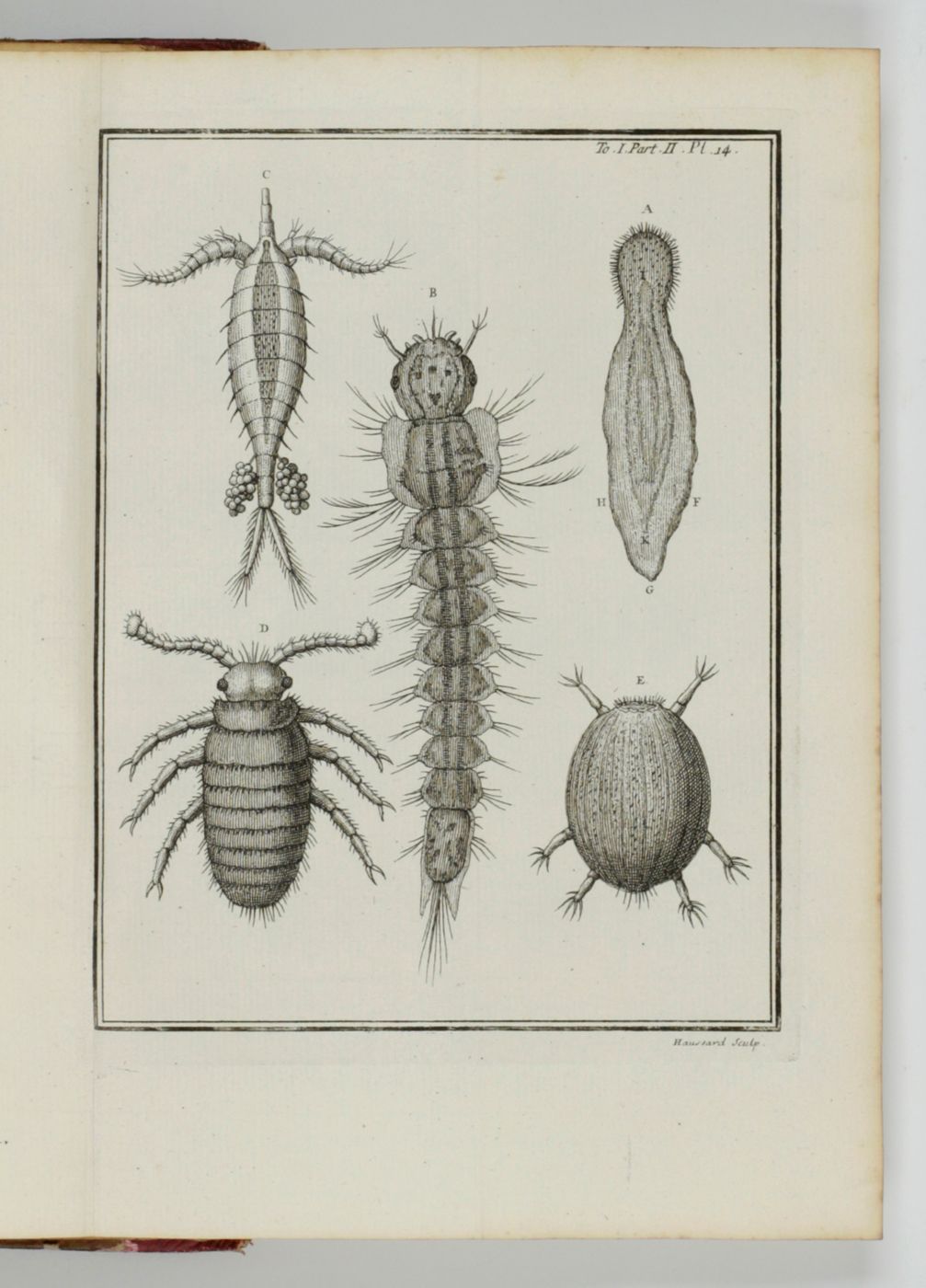
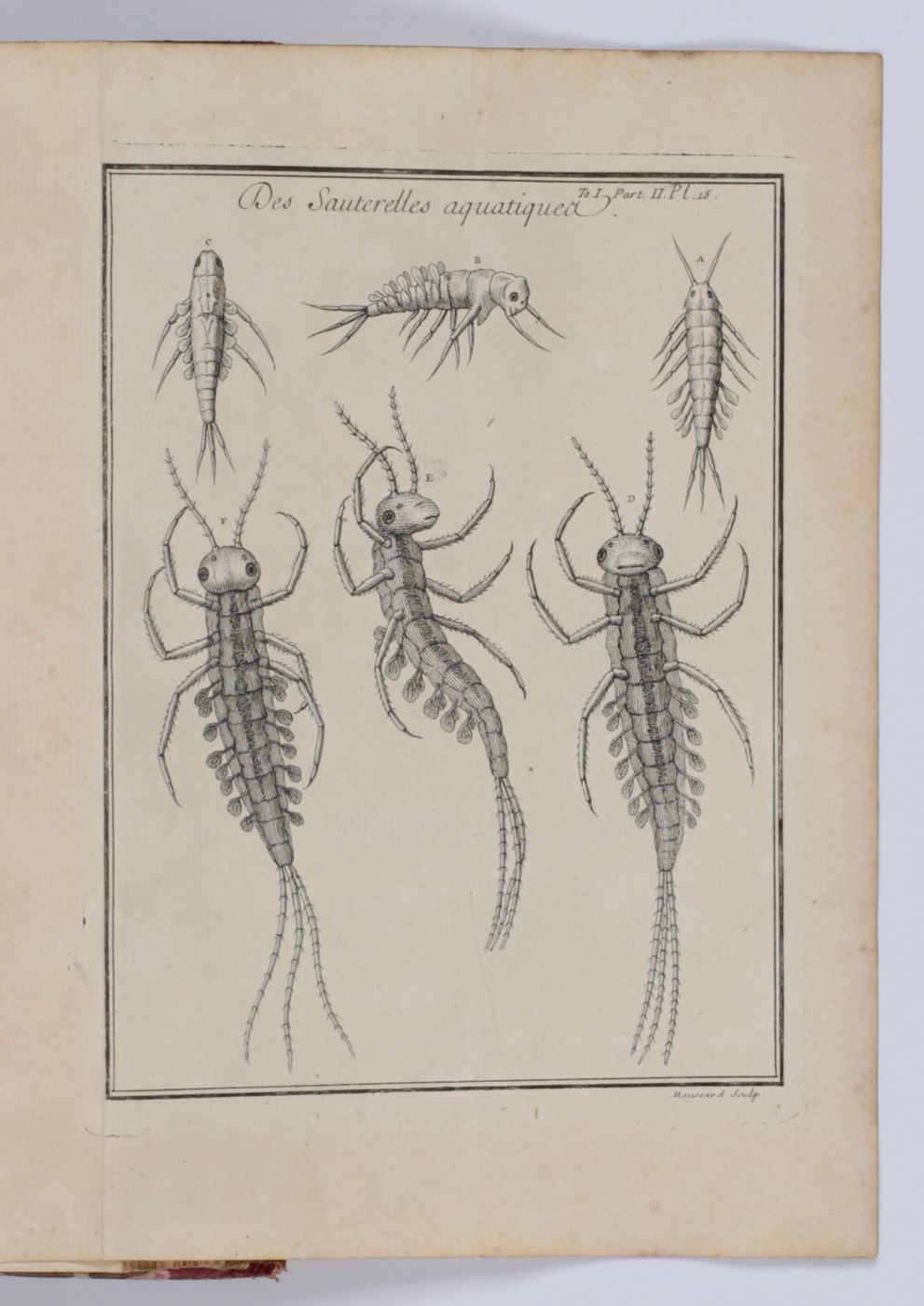
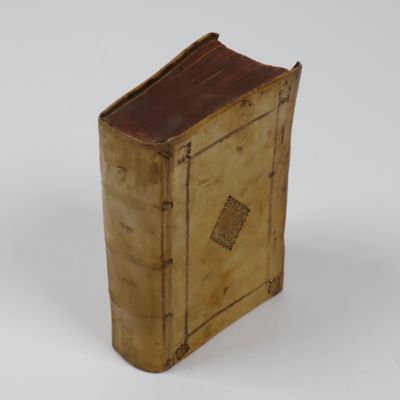
Paris, Briasson, 1754. Two parts in one. 4to (25.6 x 19.4 cm). Three half-titles, two title pages, each with woodcut vignette, 285 pp. [v-xx, 38, 124; iii-vi, 78, 3-27]; 53 [14, 15; 24] engraved plates. Contemporary red half calf over marbled boards. Spine with five raised bands; compartments with blind-tooled lines and gilt title. All edges speckled red.
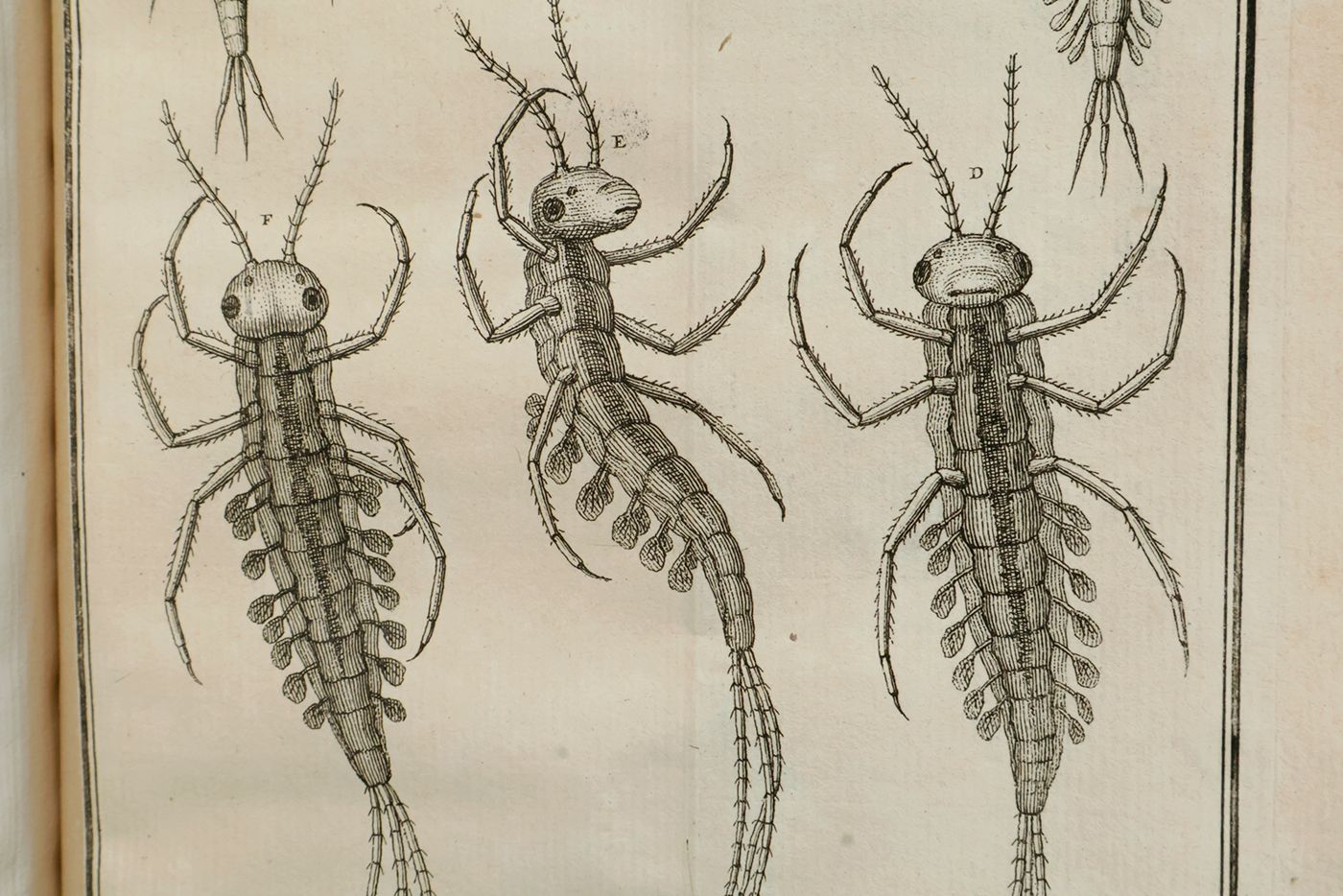
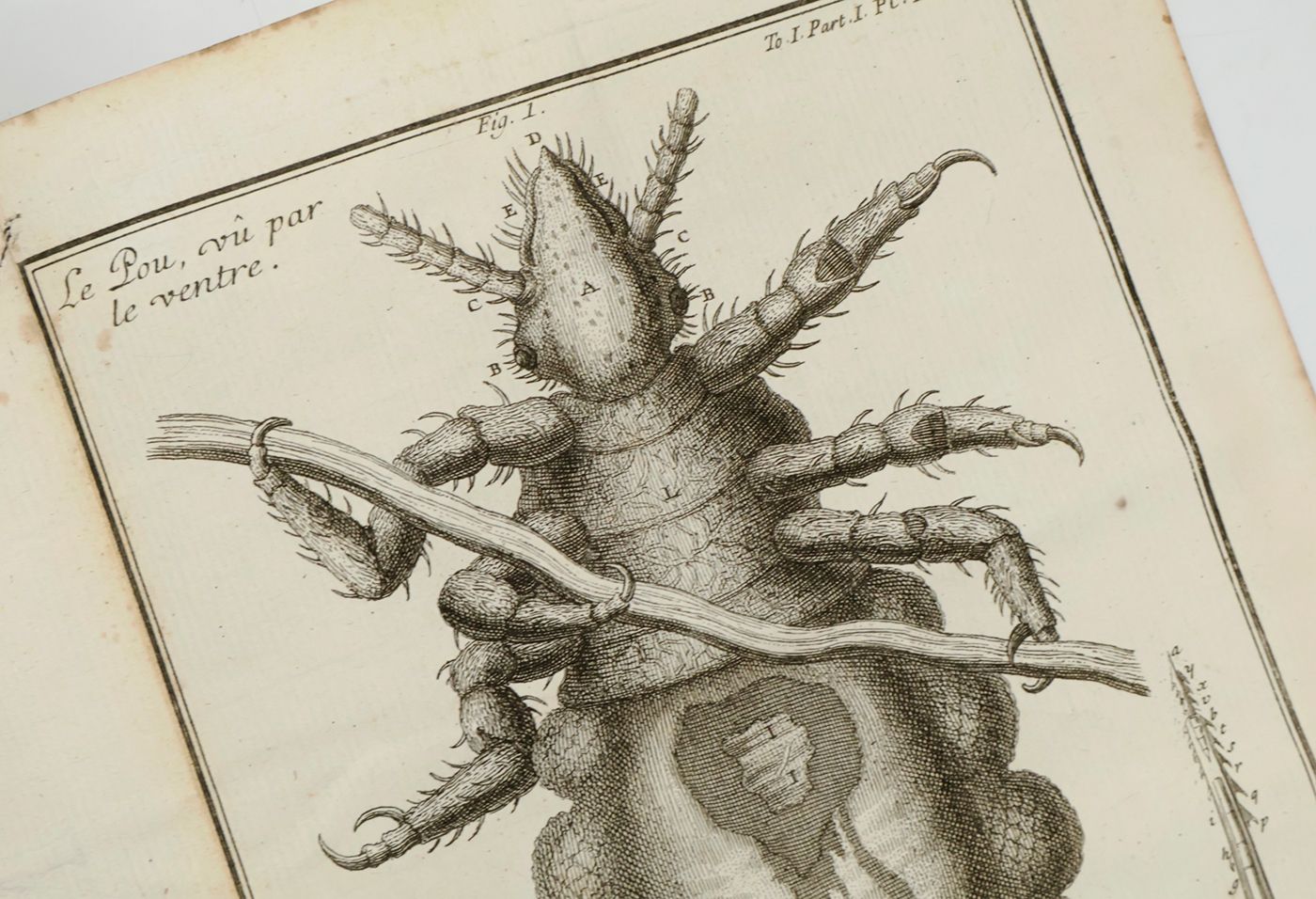
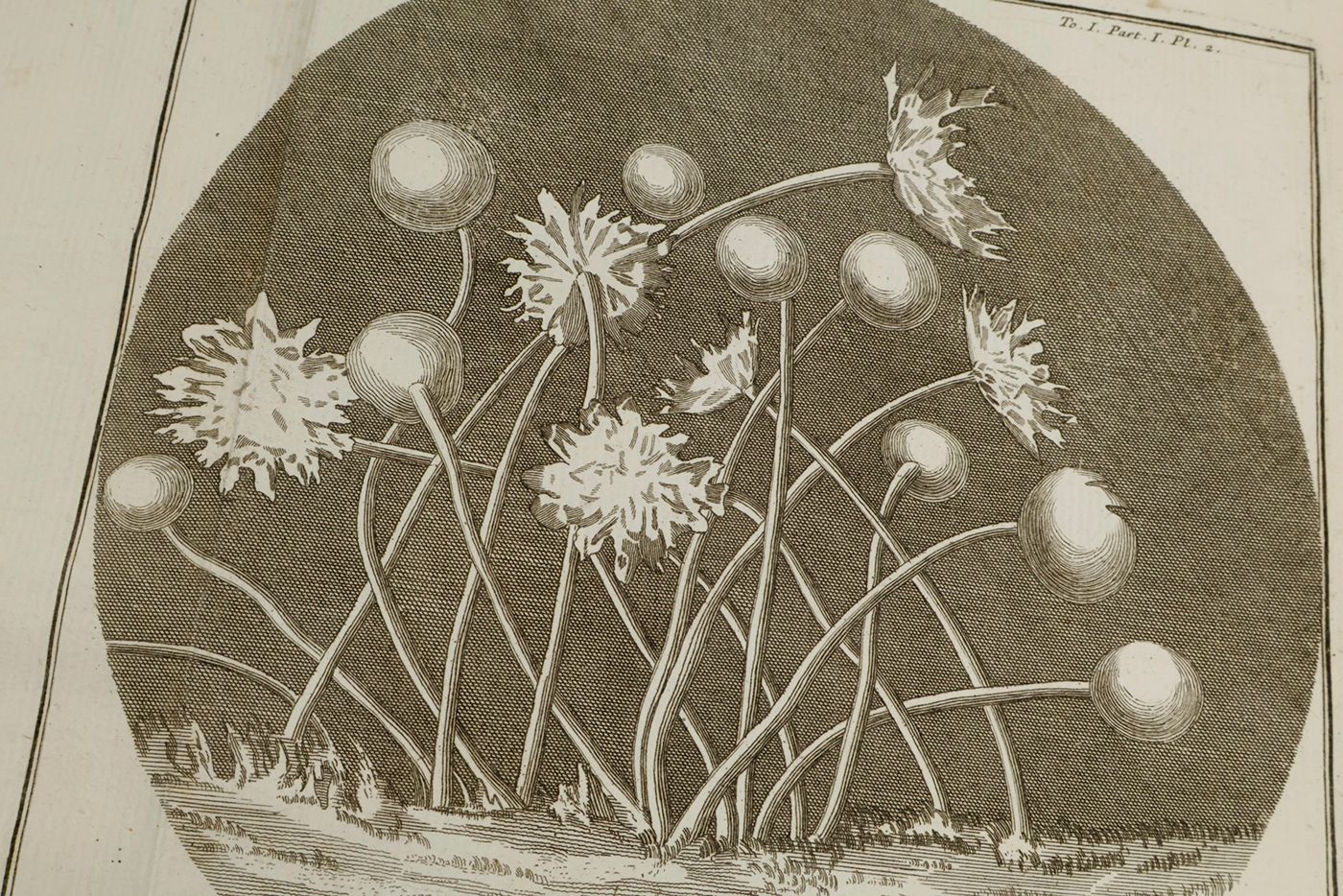
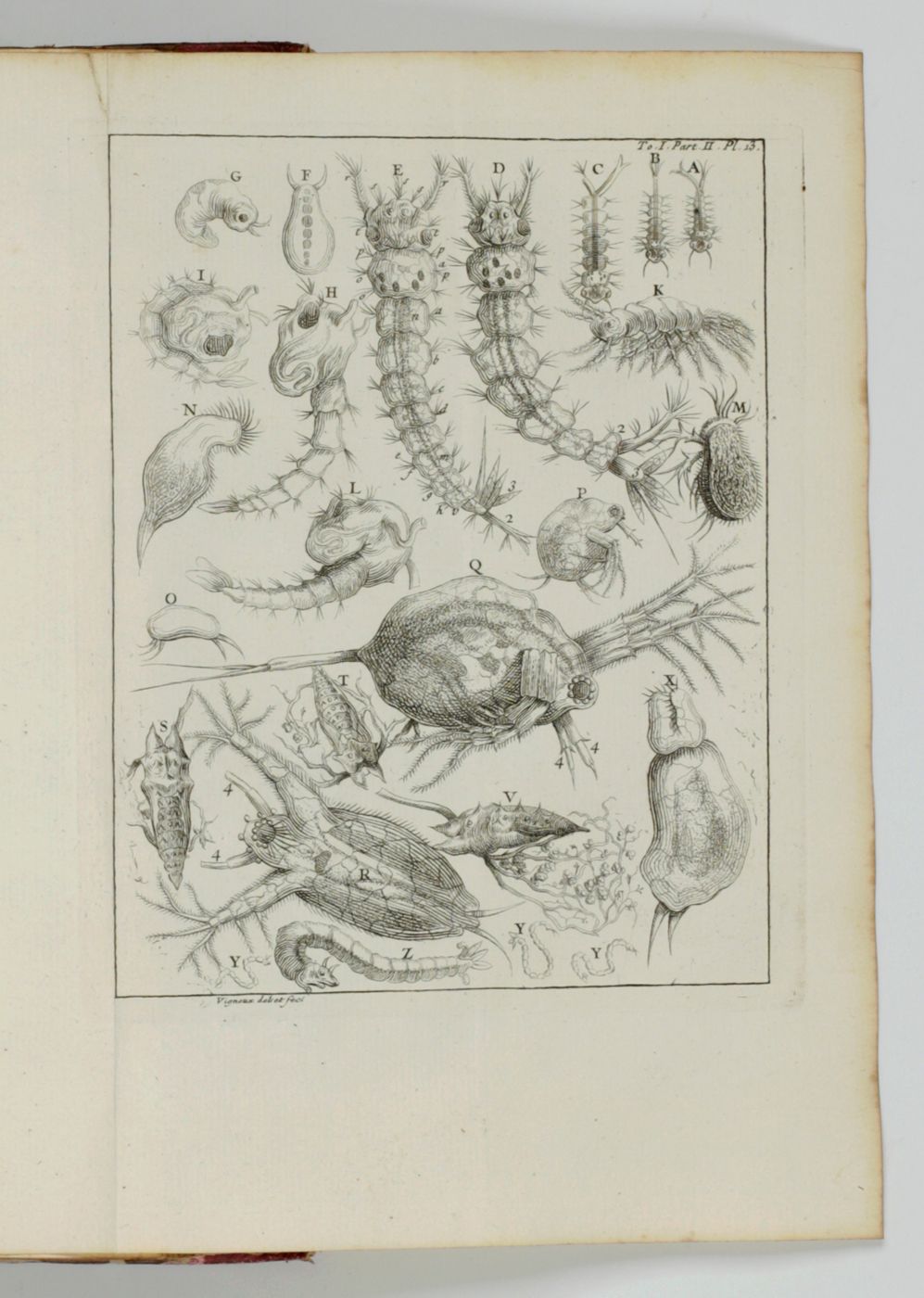
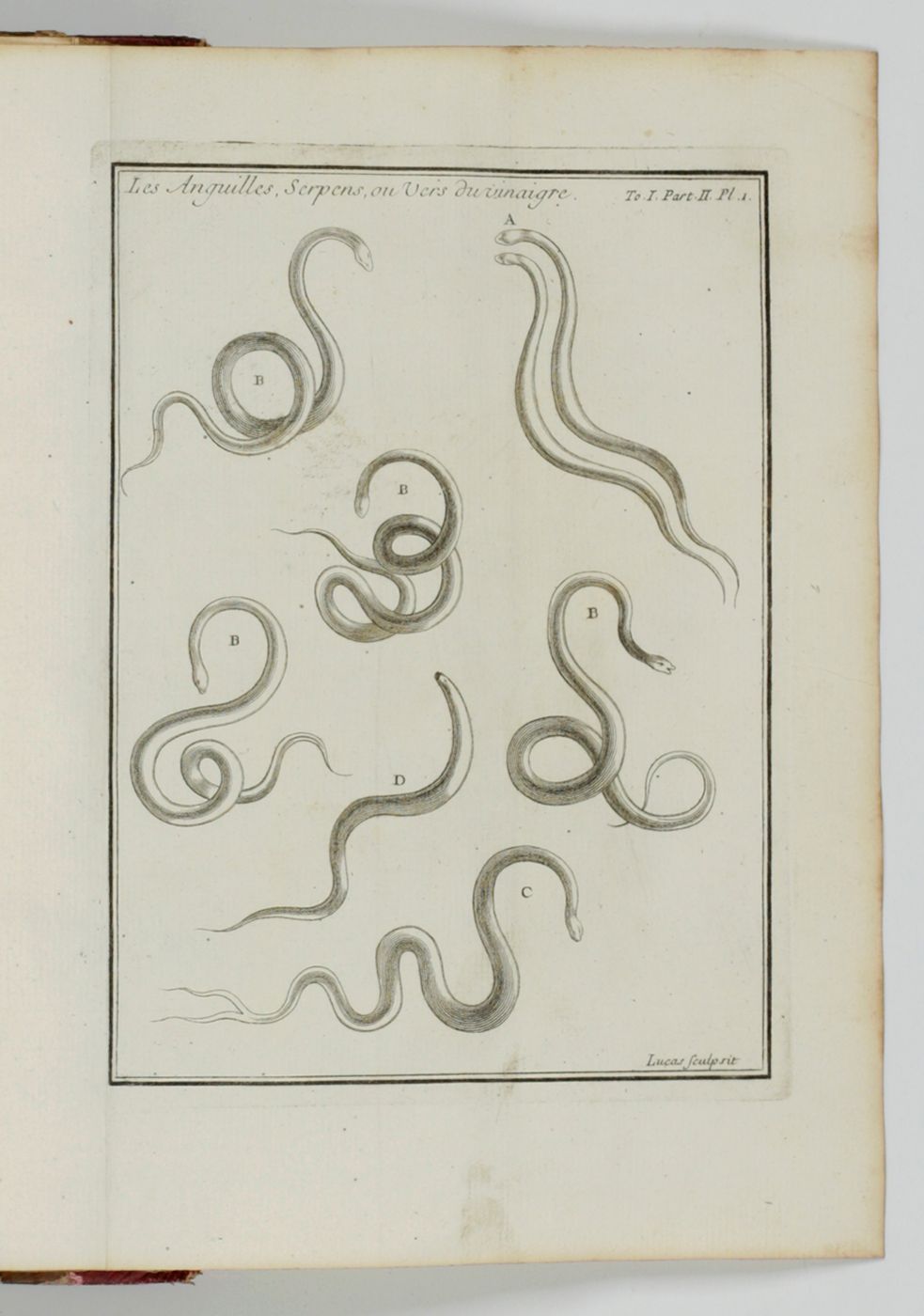
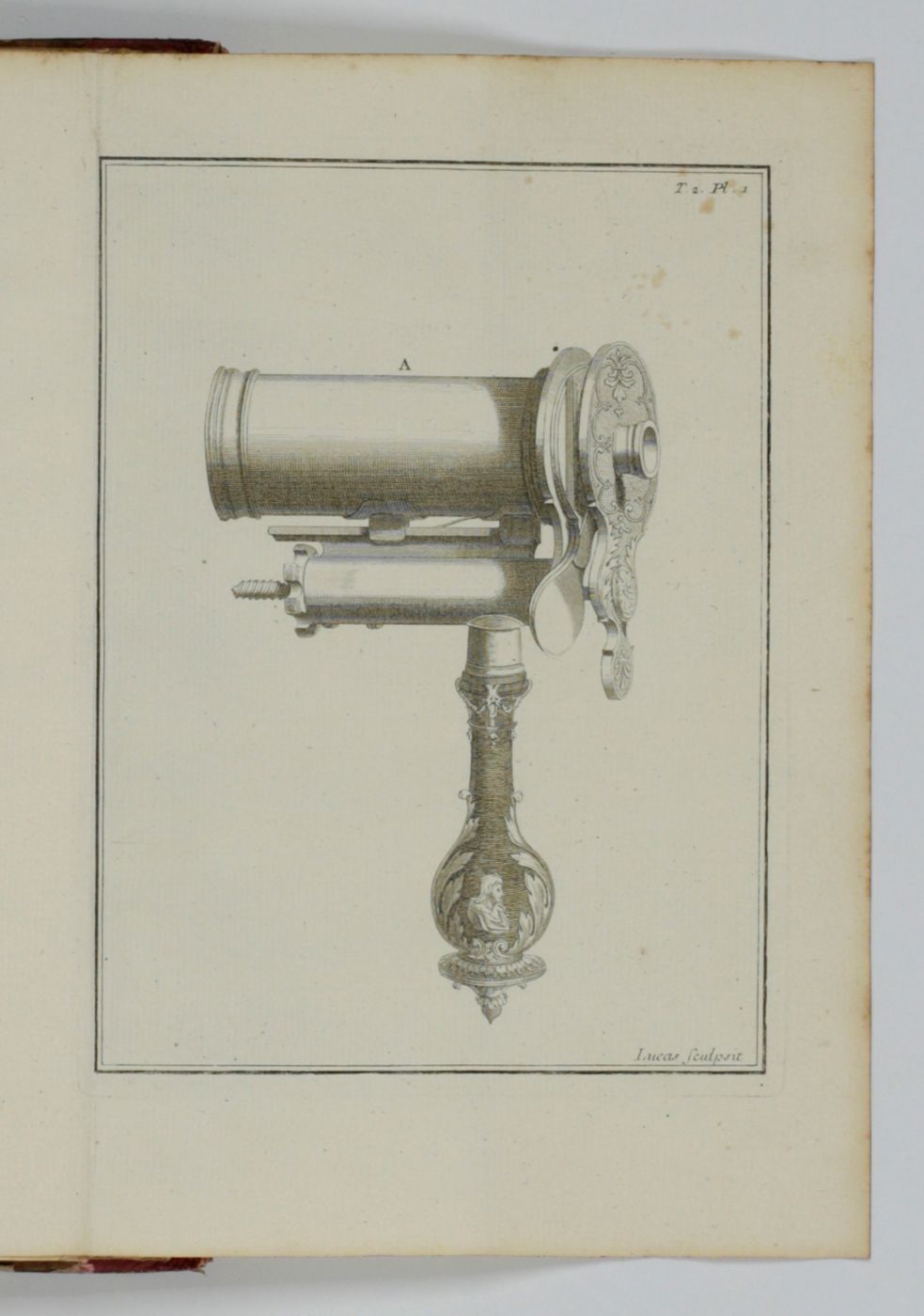
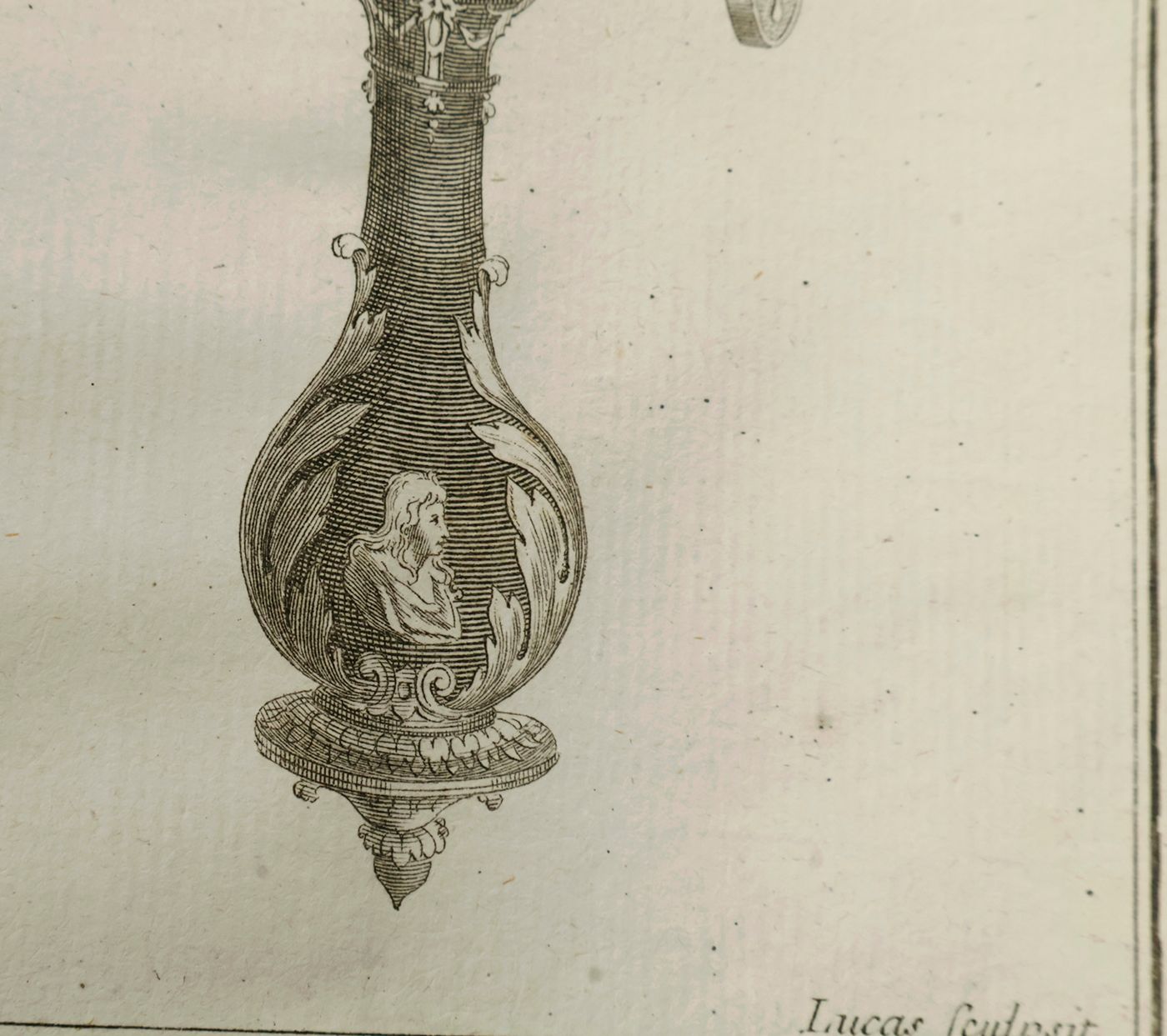
Second, much enlarged edition of this finely illustrated work on microscopy, dealing in particular with small insects and other animals. The first edition (1718) had 19 plates fewer. "Louis Joblot (1645-1723) is often neglected in the history of microscopy. A contemporary of Leeuwenhoek, who is recognized as the first to observe and record microbes, Joblot, in his own right, was an equally innovative inventor and theorist. A professor of mathematics at the École Nationale des Beaux-Arts, Joblot explored and lectured on perspective, optics, and geometry, leading to his personal pursuit of microscopy during the period of 1680-1716. His landmark work from 1718 presented his own developments and modifications of the microscope, observations of protozoa, and his opposition to the theory of spontaneous generation. Joblot’s new microscope permitted precise focusing by eliminating stray light and enabling the mounting of a diverse array of specimens. The microbes became clearer and more visible. He would refer to the microbes he observed in terms such as 'fishes' or 'caterpillars', or even provide mirthful names such as 'slipper', 'gobbler', or 'bagpipes'.“ (Harvard.edu). Provenance: private owner's stamp of Gottfried Hoette, Amsterdam in the top margin of the front free endpaper recto, first half title and lower margin of the first title. Hoette was born in Amsterdam in 1893, but little else is known about him. Wear to the board edges, a bit more to corners, a few text sections and plates very mildly toned; a few leaves with some marginal spotting; otherwise an excellent, clean copy. Horn-Schenkling, 11273; Nissen ZBI, 2114.

![image for The yellow-ridged toucan ( <em>Ramphastos vitellinus culminatus</em>). From: <em>Histoire naturelle des oiseaux de paradis et des rolliers, suivie de celle des Toucans et des Barbus</em> [Plate 5. Le grand Toucan à gorge orange].](https://schierenberg.nl/media/cache/product_thumb/78969/78969_x.jpg)
![image for The channel-billed toucan ( <em>Ramphastos vitellinus</em>). From: <em>Histoire naturelle des oiseaux de paradis et des rolliers, suivie de celle des Toucans et des Barbus</em> [Plate 7. Le Pignancoin].](https://schierenberg.nl/media/cache/product_thumb/78964/78964_x.jpg)
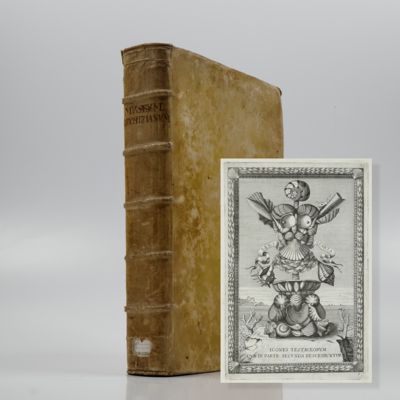
![image for Histoire naturelle des quadrupèdes ovipares, serpents, poissons, et cétacées. Pour faire suite aux oeuvres de Buffon. Nouvelle édition, ornée de 115 planches et du portrait de l'auteur. Tome premier - cinqante. [Complete].](https://schierenberg.nl/media/cache/product_thumb/78300/78300.jpg)
![image for Red bird-of-paradise ( <em>Paradisaea rubra</em>). From: <em>Histoire naturelle des oiseaux de paradis et des rolliers, suivie de celle des Toucans et des Barbus</em> [Plate 6. L'Oiseau de Paradis Rouge].](https://schierenberg.nl/media/cache/product_thumb/78970/78970_x.jpg)