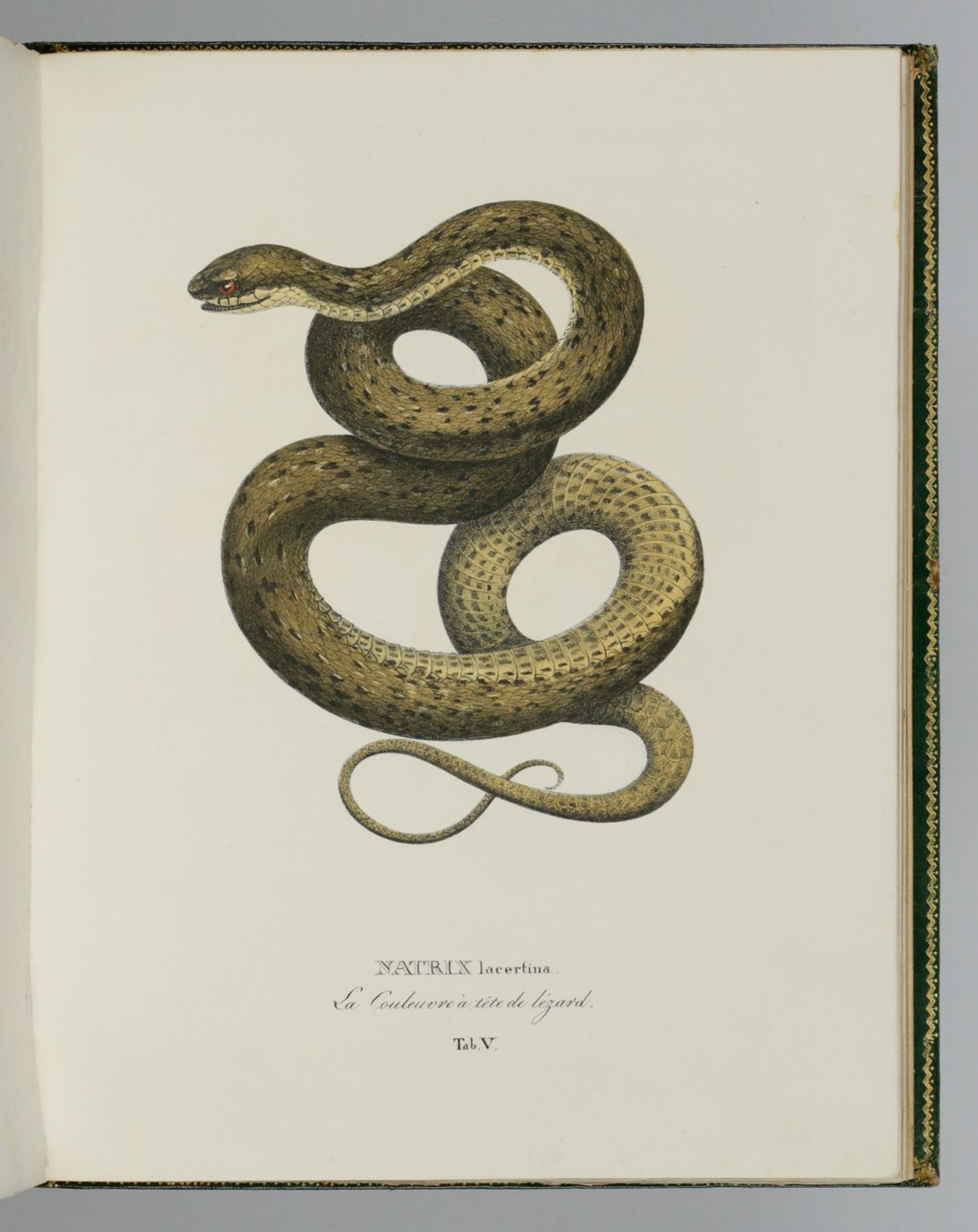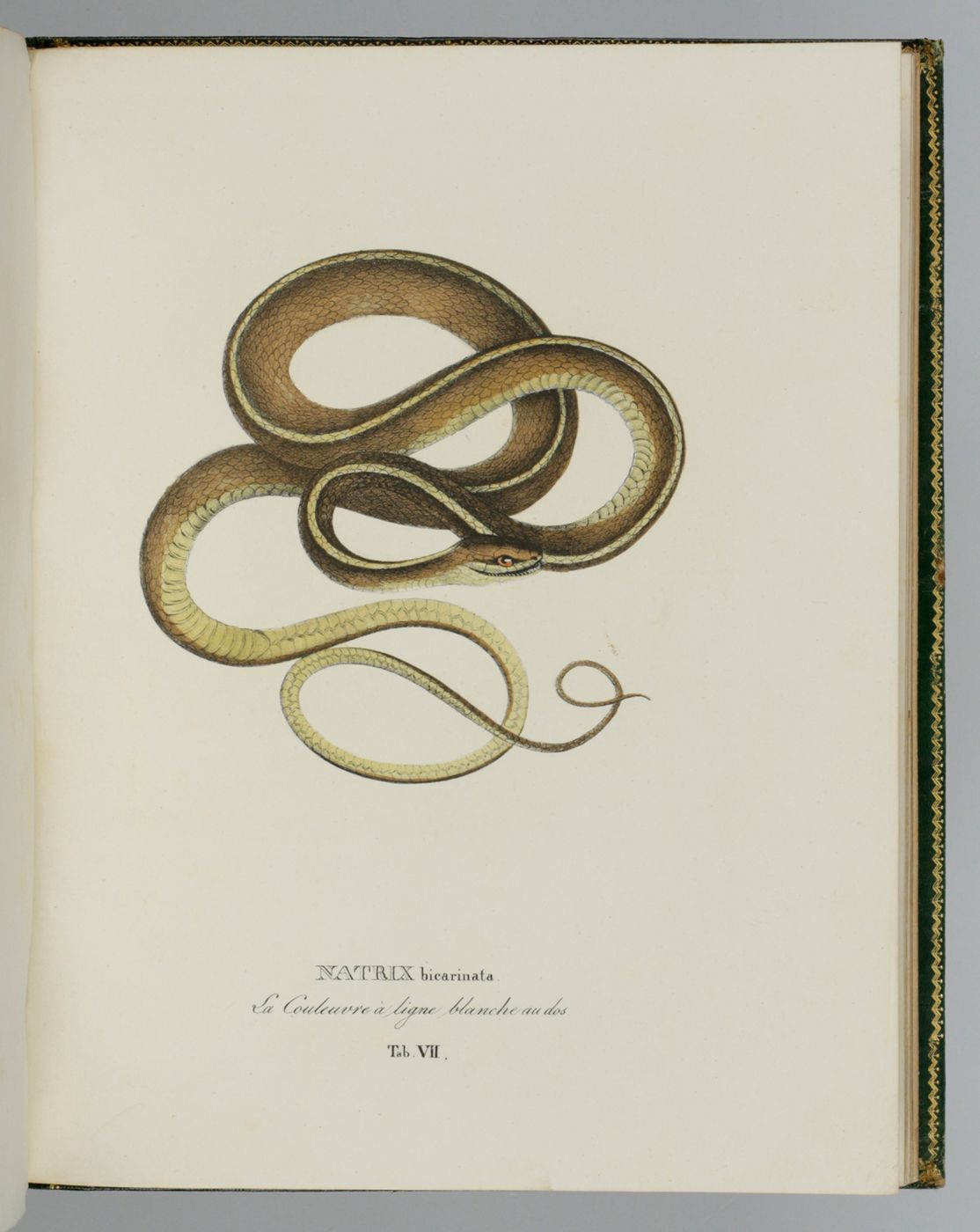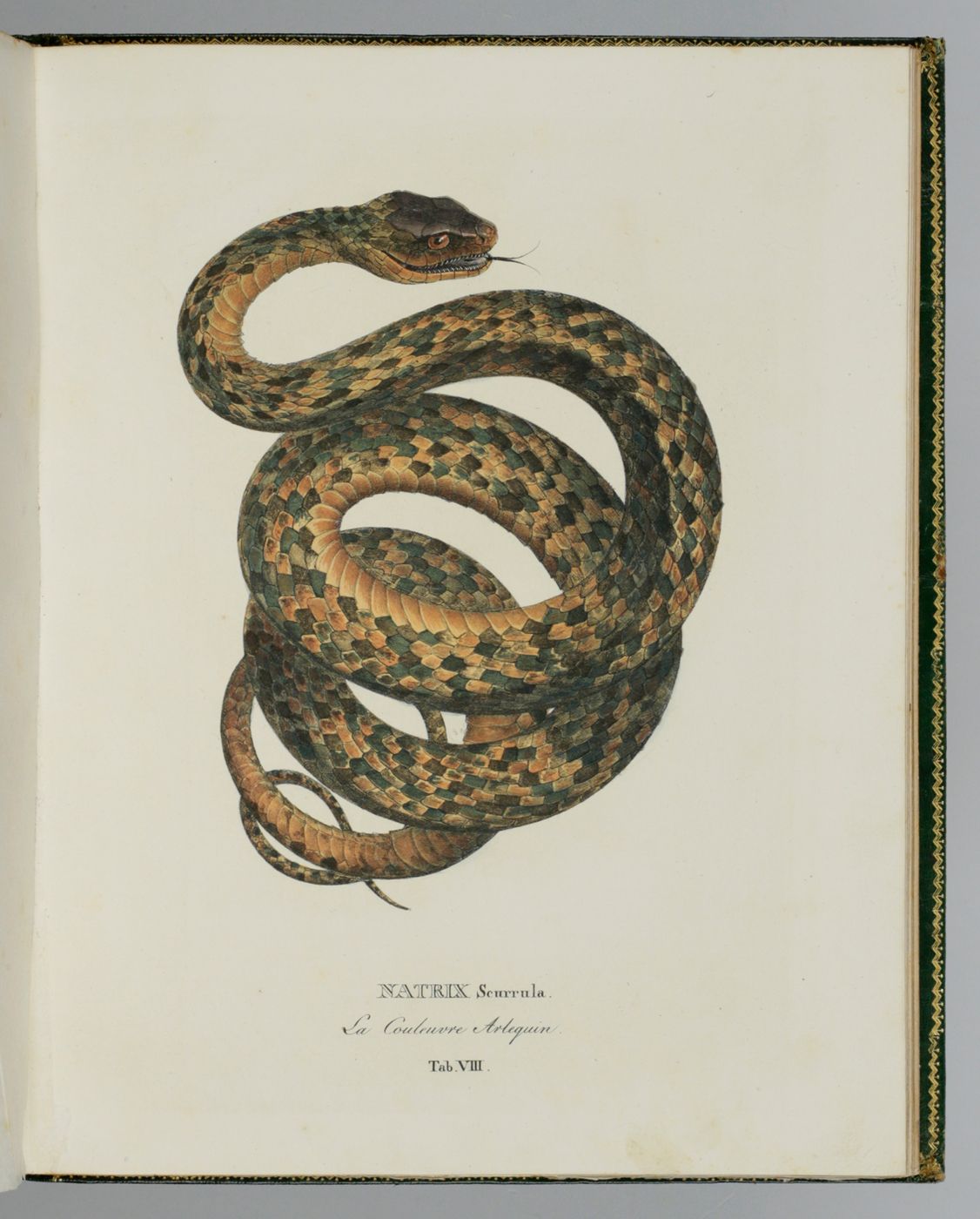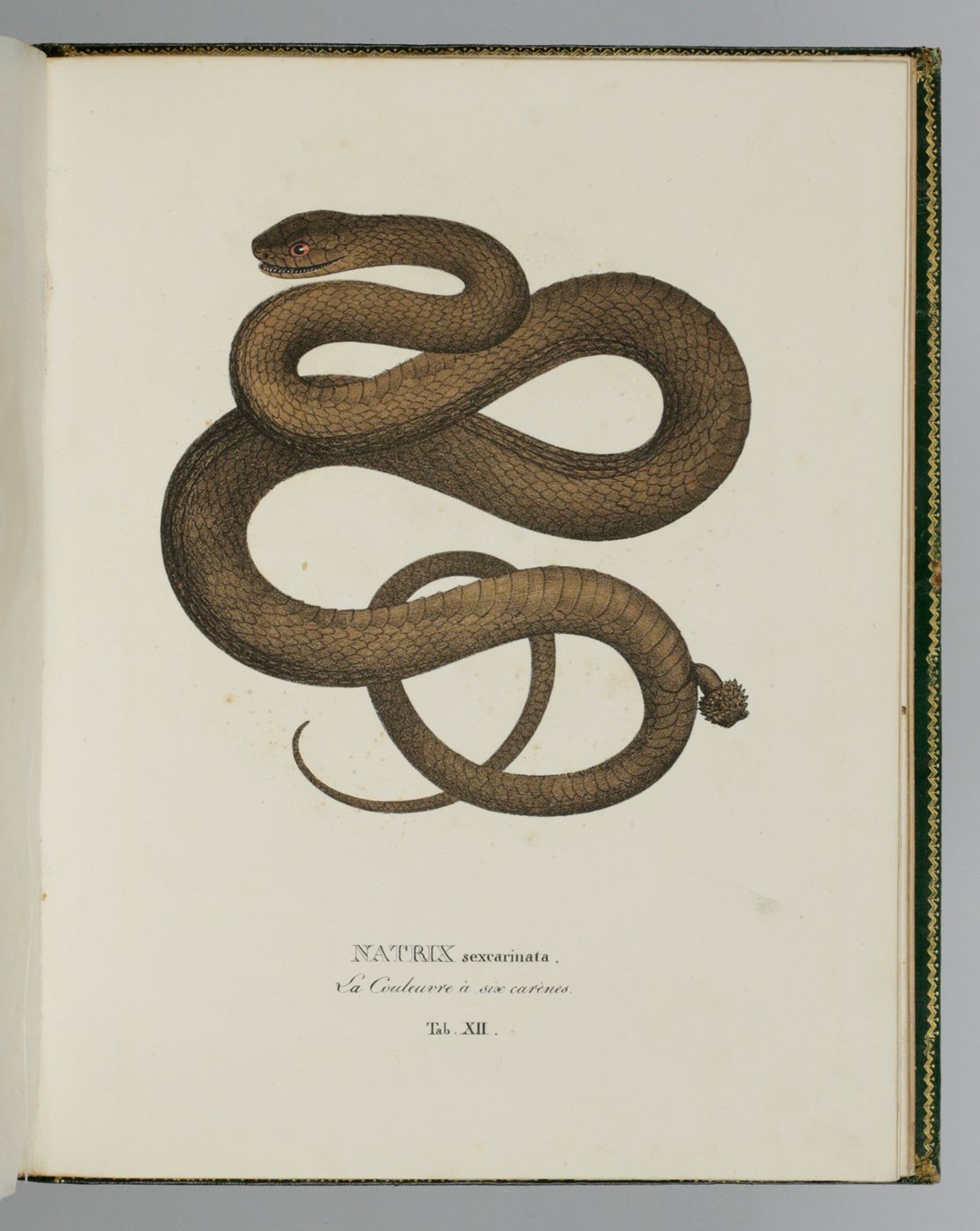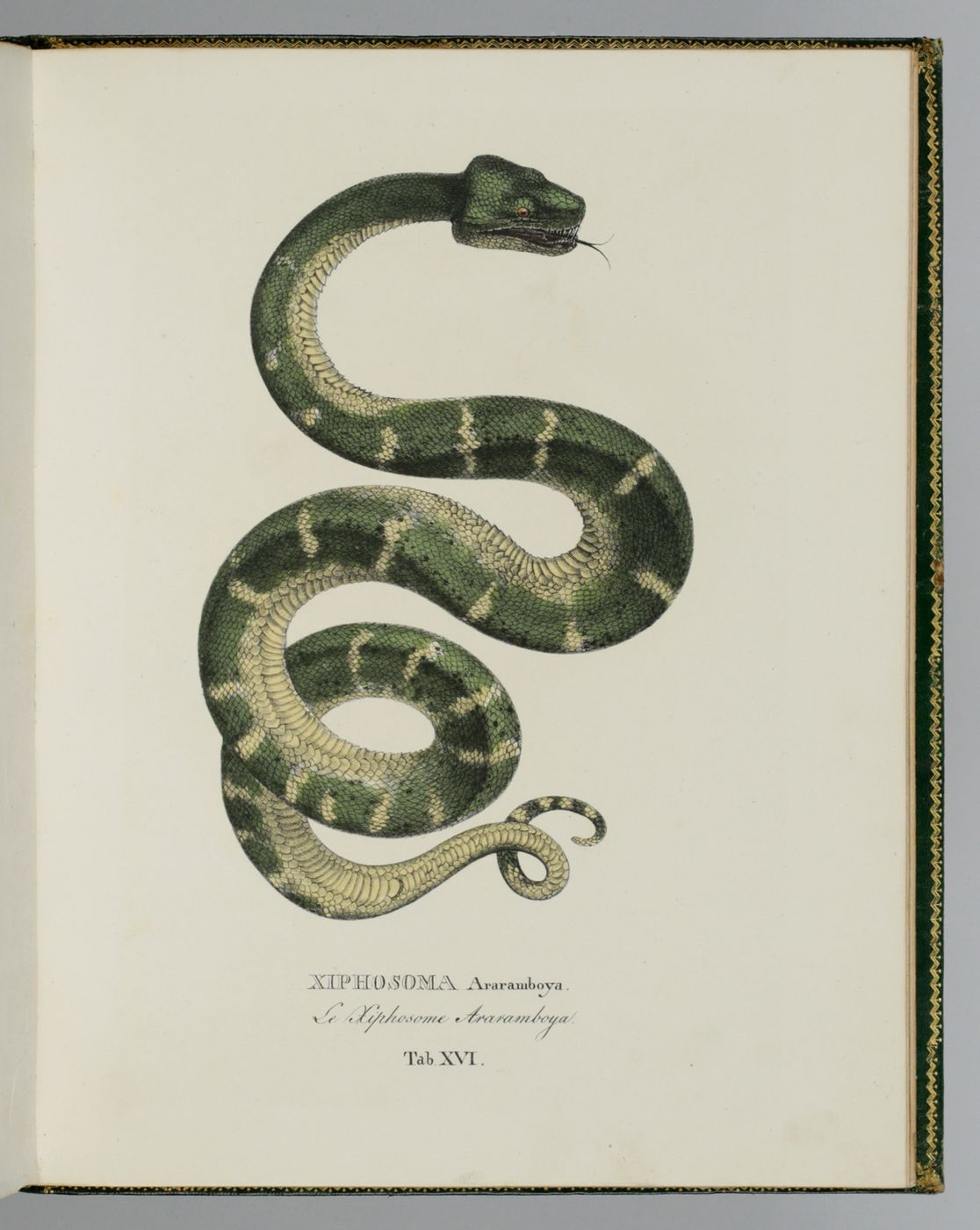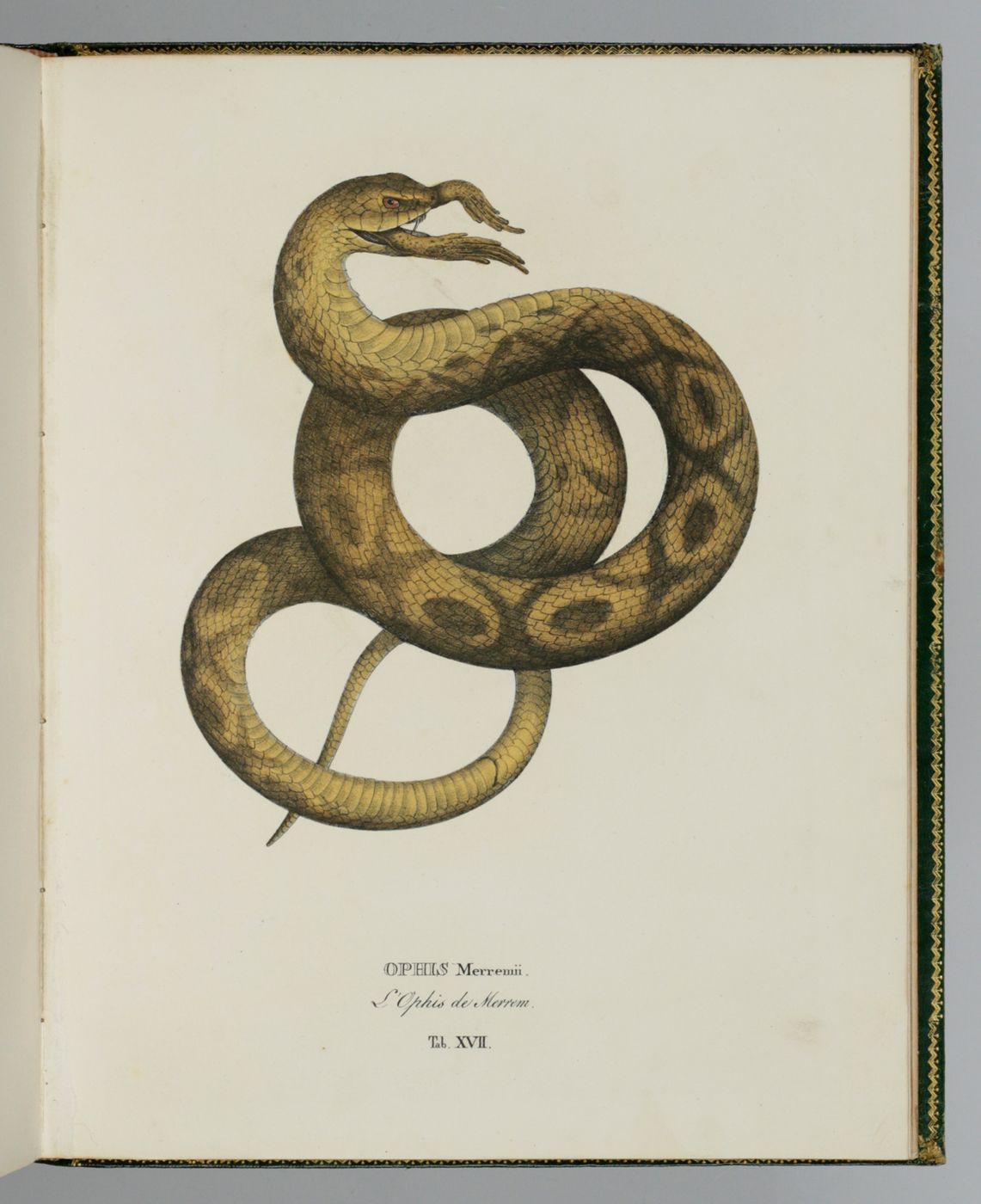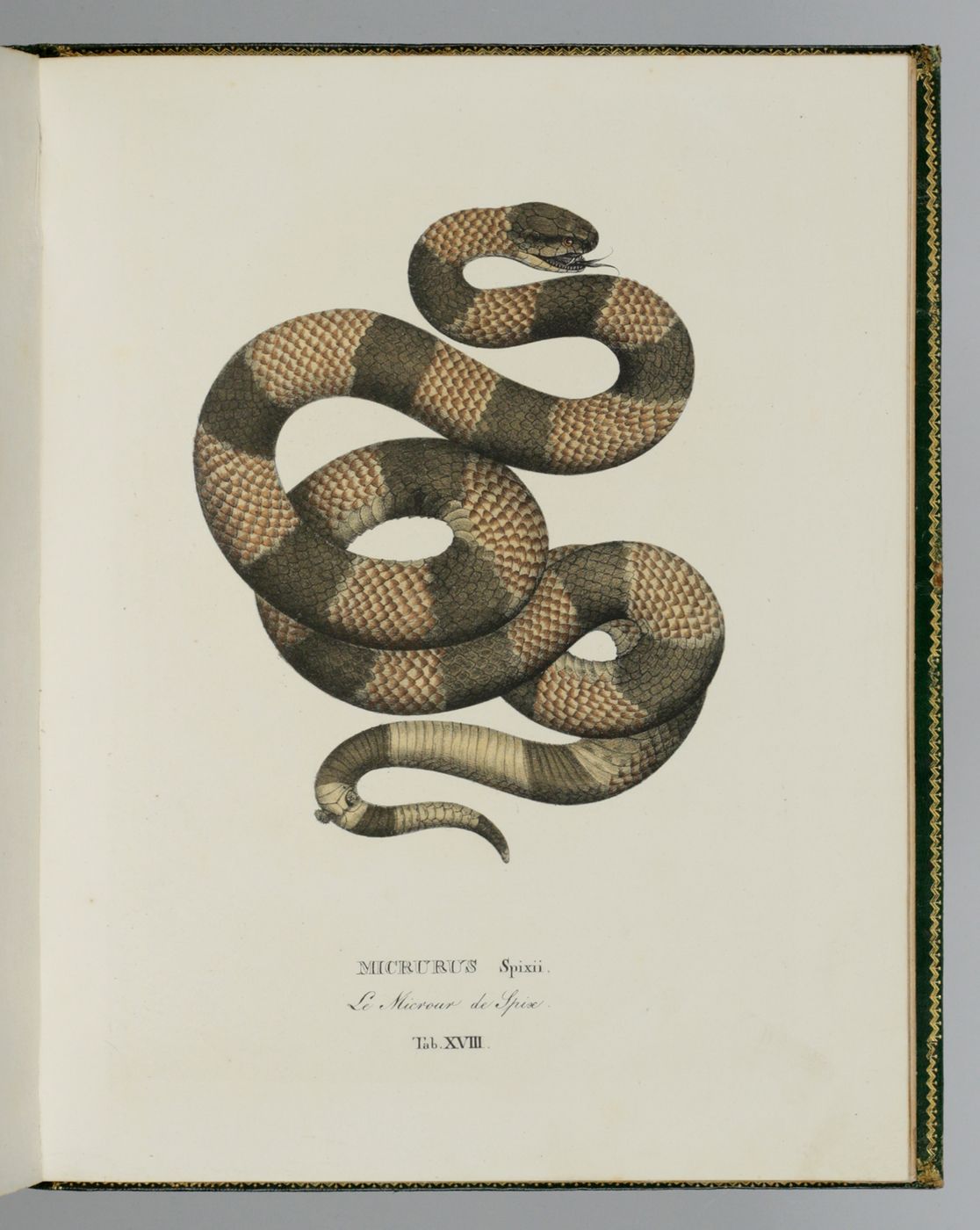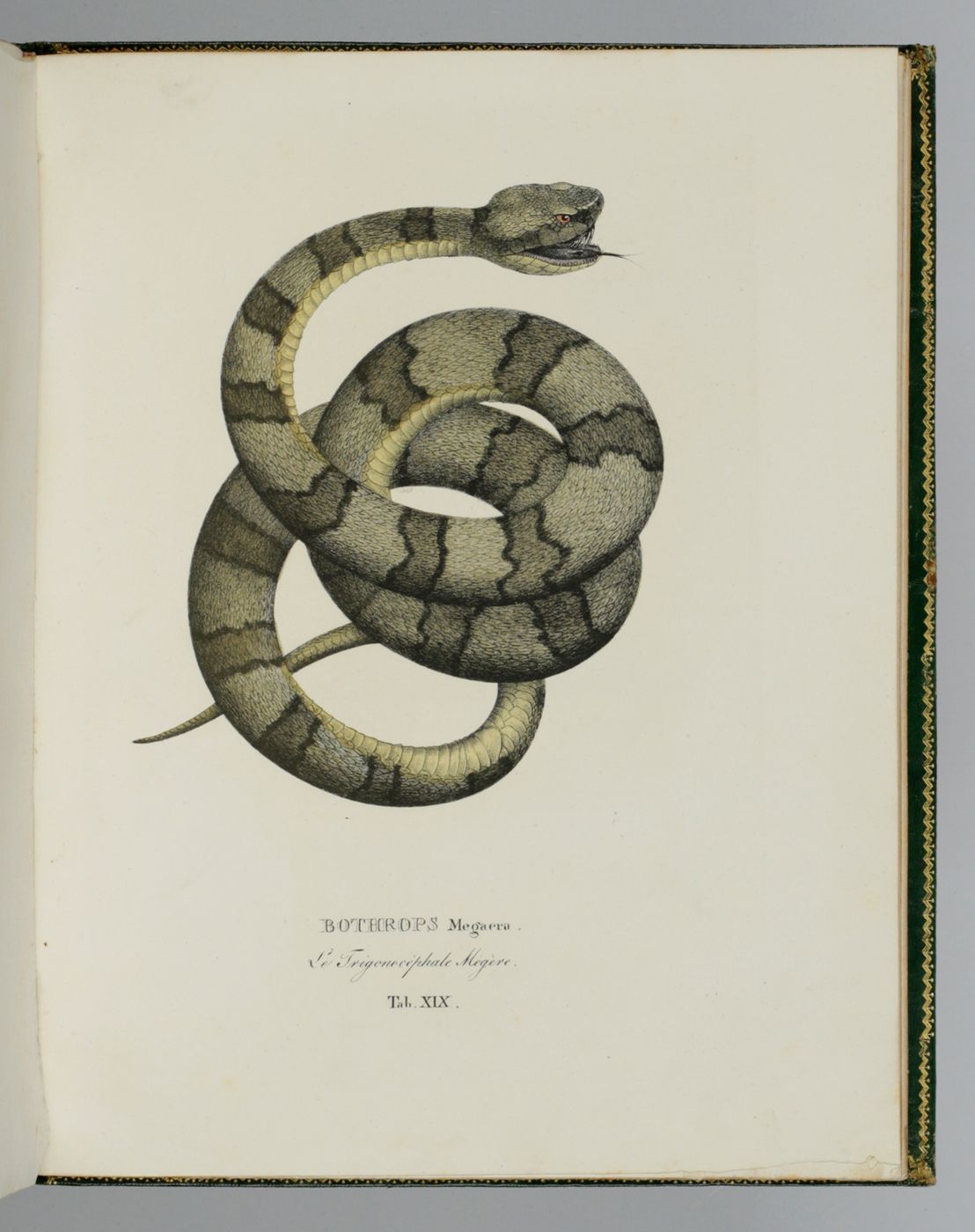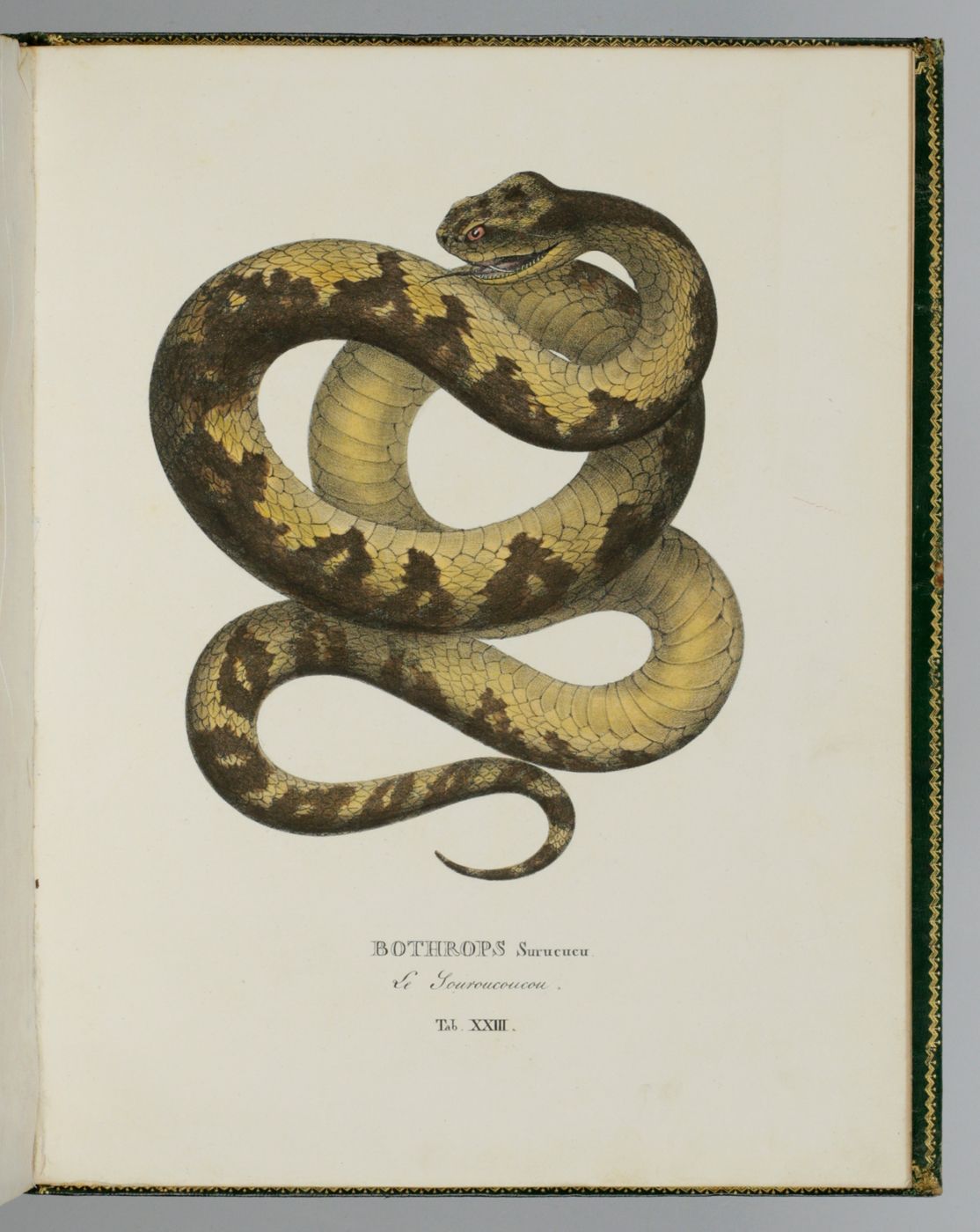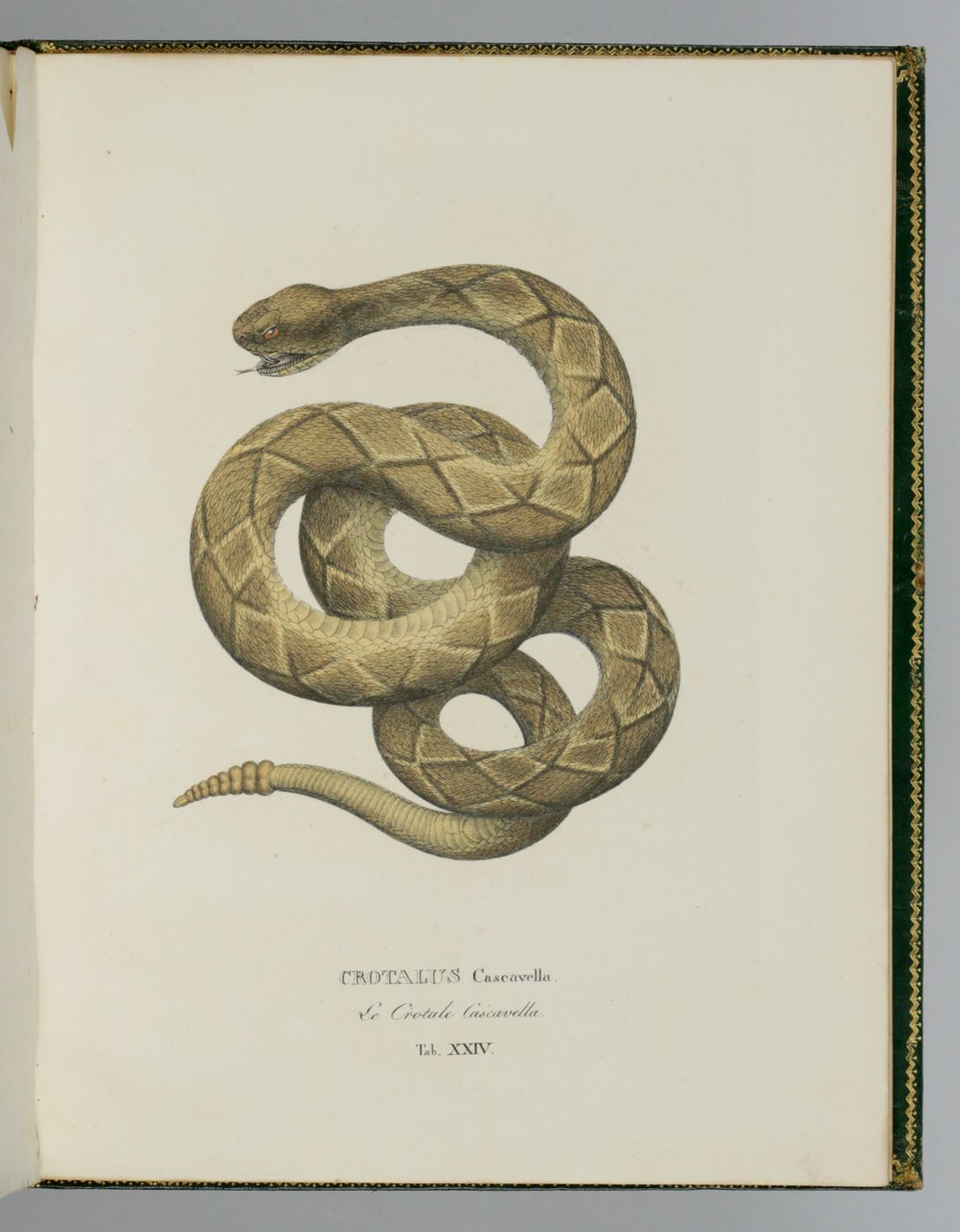
Spix, J. [B.] de and J. [G.] Wagler
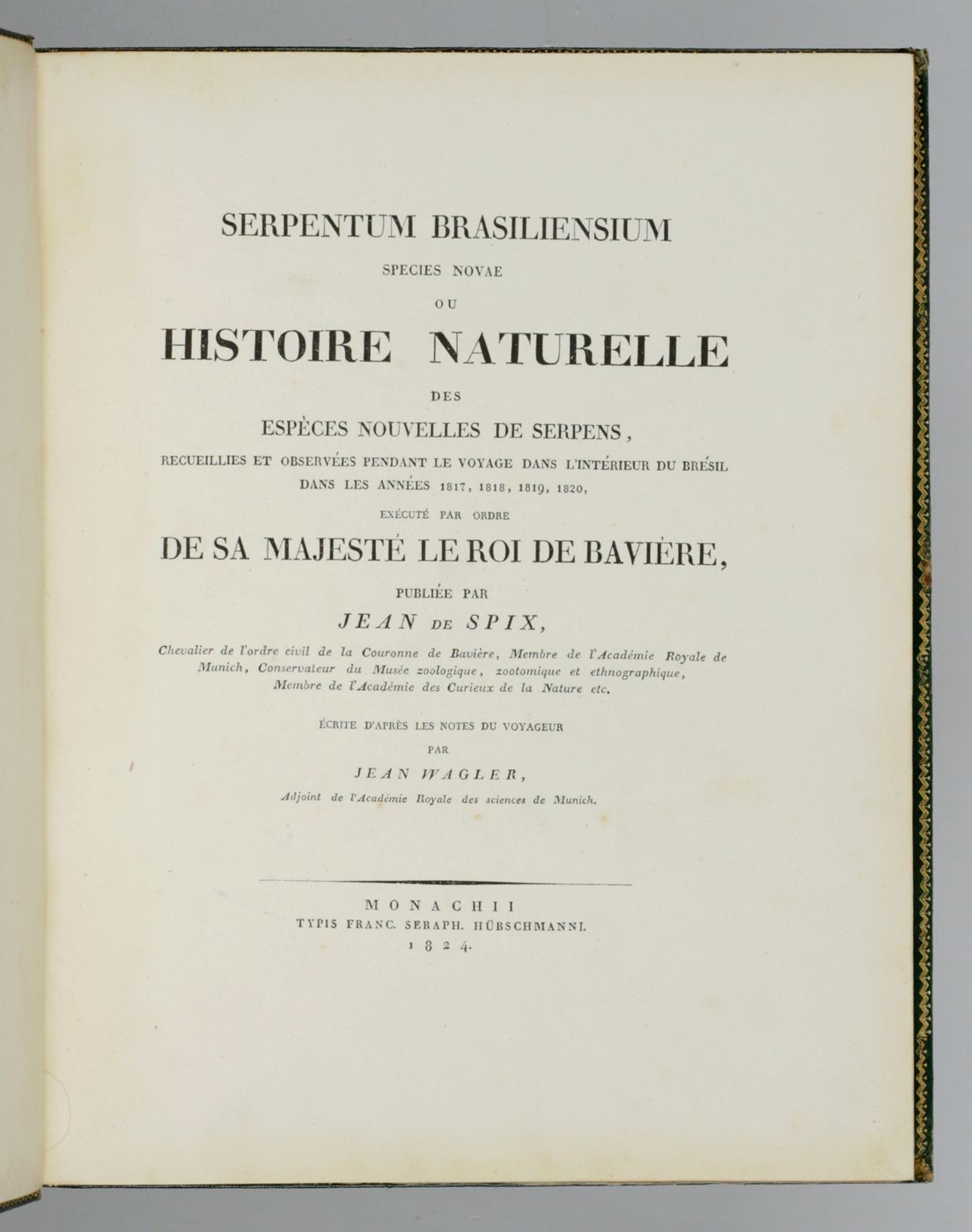
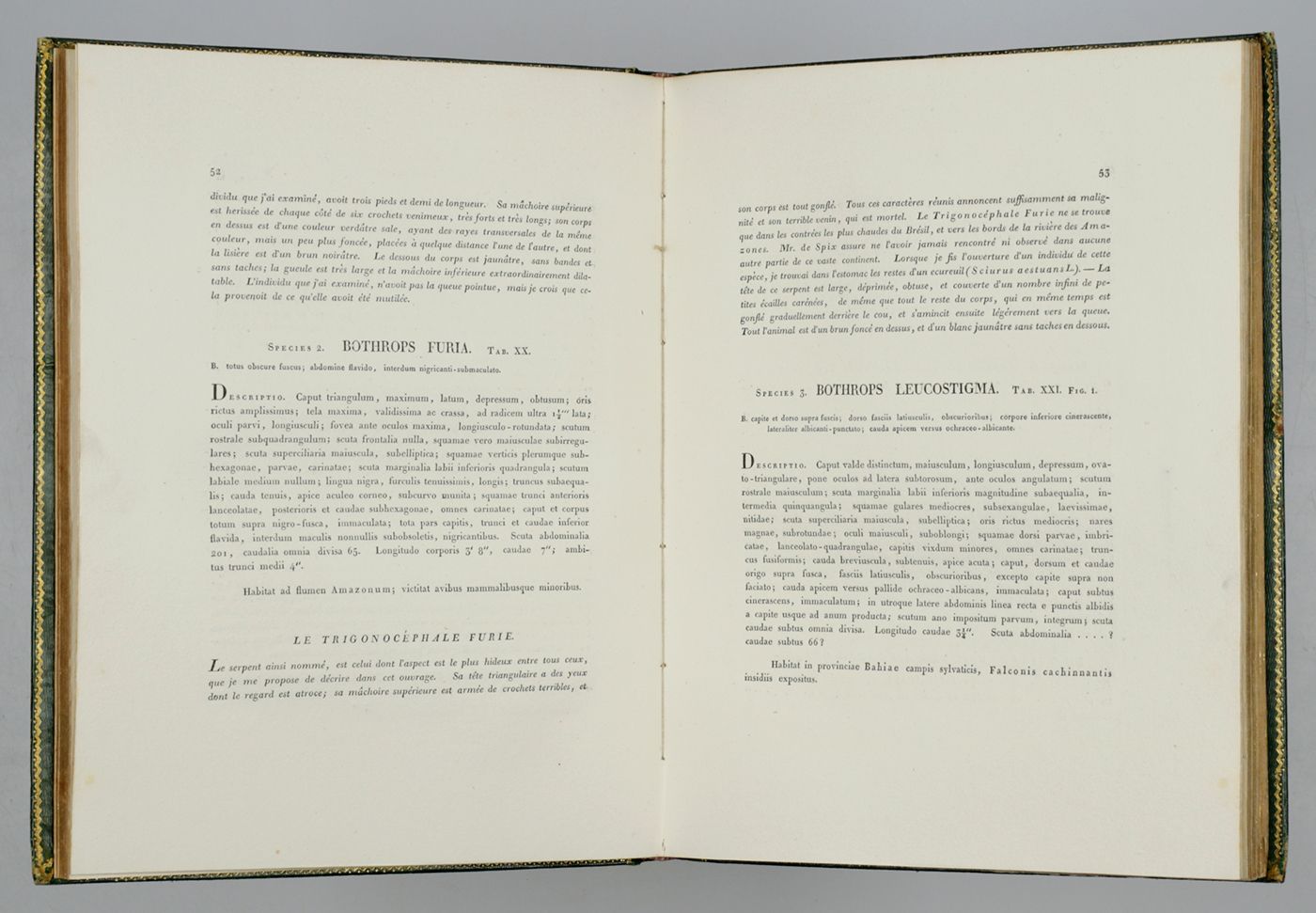
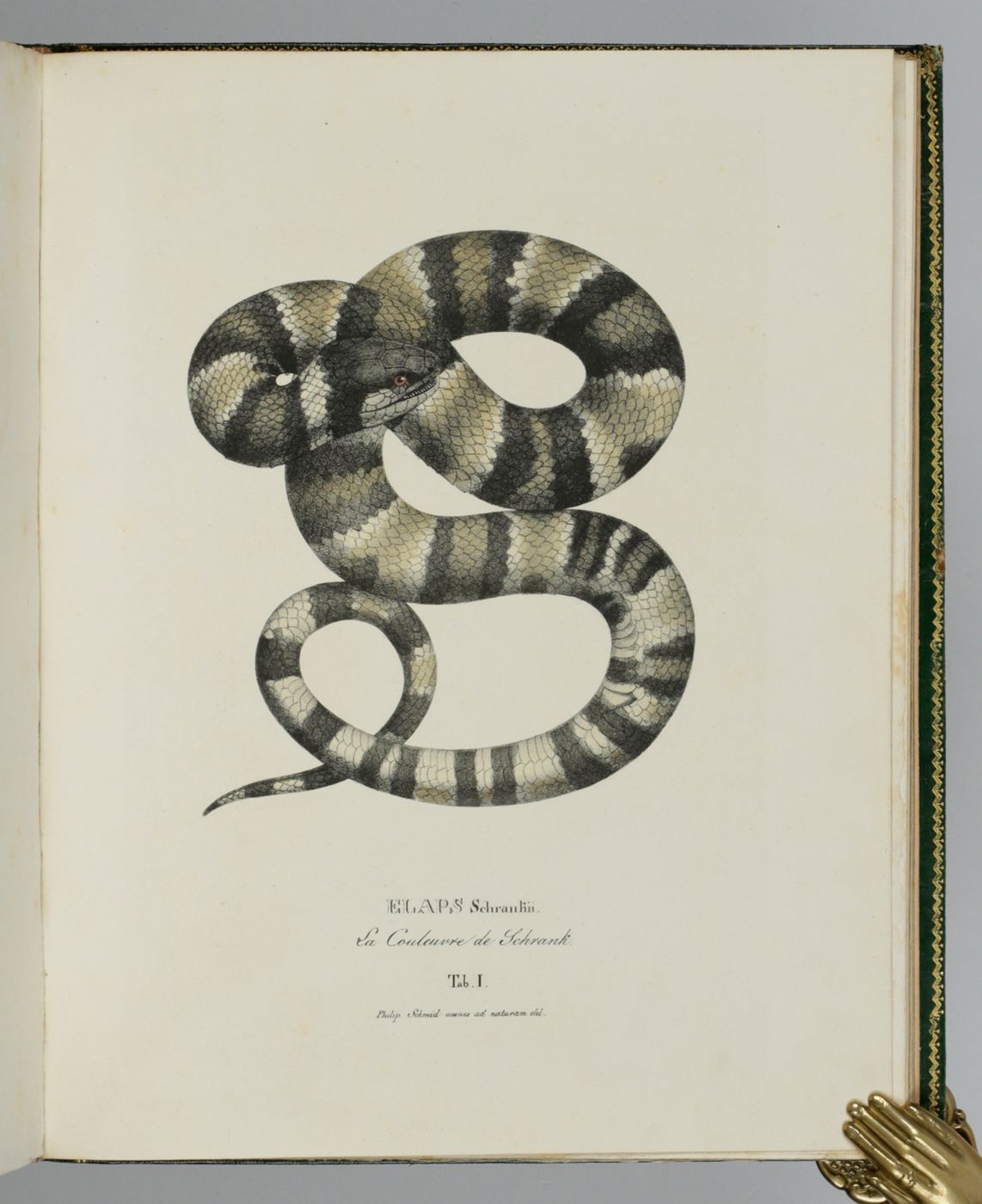
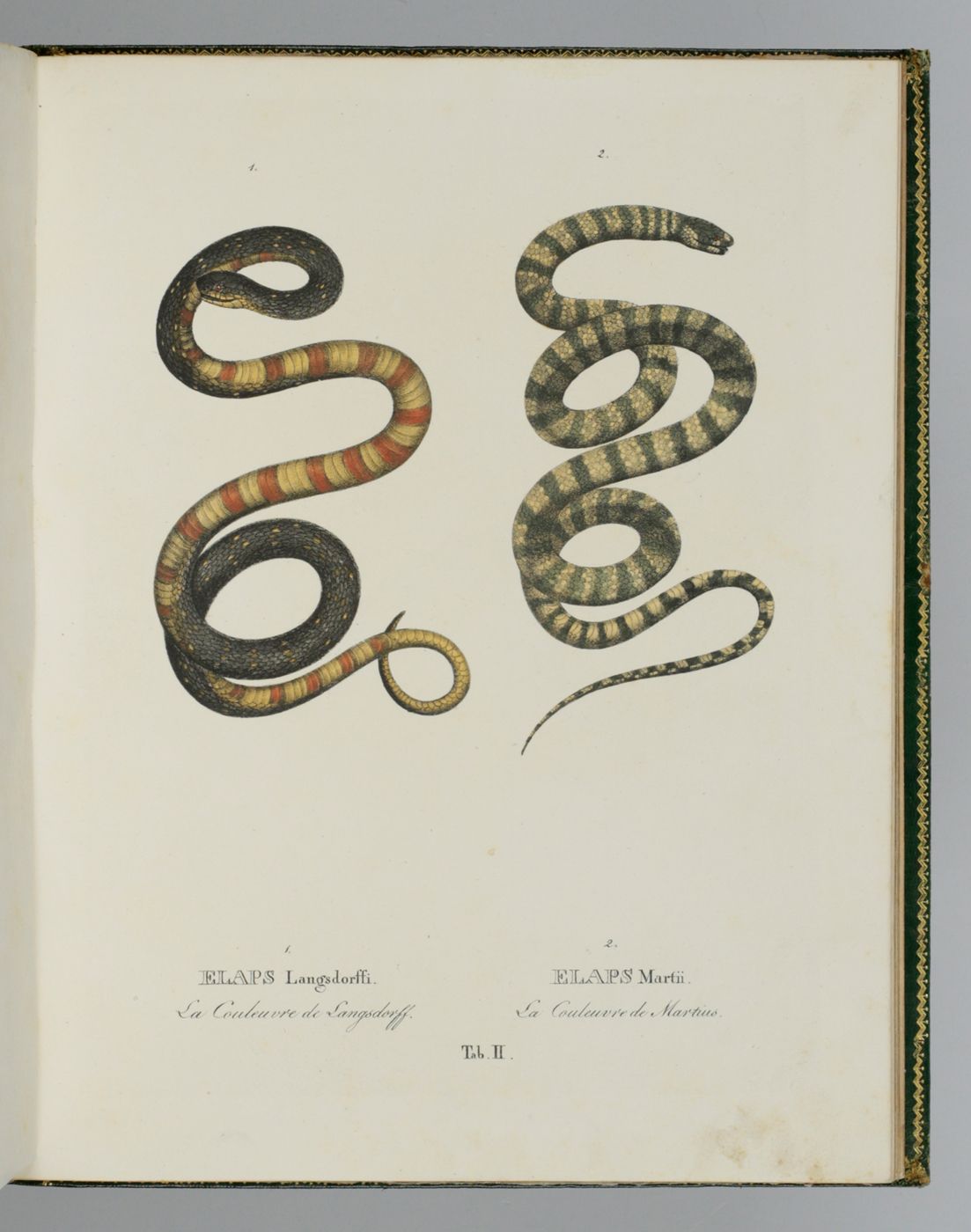
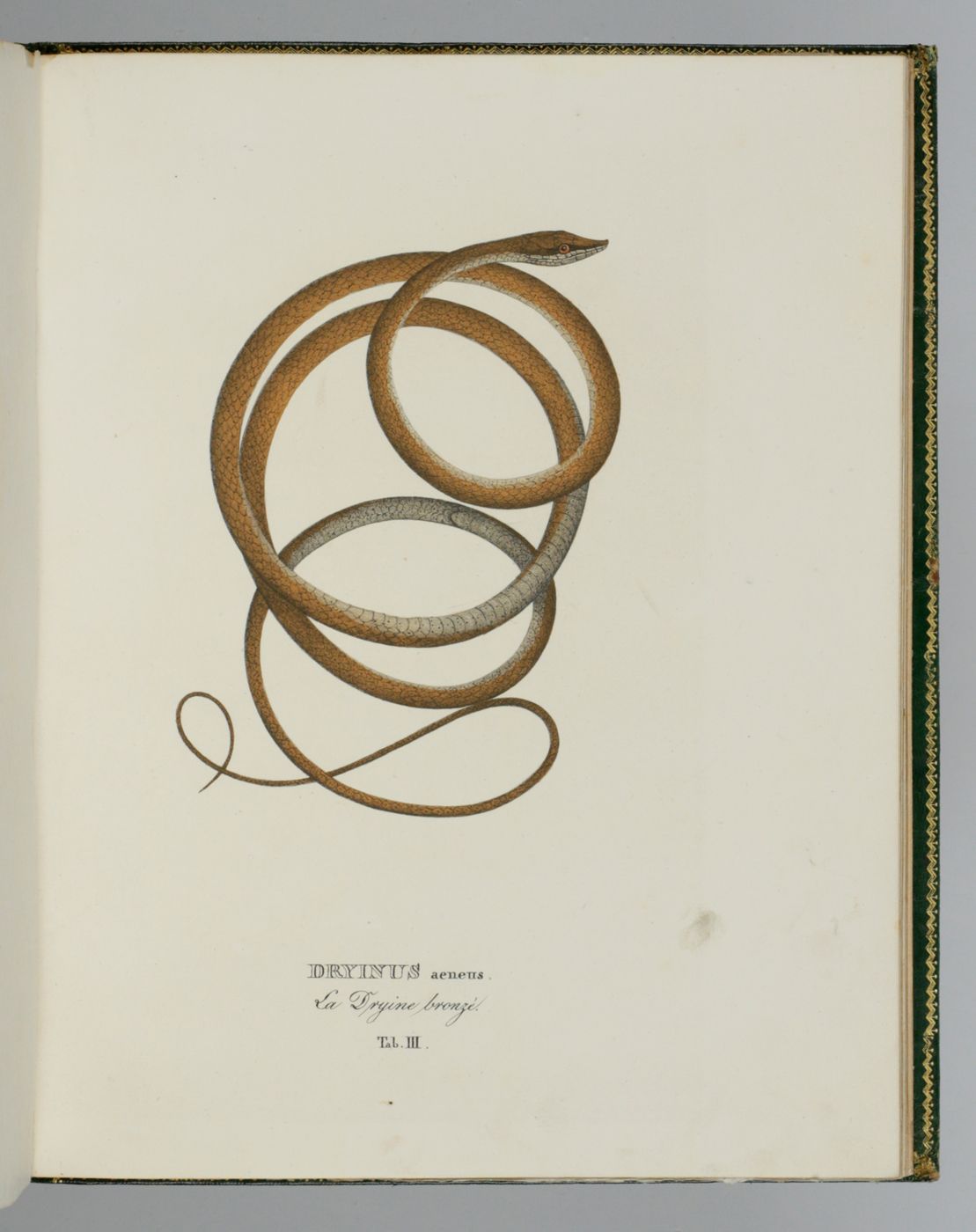
Serpentum Brasiliensium species novae ou histoire naturelle des espèces nouvelles de serpens, recueillies et observées pendant le voyage dans l'intérieur du Brésil dans les années 1817, 1818, 1819, 1820, exécuté par ordre de sa majesté le roi de Bavière, publiée par Jean de Spix, écrite d'après les notes du voyageur par Jean Wagler.
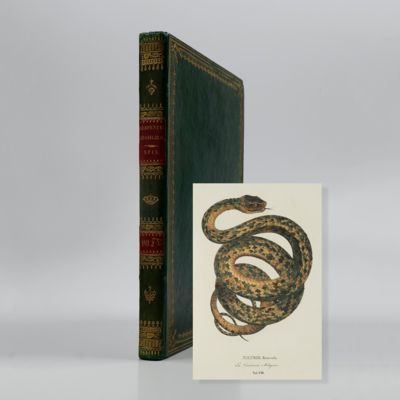
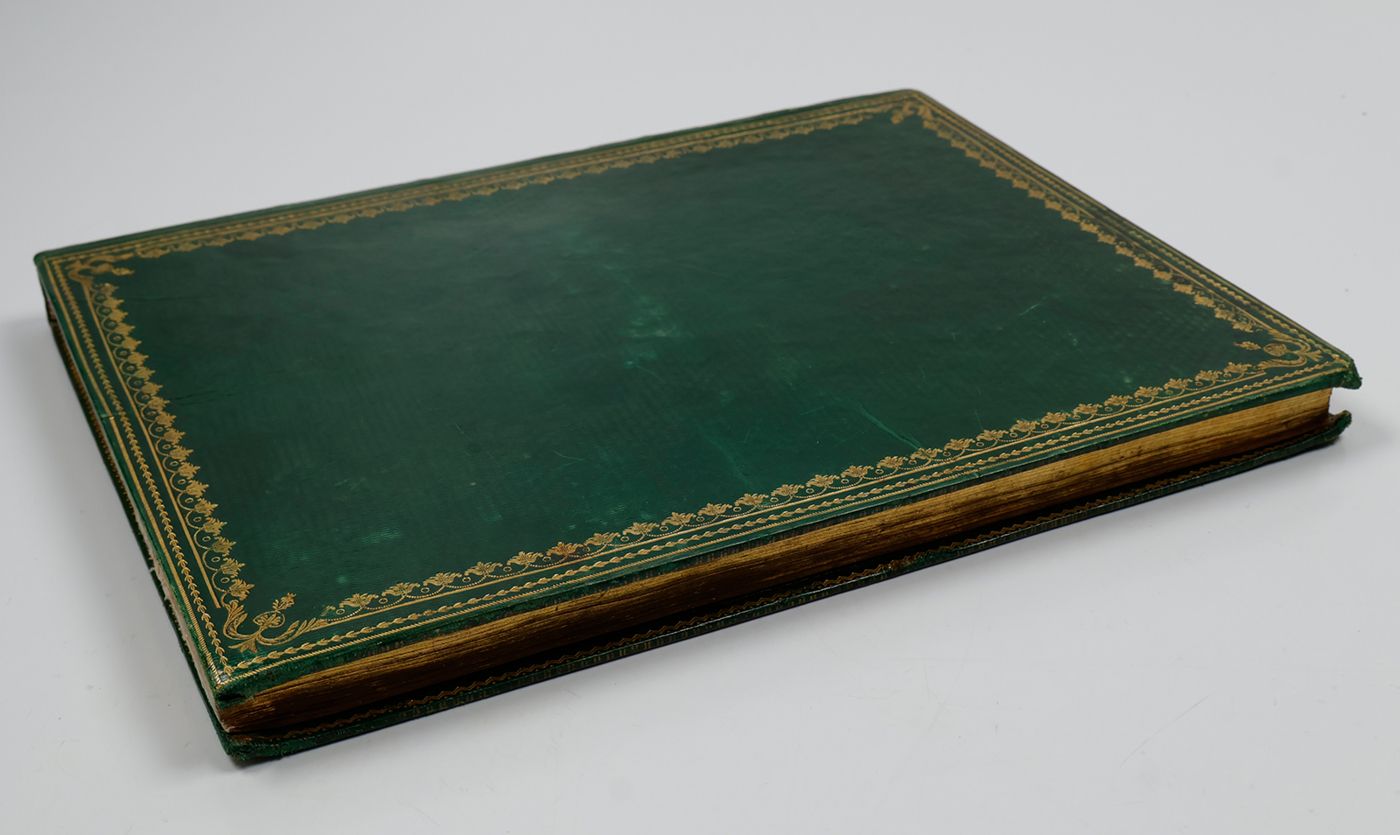
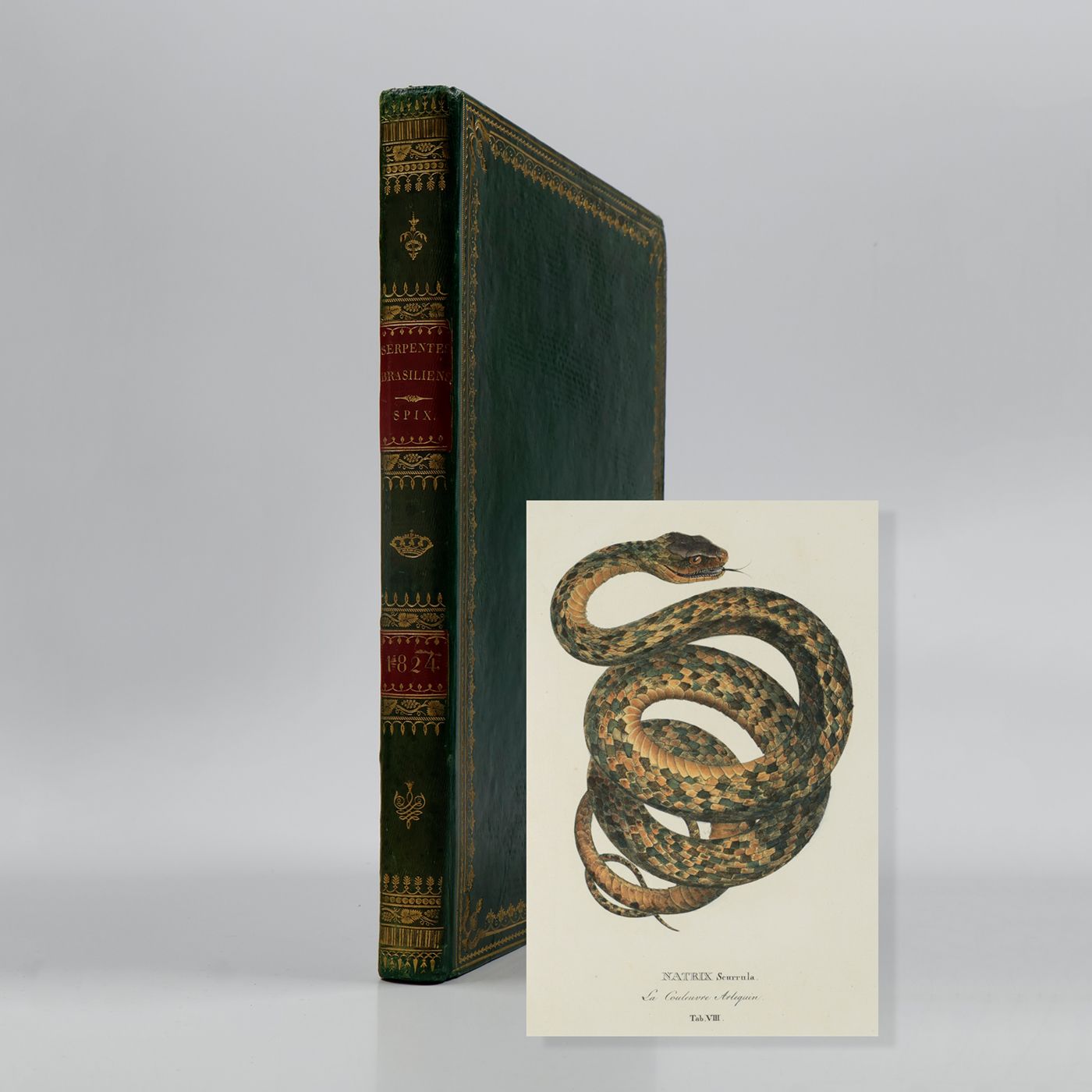
Monachii [Munich], Franz Seraph Hübschmann, 1824. Folio (34.9 x 27.5 cm). viii, 75 pp.; 28 originally hand-coloured, tissue-guarded, lithographed plates. Contemporary full-grained green calf. Boards with gilt-rolled floral borders, edges gilt and gilt inner dentelles; spine with gilt floral bands, gilt vignettes and two red morocco labels with gilt title and date. Pink pastedowns and endpapers. All edges gilt.
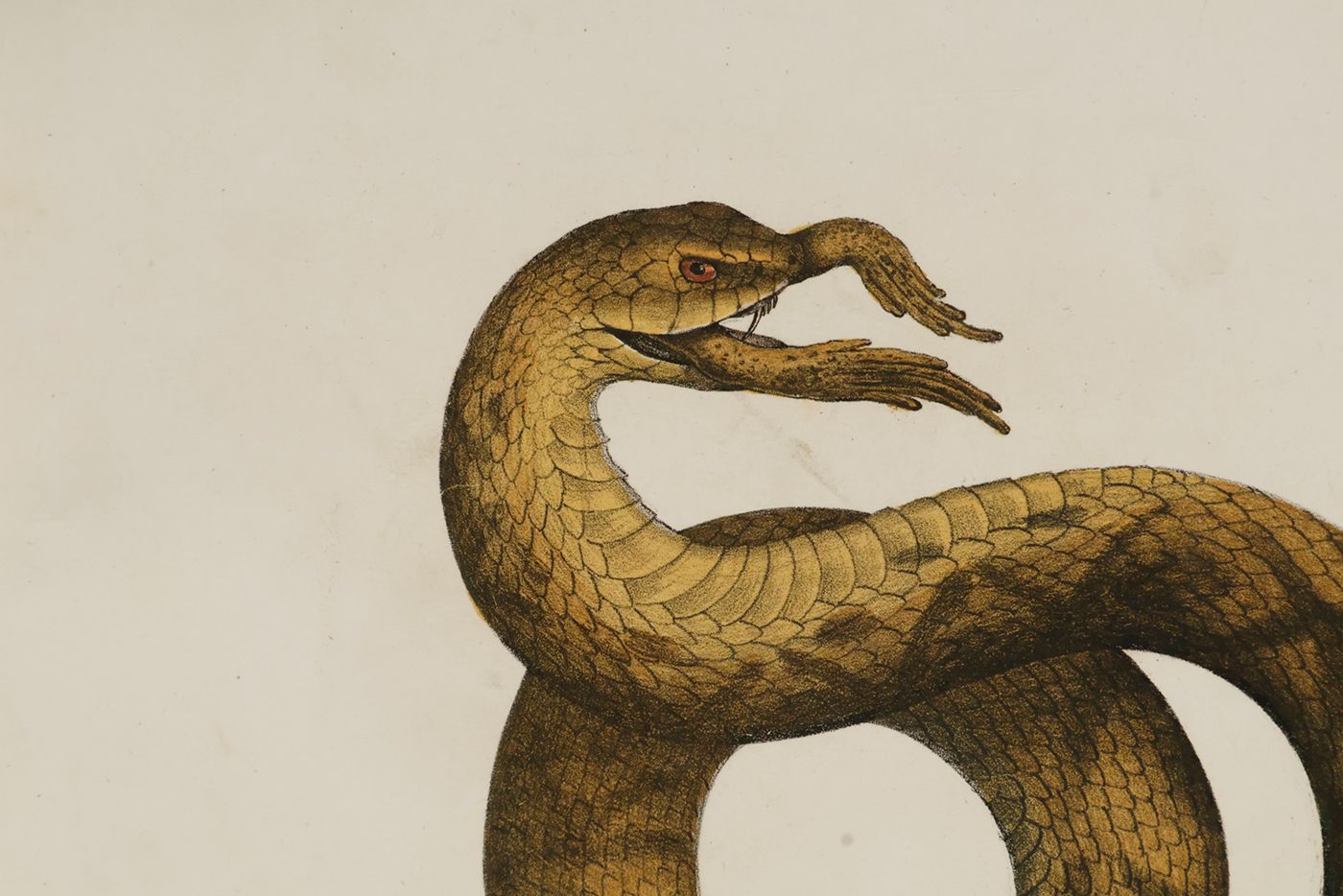
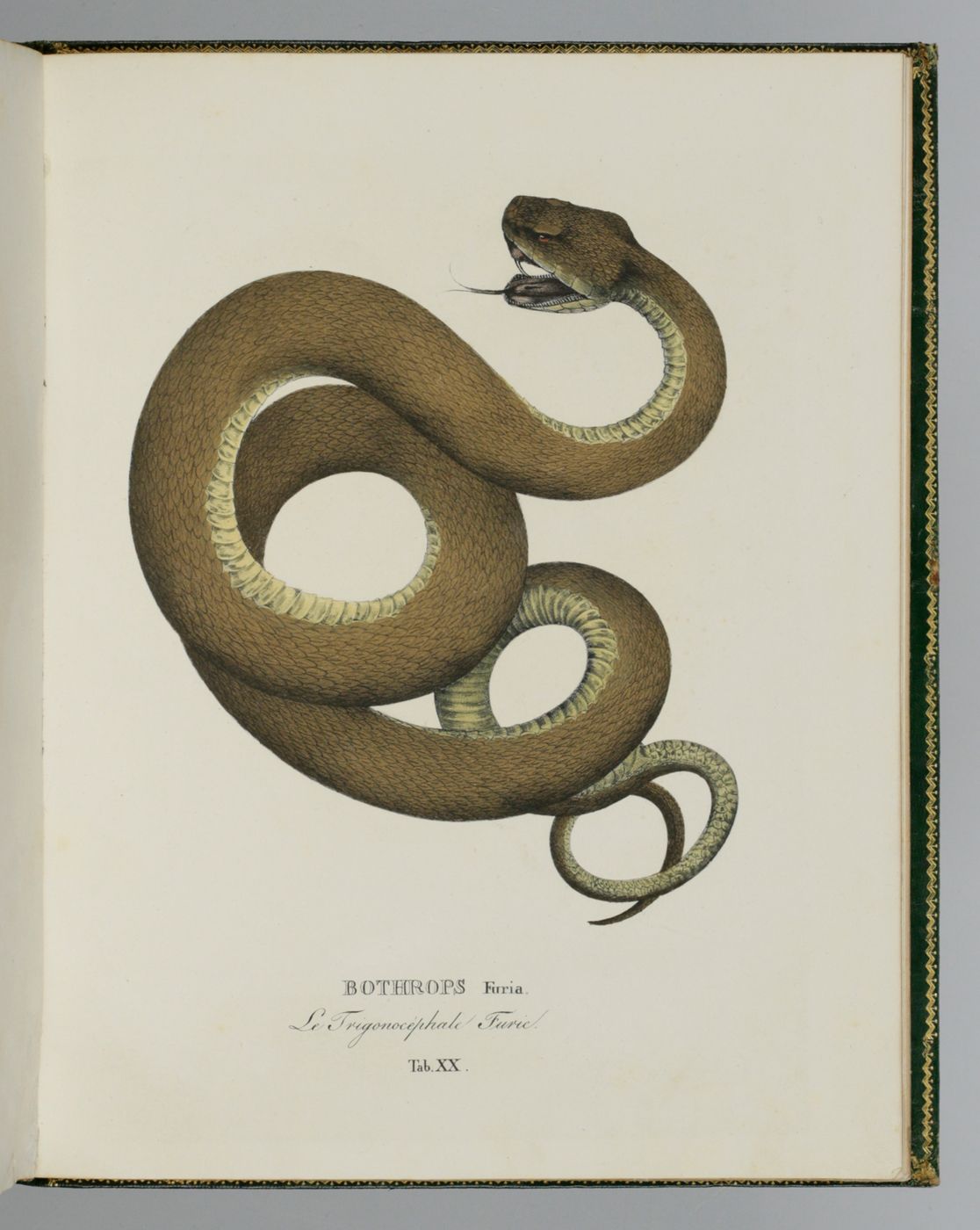
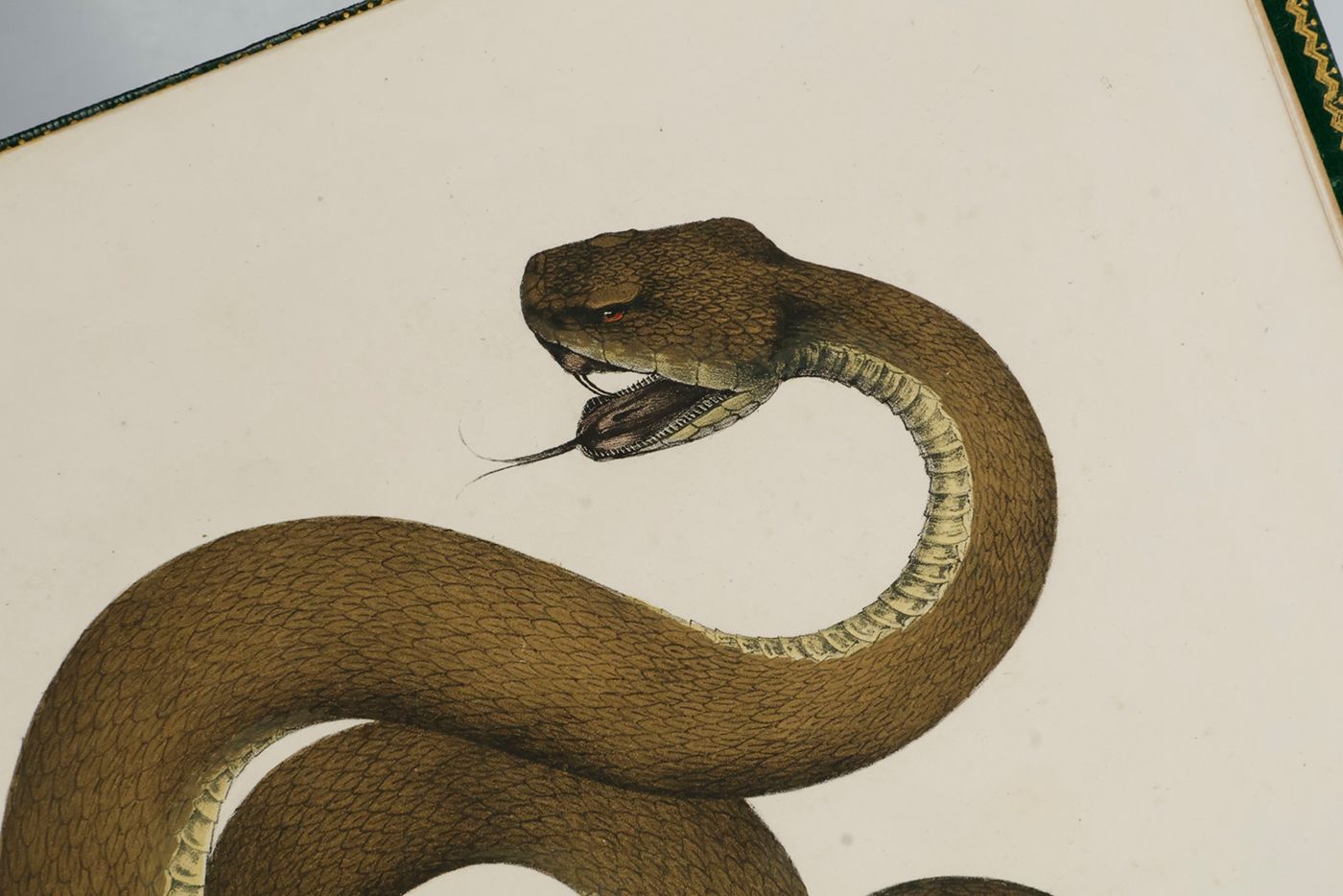
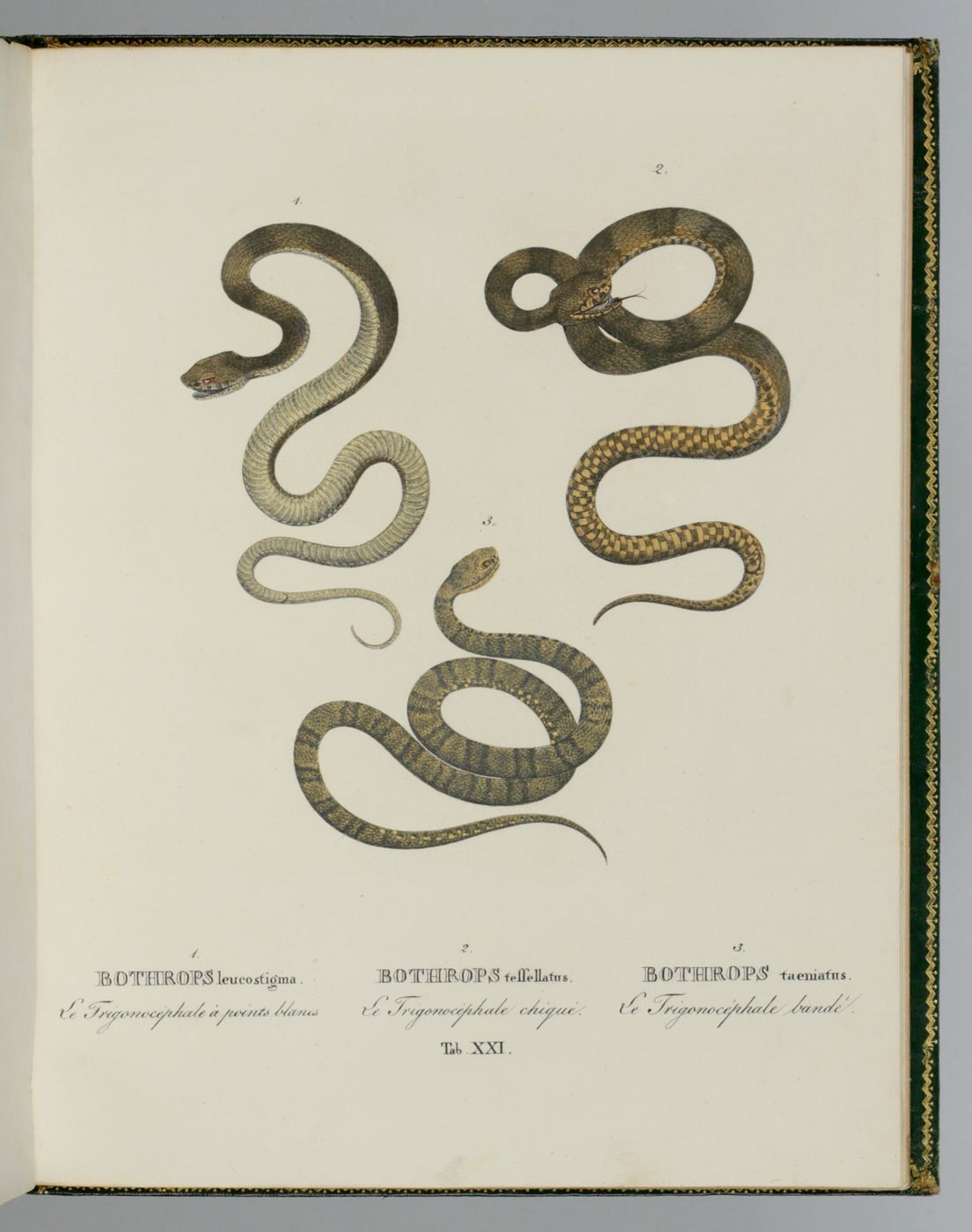
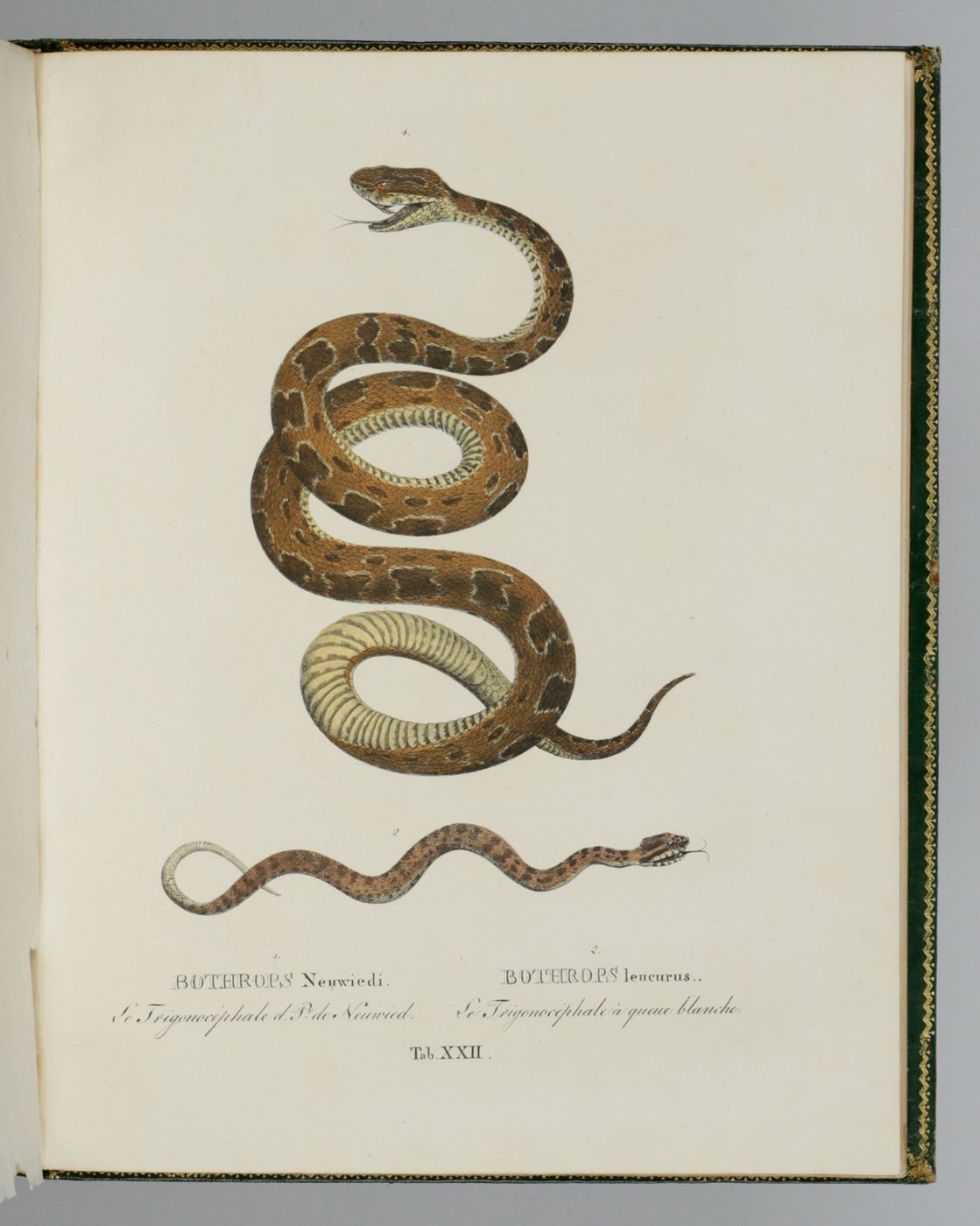
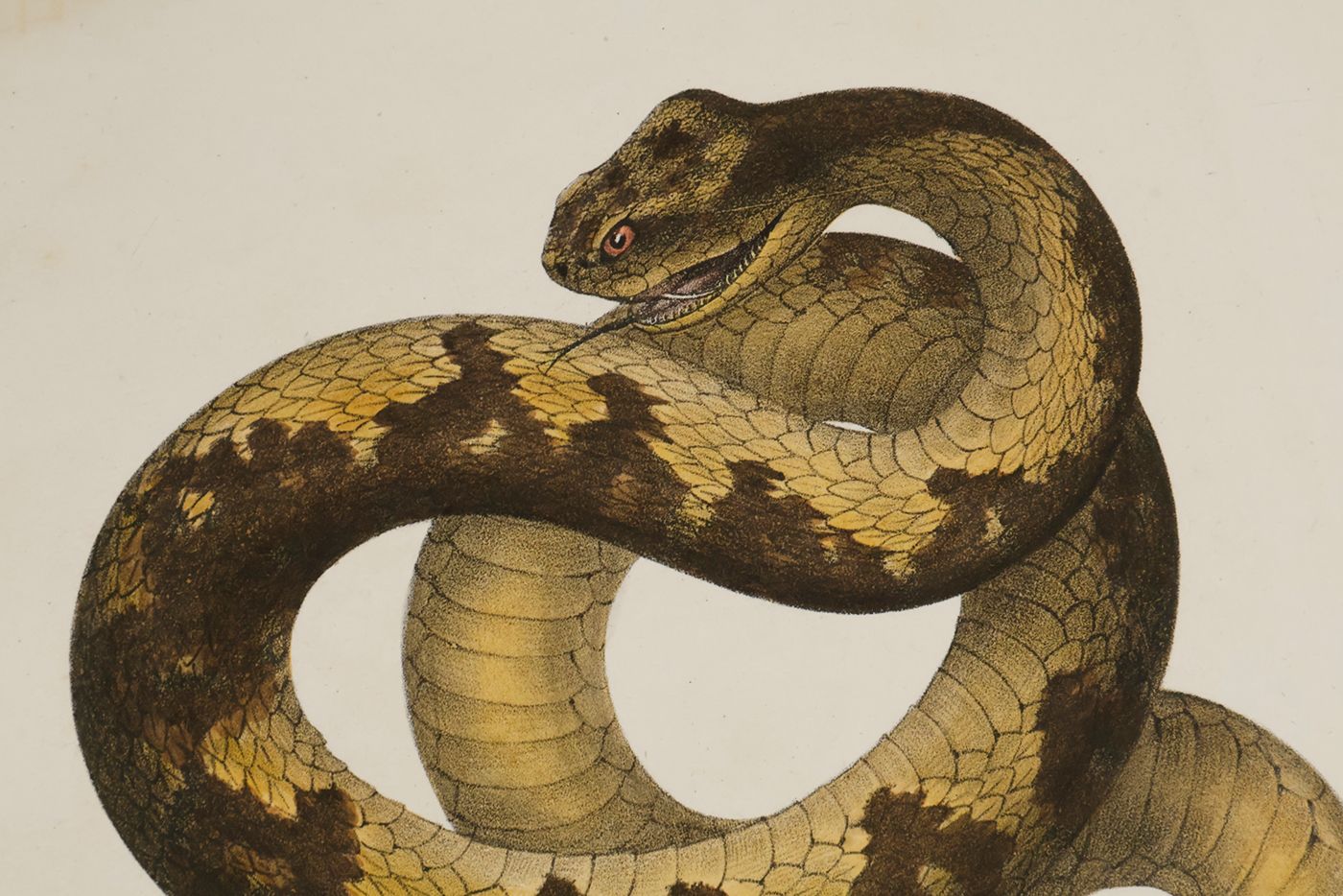
A very rare, fundamental treatise on reptiles in general and especially of Brazil. It includes extensive descriptions and fine illustrations of many new snakes from areas never visited by zoologists before. This copy comes in a sumptuous contemporary binding. This work has variously been attributed to "Spix and Wagler" [as we do here], "Spix" (e.g., Borba de Moraes, Cat. BM[NH] p. 1992, Nissen), "Wagler" (e.g., Adler, Cat. BM[NH], p. 2245, Vanzolini, Casey Wood), and even, totally erroneously, "Spix and Martius". We think it is fair to list both Wagler and Spix as authors, also because all (new) taxa in this work, officially have "Wagler and Spix" as authors. "The snakes were entrusted to Wagler and resulted in his first book, Serpentum Brasiliensium (1824, reprinted 1981), which was in part written from Spix's notes. ... Wagler died in Moosach, a small village near Munich, on 23 August 1832, nine days after accidently shooting himself in the arm" (Adler, p. 24). This is only the second herpetological work using lithographs, preceded only by Schmidt's Naturhistorische Beschreibungen der Amphibien, Munich 1819. The artist for the Spix plates is Philip Schmid who also worked for his brother J. Schmid. The list of subscribers is largely a who's who of European, mainly German and Austrian, higher nobility (pre-ordering 45 copies in all), as well as some libraries (7 copies), private purchasers including lower nobility (6 copies), and booksellers in Leipzig, Hamburg, Leiden, Amsterdam, Saint Petersburg, and Vienna (57 copies). We found only three post-WWII auctions, the last in 1985. A magnificent, clean, unmarked copy. Adler I, pp. 23-24; Borba de Moraes, pp. 828-829; Nissen ZBI, 3952; Vanzolini I, pp. 32-33; Casey Wood, p. 616. Not in Sabin.