Butterflies, caught with scissors
[Scissor Art and Lepidochromy]
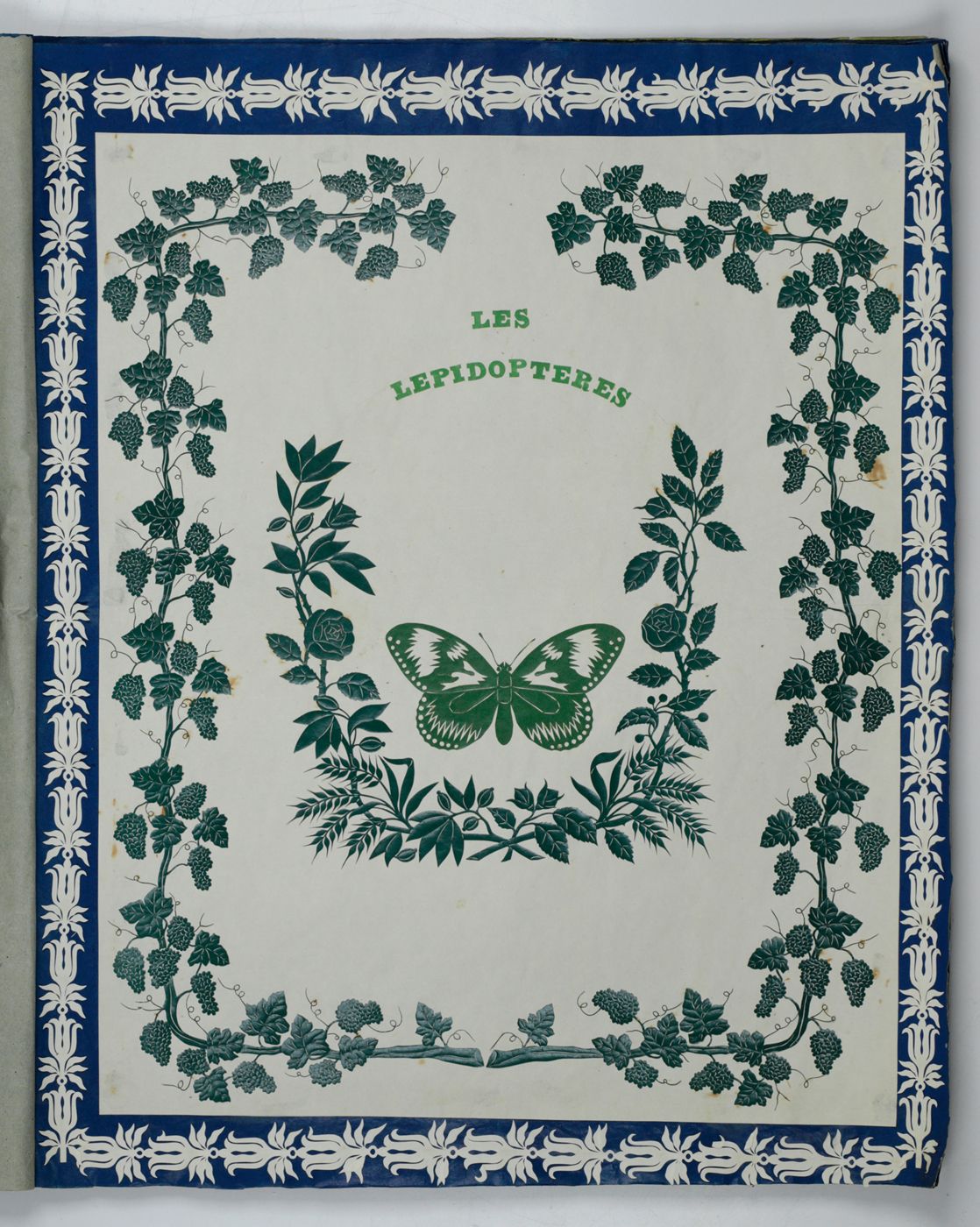
Les Lépidoptères.
Published
[1845]
Item ID
78933
€15,000.00
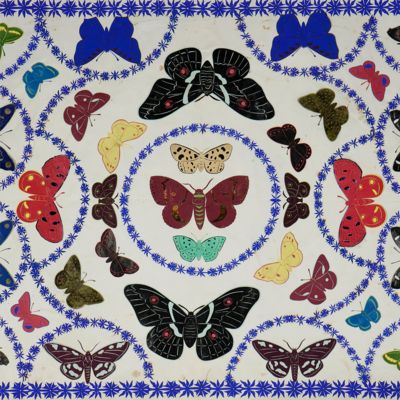
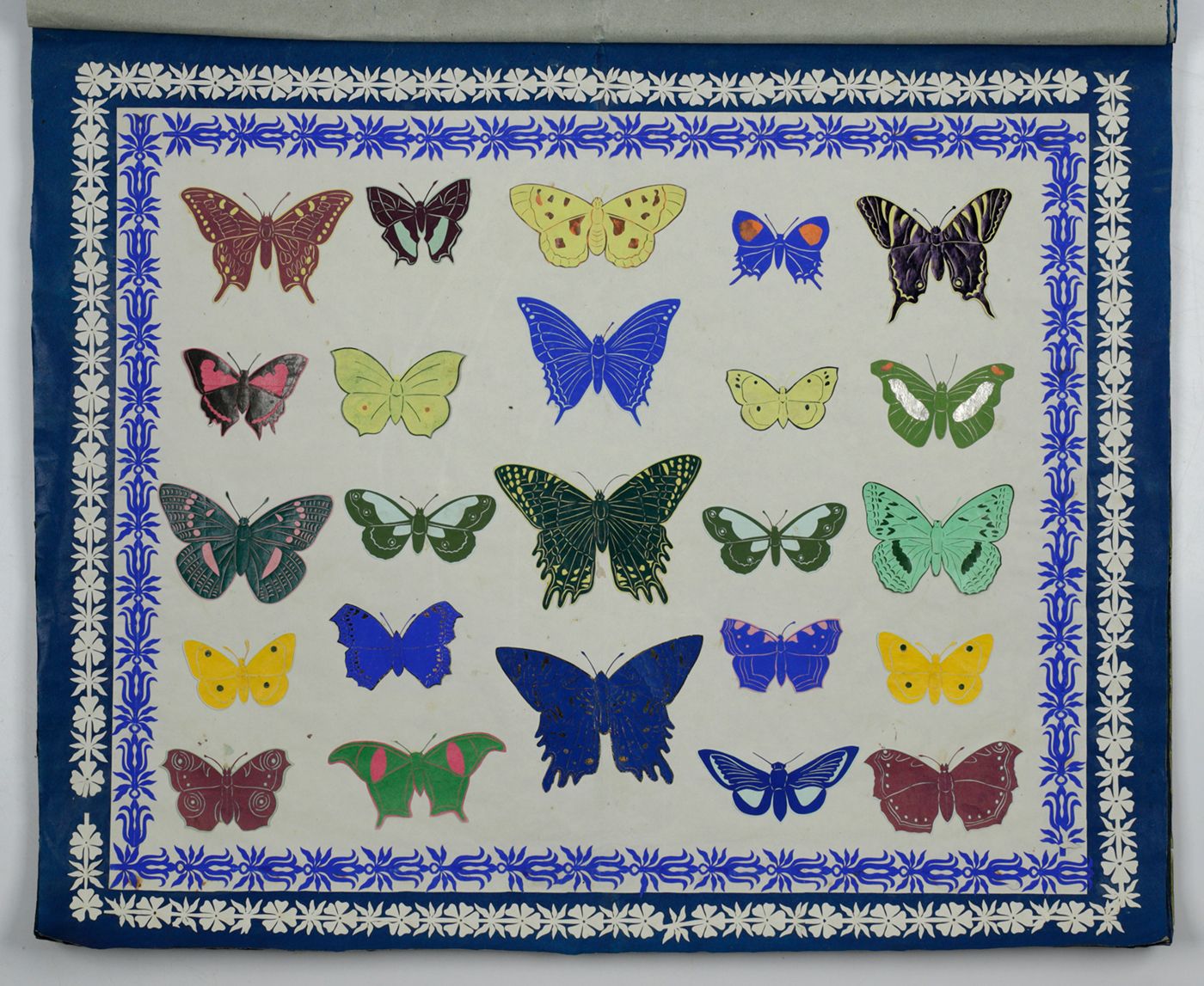
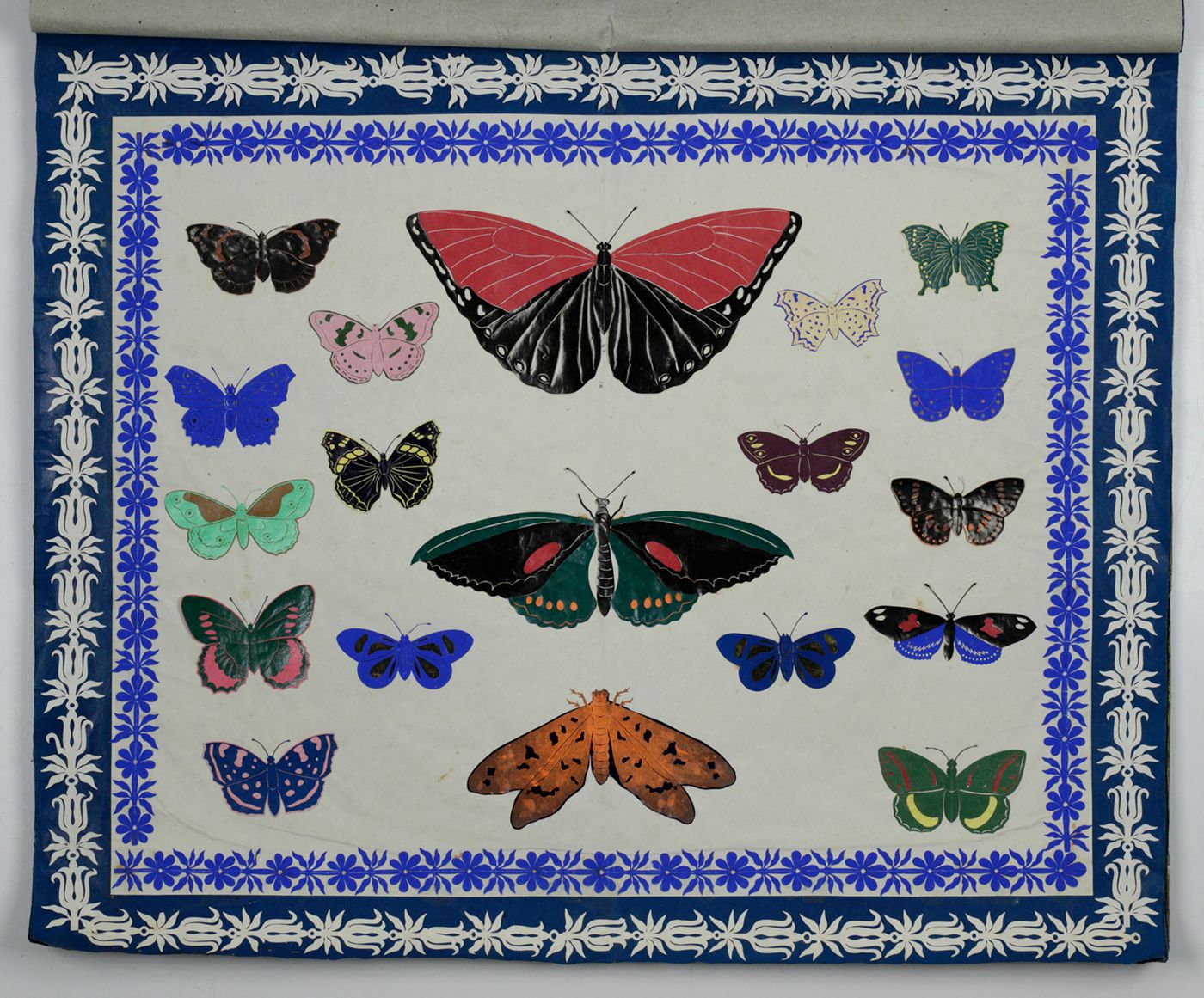
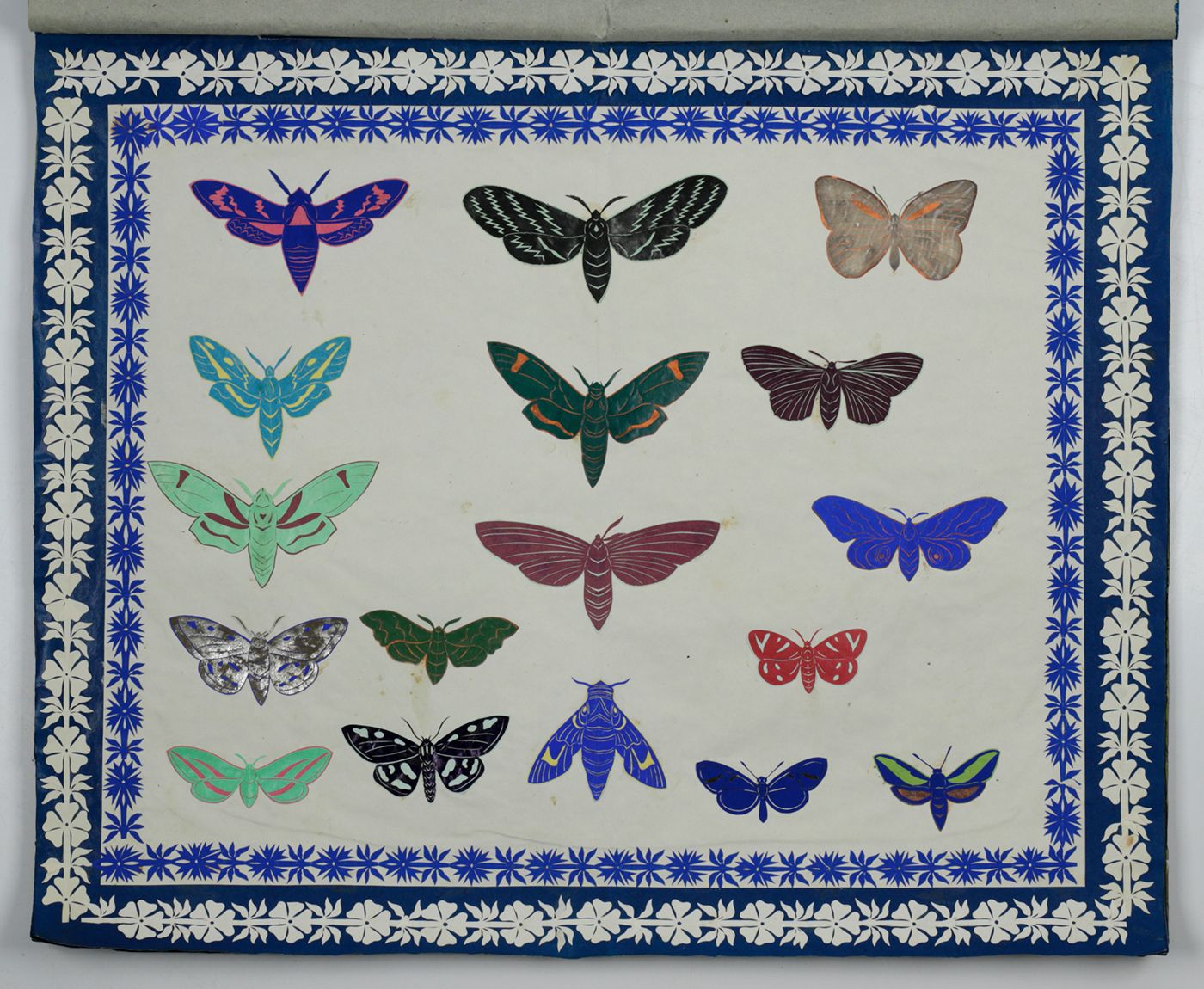
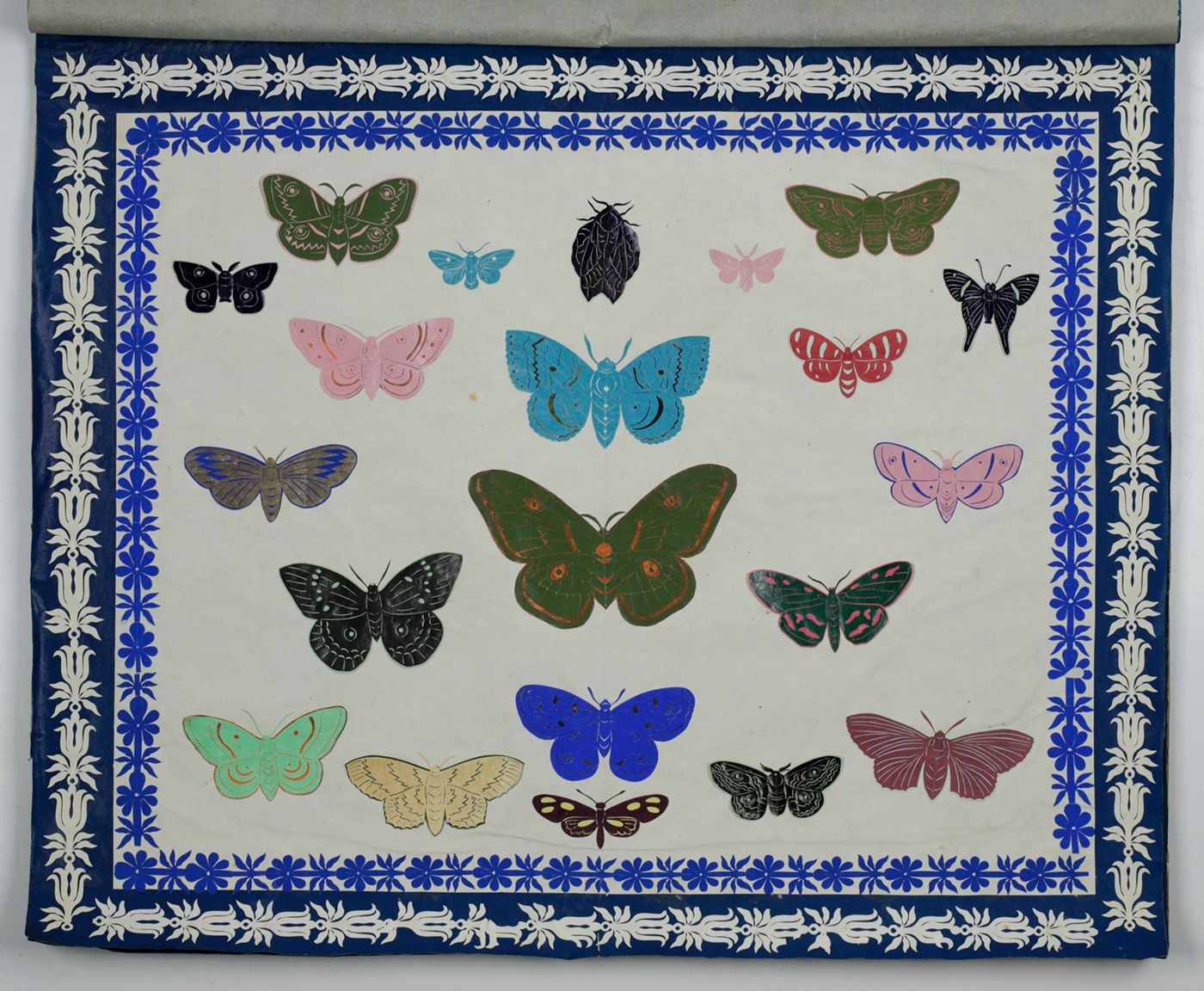
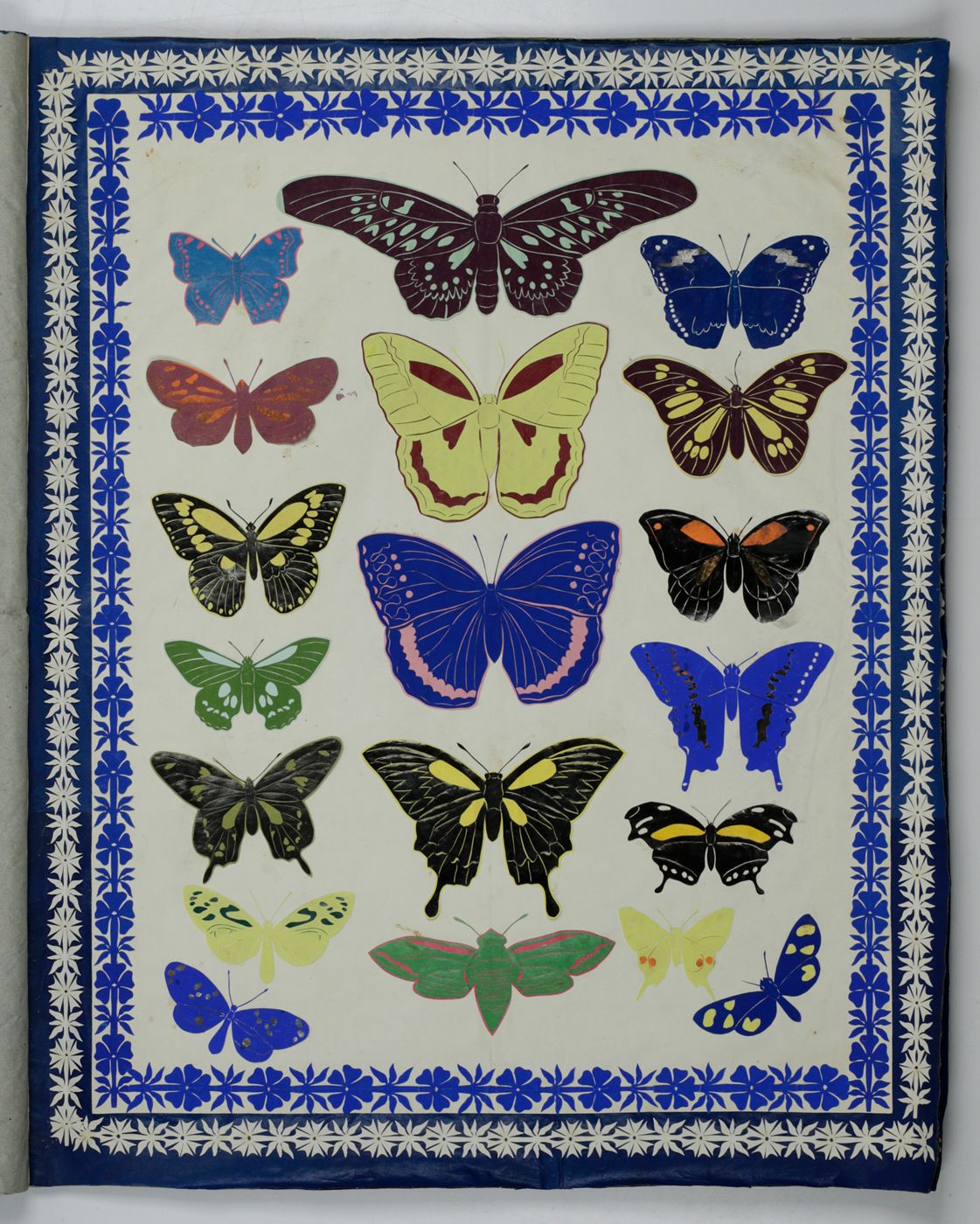
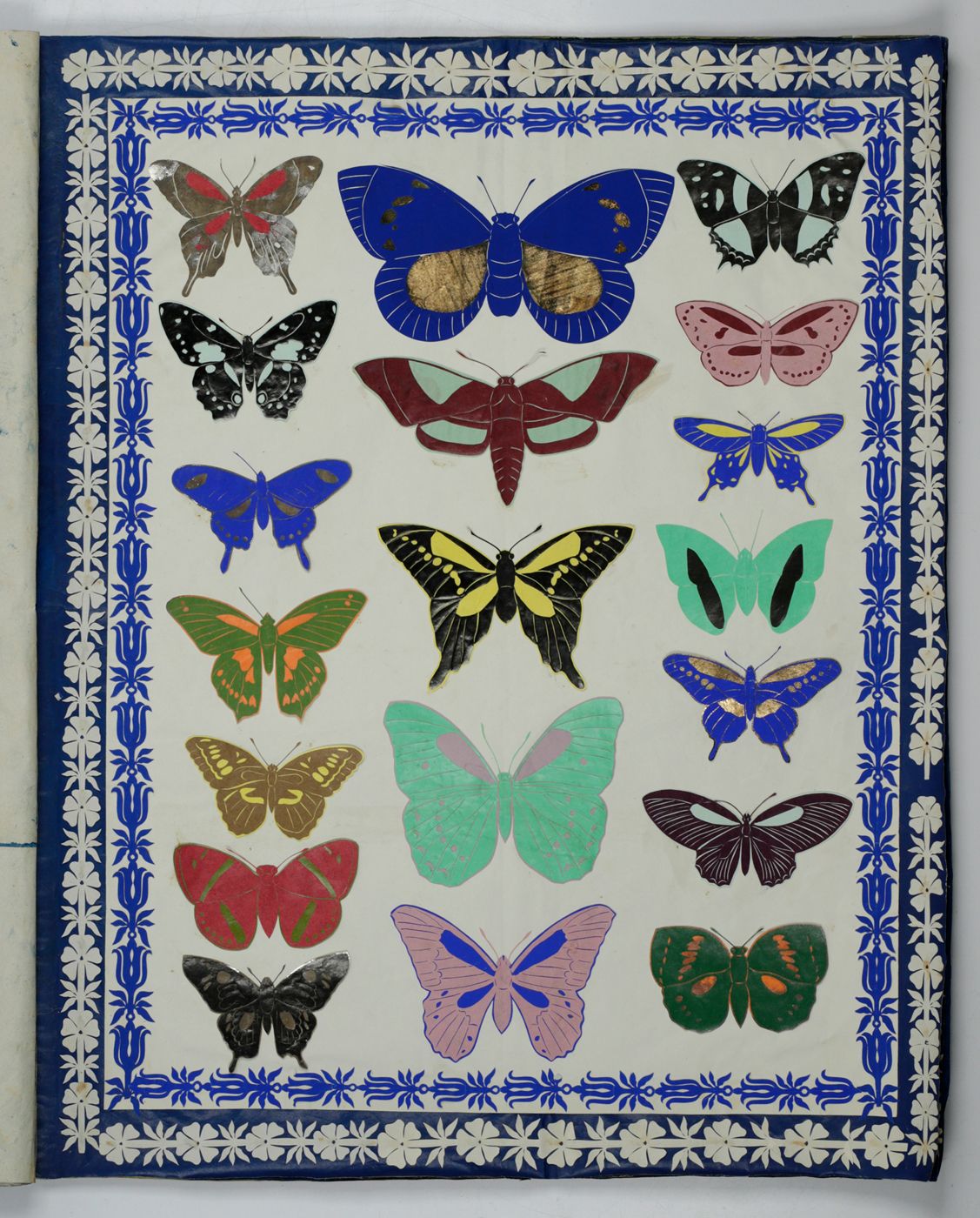
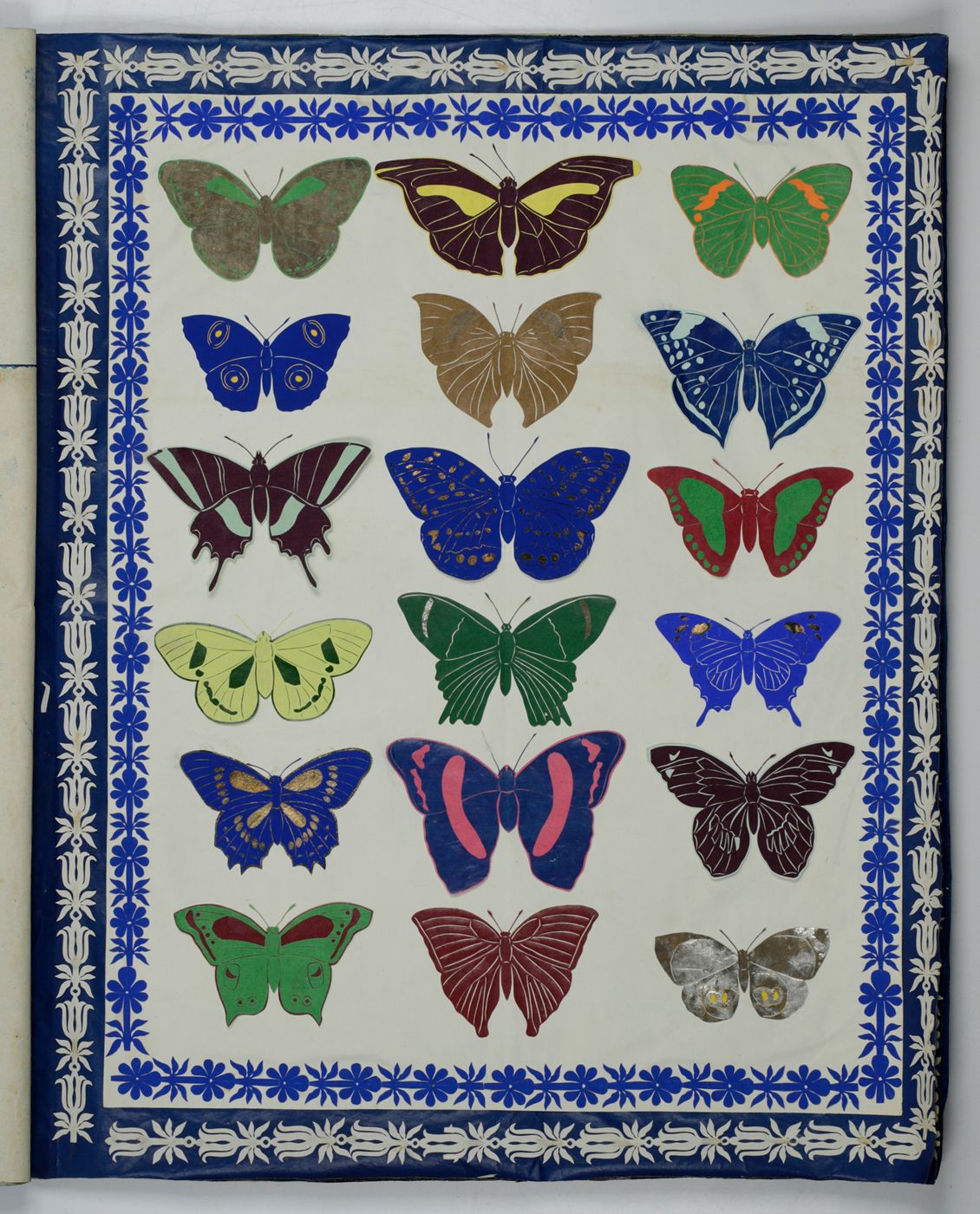
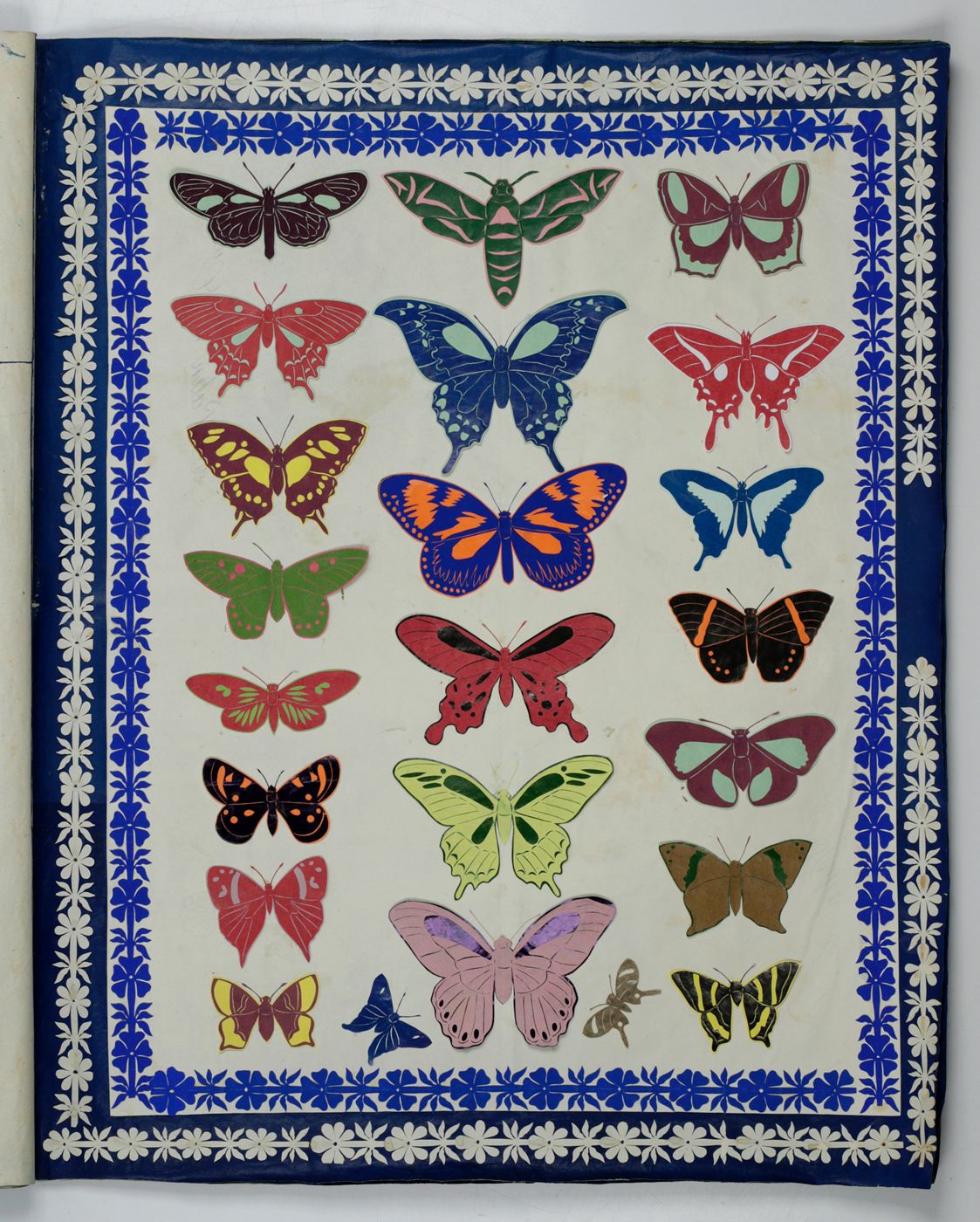
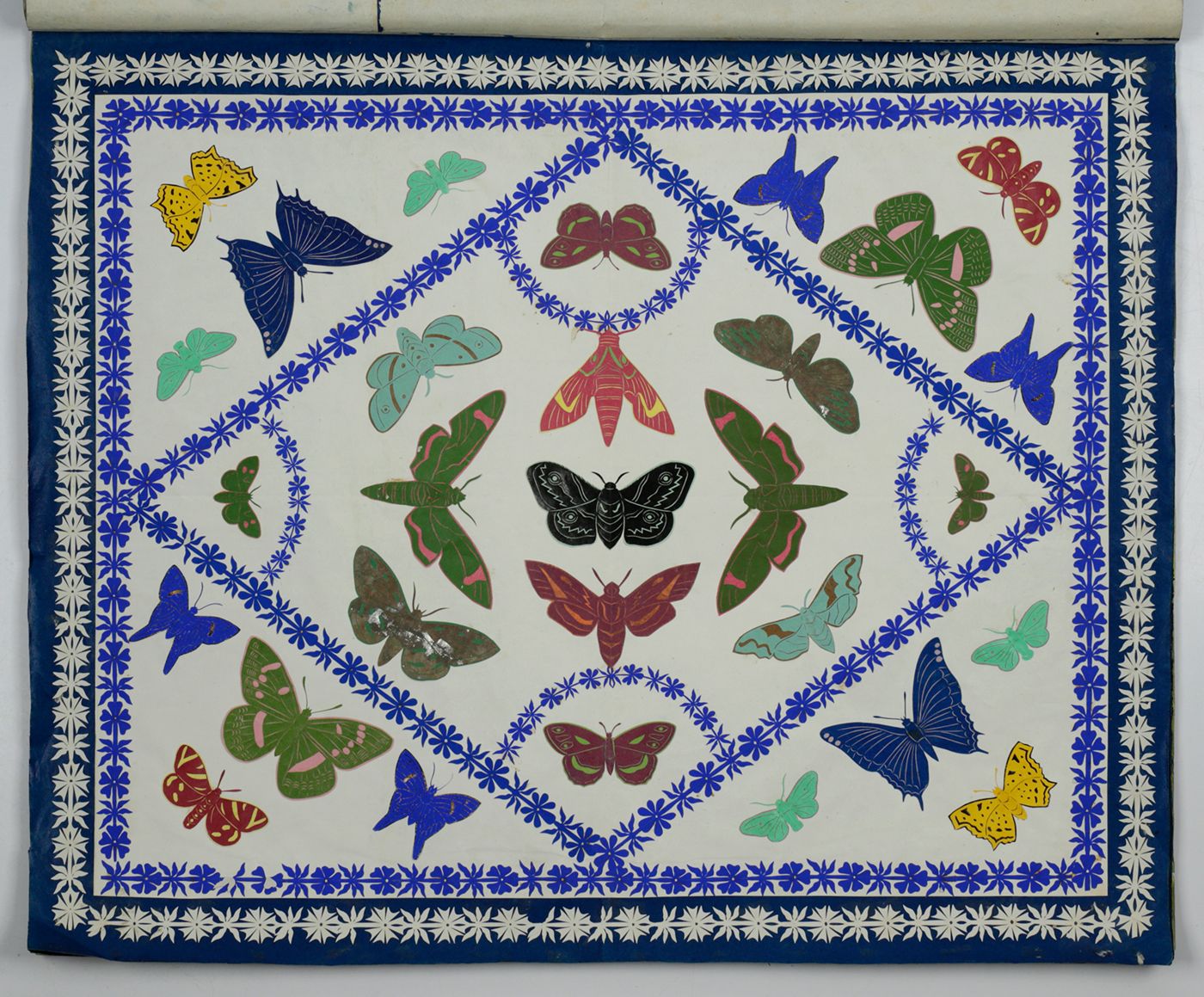
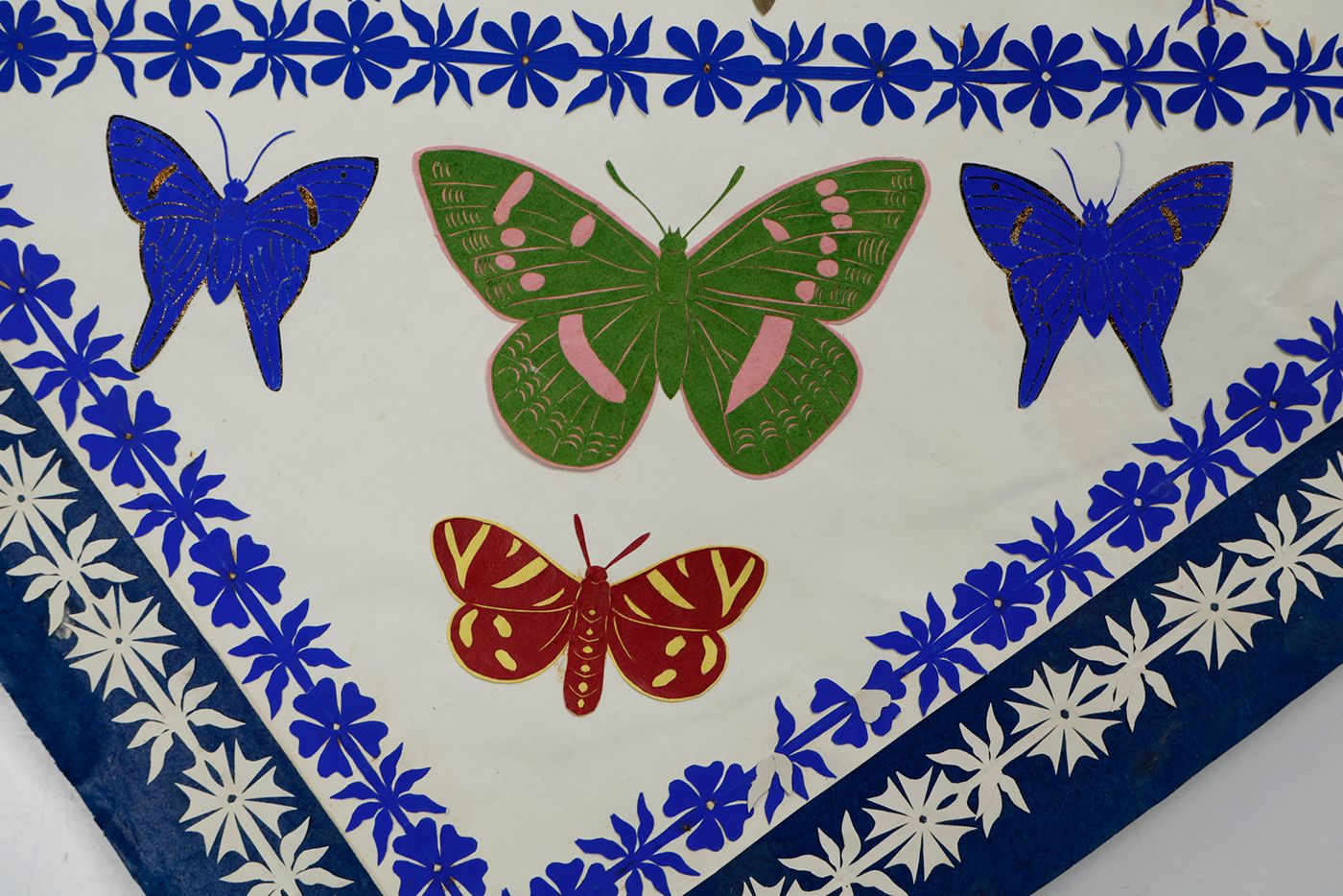
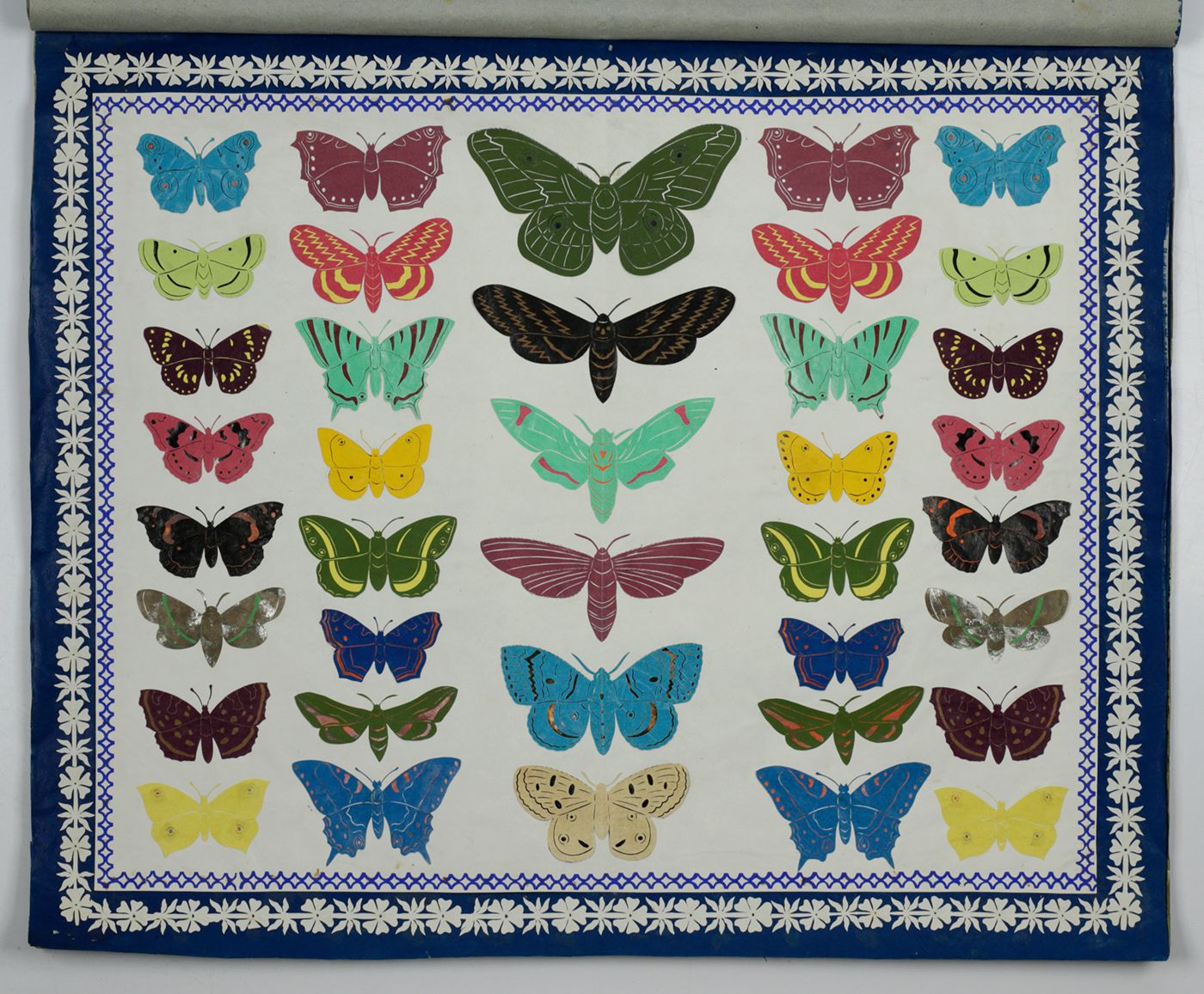
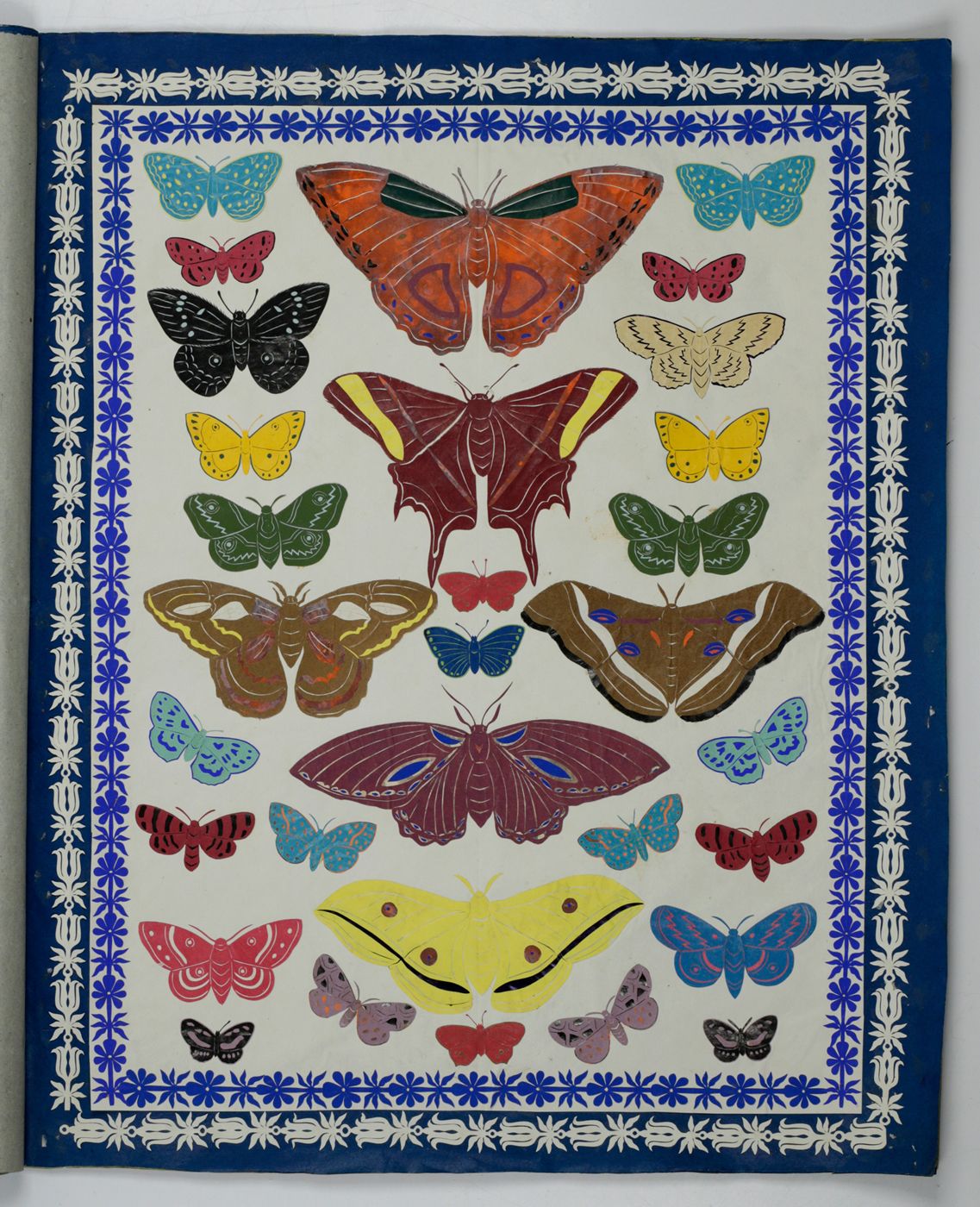
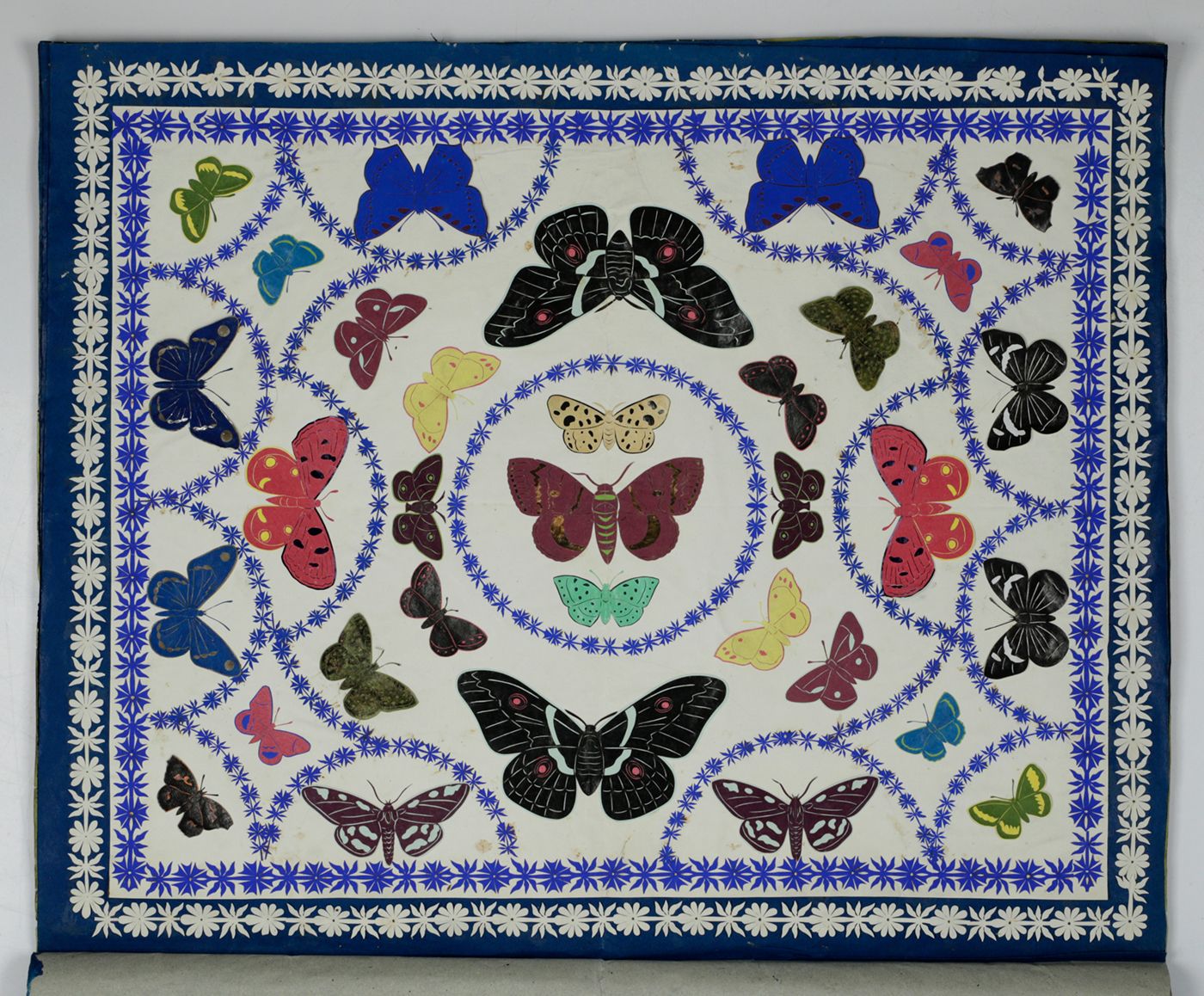
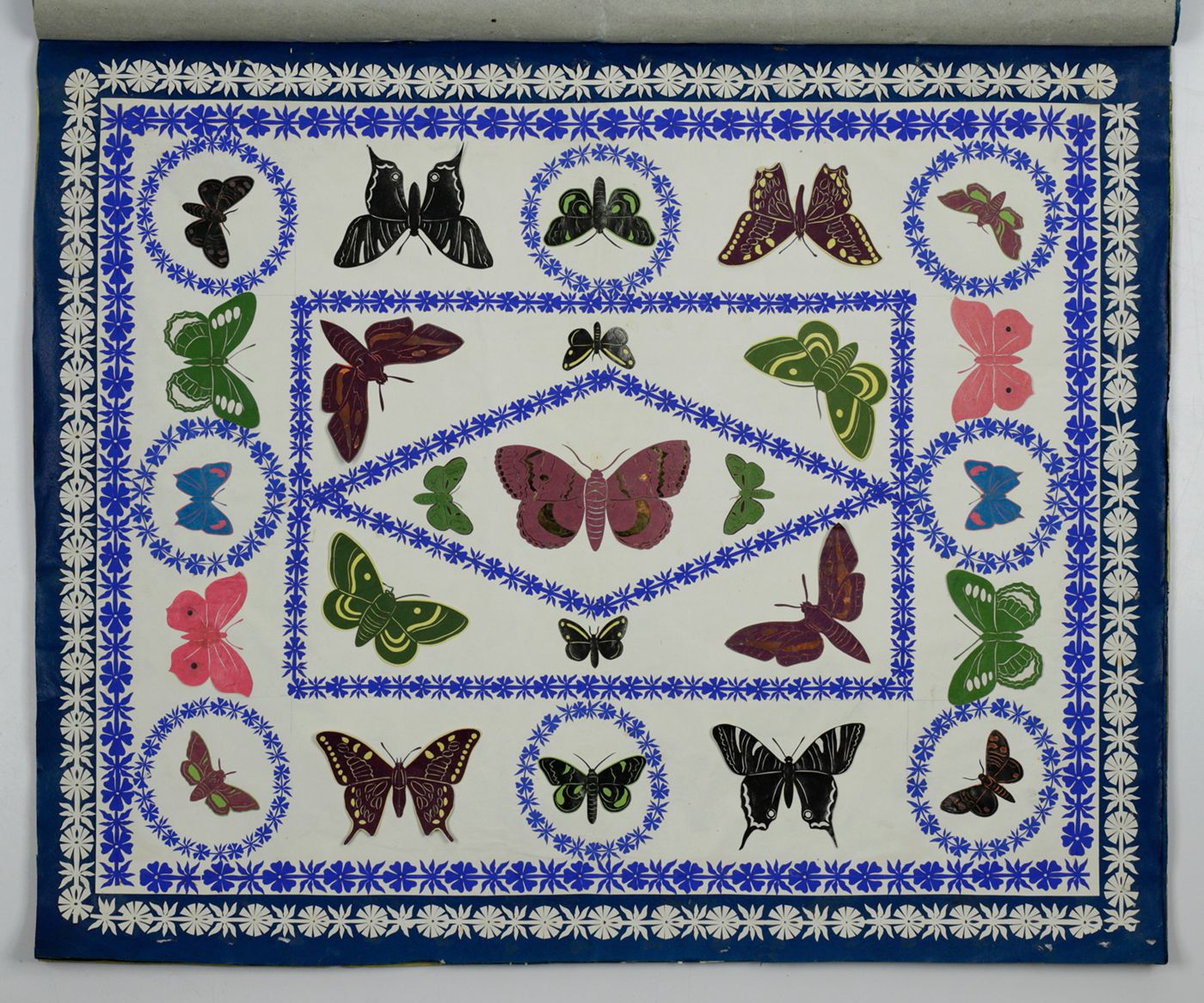
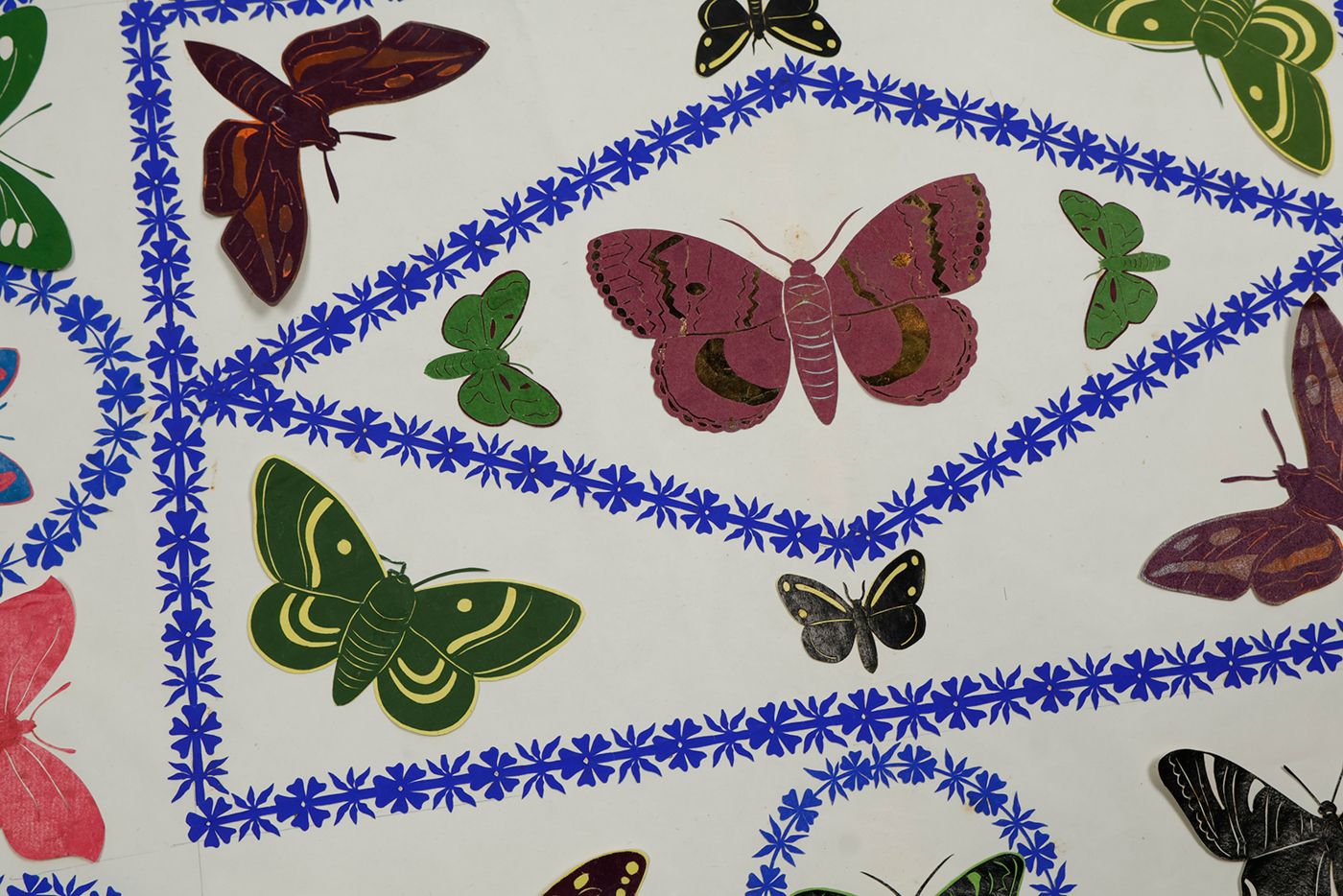
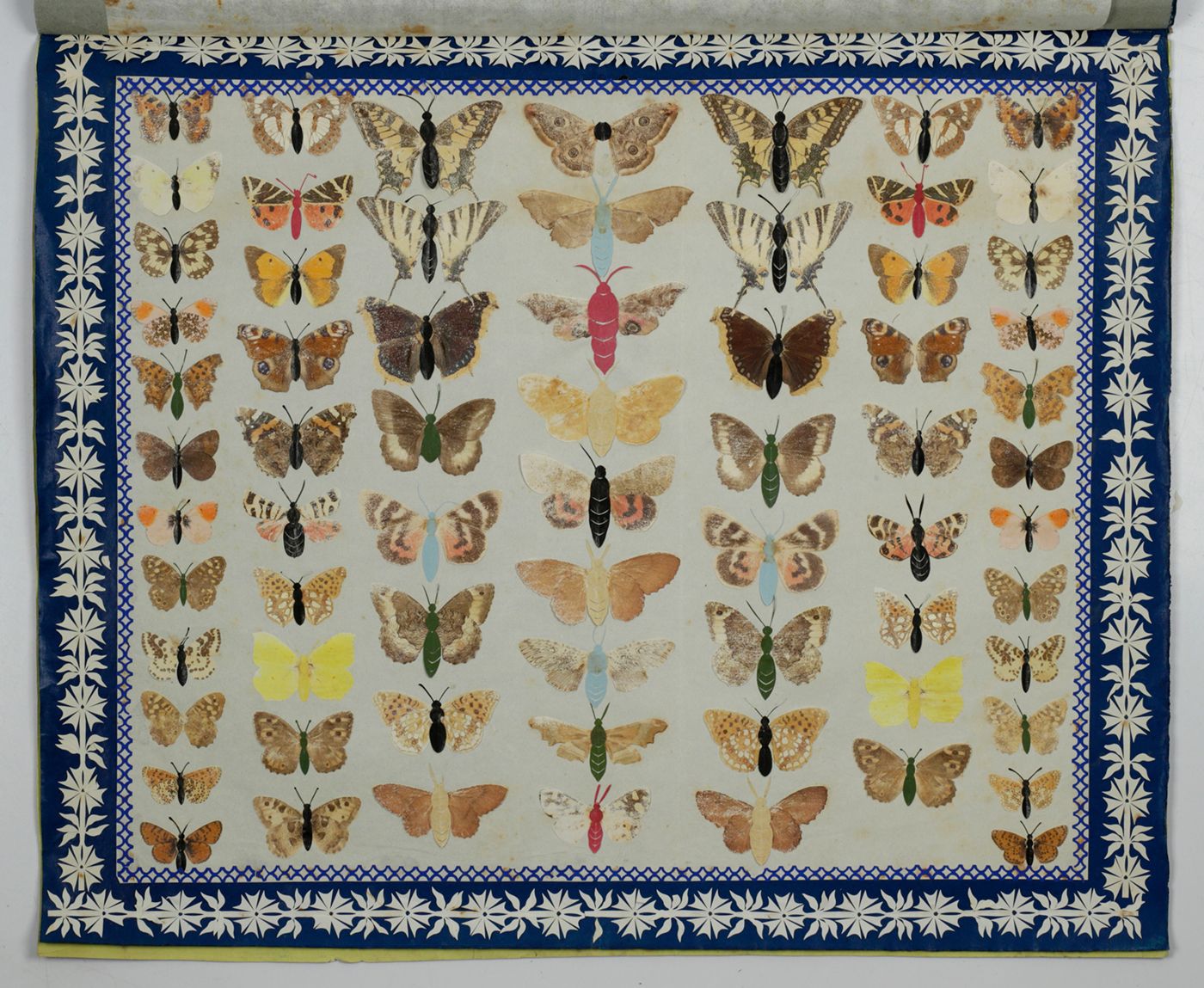
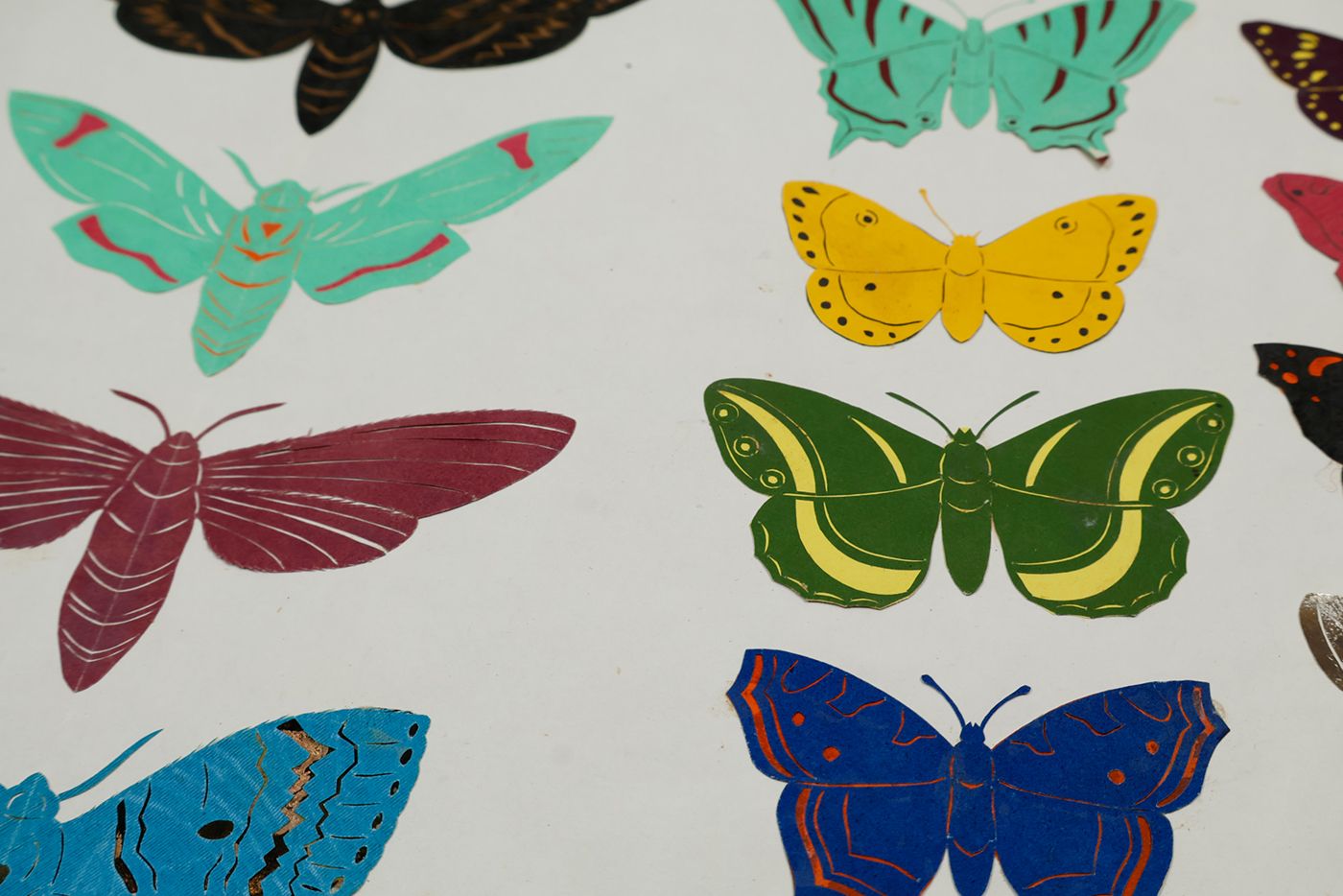
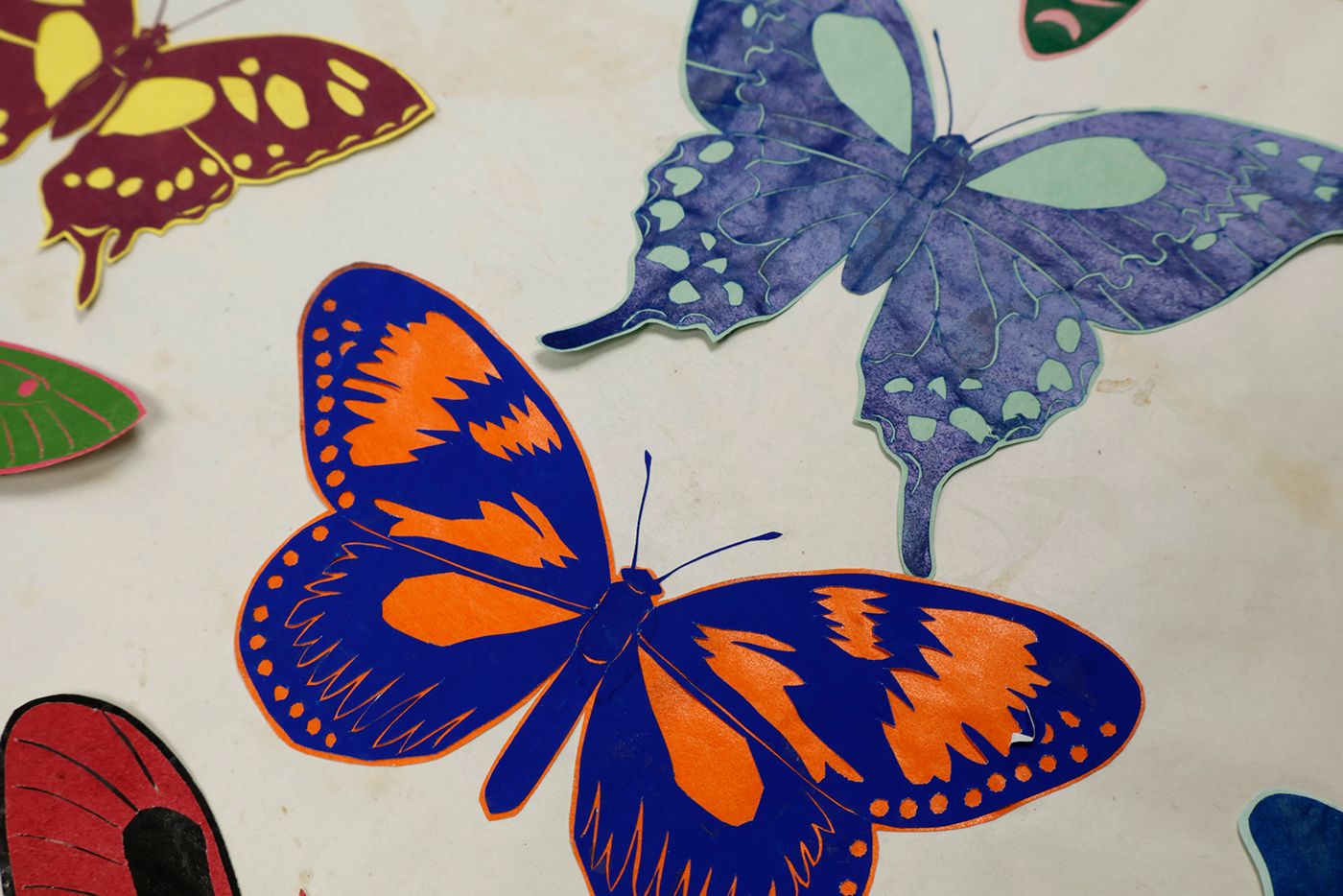
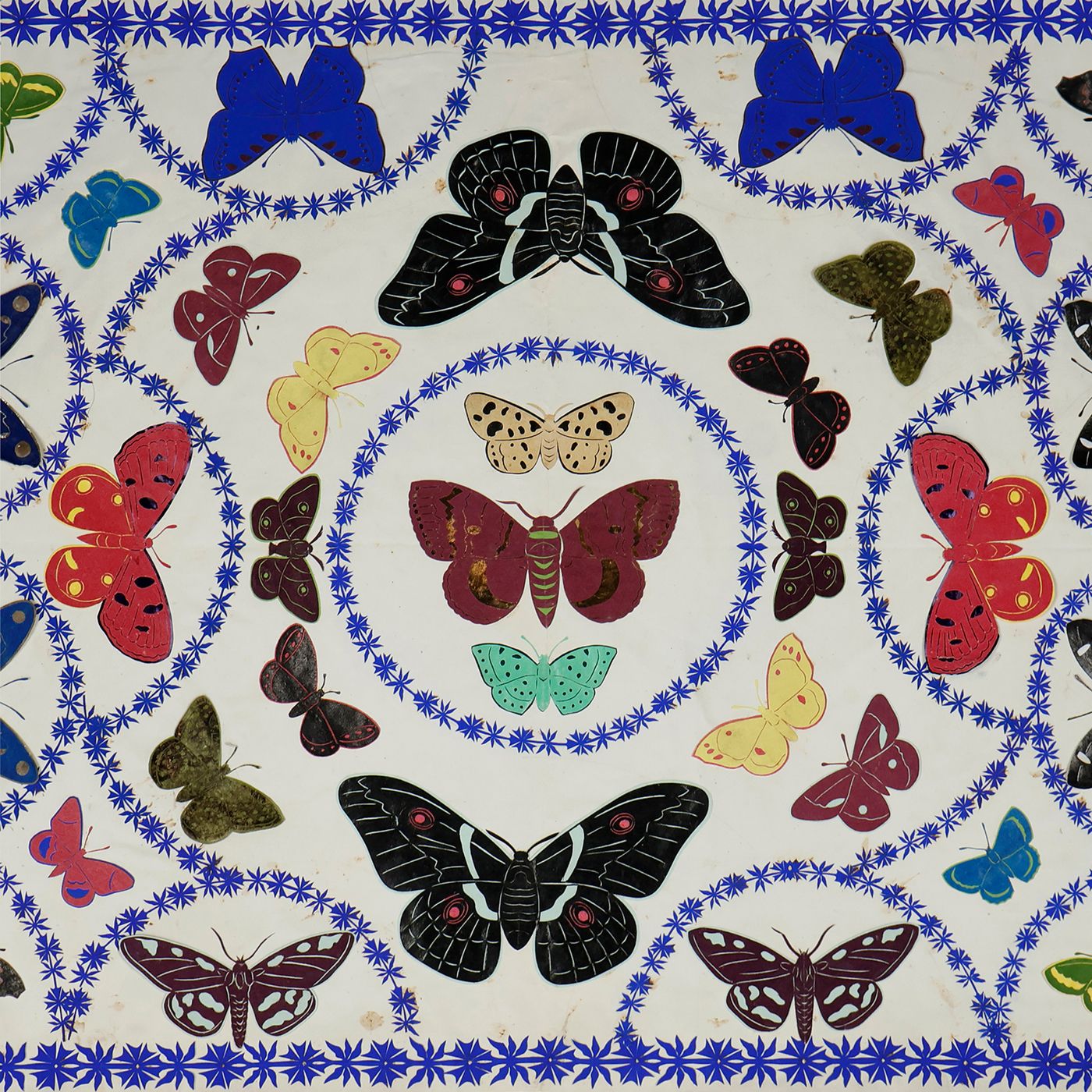
France or Switzerland, ca. 1800. (58.5 x 46.0 cm). 17 leaves, including two title pages (one with a cutout butterfly), 13 with, in total, 316 multicolour paper cutouts of butterflies, and ditto floral borders, and two similar leaves with 138 specimens in lepidochromy. Scissor Art borders. Marbled wrappers.
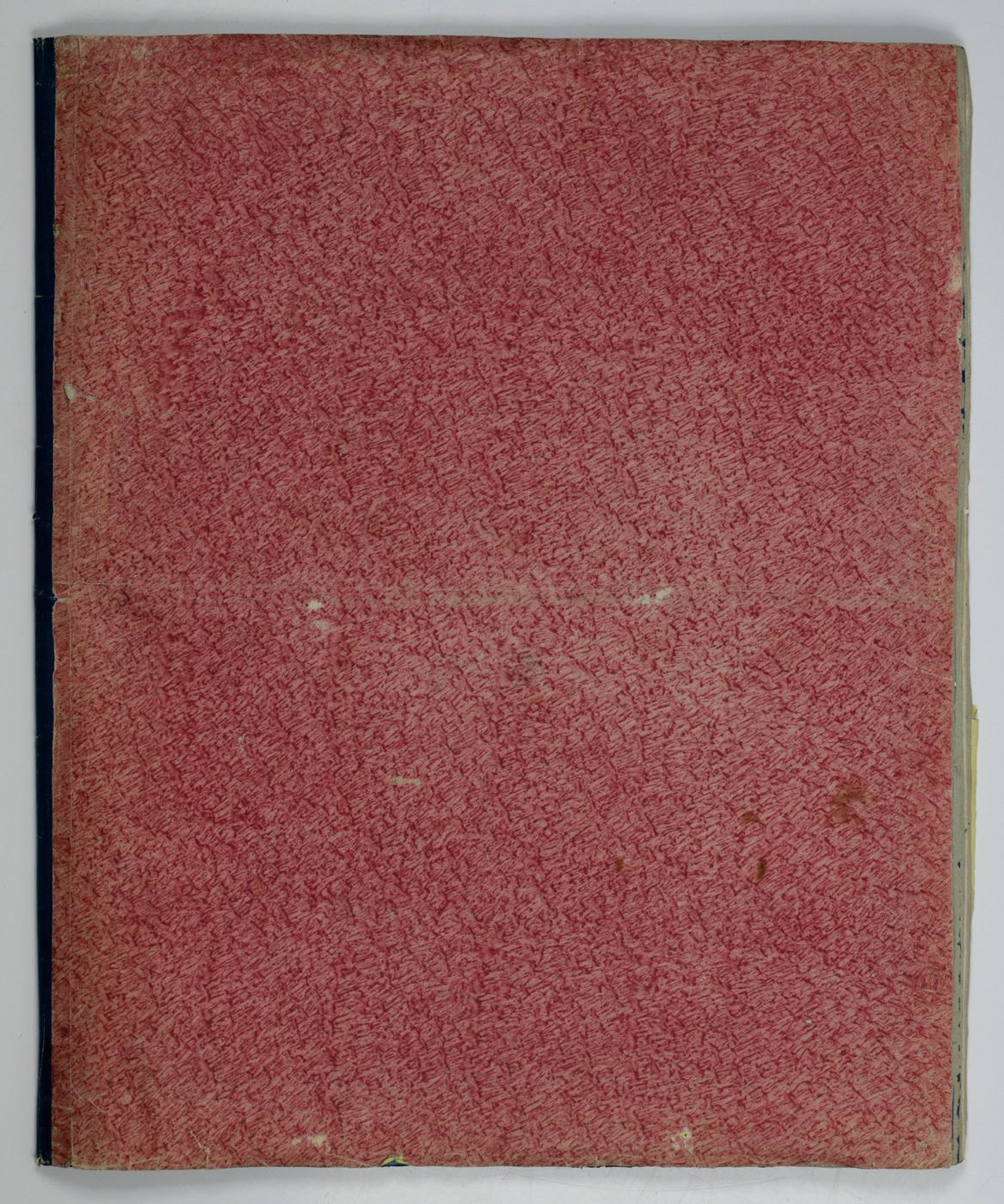
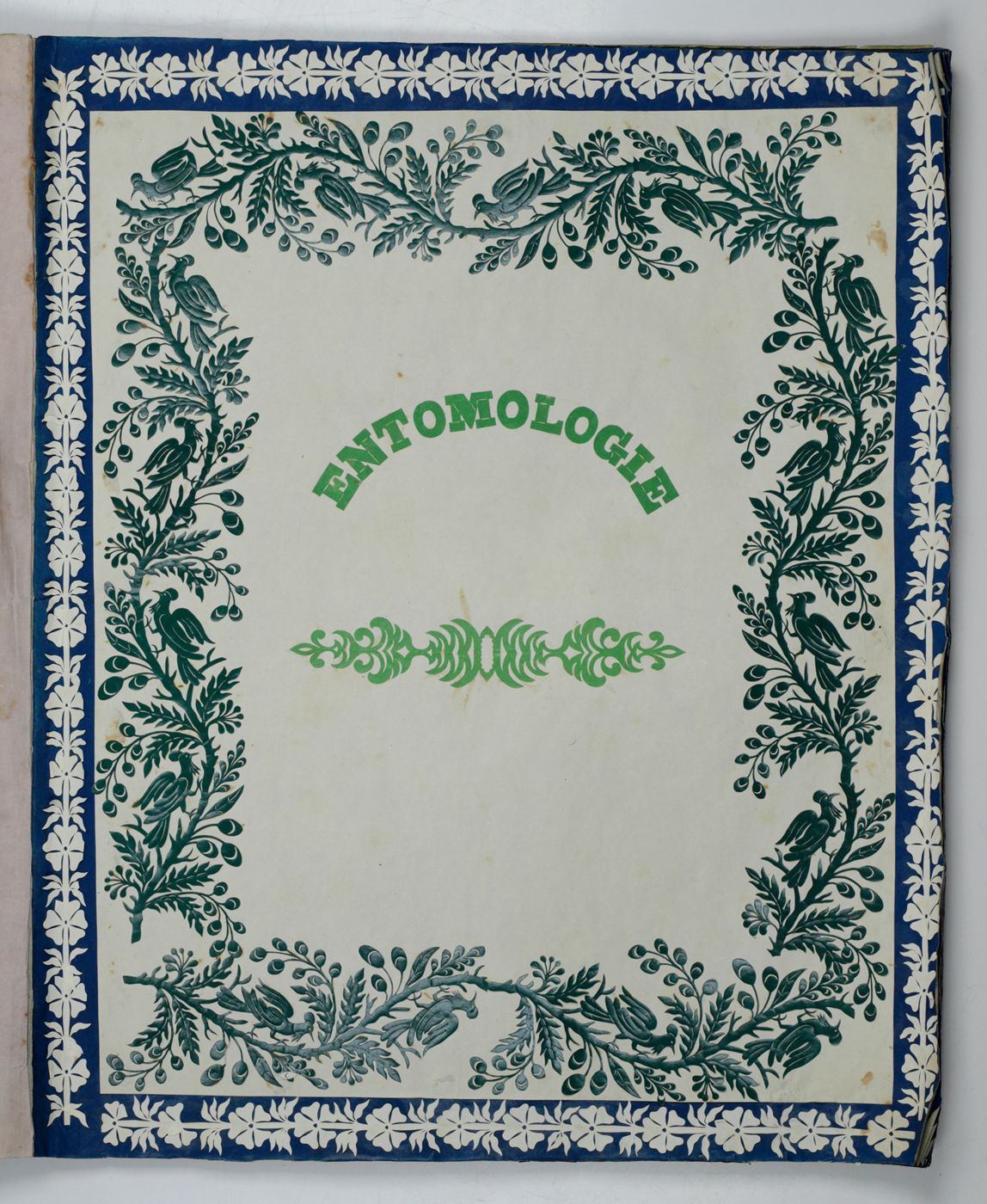
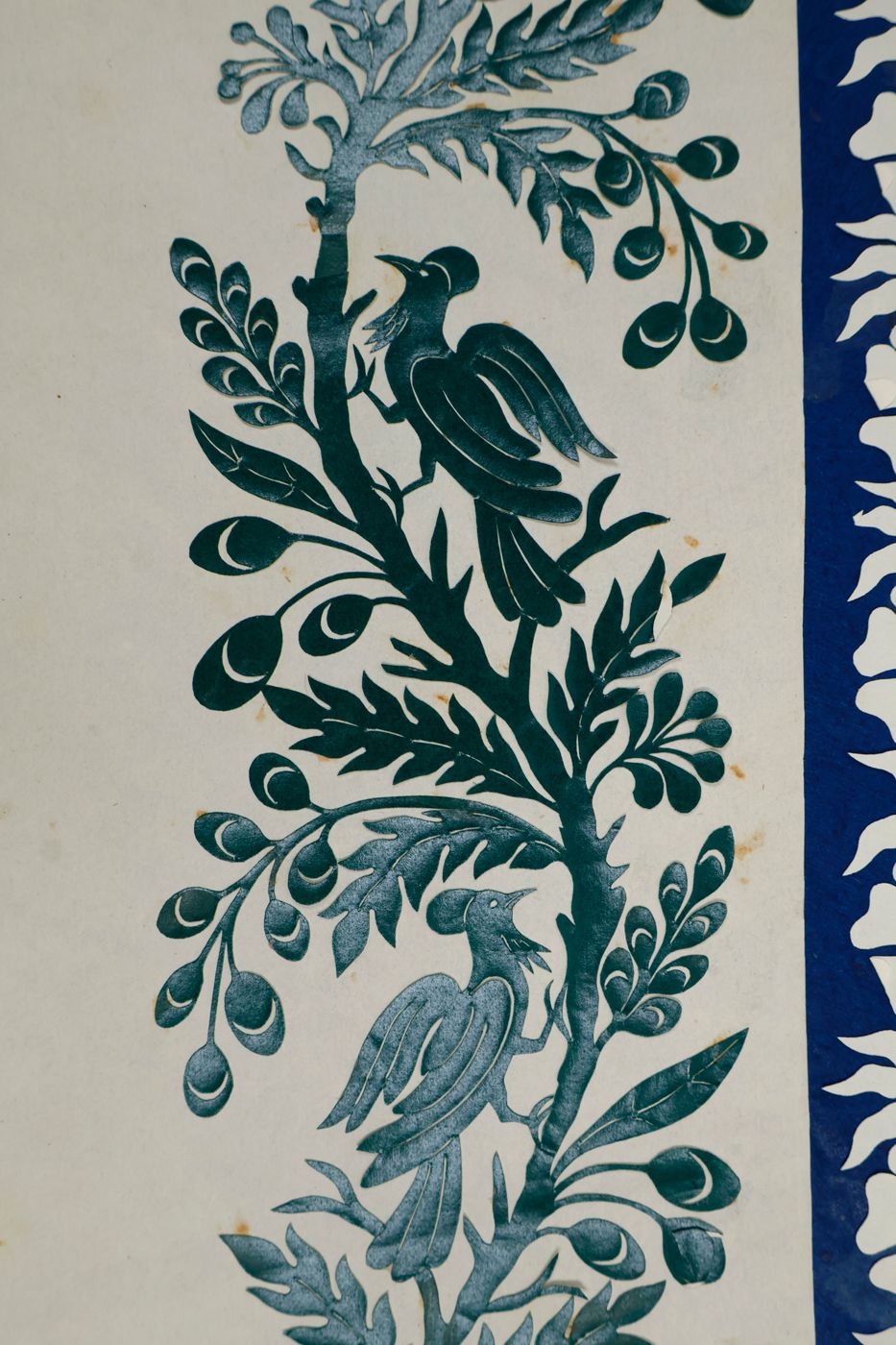
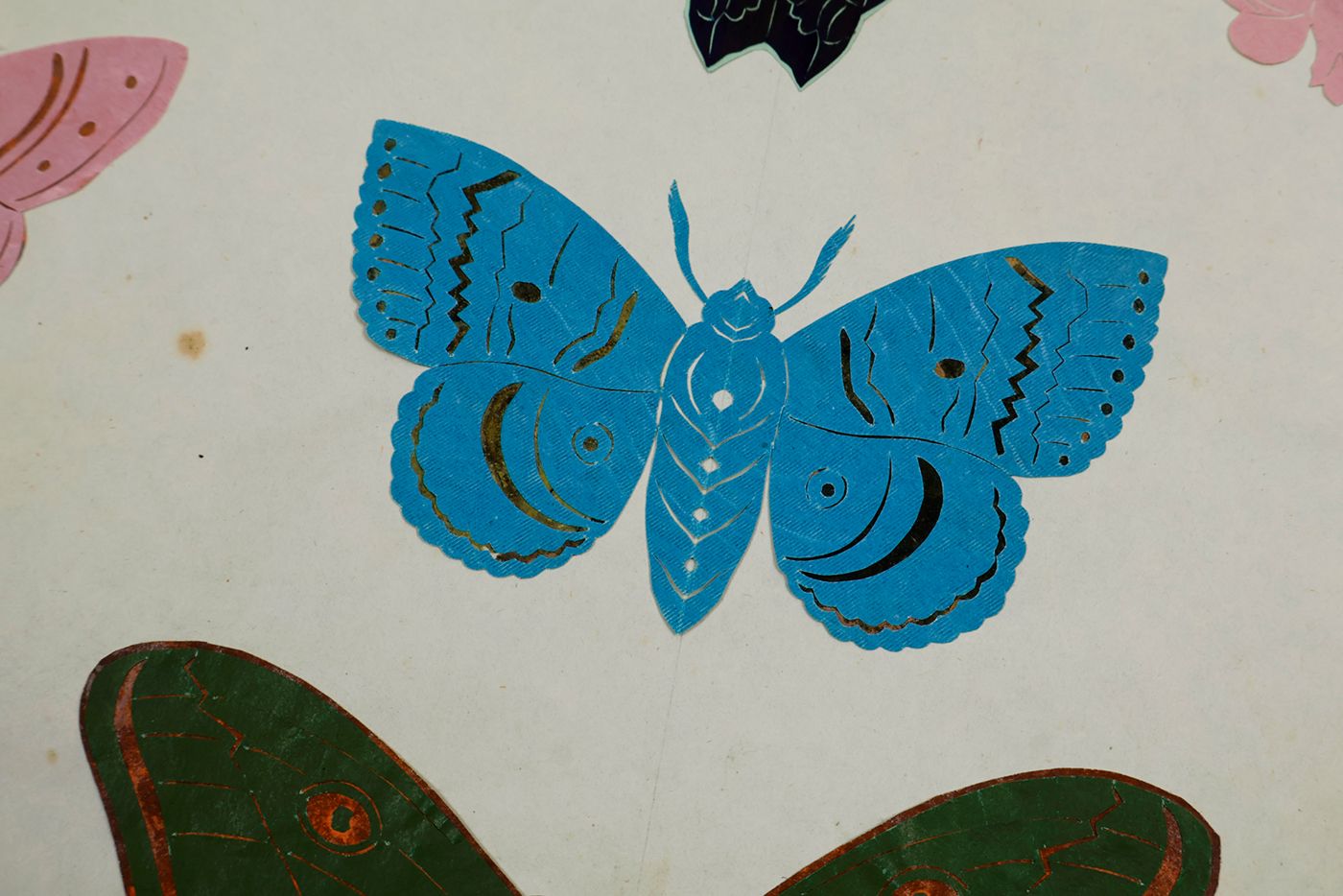
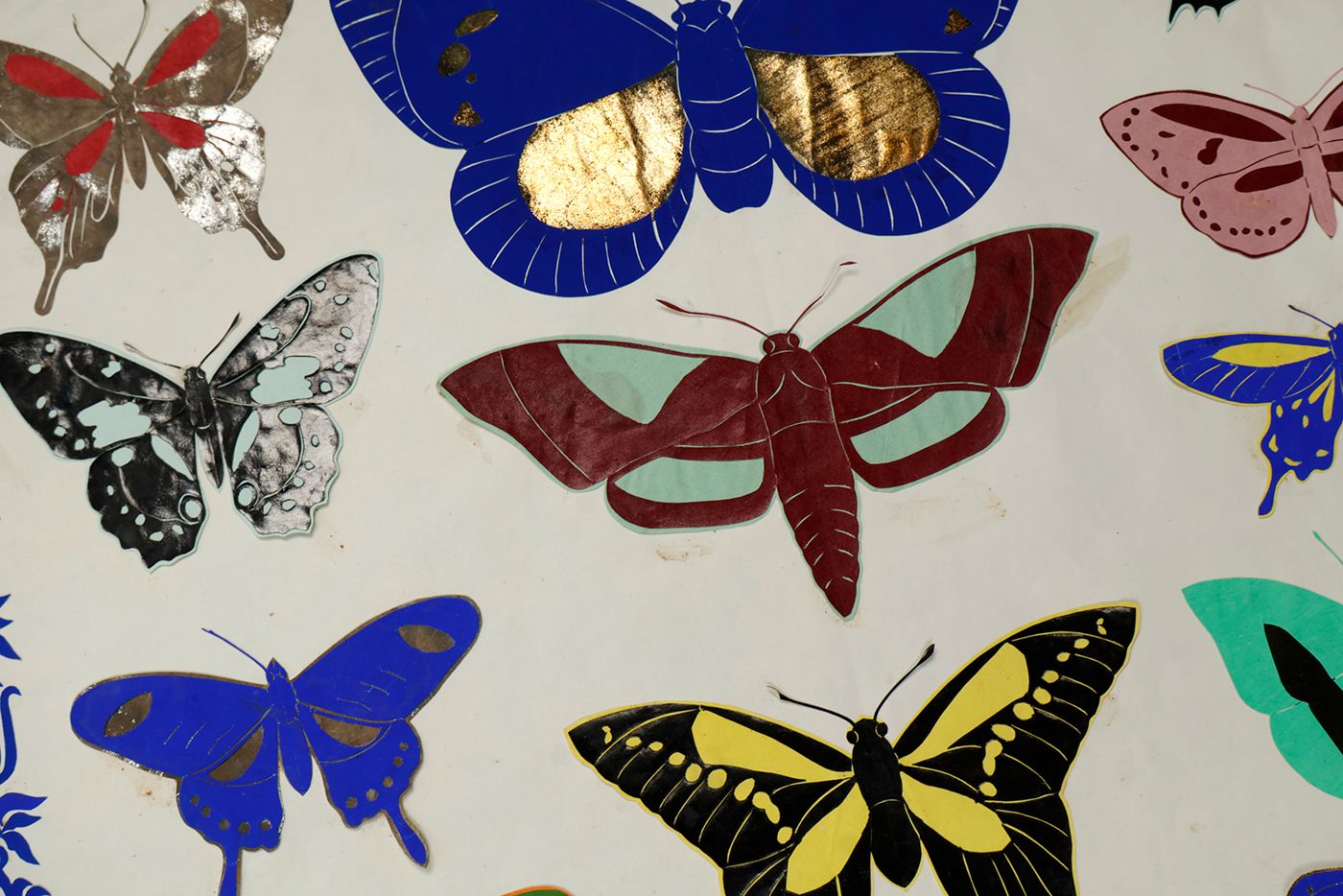
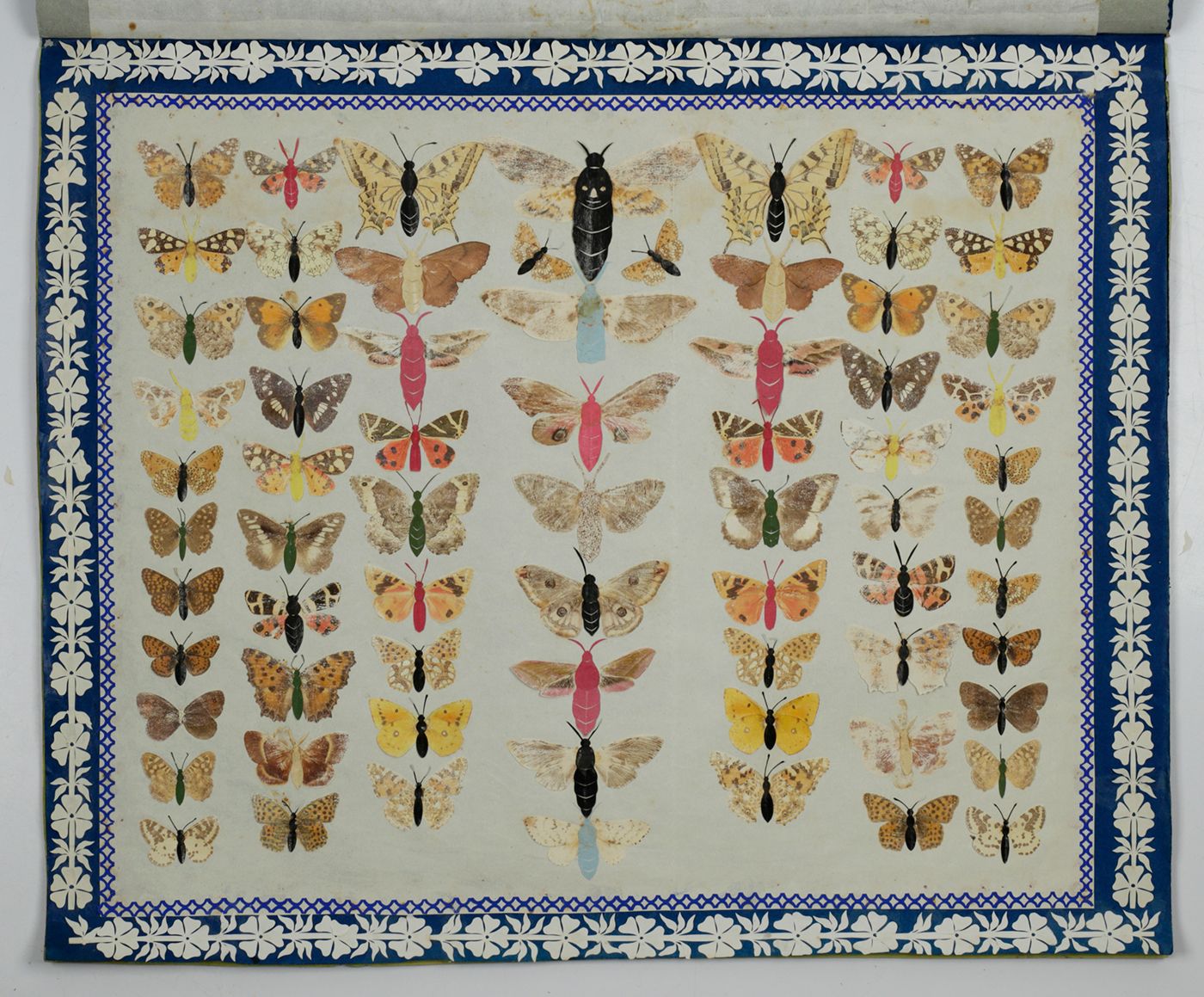
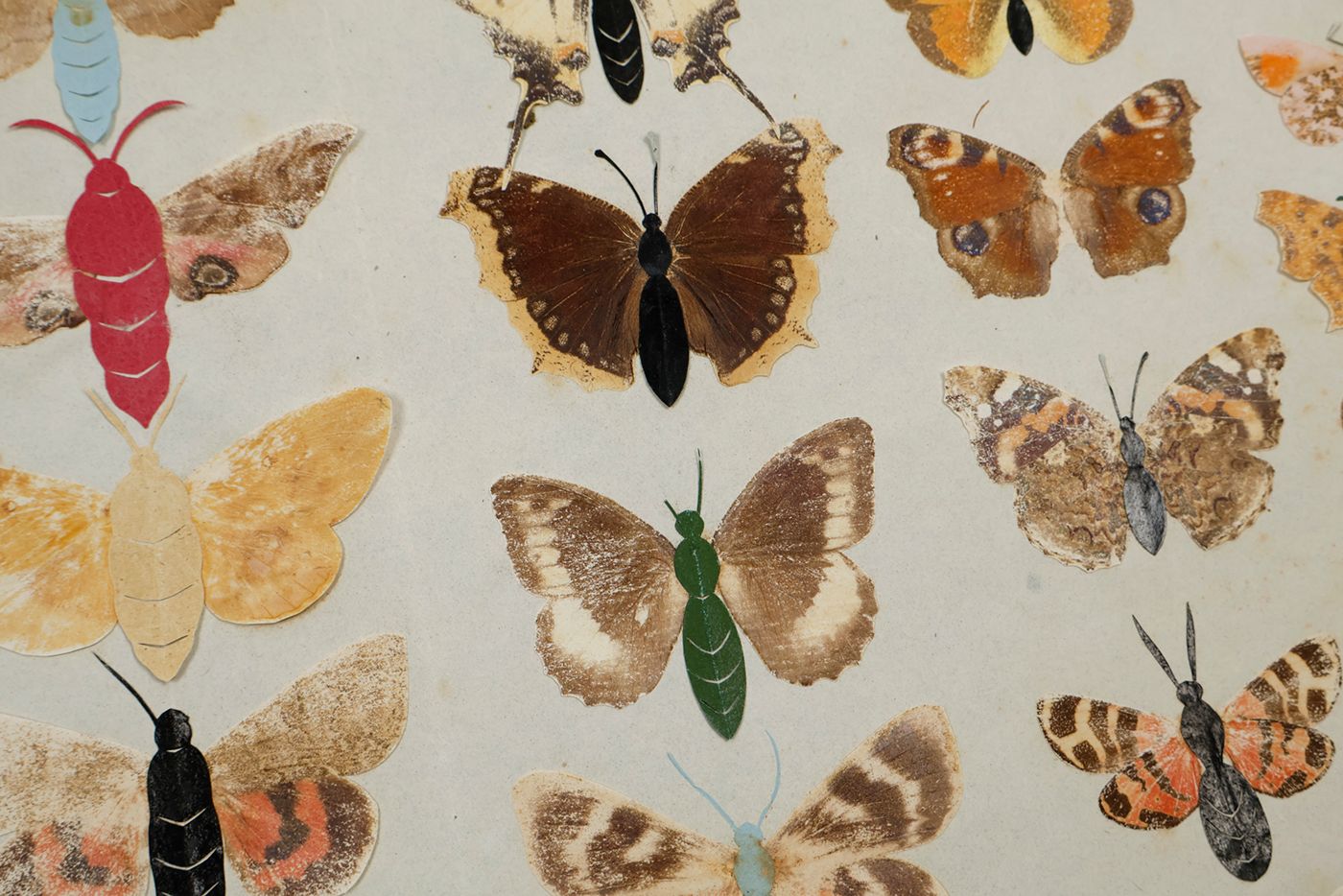
A wonderful, unique album, with beautifully arranged cut-out butterflies in fantastic colours on exceptionally large sheets. One of the most exciting pieces of natural history “scissor art”, or Scherenschnitte, that we have ever seen. This album consists of folded sheets glued back-to-back à la colle, i.e., without stitching. A very high-level decorative object, in the taste of cabinets of curiosities, and probably manufactured in French-speaking Switzerland (Romandy) or Geneva. The style of composition, the cover, and the paper used allow dating the whole to the late 18th century to the early 19th century. The cover is in the style of that period, with vermilion marbled paper, while the borders - dense floral motifs, stylized birds, in blue, white, and green - are typical of Swiss or Alsatian/Lorraine papers from this period. The fine wove paper (papier vélin) used was quite common at the turn of the 18th century. Both French mills (Rhône-Alpes, Dauphiné, Isère) and Swiss romand mills produced vellum in large quantities, often with simple watermarks such as a St Jacques scallop, which is present in the leaves of this album. The fine cut-out borders - white silhouettes on navy blue background - display floral motifs: leaves, berries, bunches of grapes, perched birds, etc. They draw strongly from French or Swiss romand rococo and neoclassical styles of the period. The lettering “ENTOMOLOGIE” in a green arc and “LES LÉPIDOPTÈRES” is hand-painted and hand-cut, with sophisticated floral ornaments. The butterflies on the 13 main plates are cut from coloured paper, and layered for a subtle three-dimensional effect. A superb example of Scherenschnitte, executed with near-perfect care. Several butterfly families can be identified: uranids, saturnids, sphingids… The vivid colours - blue, green, red, yellow, metallic silver, and gold - and careful illustration of fine antennae and eye spots, evoke natural history illustrations of the time, such as those in Cramer's Papillons Exotiques. Two plates, being very rare examples of lepidochromy, conclude the album. These two plates form a true artistic and scientific hybrid, blending popular art and natural preservation. They employ lepidochromy, or “wing-printing”, a technique for preserving real wings typical of the late 18th to early 19th century. This technique was developed in particular to fix iridescent colours and prevent fading: fresh wings are pressed onto gummed paper to transfer the coloured scales, creating a natural, indelible impression. This method is, as stated in contemporary treatises “truer than painting” as it captures iridescences without alteration. Lepidochromy is often first attributed to Otto Marseus van Schrieck (1619/20-1678), a Dutch painter and naturalist of the Dutch Golden Age. He developed this method around 1650 for his undergrowth paintings, by pressing wing scales directly onto the canvas for a realistic and conservative effect - the earliest known use, well before more scientific entomological applications.
read more
The English naturalist George Edwards (1694-1773), documents precise recipes in his book Essays upon Natural History and other Miscellaneous Subjects(London, 1770), including “A Receipt for taking the Figures of Butterflies on thin Gummed Paper”. As early as 1771, the Abbé François Rozier presents it in his Journal de Physique: he relates an accidental discovery by a Bressan priest and details the process for fixating scales on treated paper. Among the most famous historical sources, Lepidoptera Fluminensis (1789), by José Mariano Veloso, is one of the earliest known examples of the process. Lepidochromy was used until well into the 20th century, the latest example perhaps being Woodhouse’s Butterfly Fauna of Ceylon (1942-1949) (see: Cowan, also for an historical review). A similar process was independently developed in Japan by "The Insect Man", the entomologist Yasushi Nawa (1857-1926). The arrangement of the figures, here in symmetrical vertical alignments, may be regarded as typical for pre-pinning entomological collections, i.e., from before standardized pinning boxes which did not become widely available until 1830-1850. The album contains 138 specimens in total. All, it seems, are wings from butterflies and moths typical to Western and Central Europe. The bodies and antennae are cut from paper and glued, superimposed on the wings to complete the specimen, a common technique to replace the real bodies, which are less suited to the technique of lepidochromy. Light signs of the times, mainly some marginal creasing; a skilful repair to the front wrapper, and two cut-out butterfly bodies perished; otherwise, this work is extremely well-preserved and in an excellent state. In all, this is a rare, majestic piece, of museum quality and interest. Cowan, C. F. (1968) Butterfly Wing Prints. In: J. Soc. Biblphy Nat. Hist 4(7): 368-369.
read less
Very flexible return policy
Secure payments by Adyen
Sent in 2 business days with Track & Trace

We are members of ILAB-LILA and NVvA