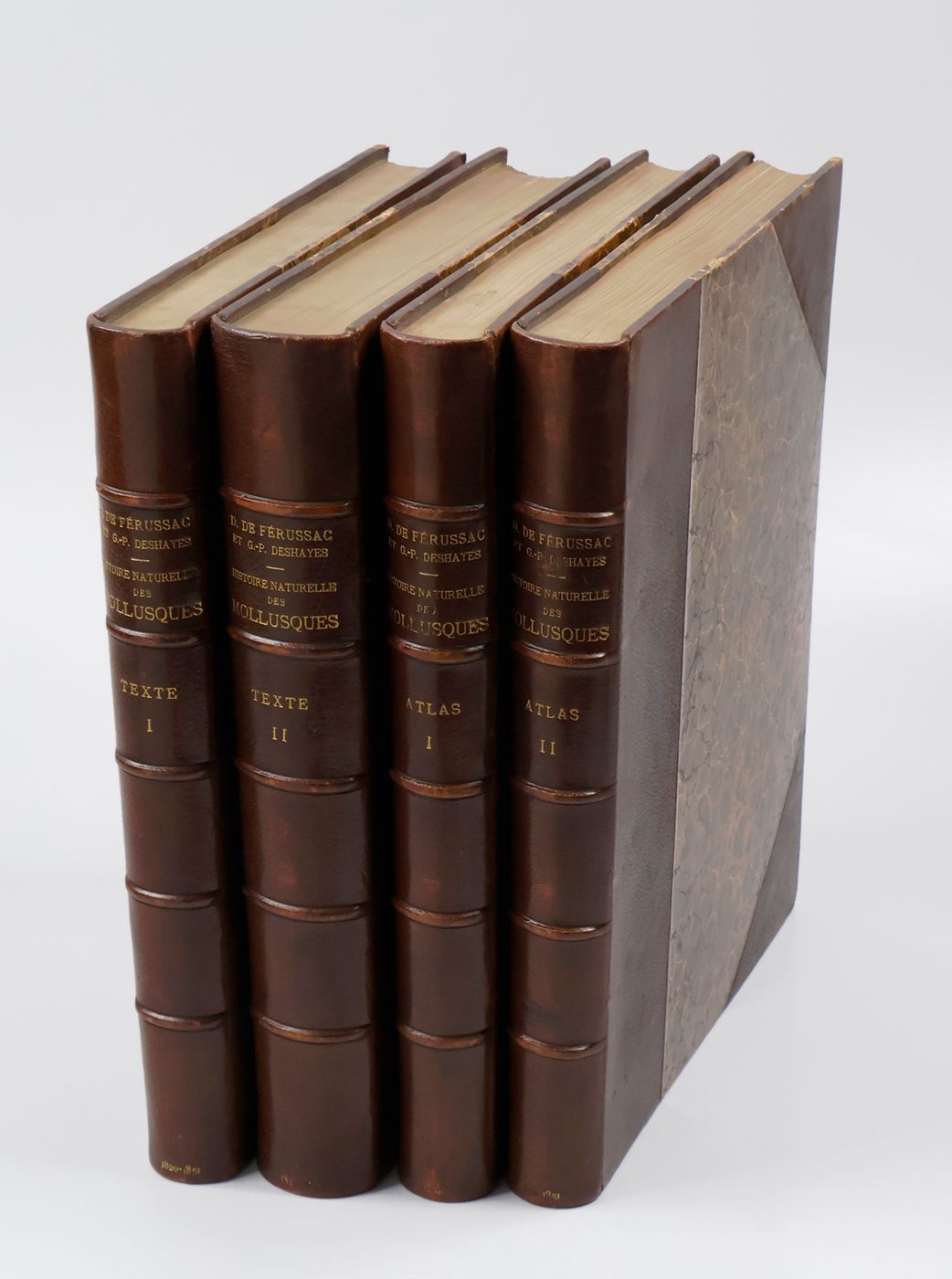
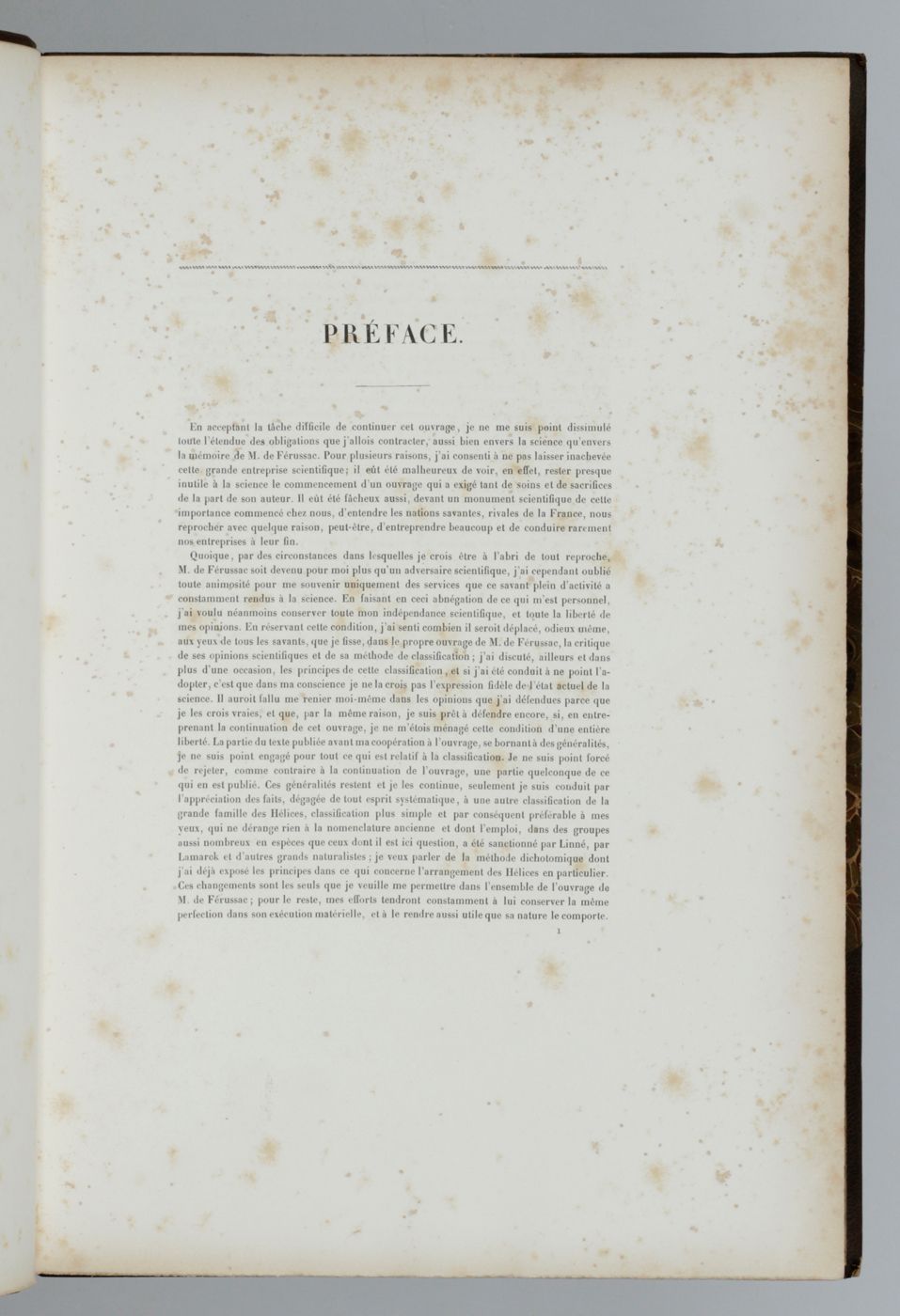
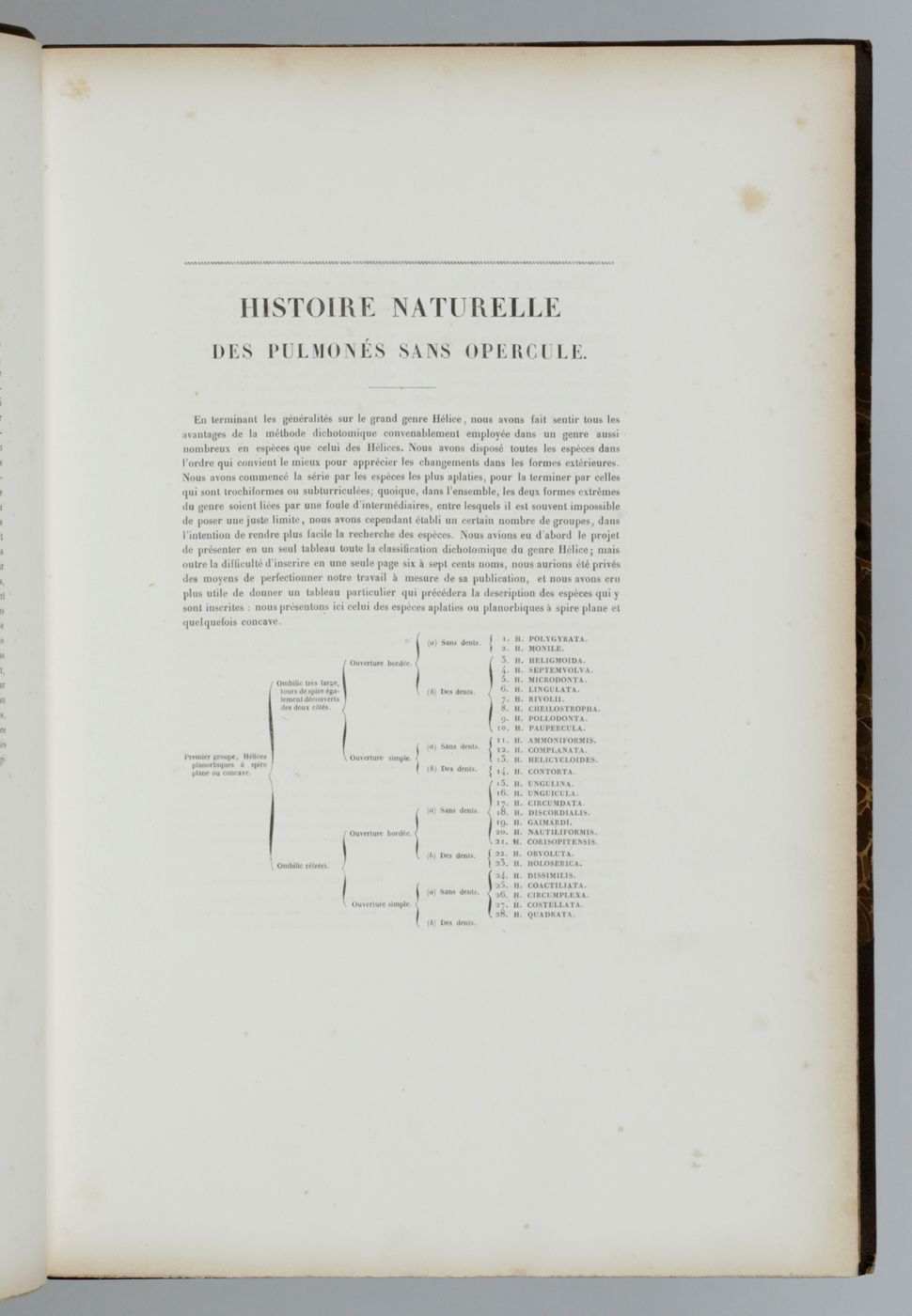
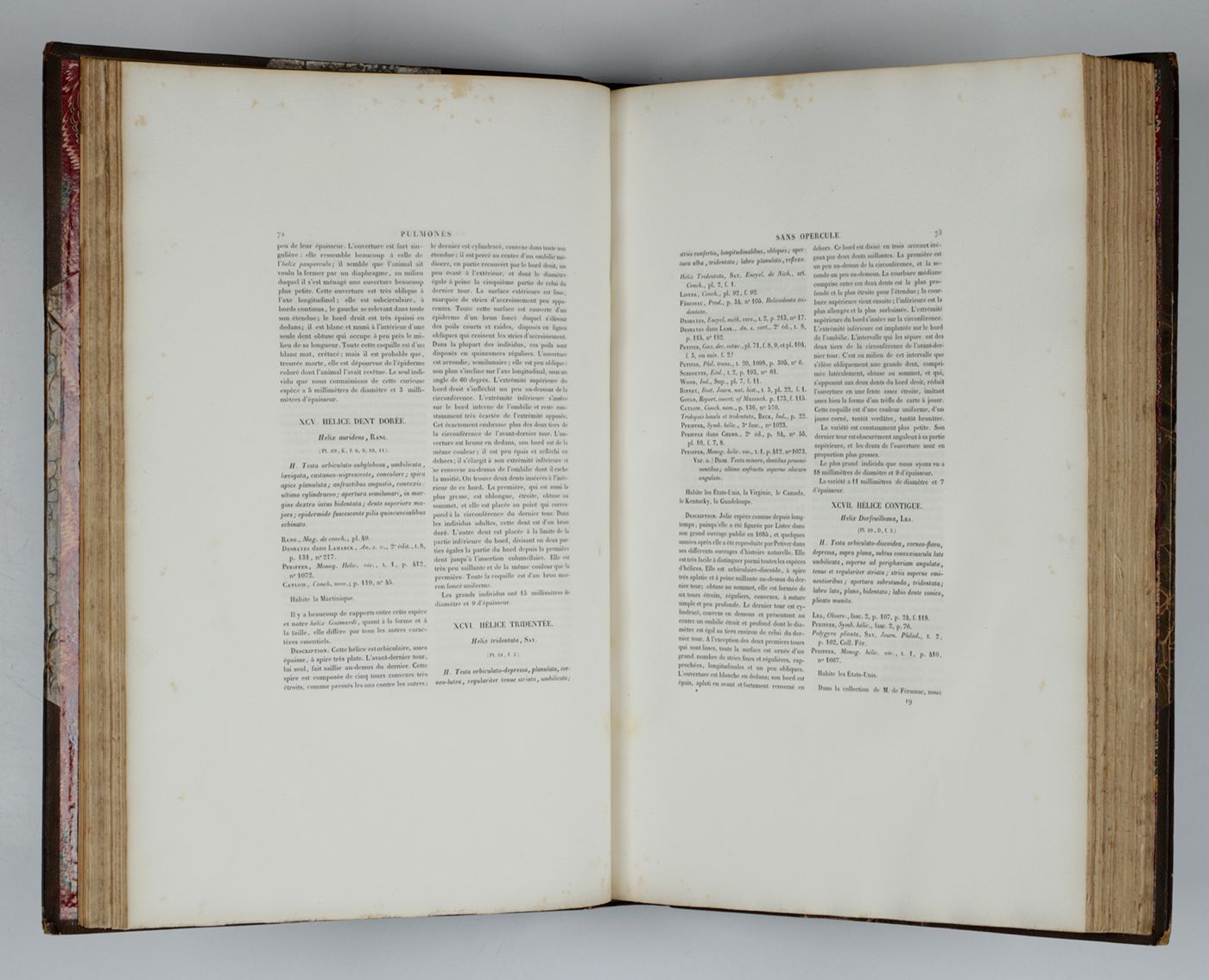
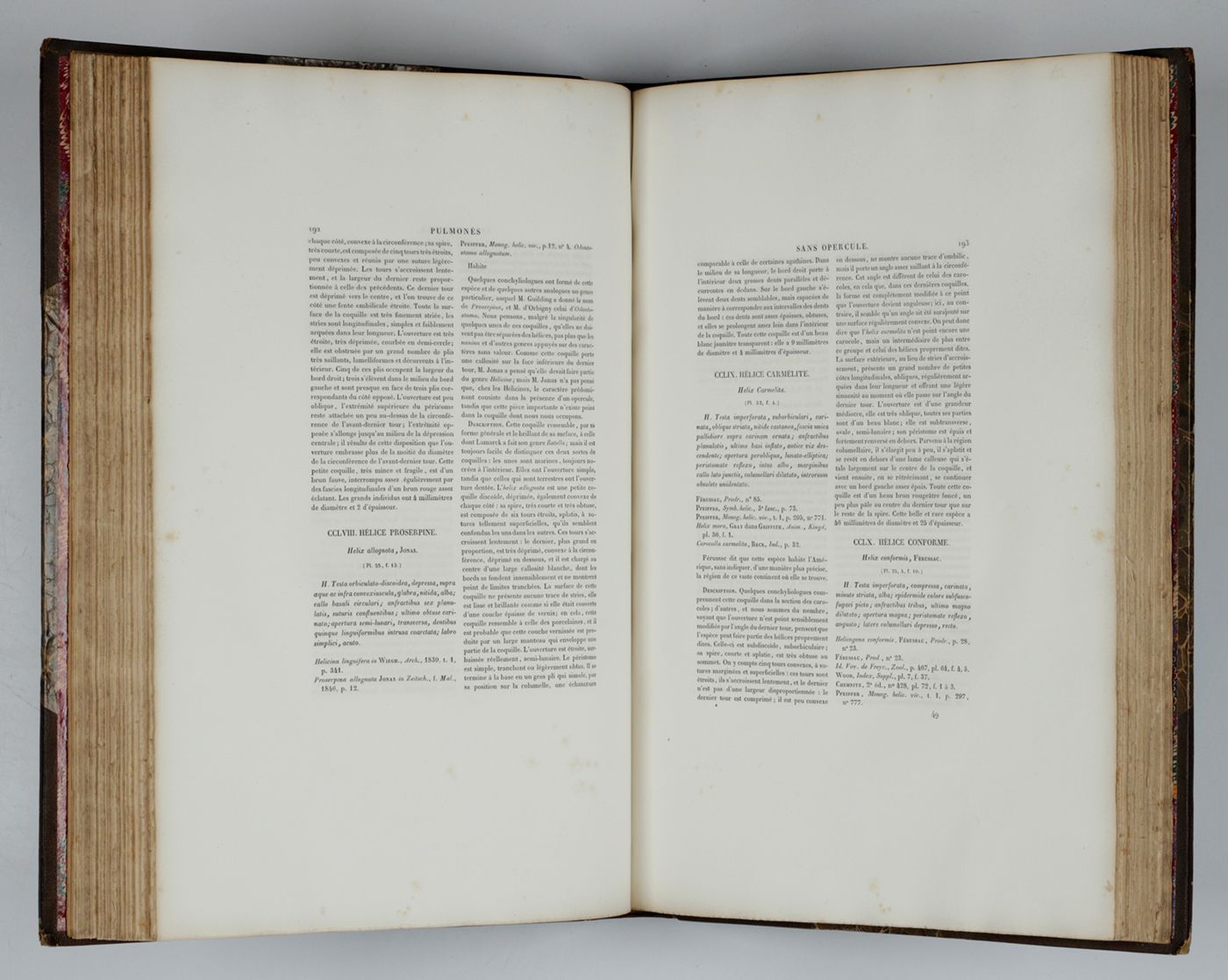
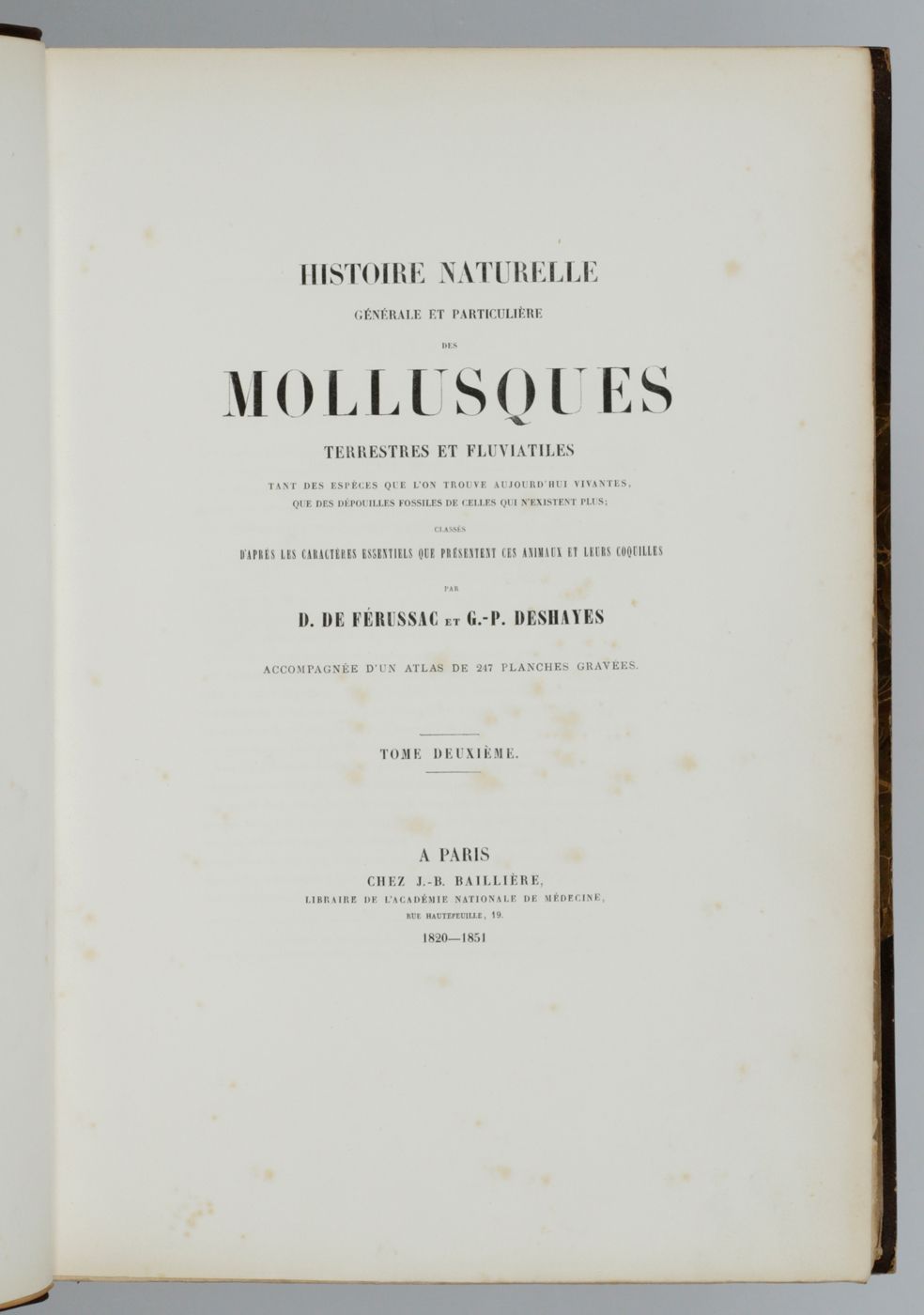
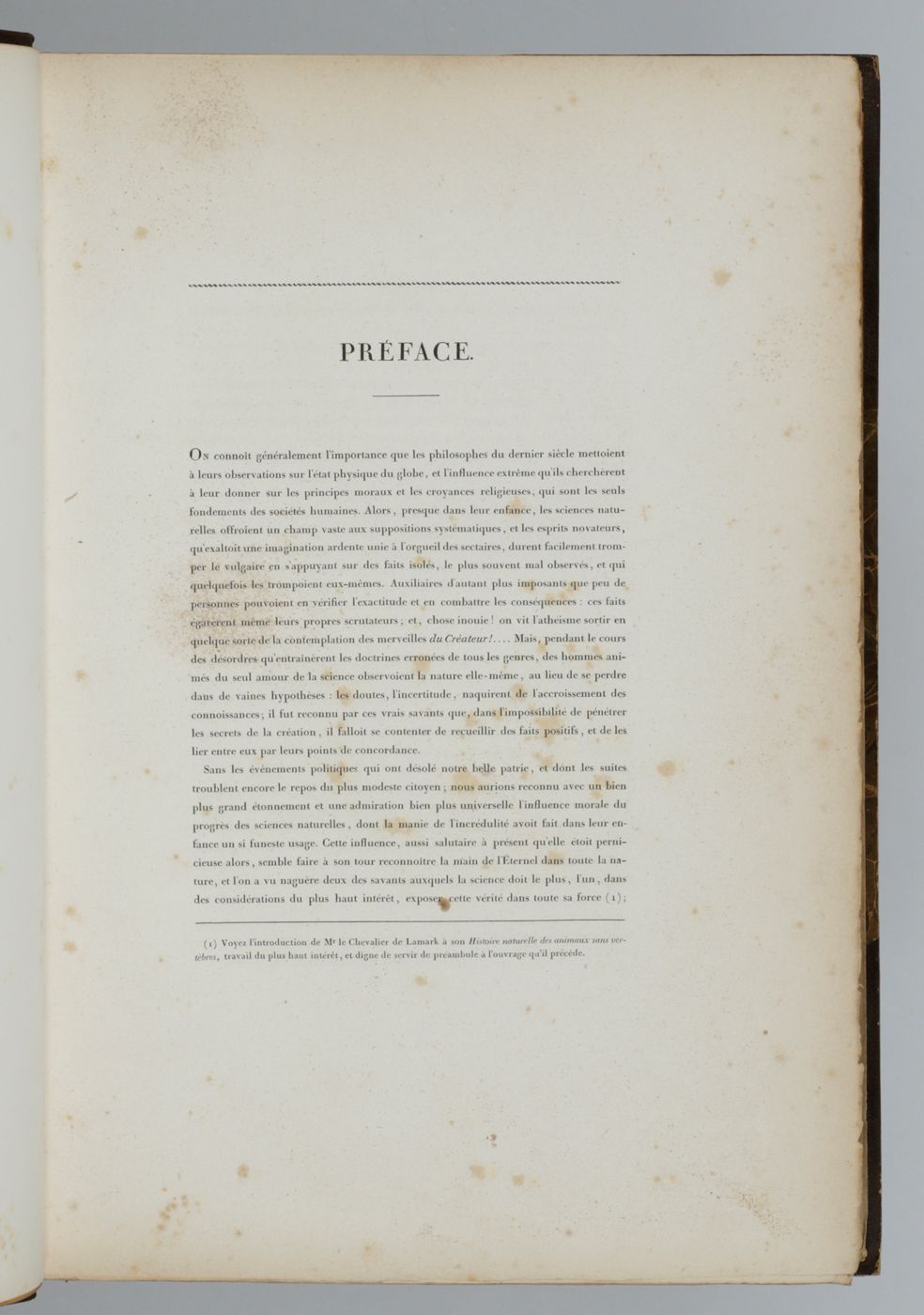
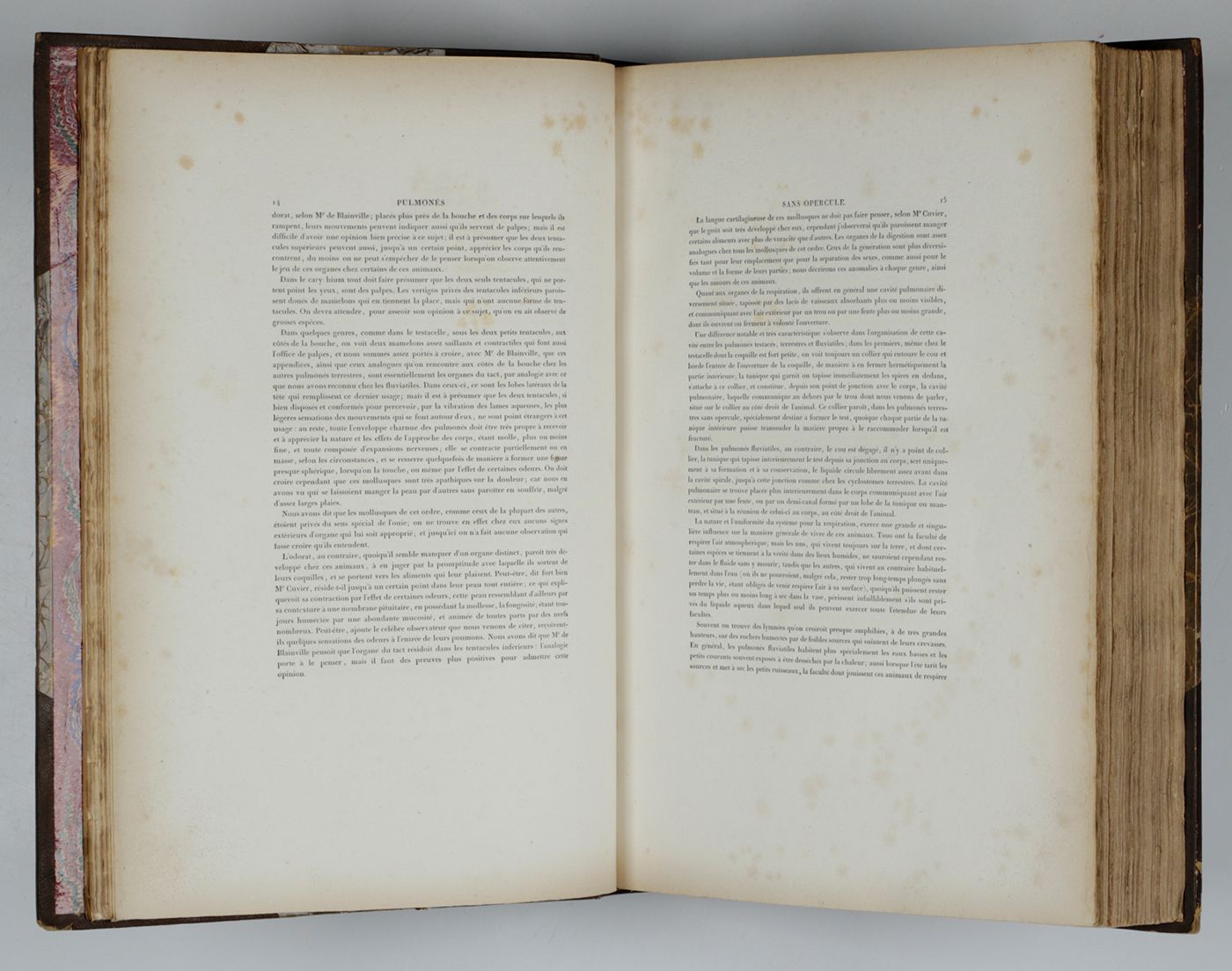
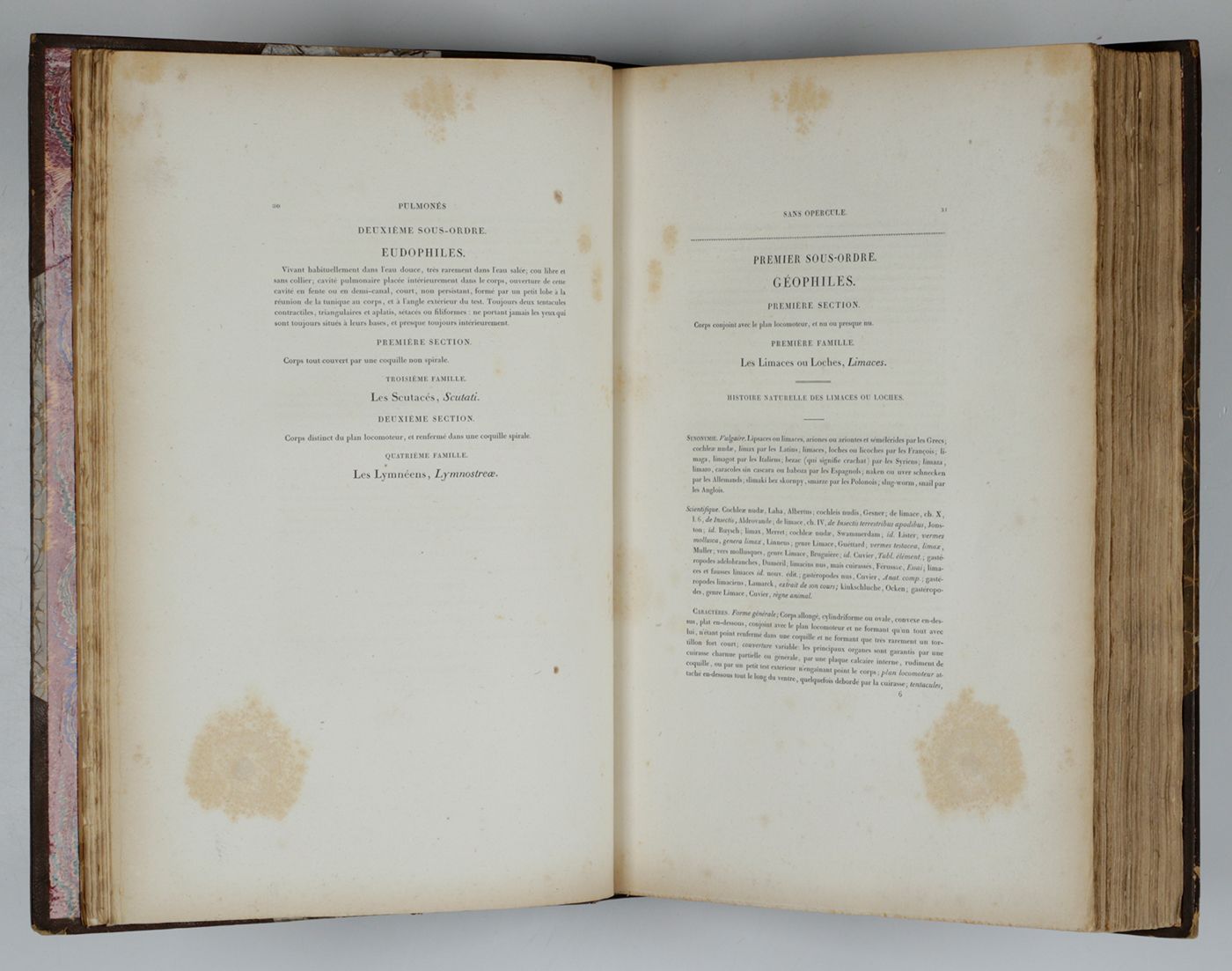
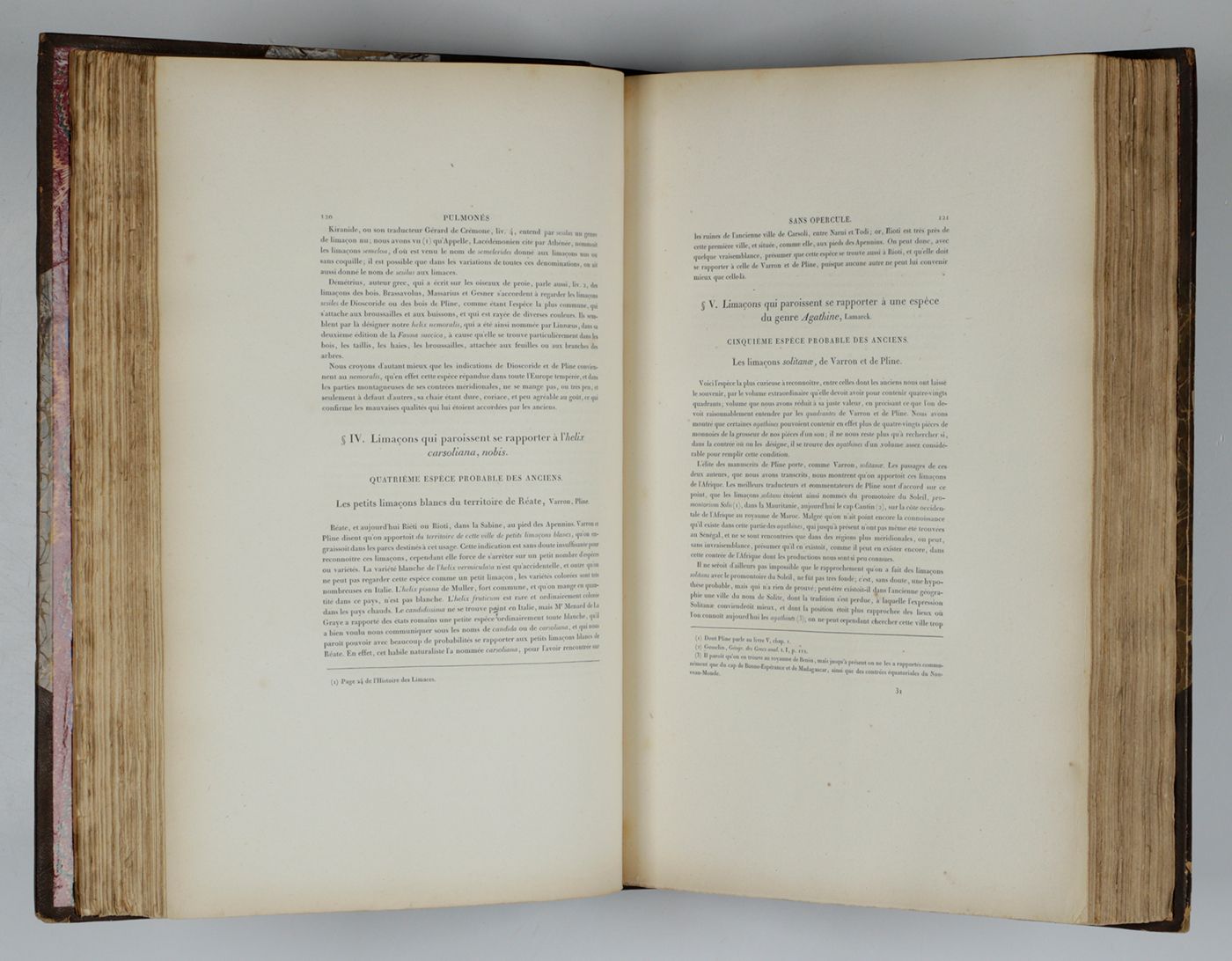
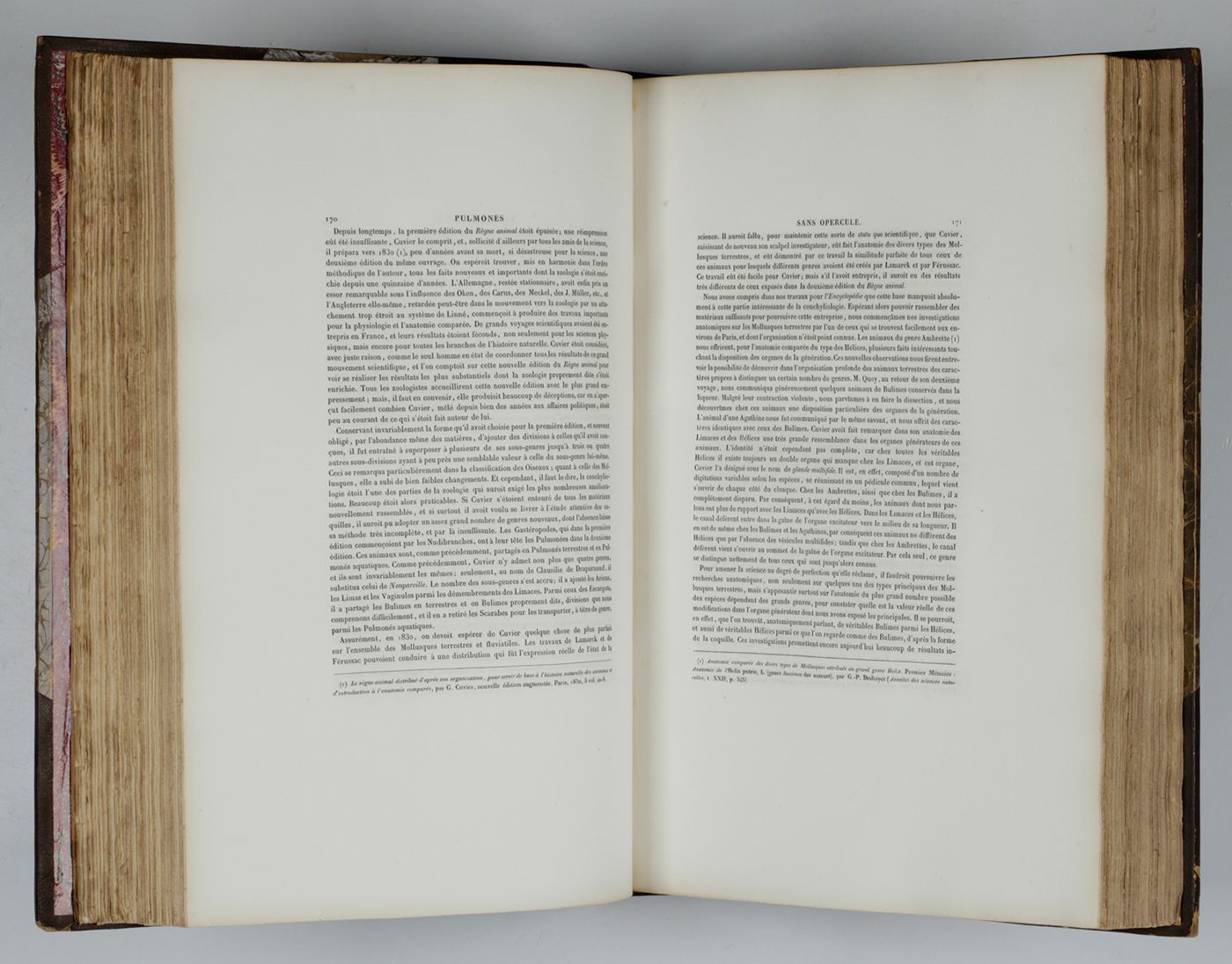
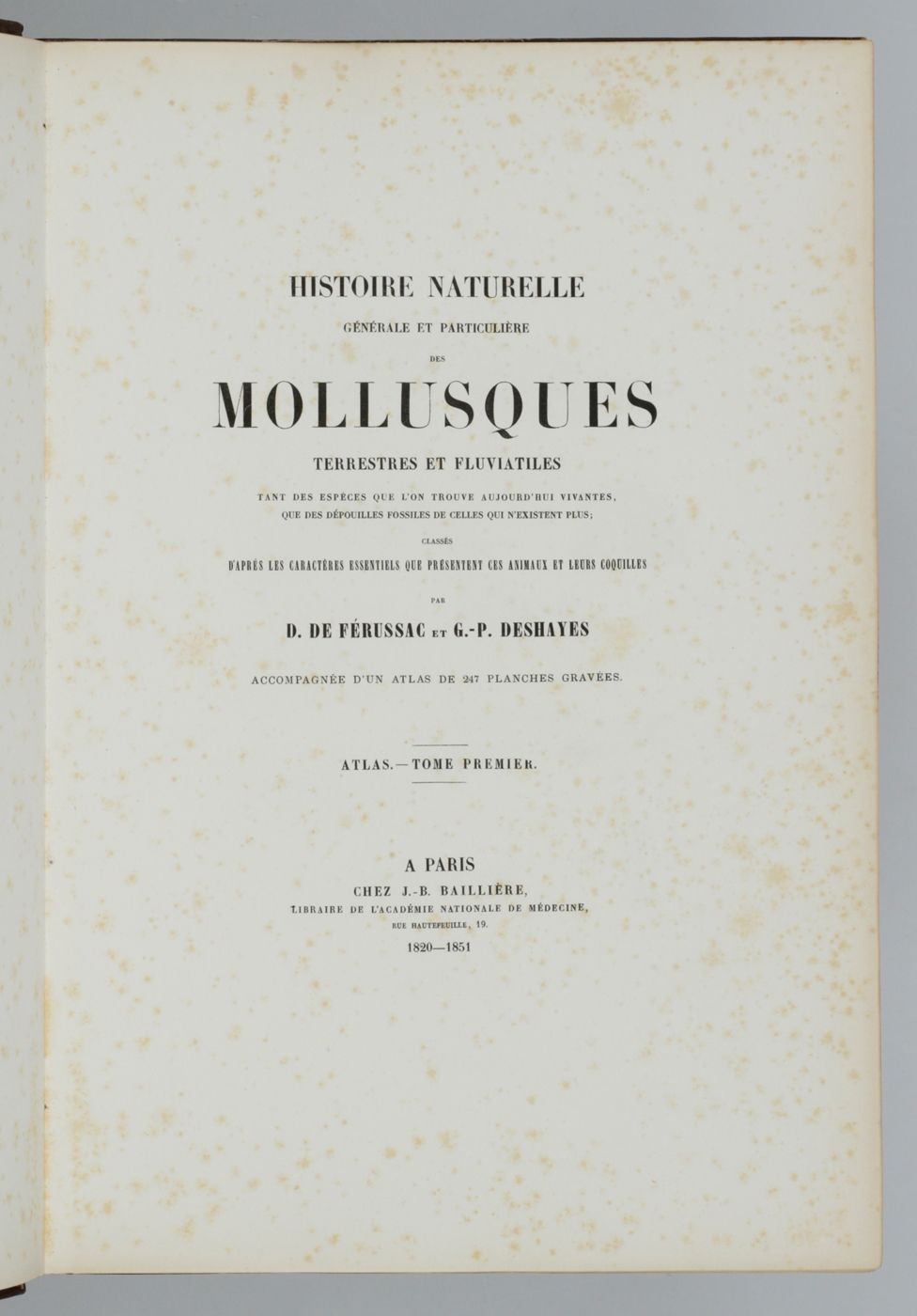
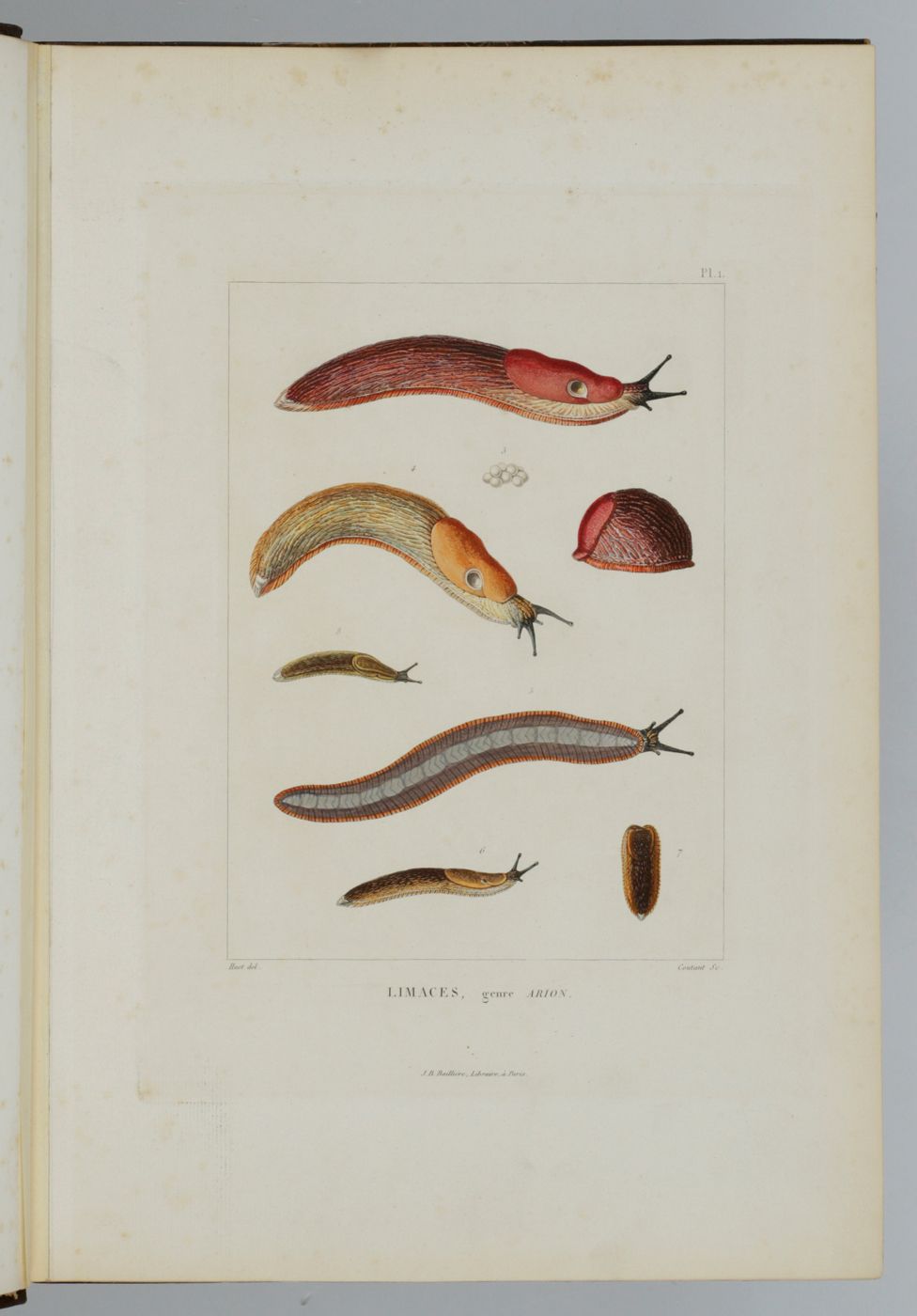
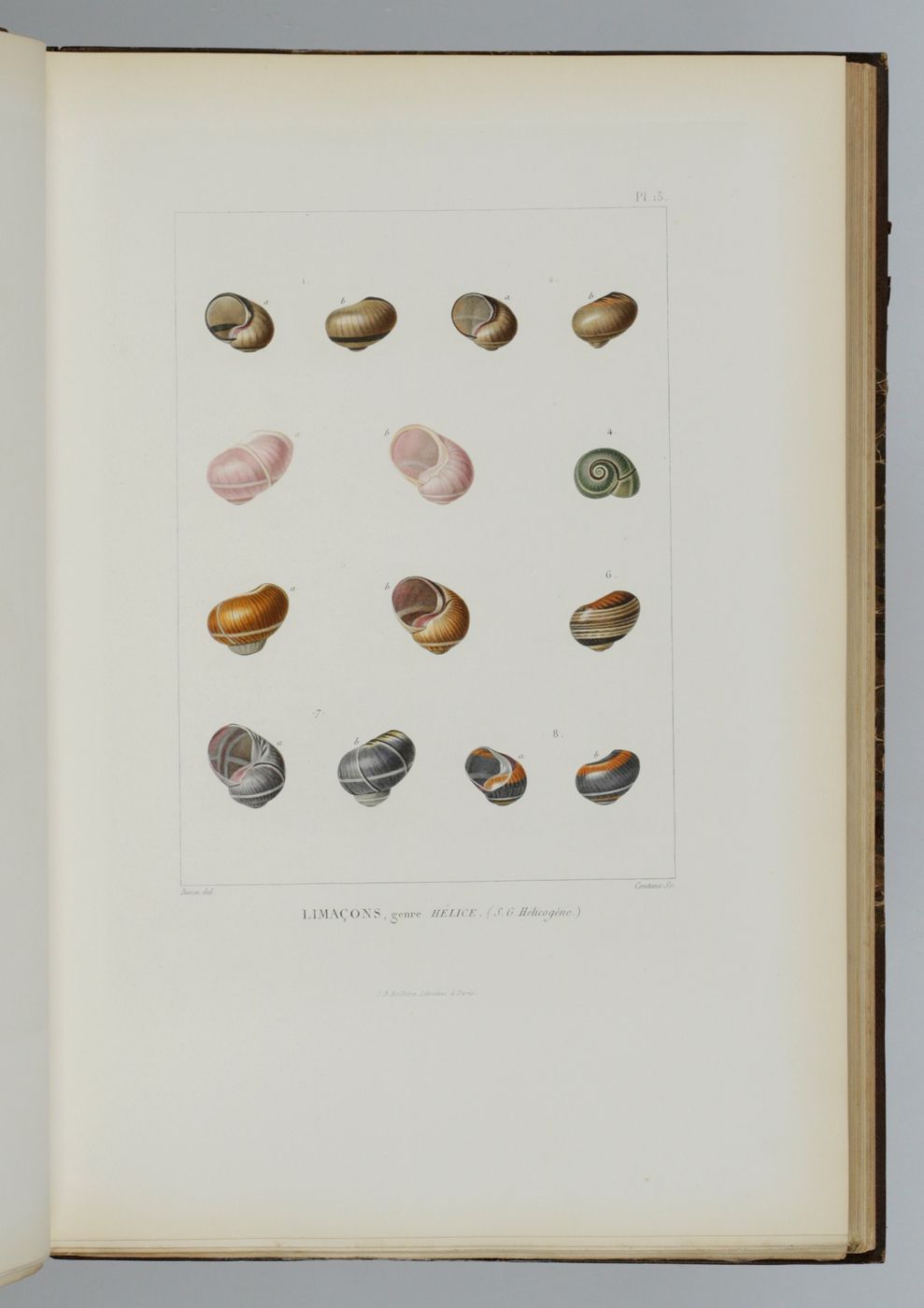
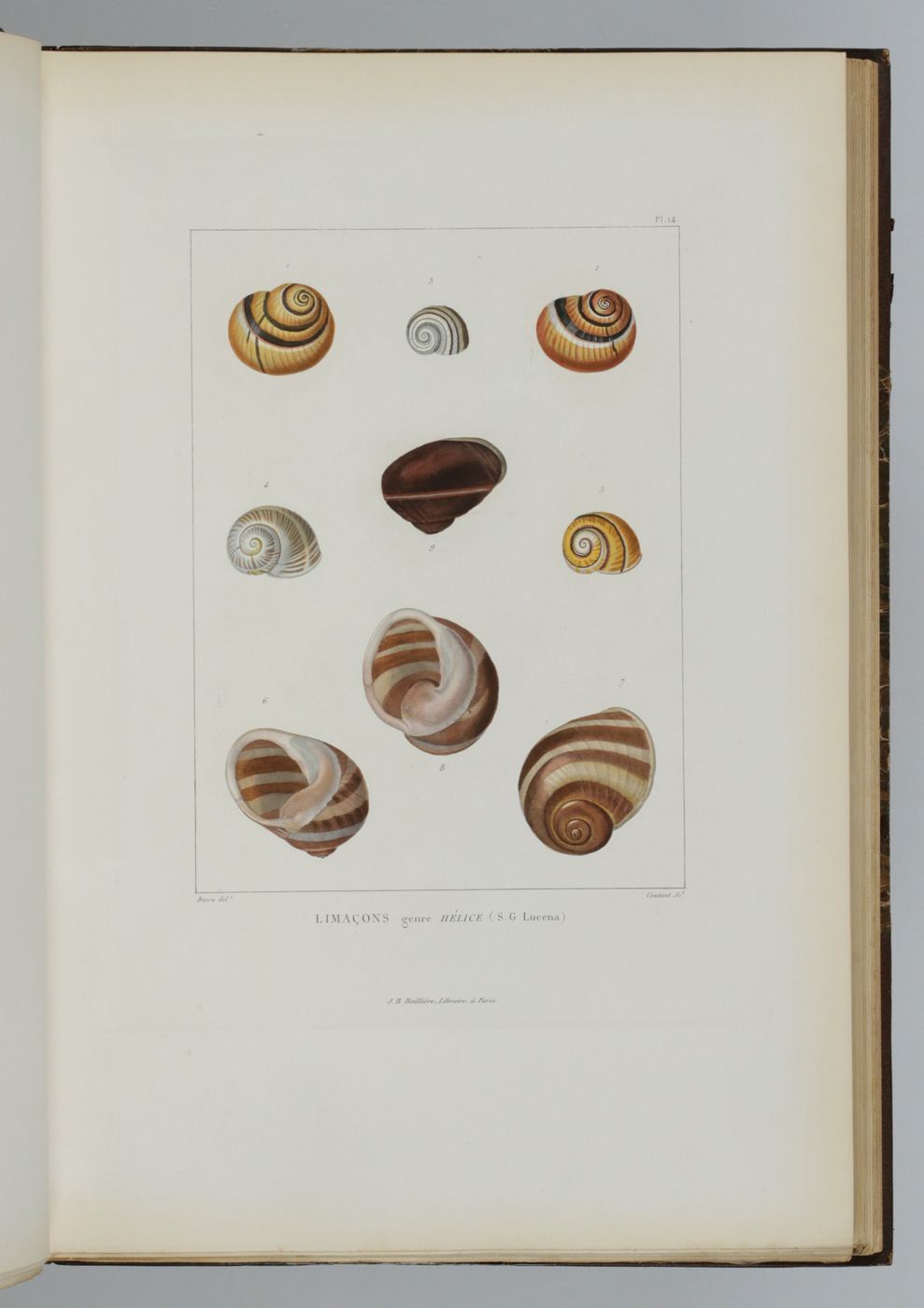
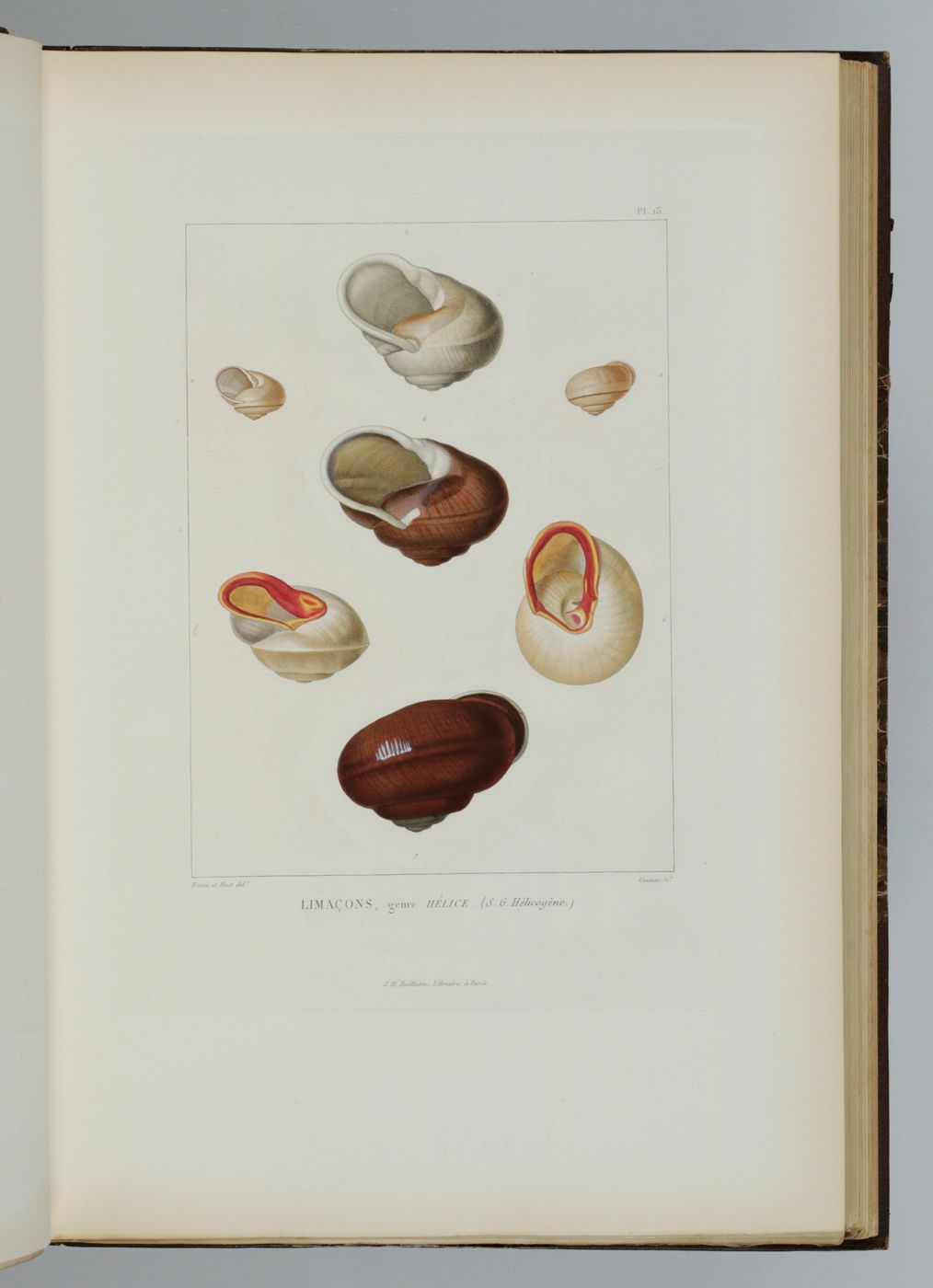
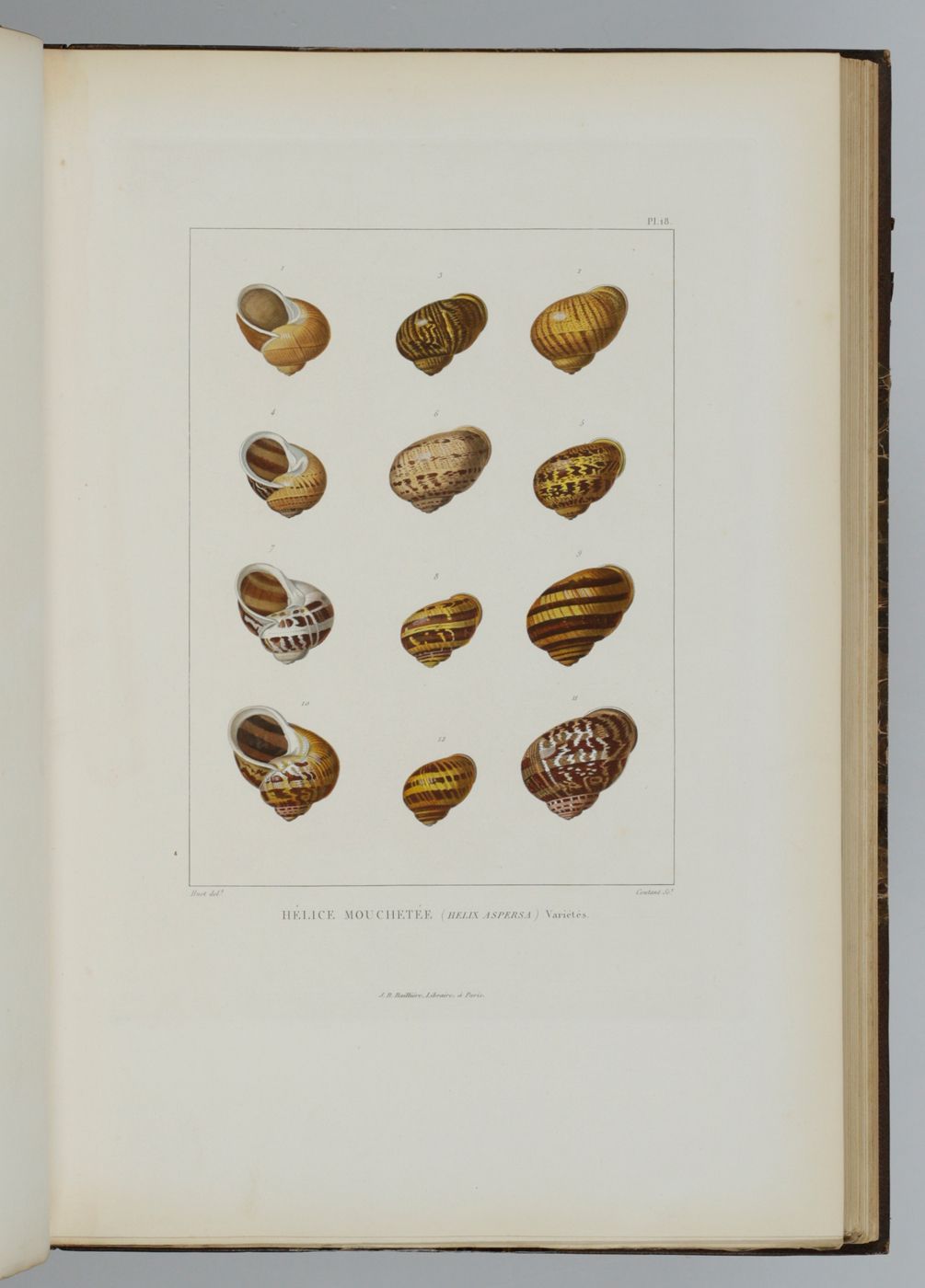
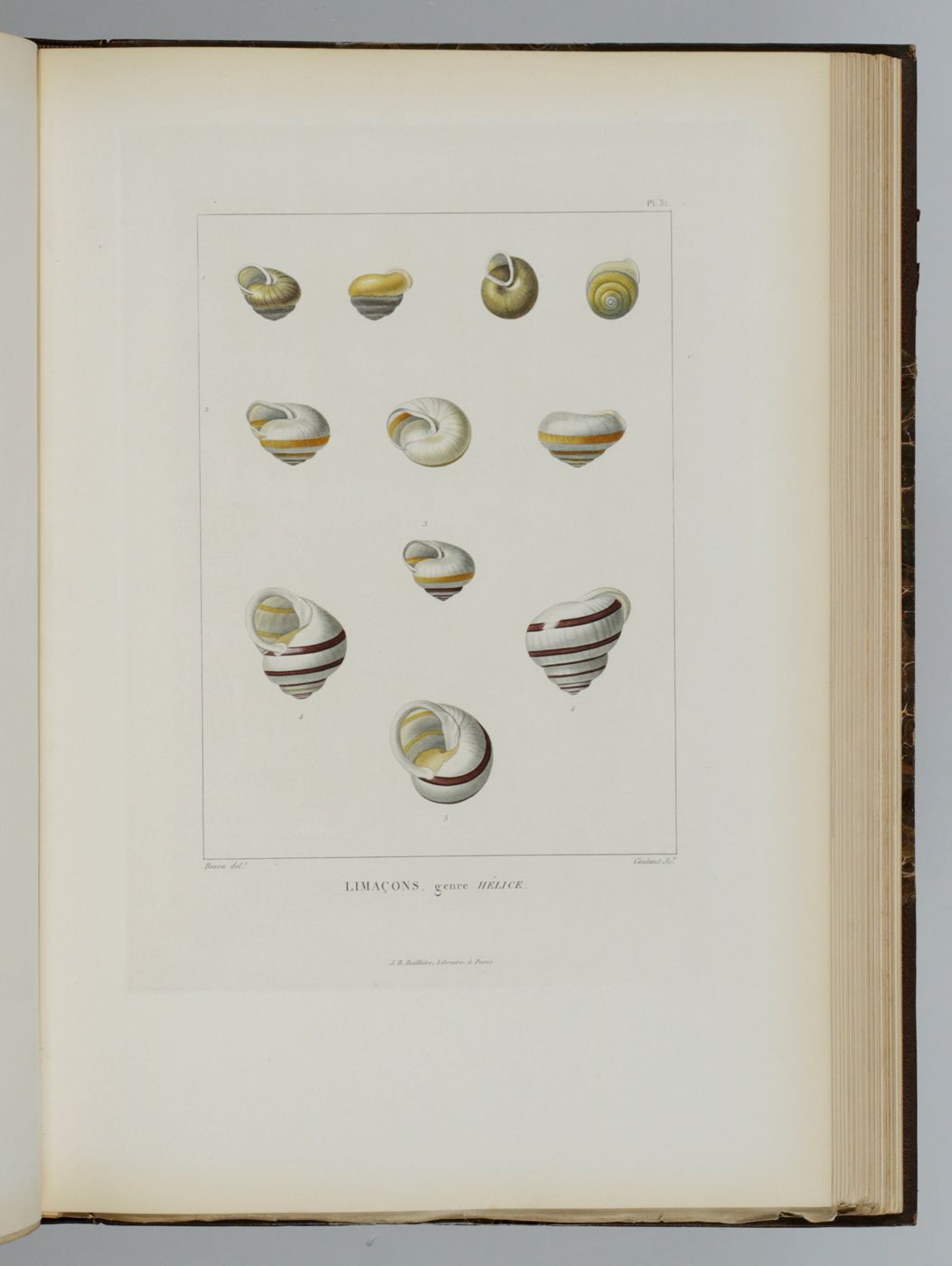
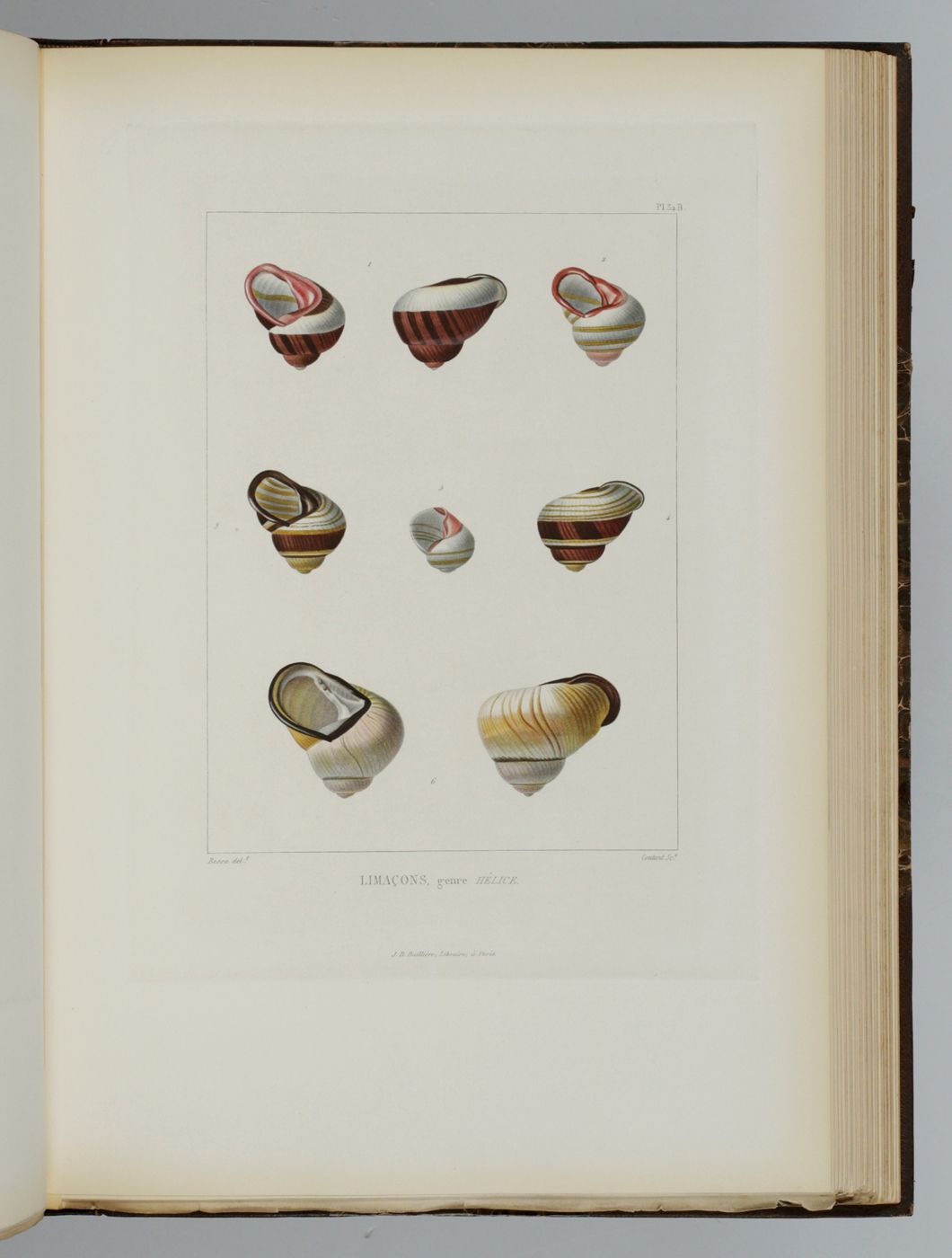
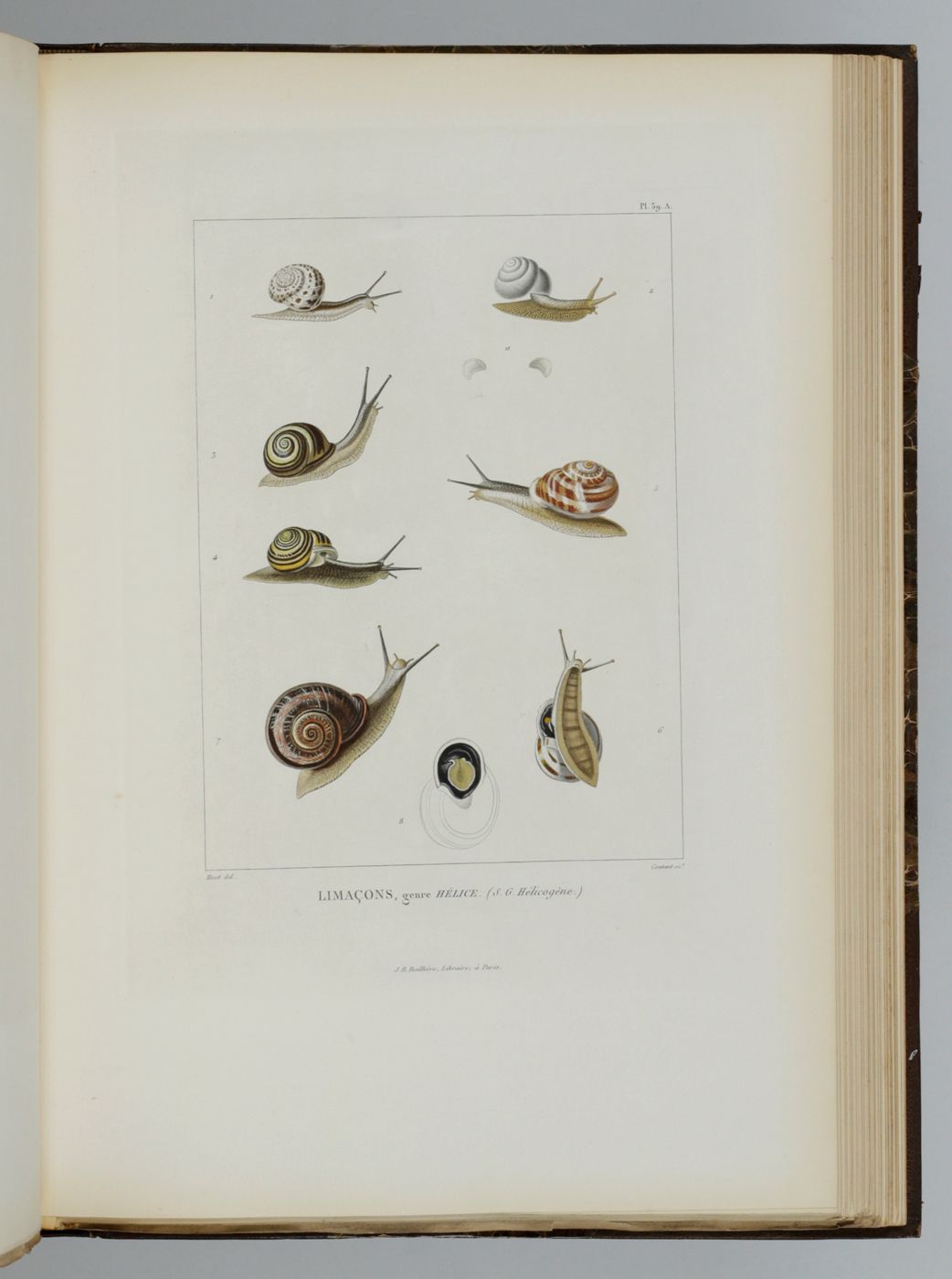
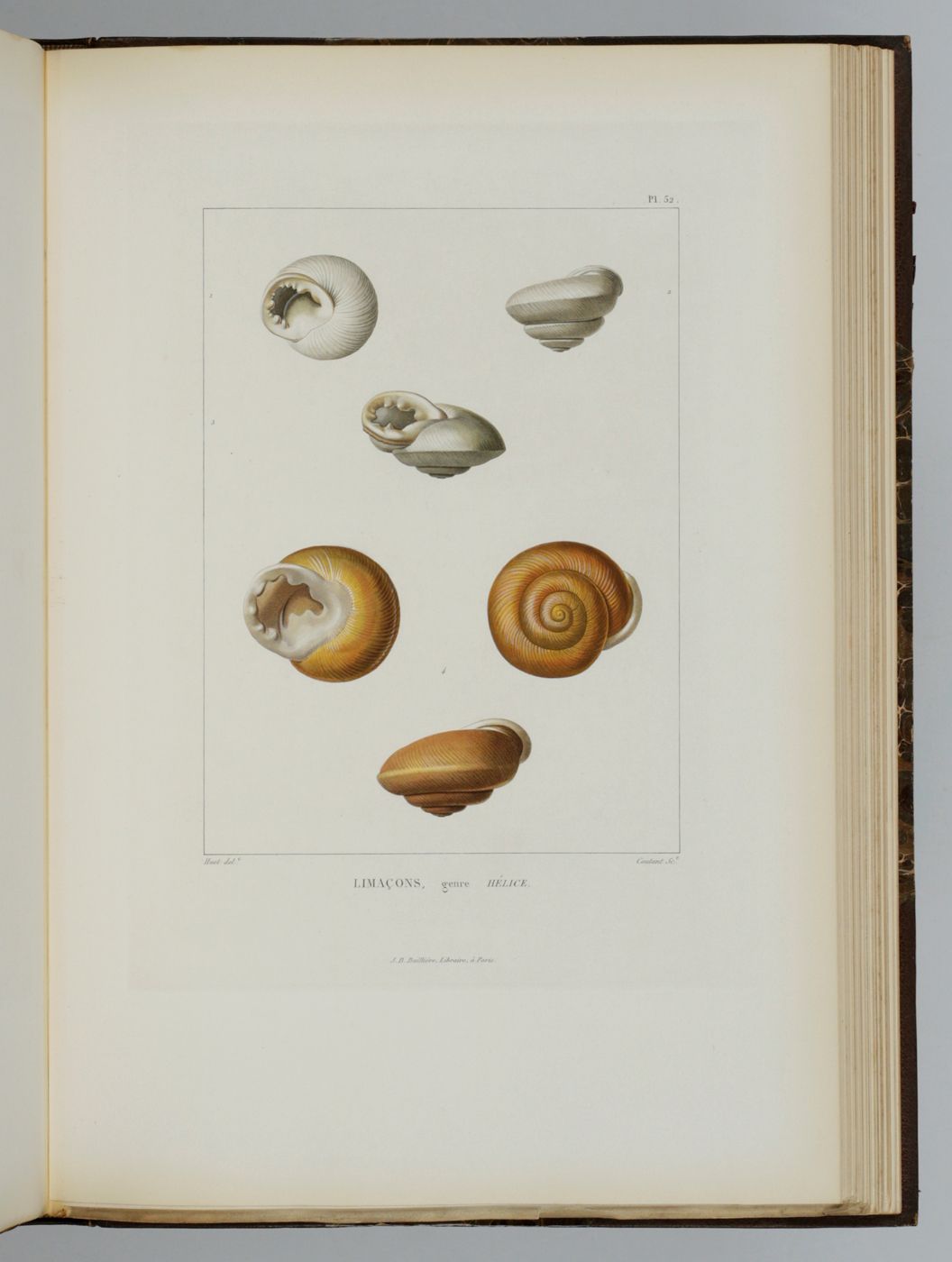
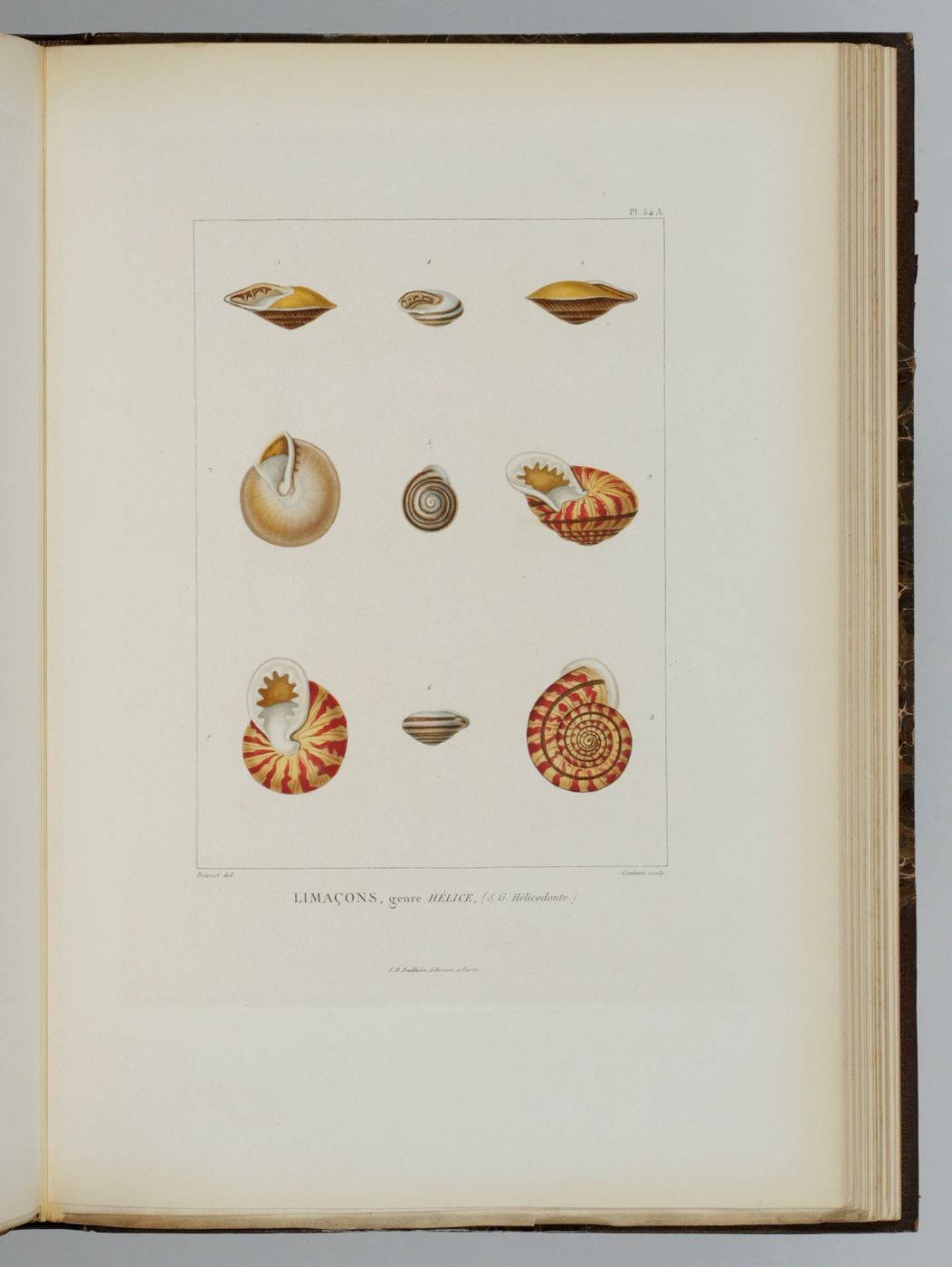
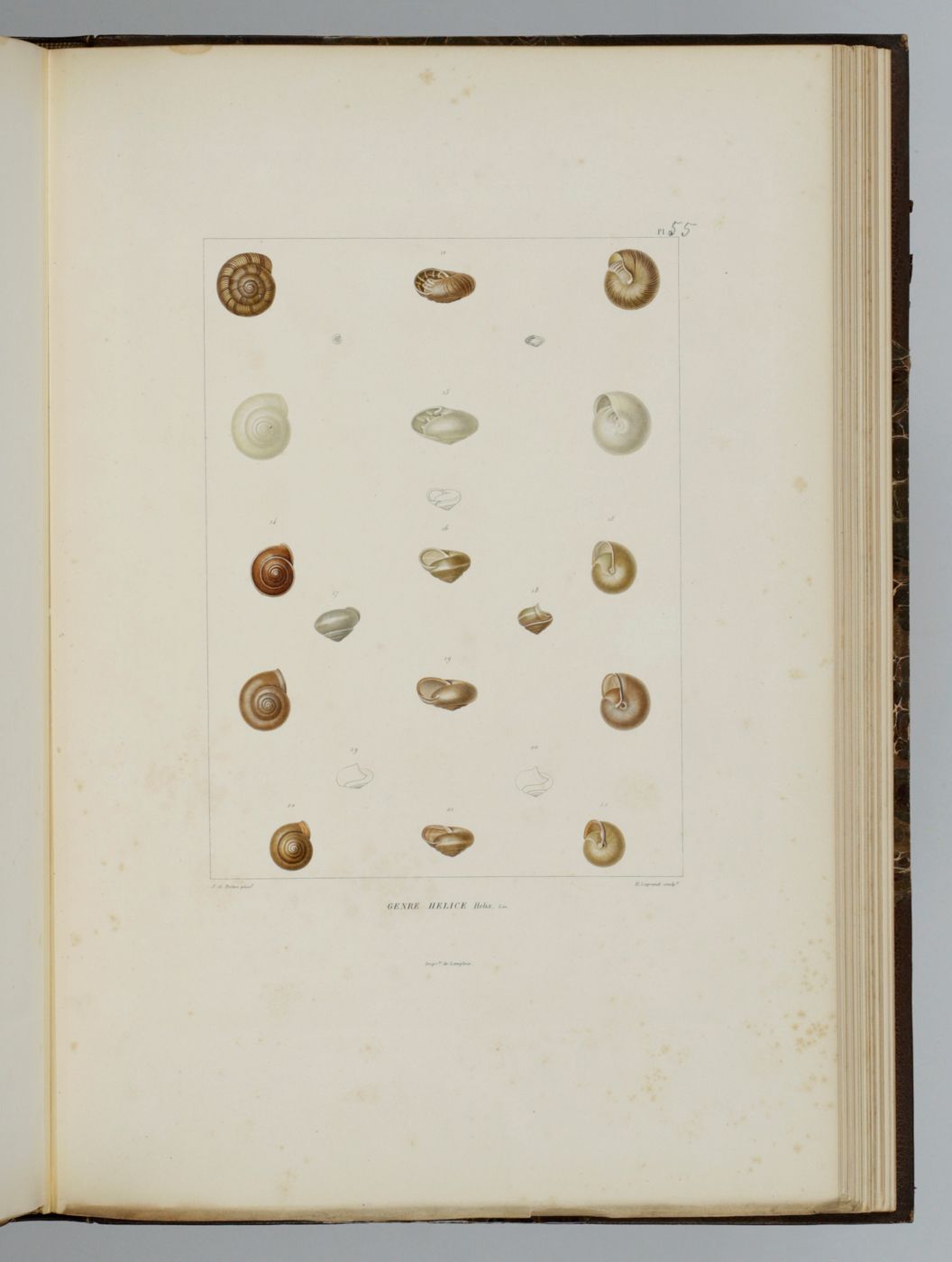
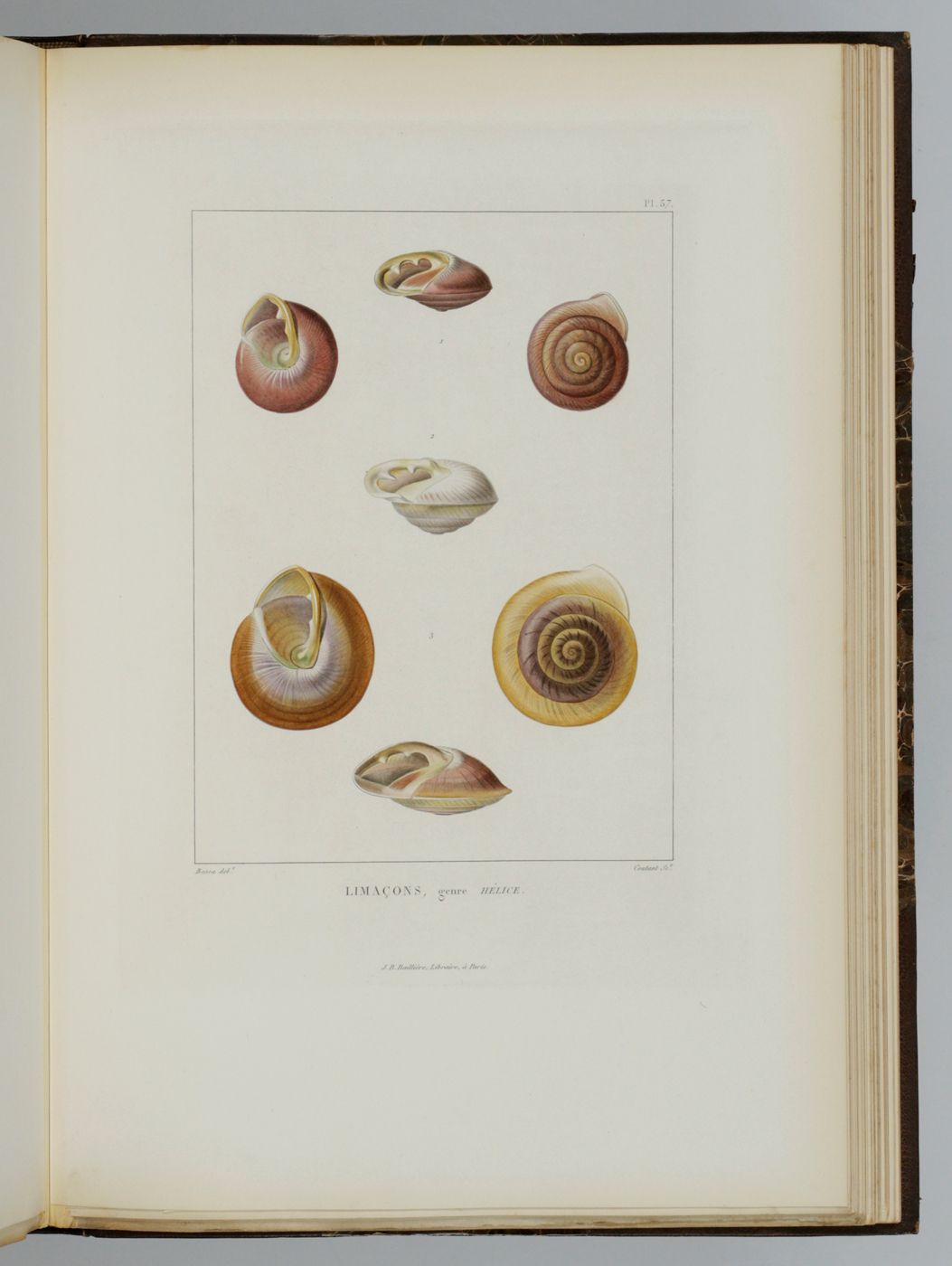
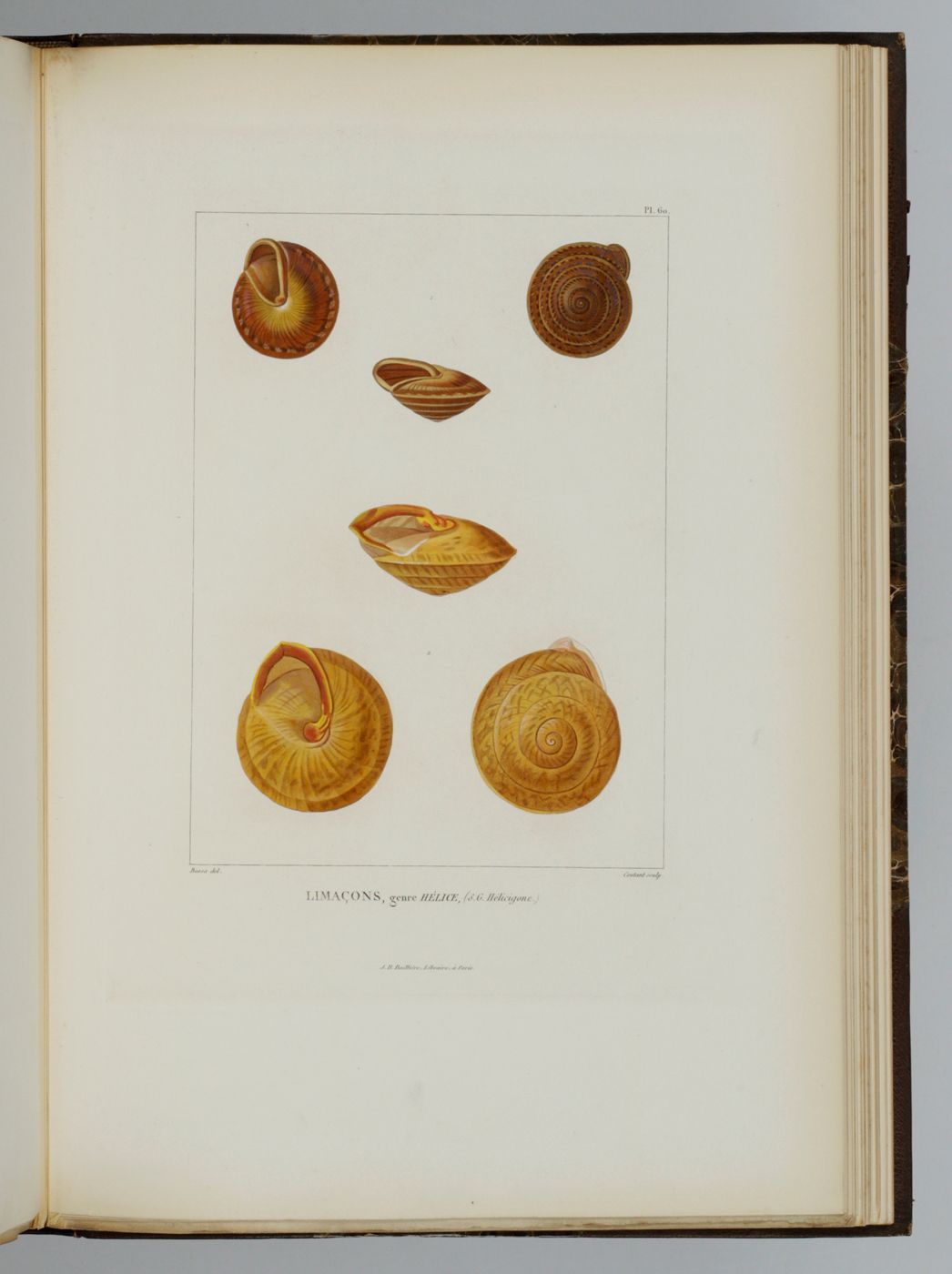
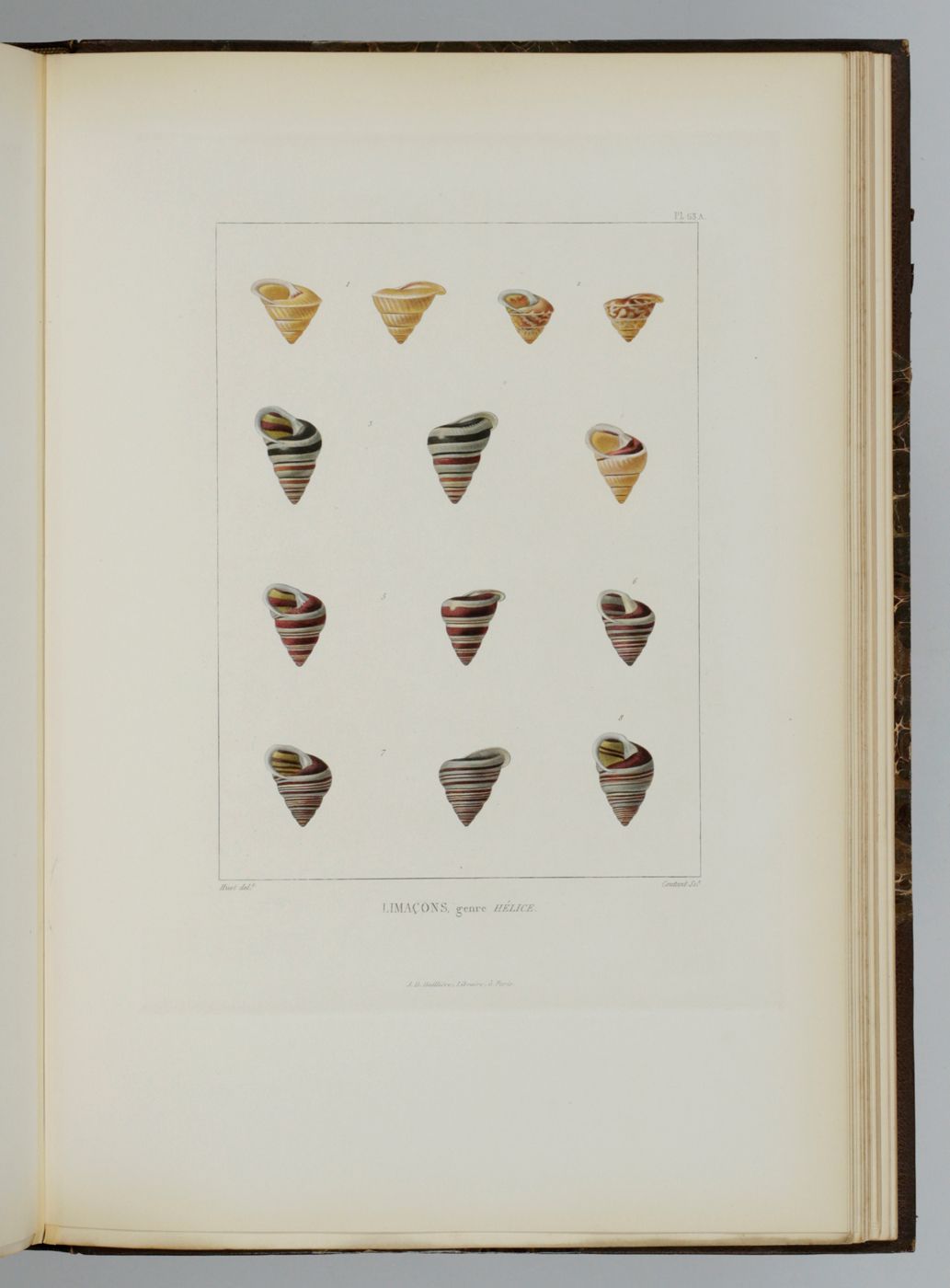
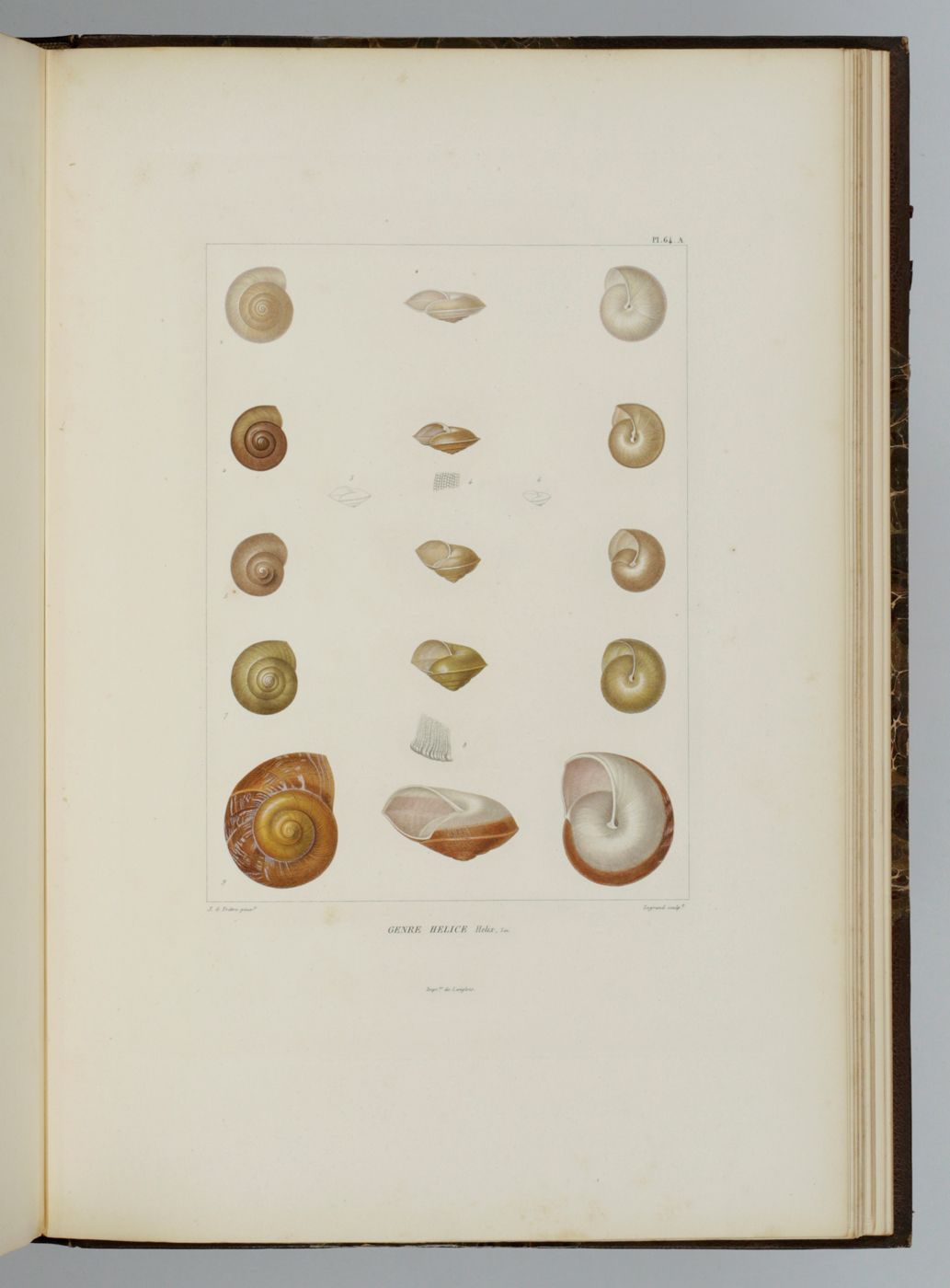
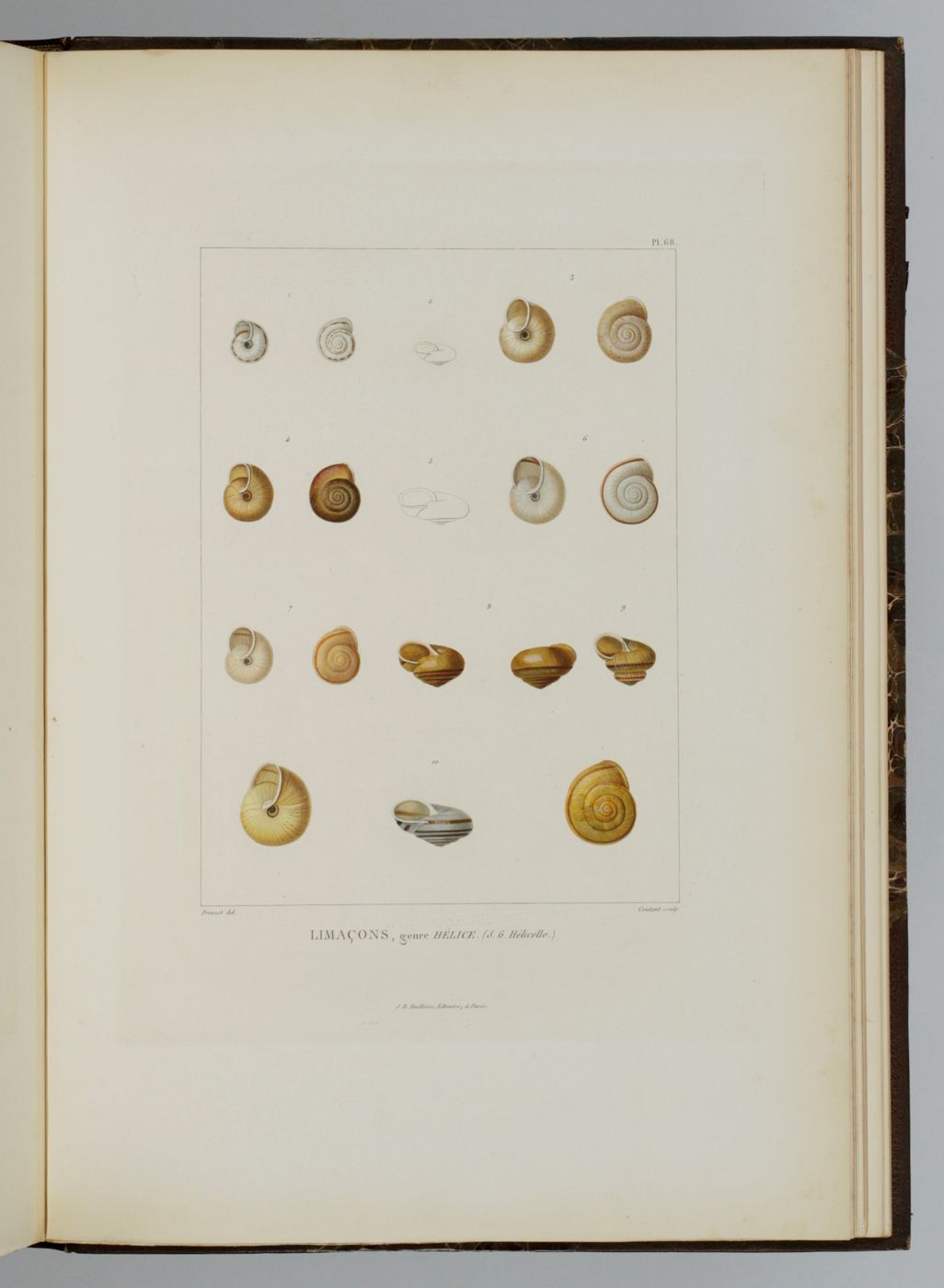
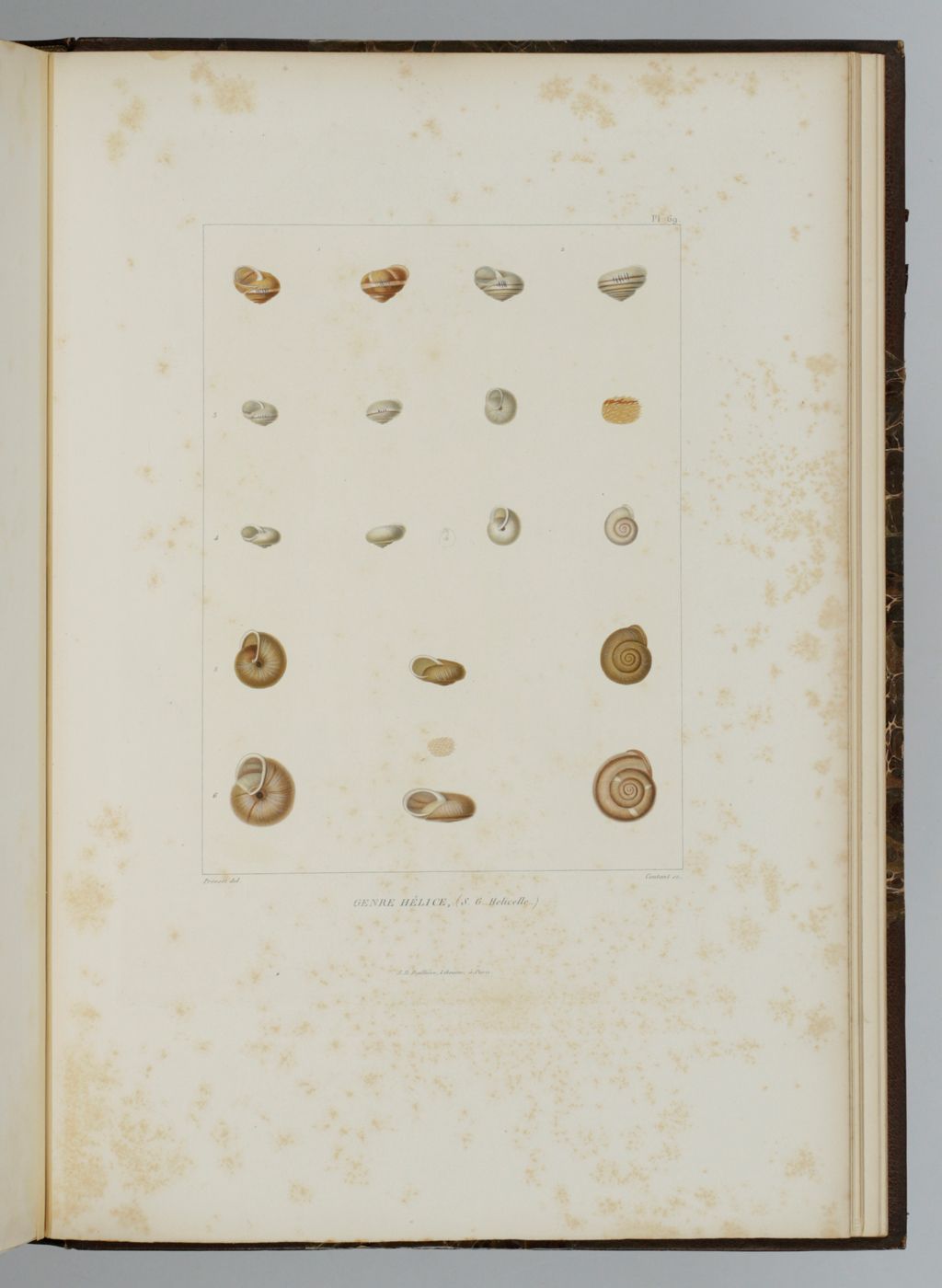
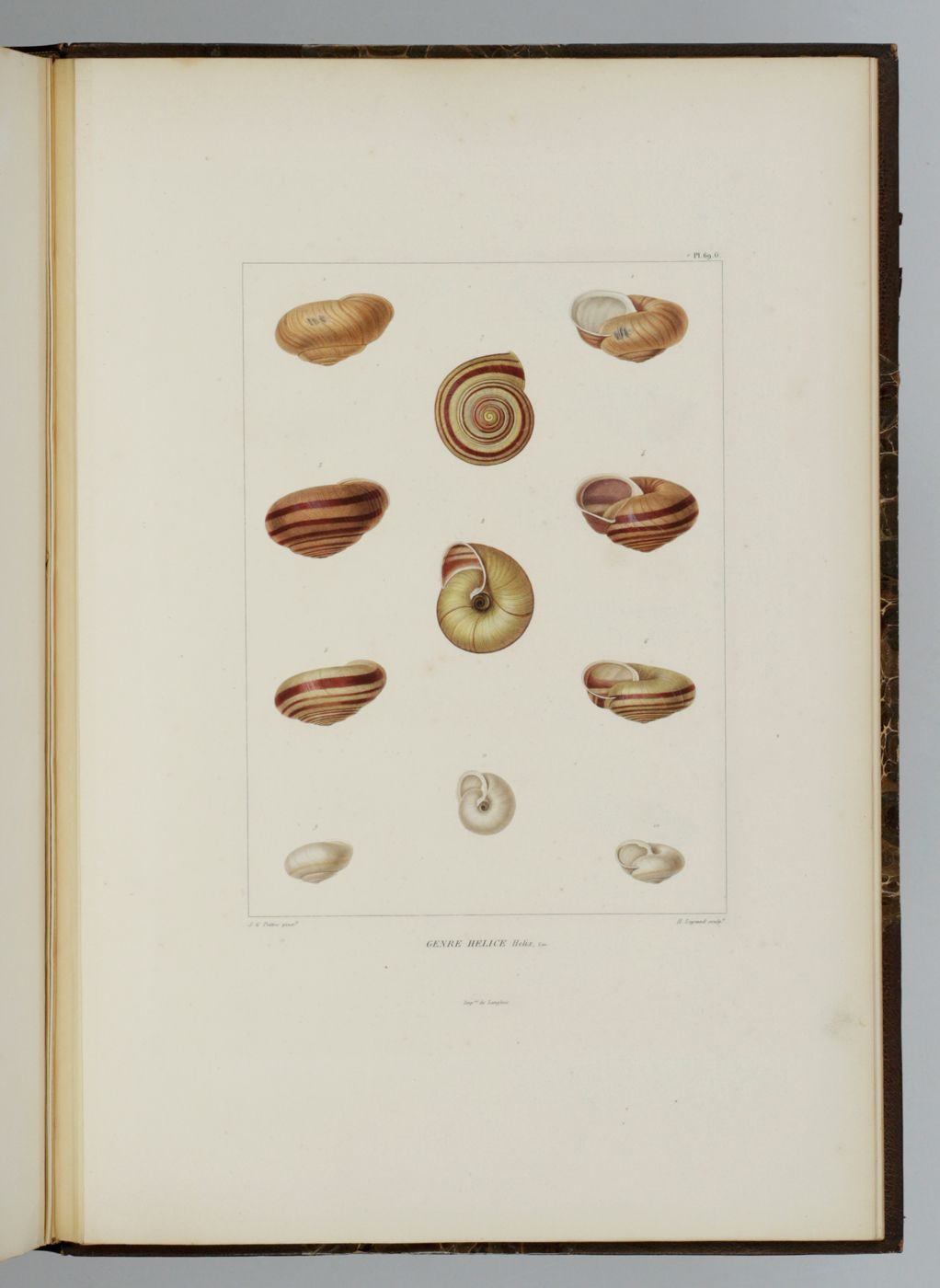
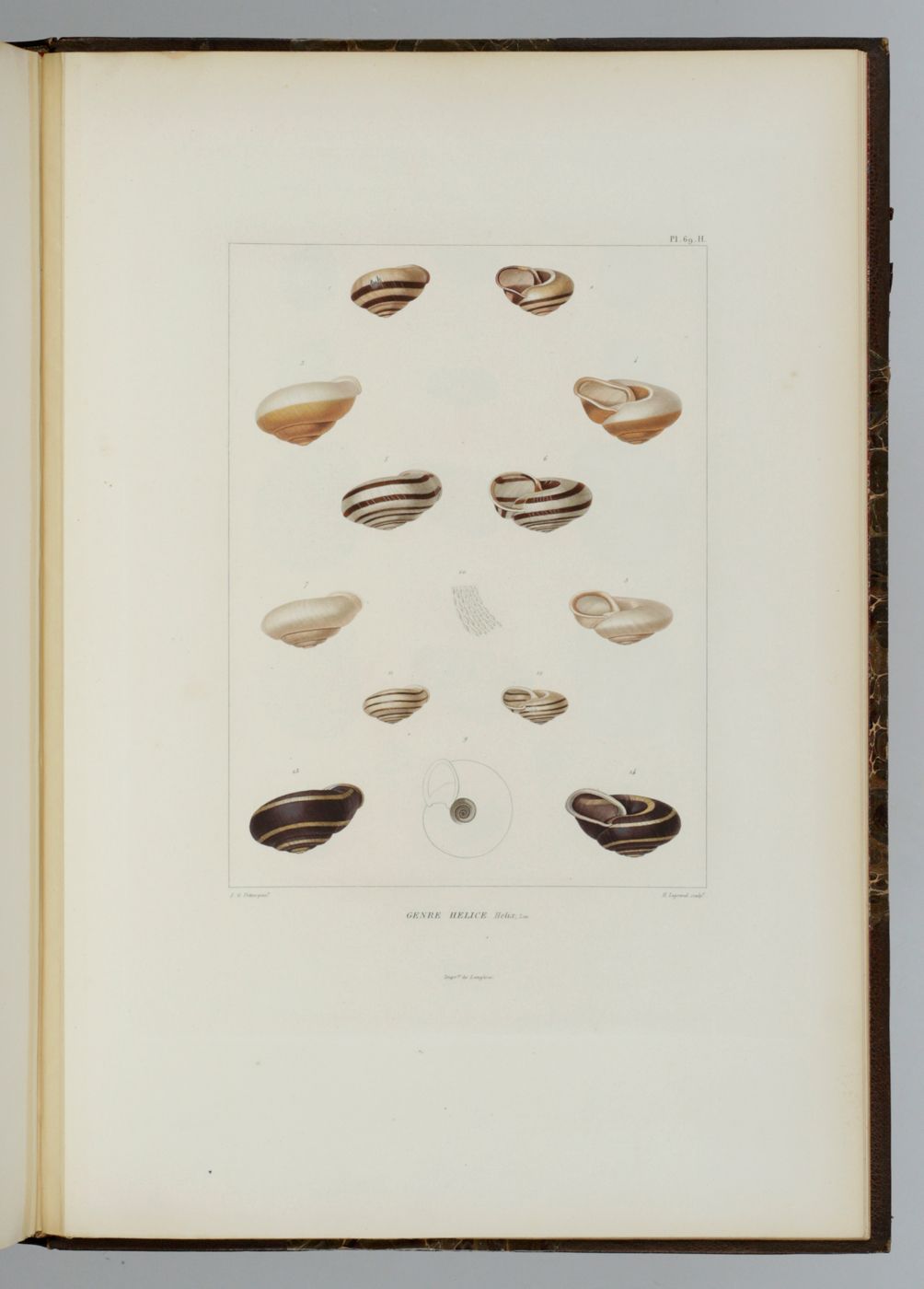
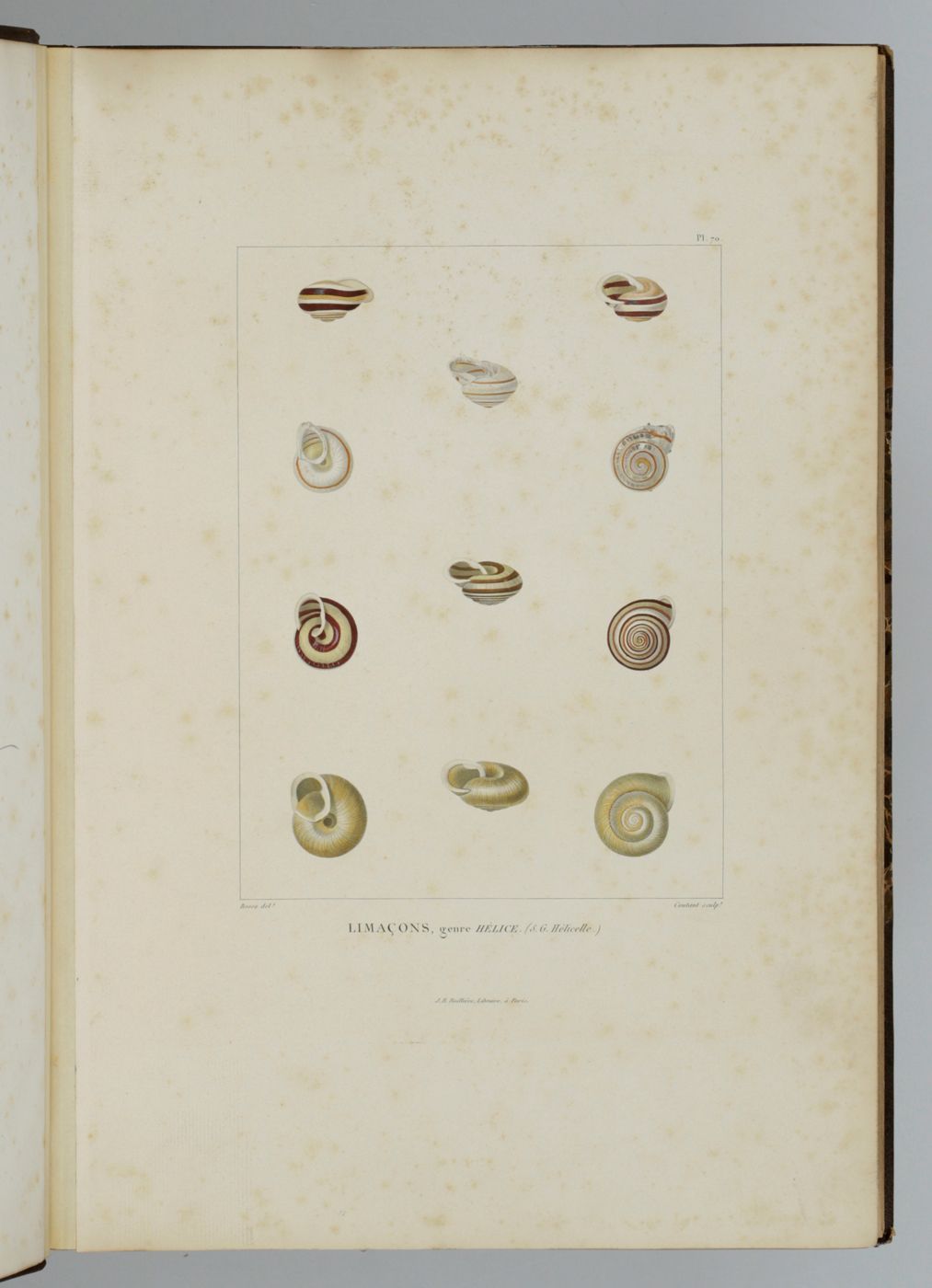
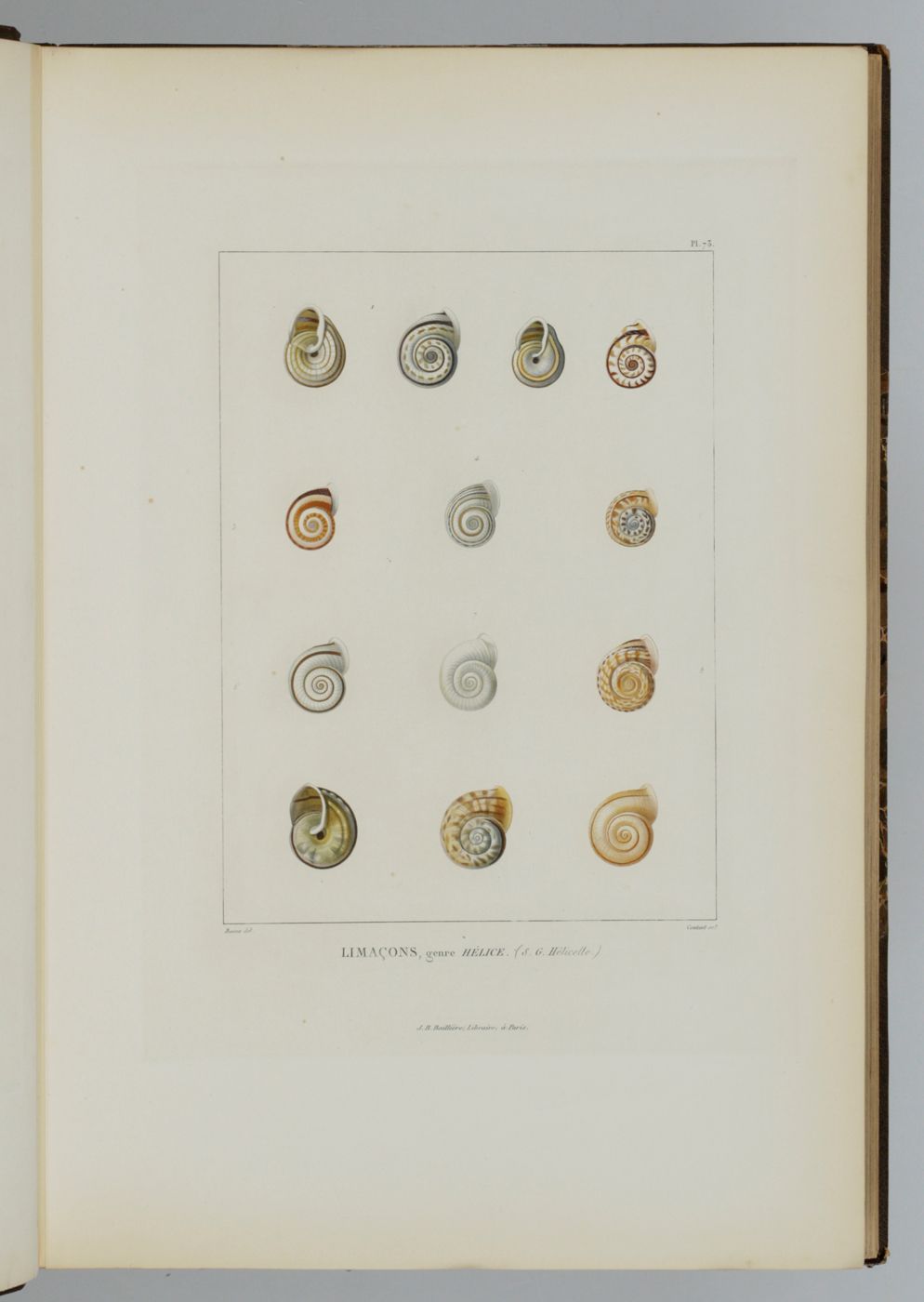
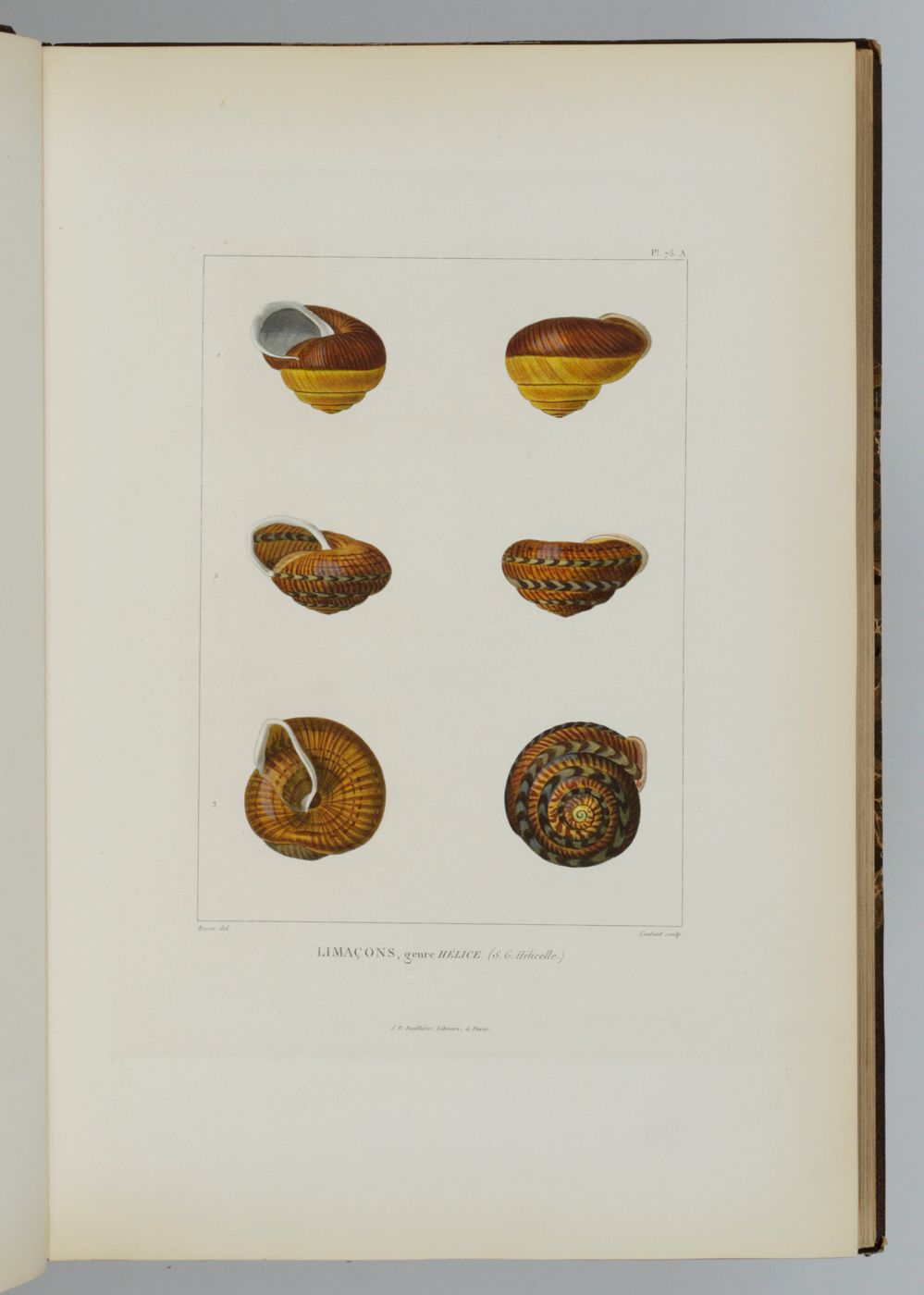
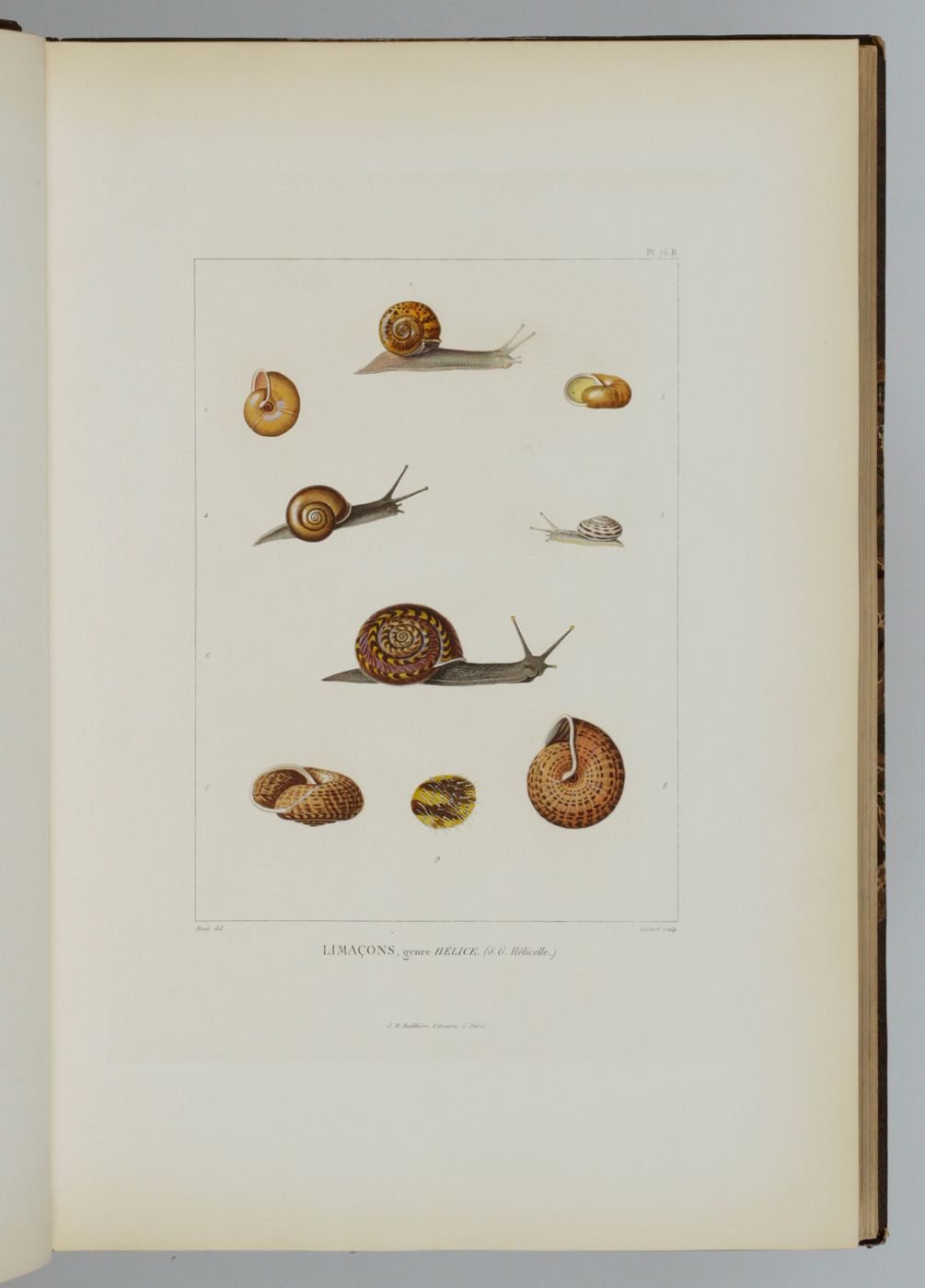
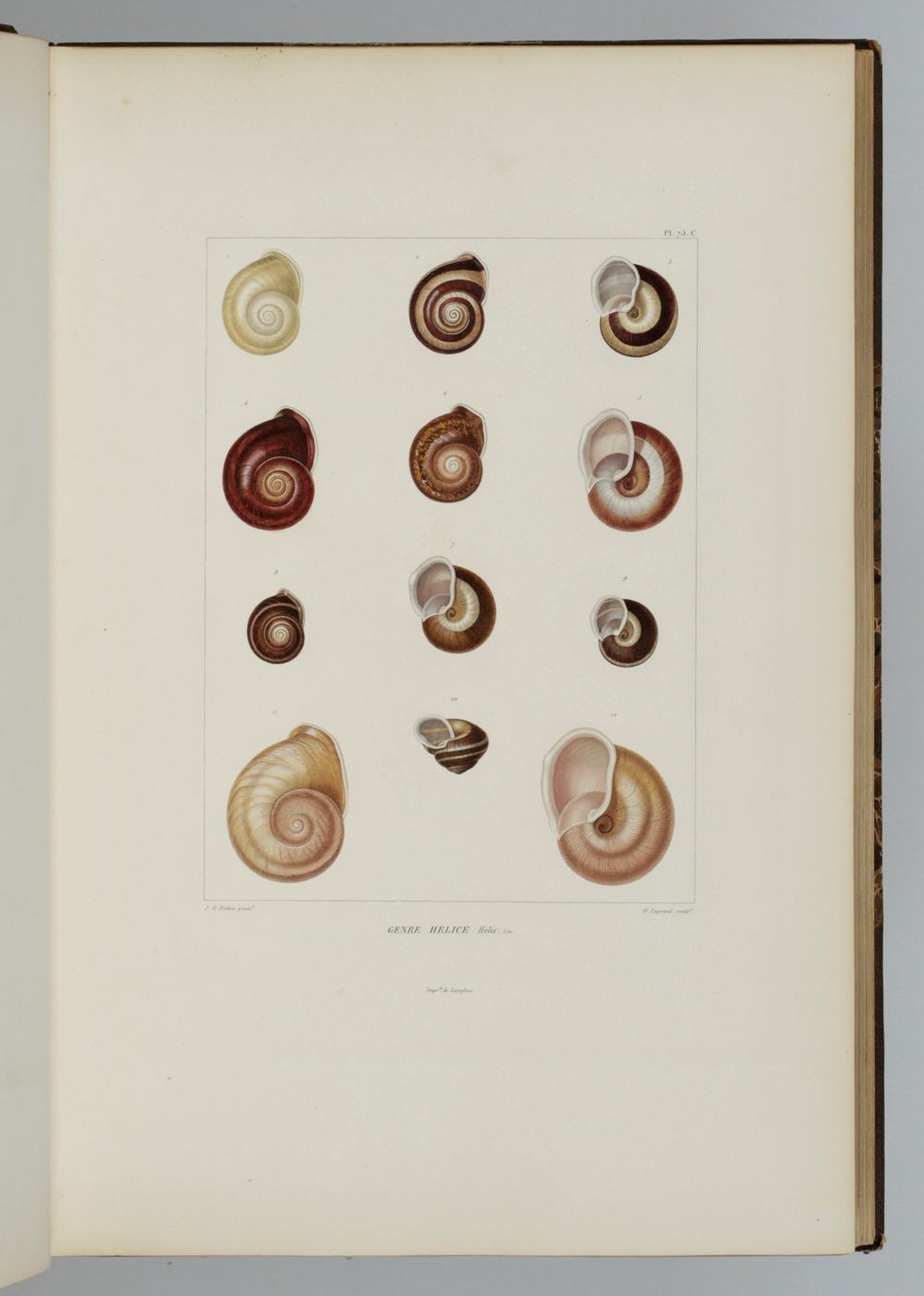
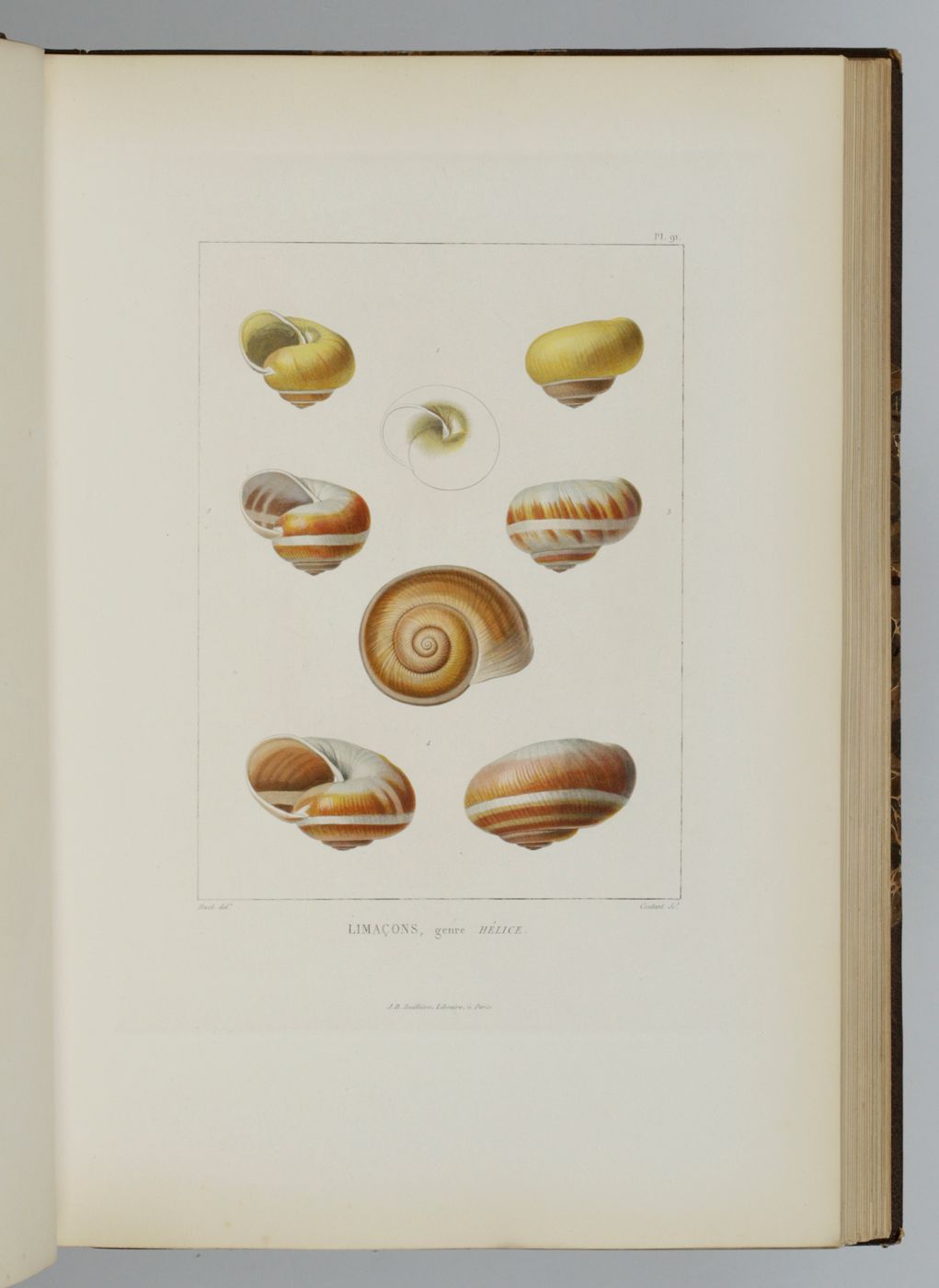
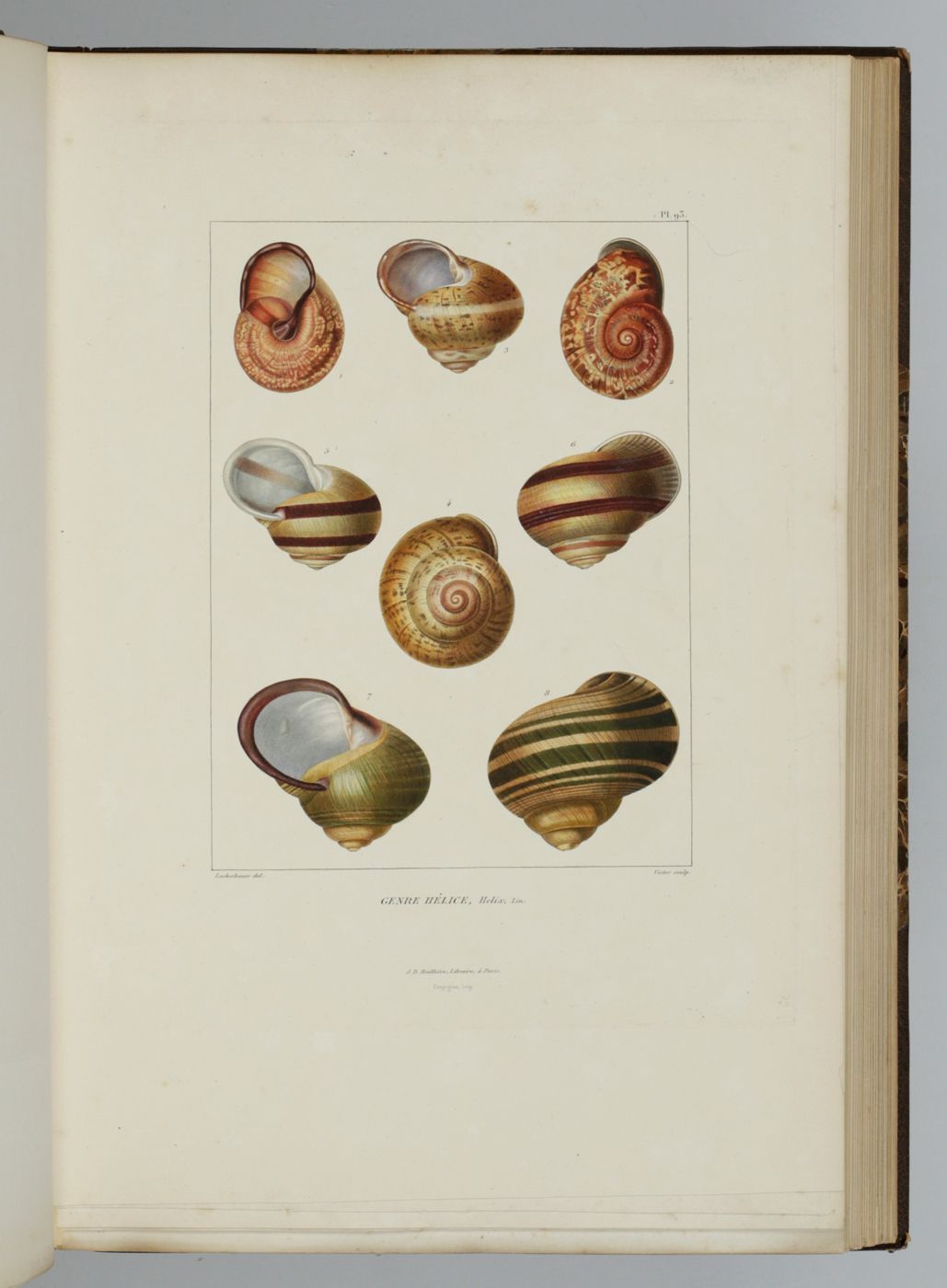
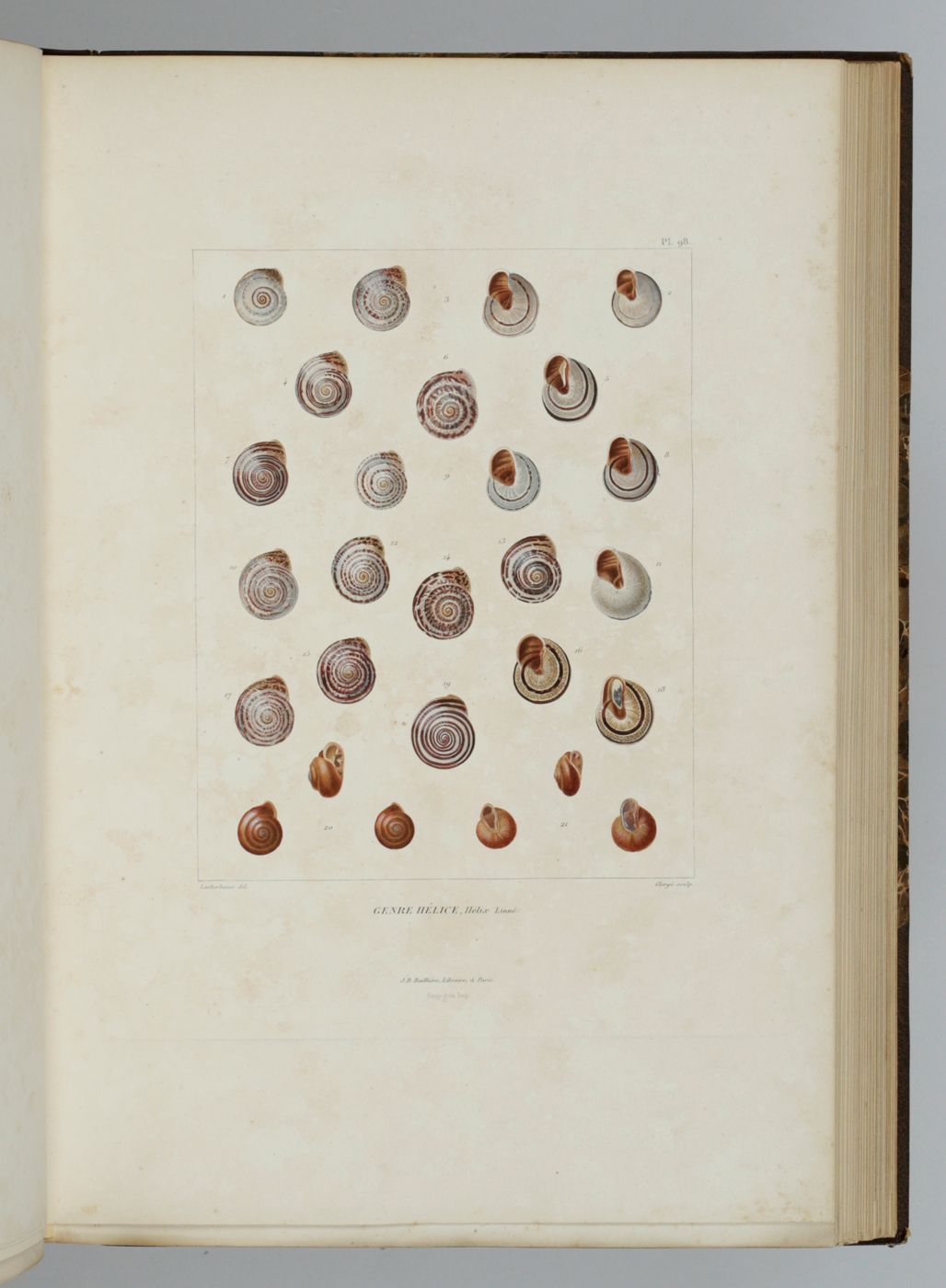
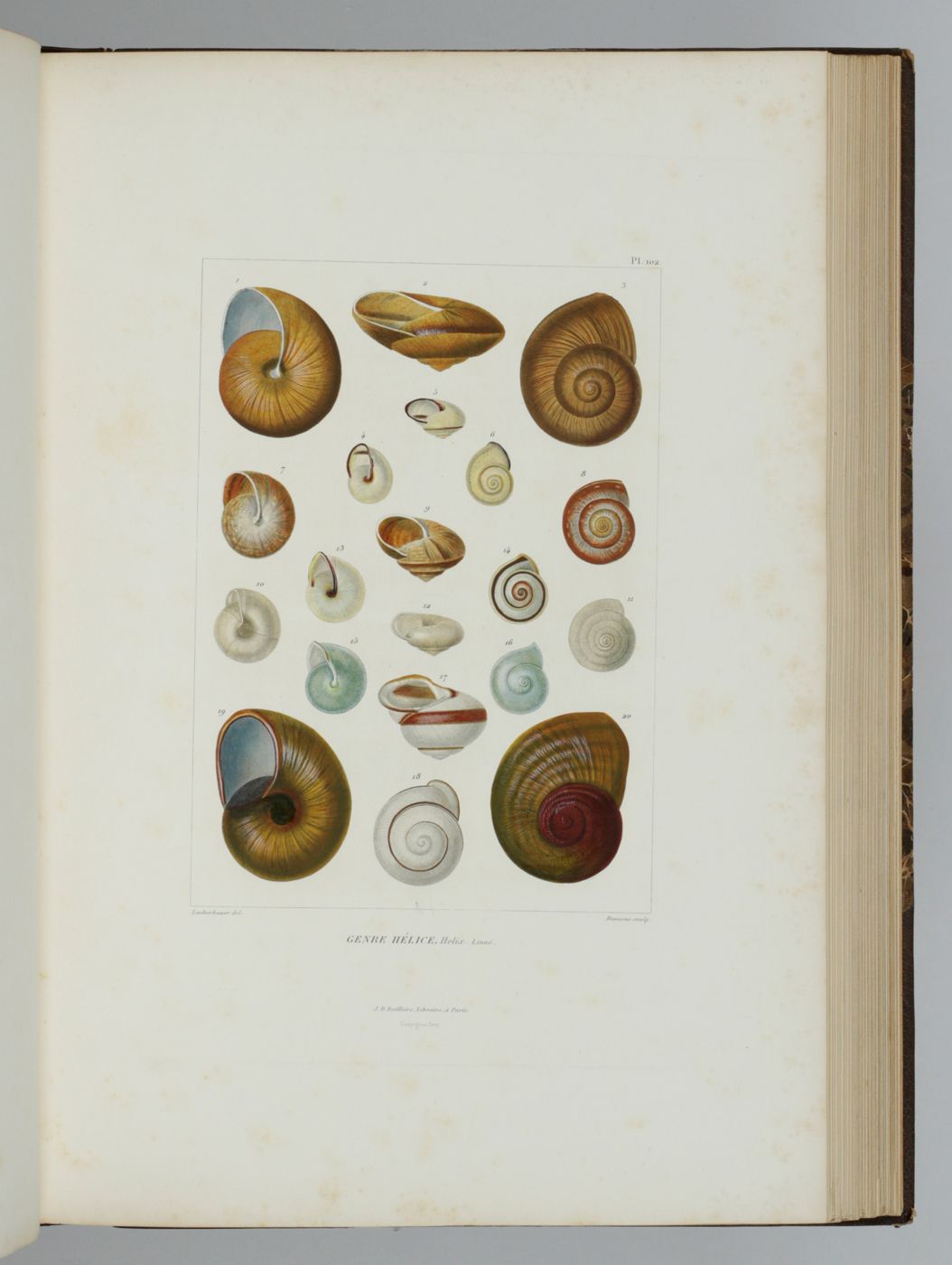
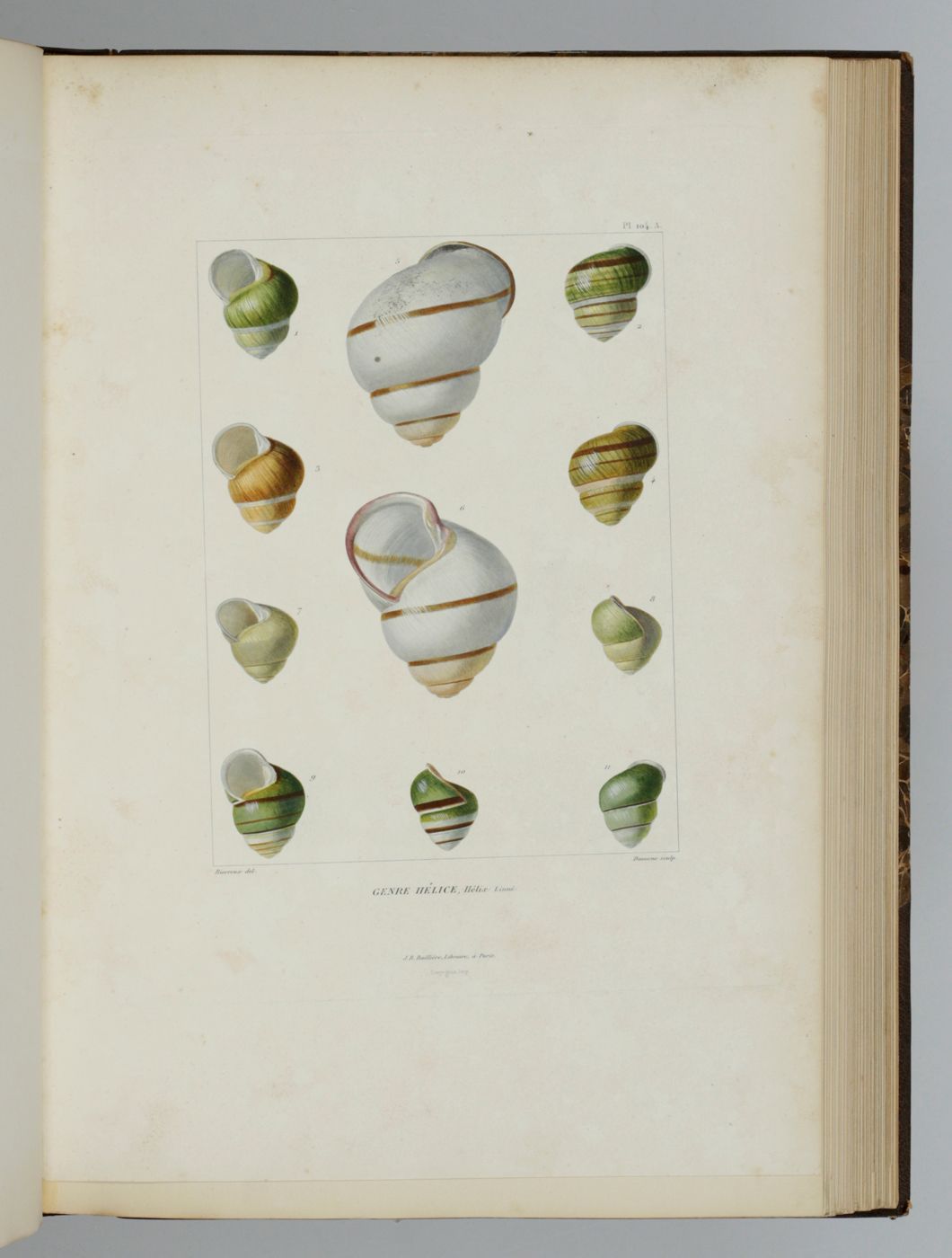
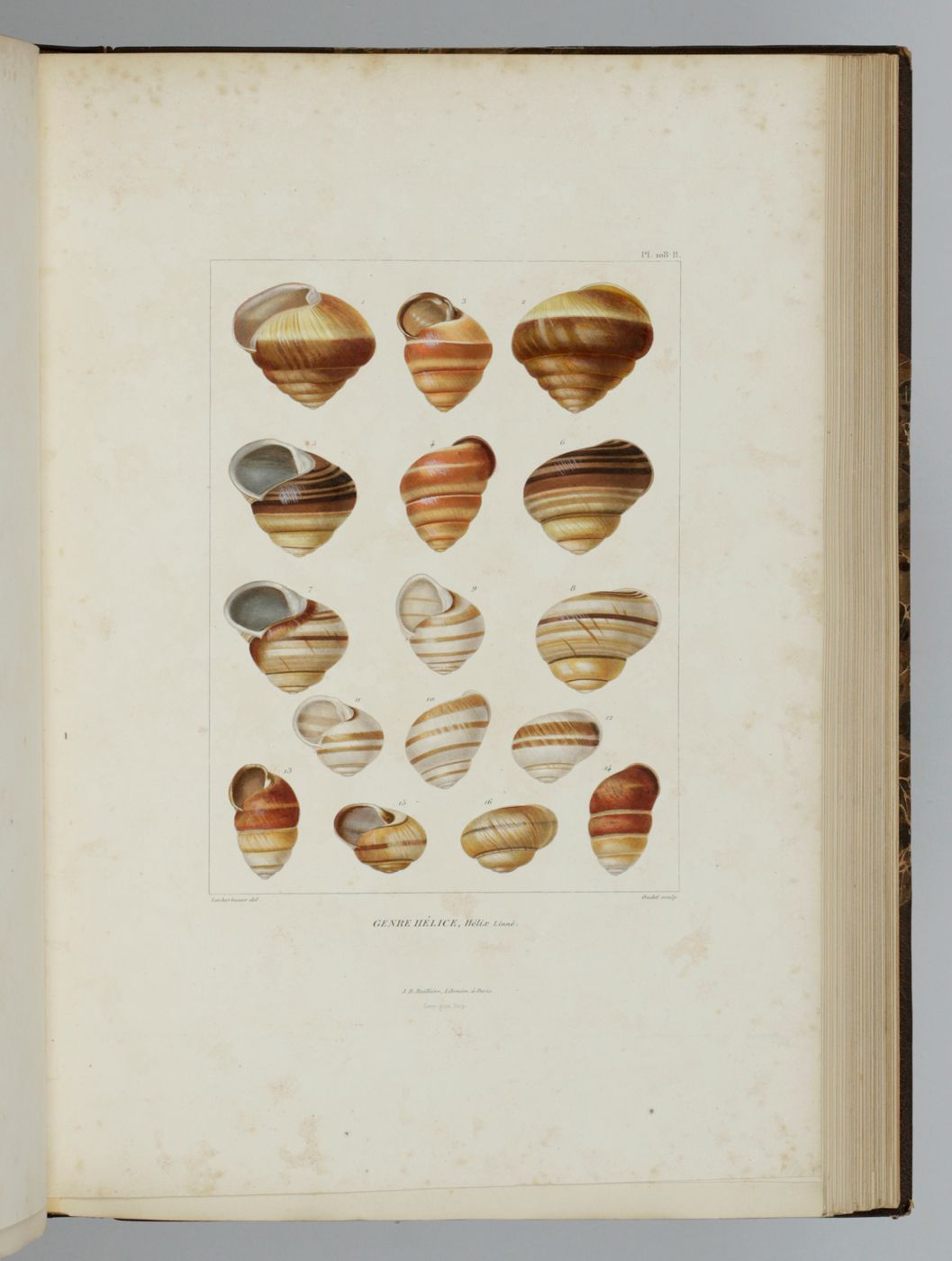
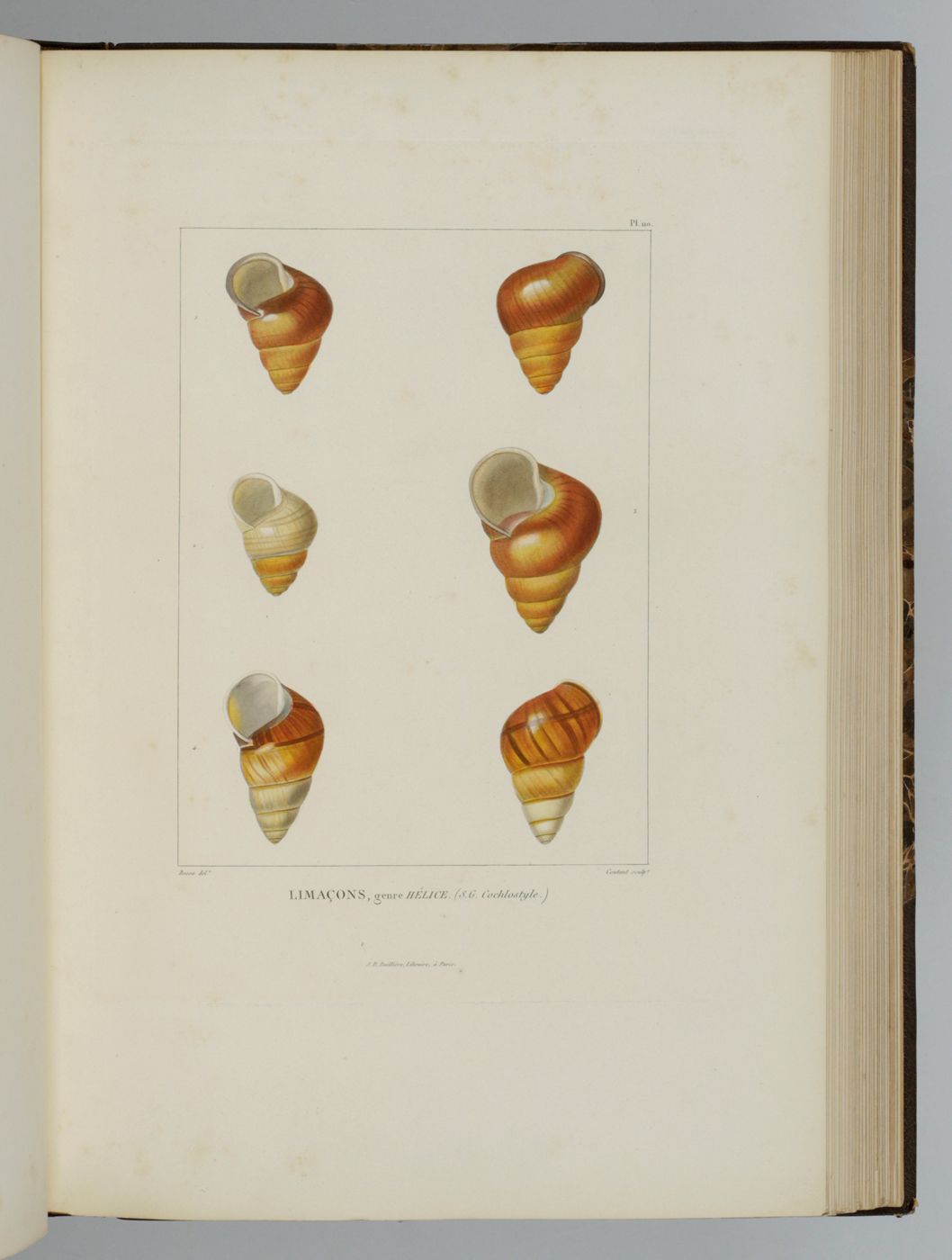
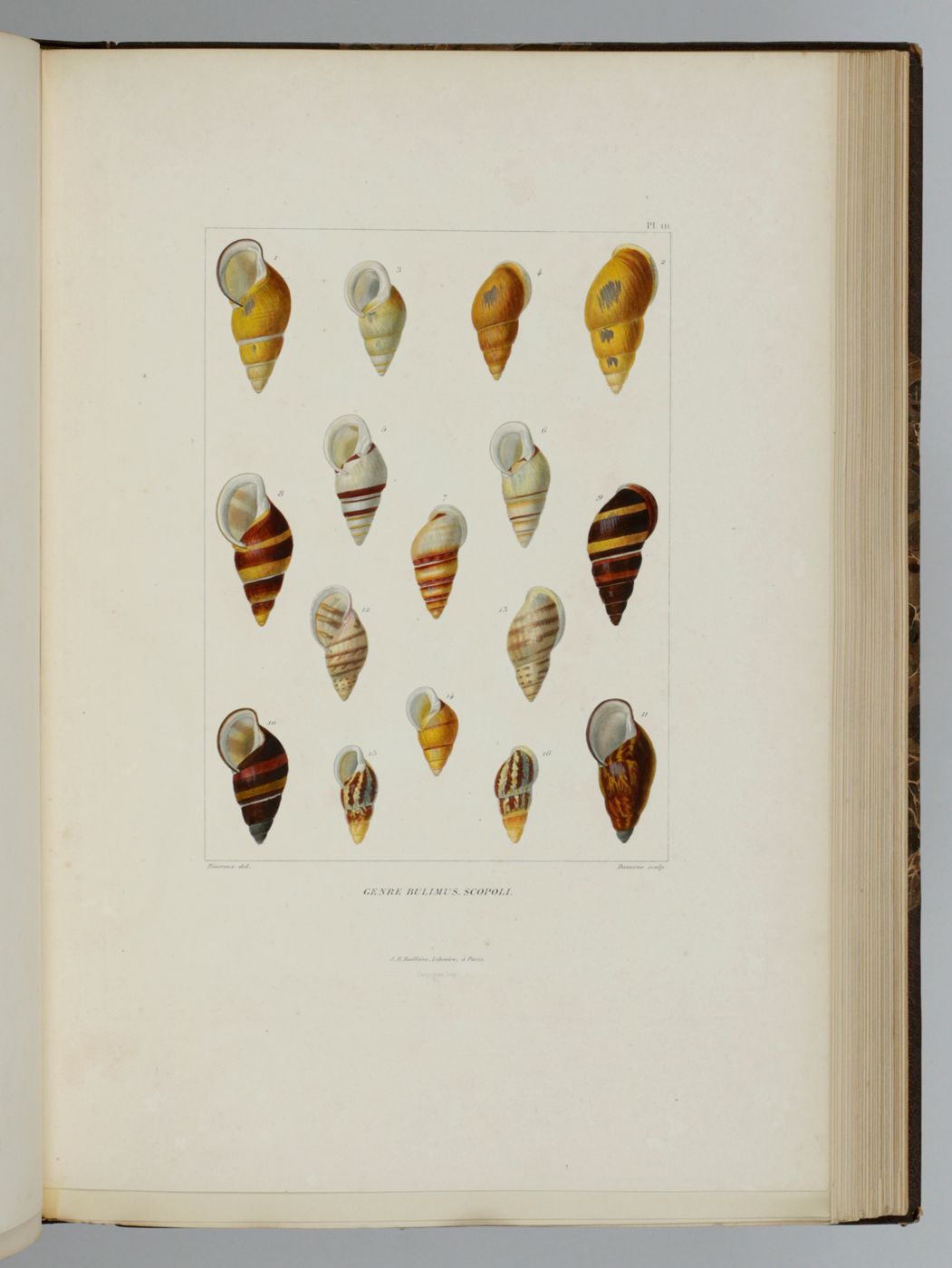
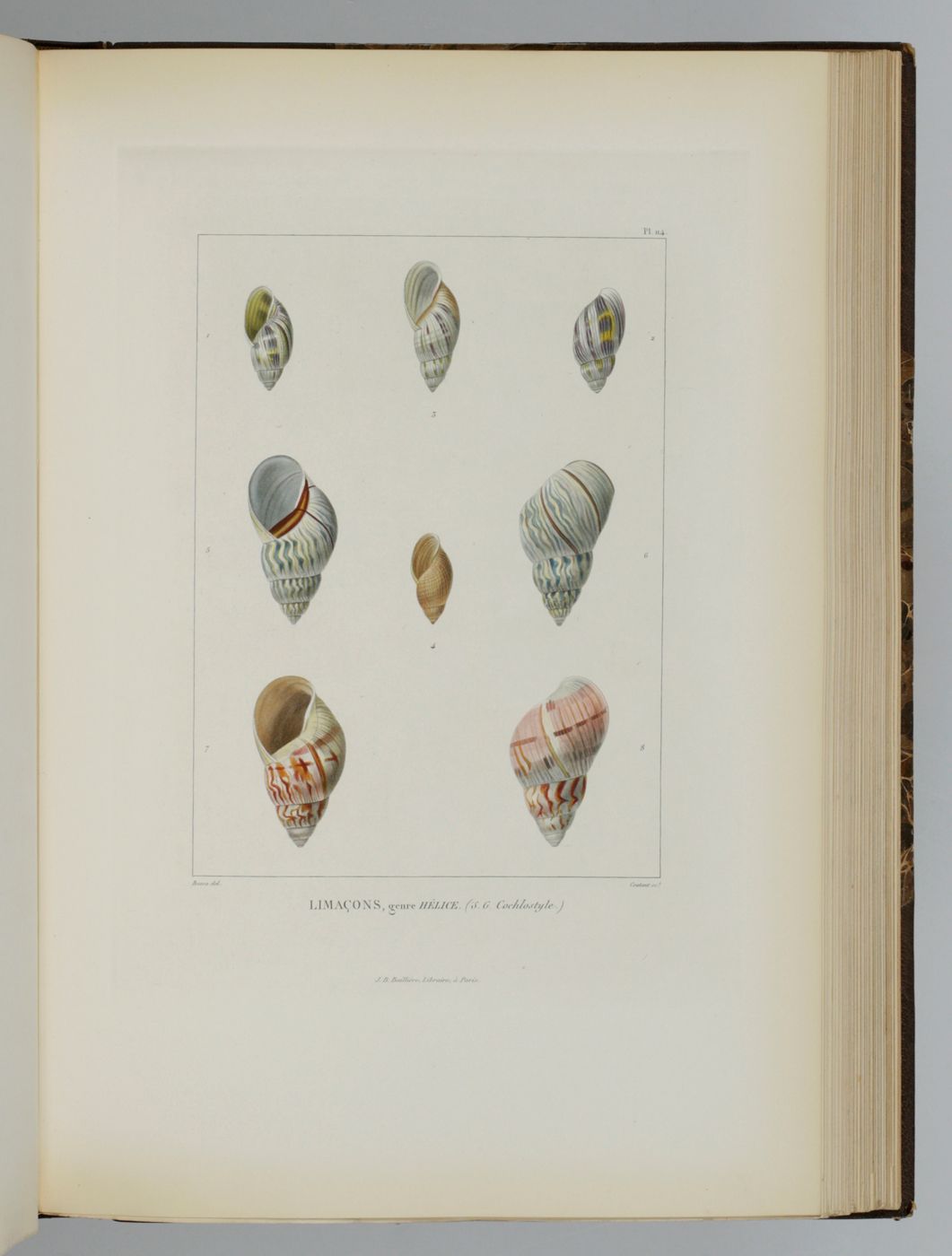
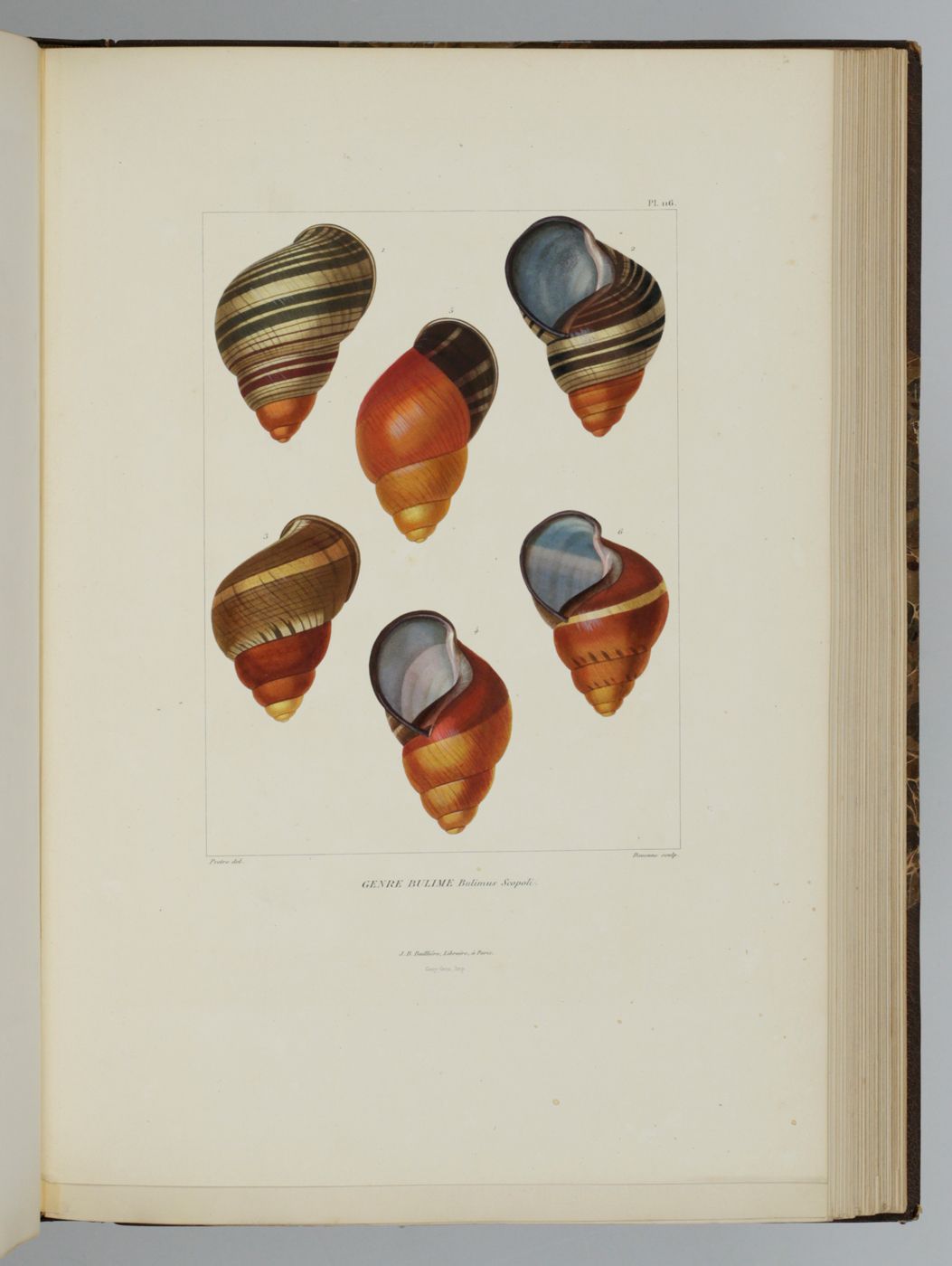
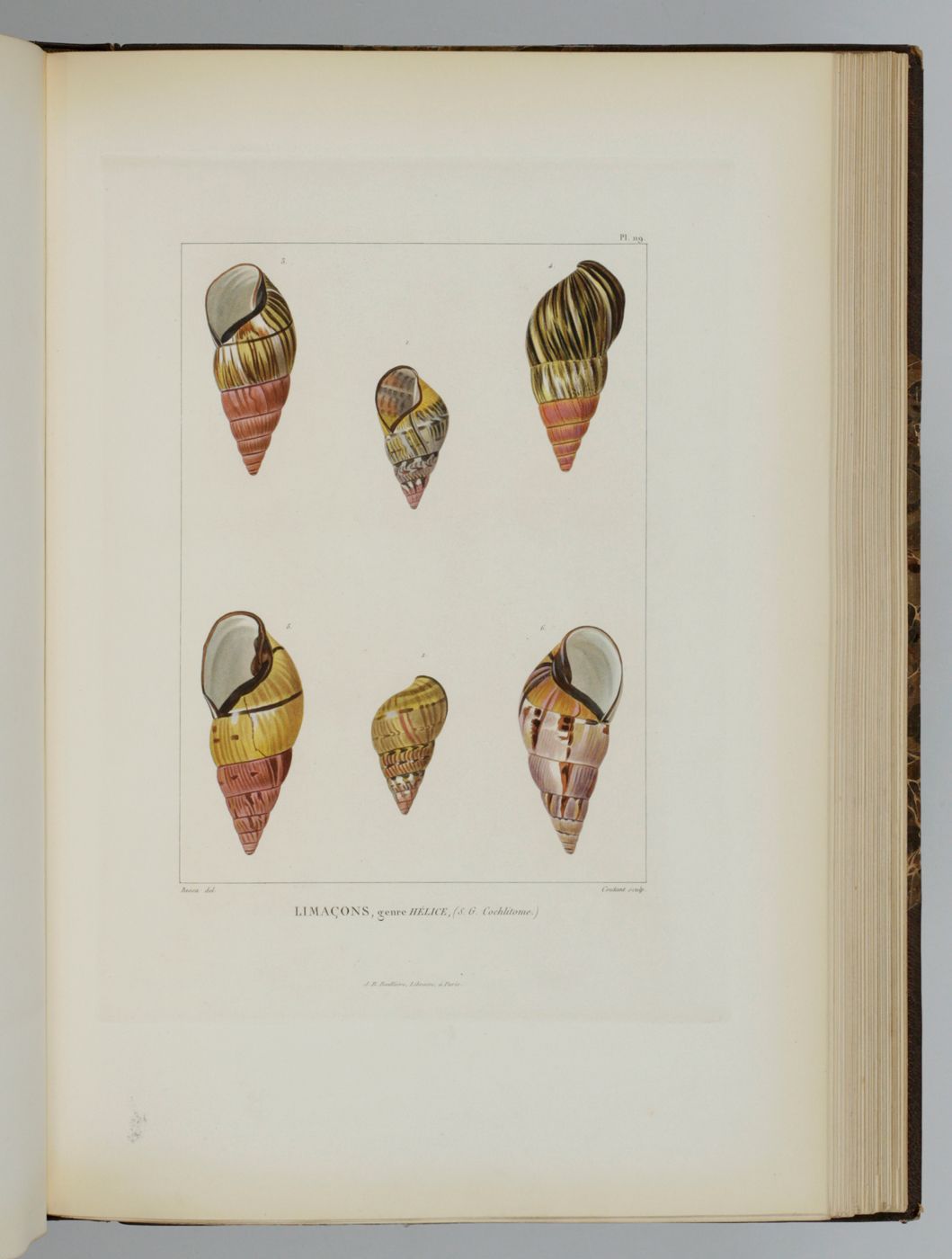
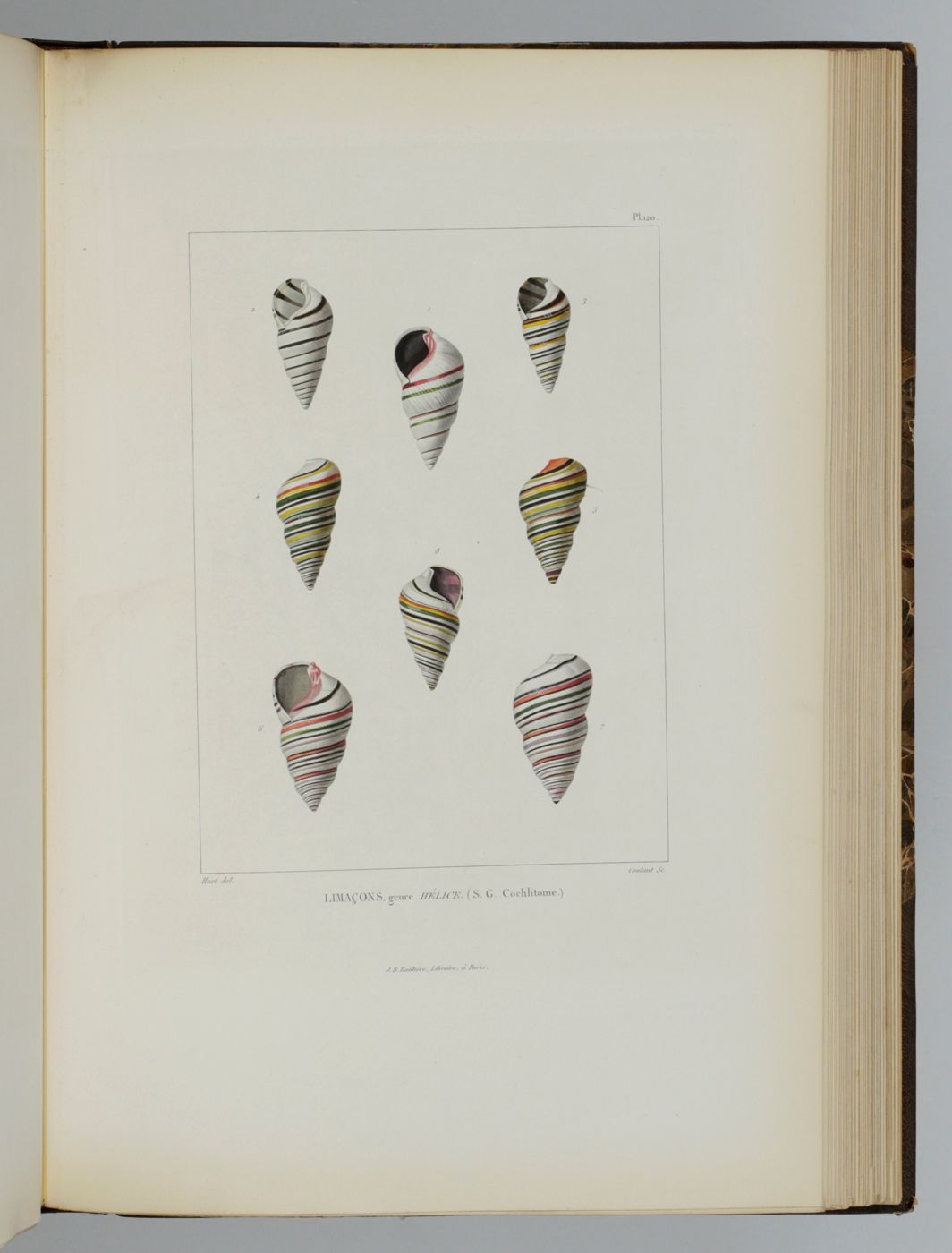
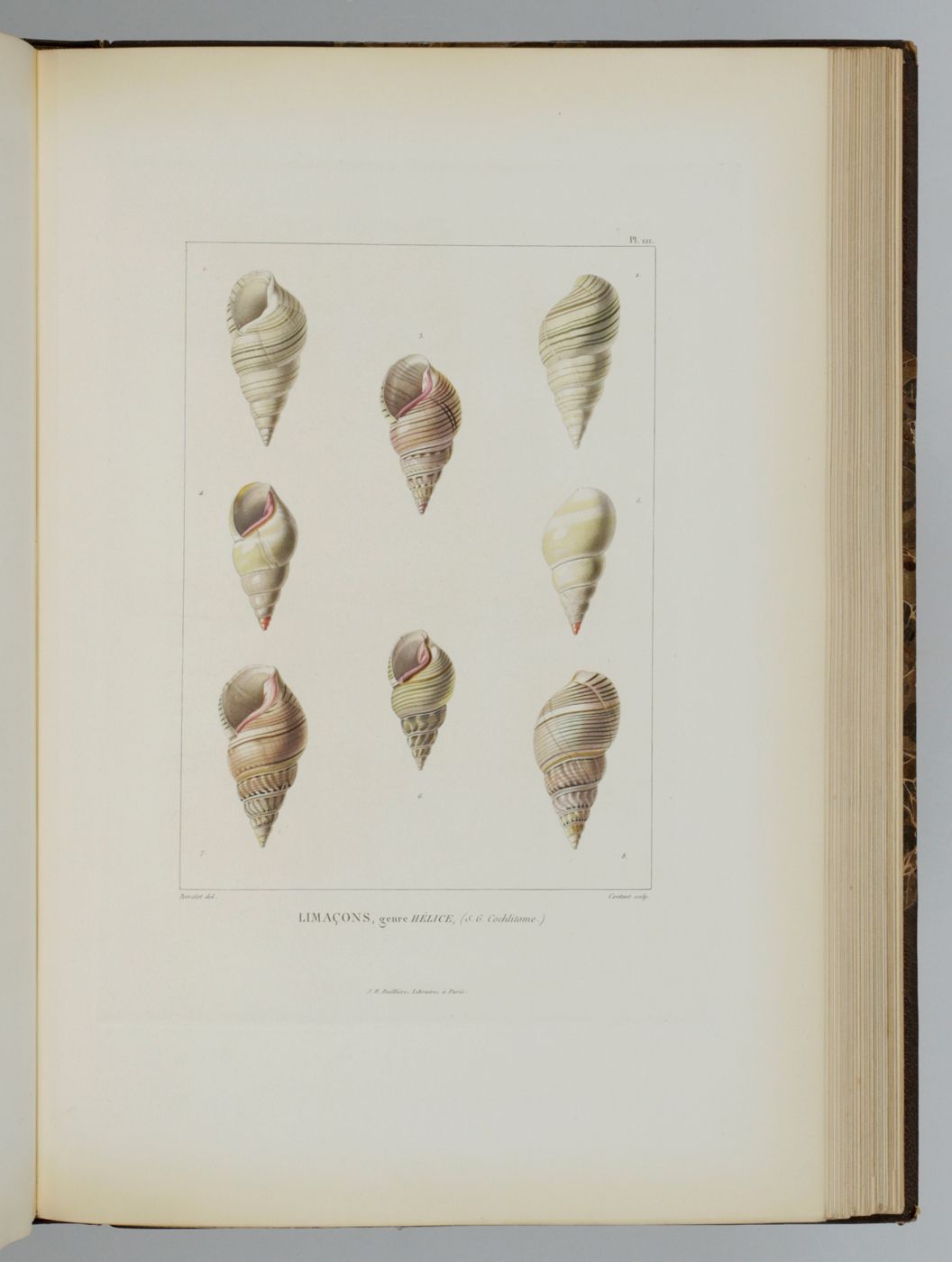
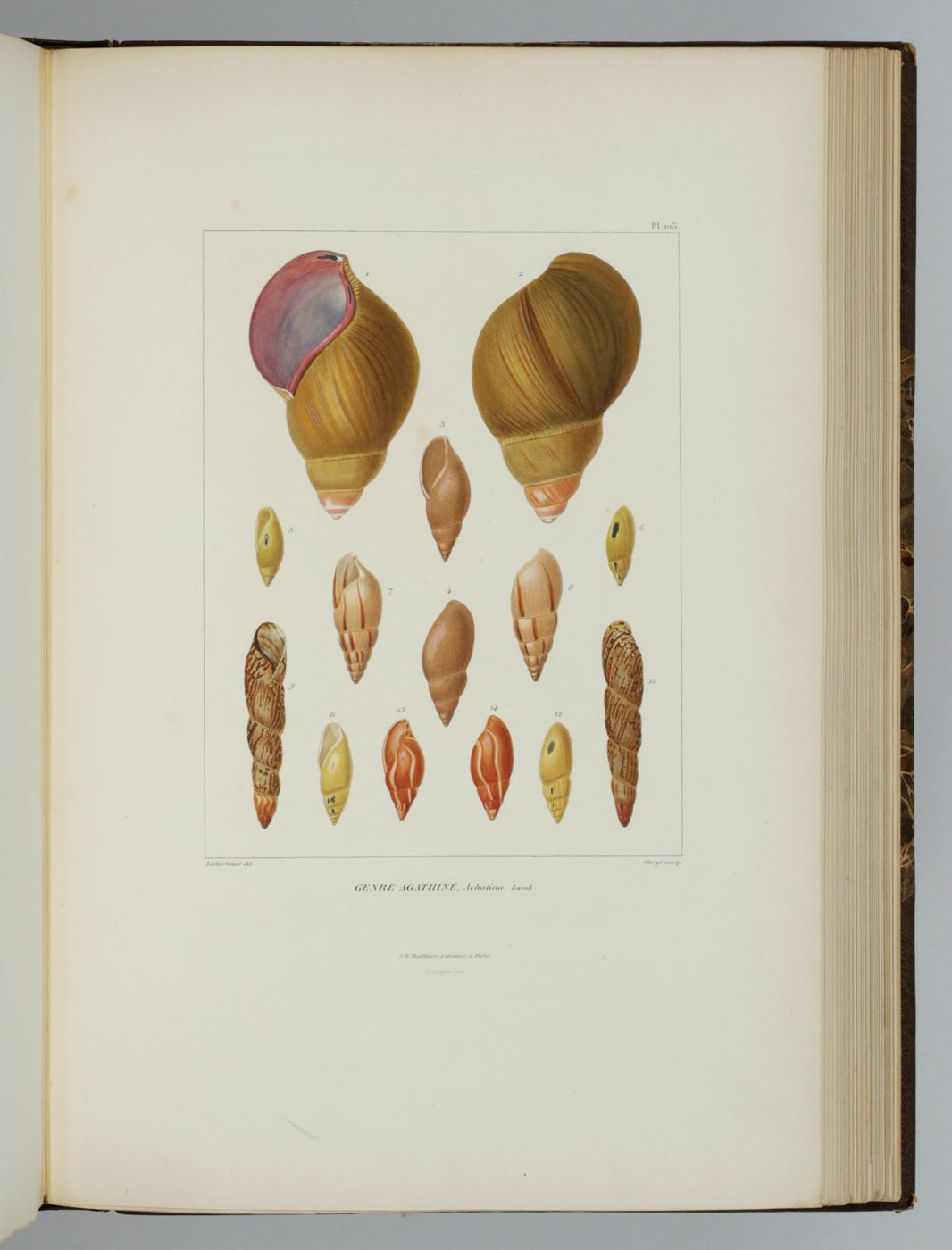
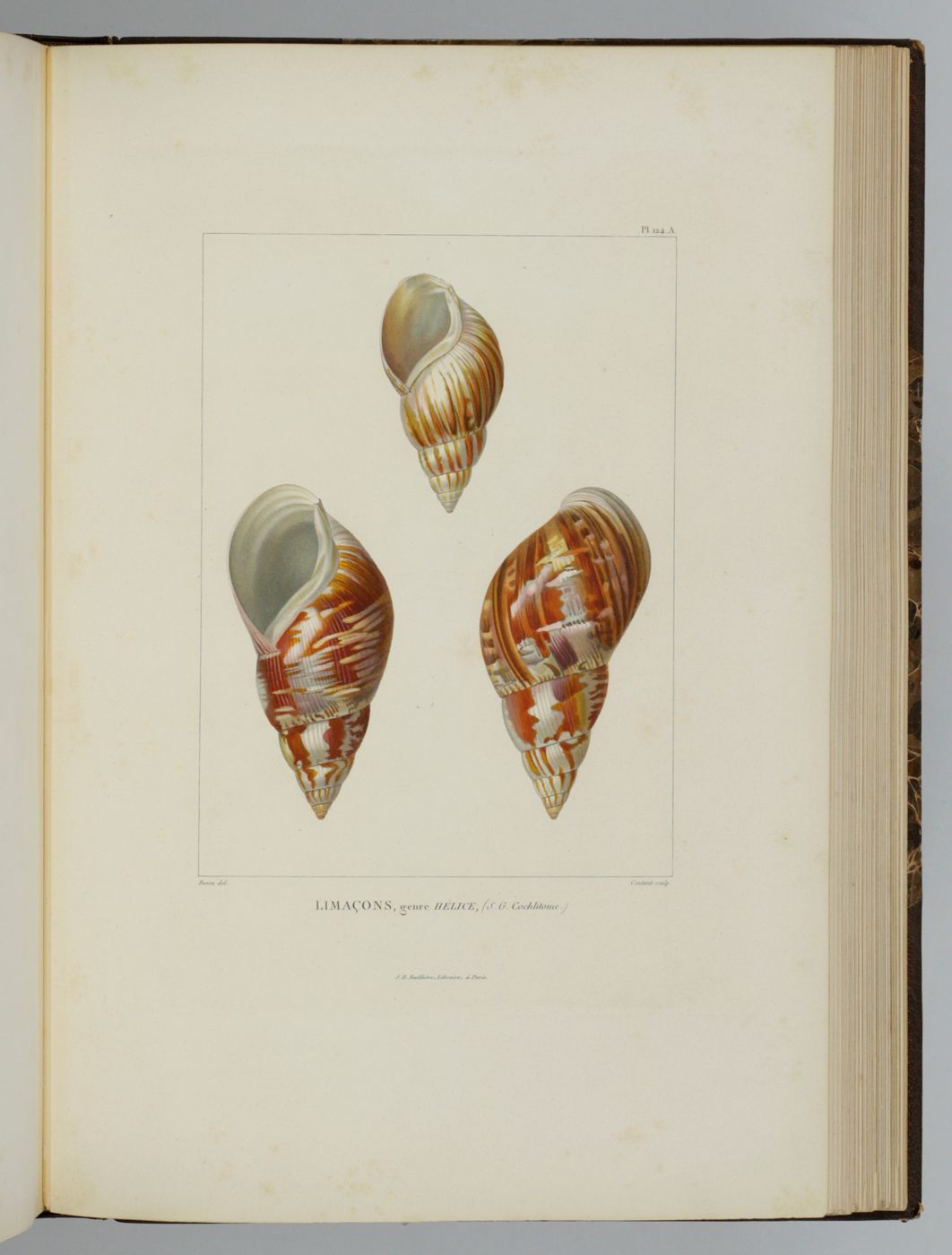
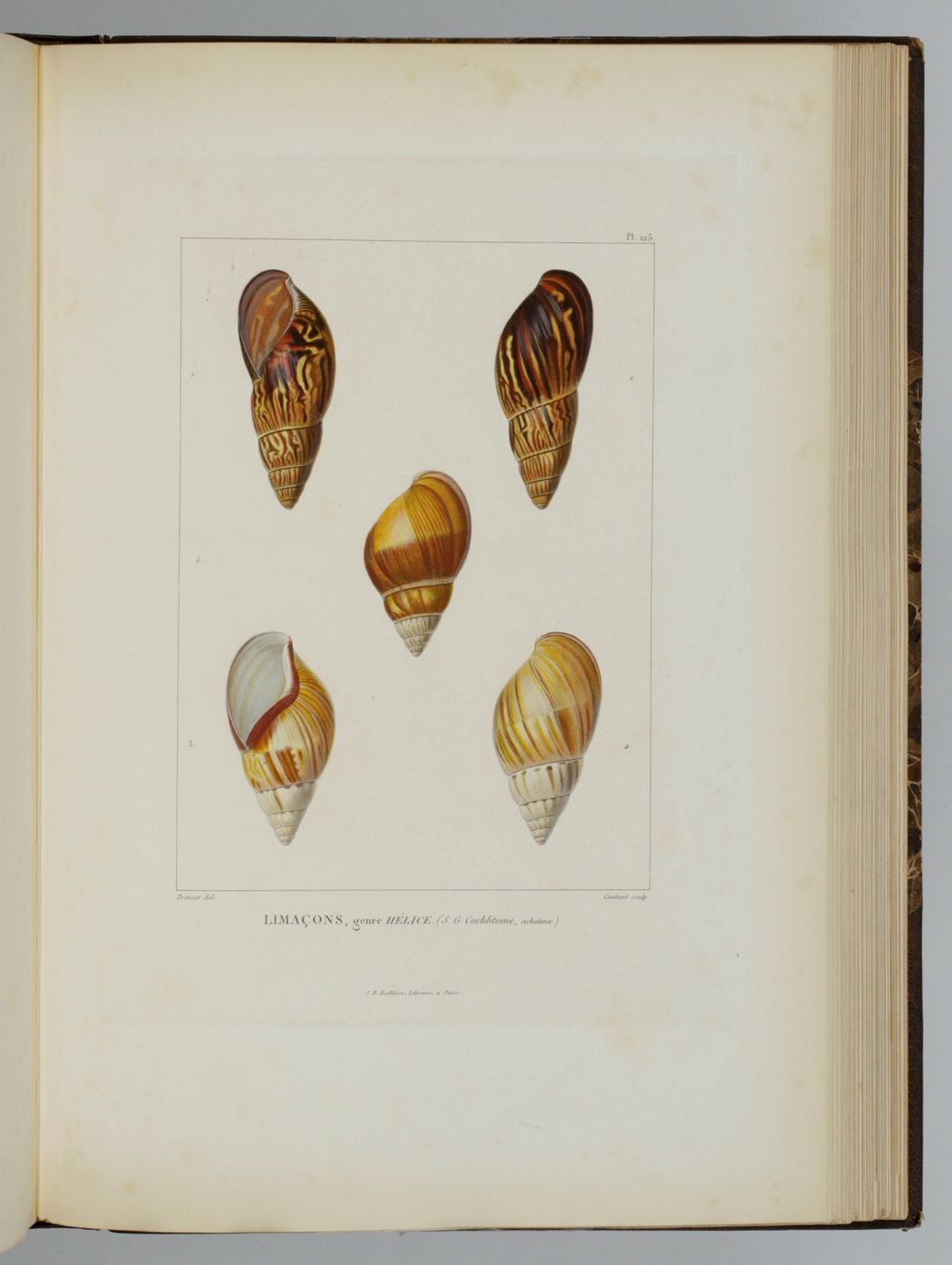
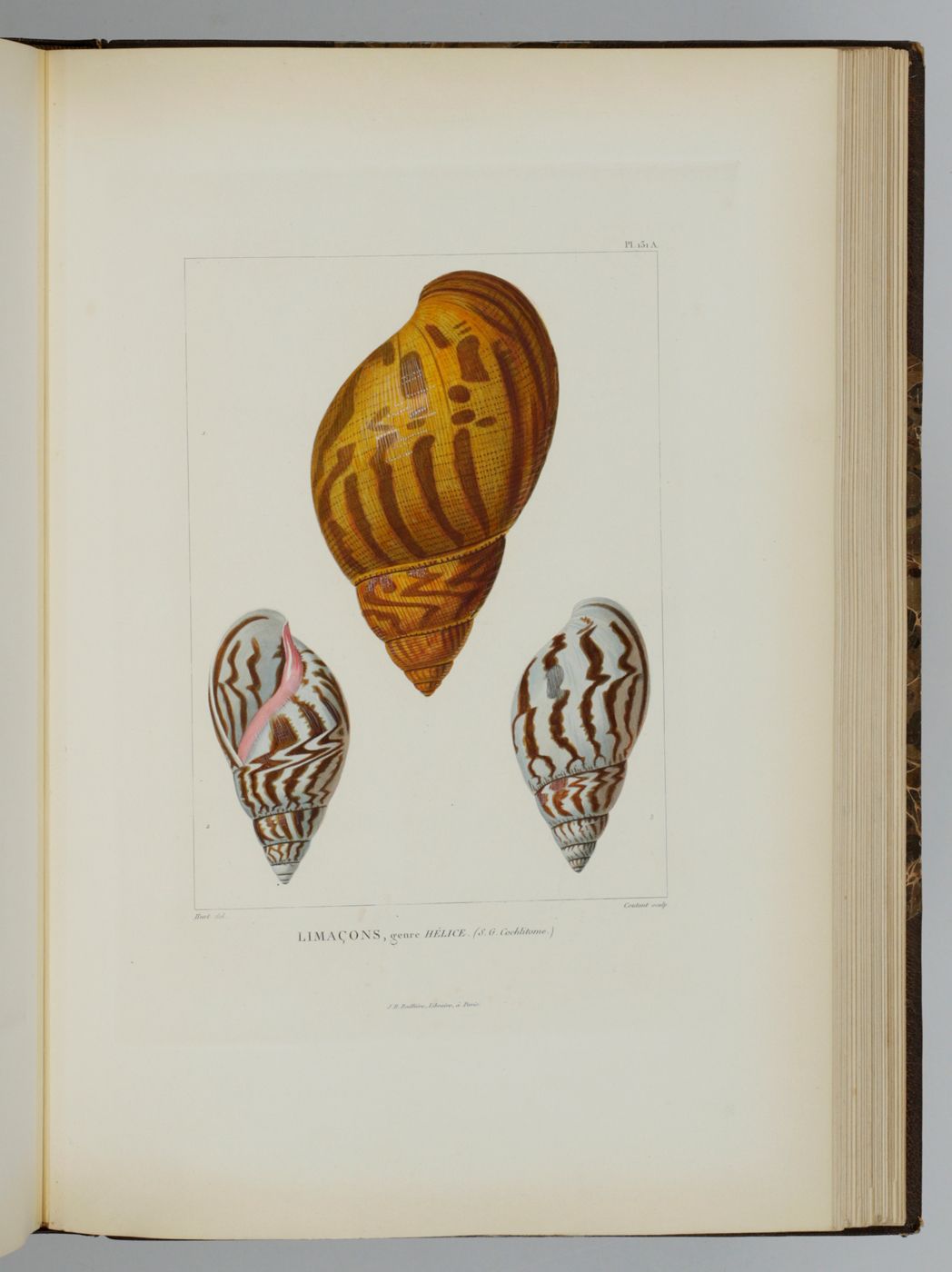
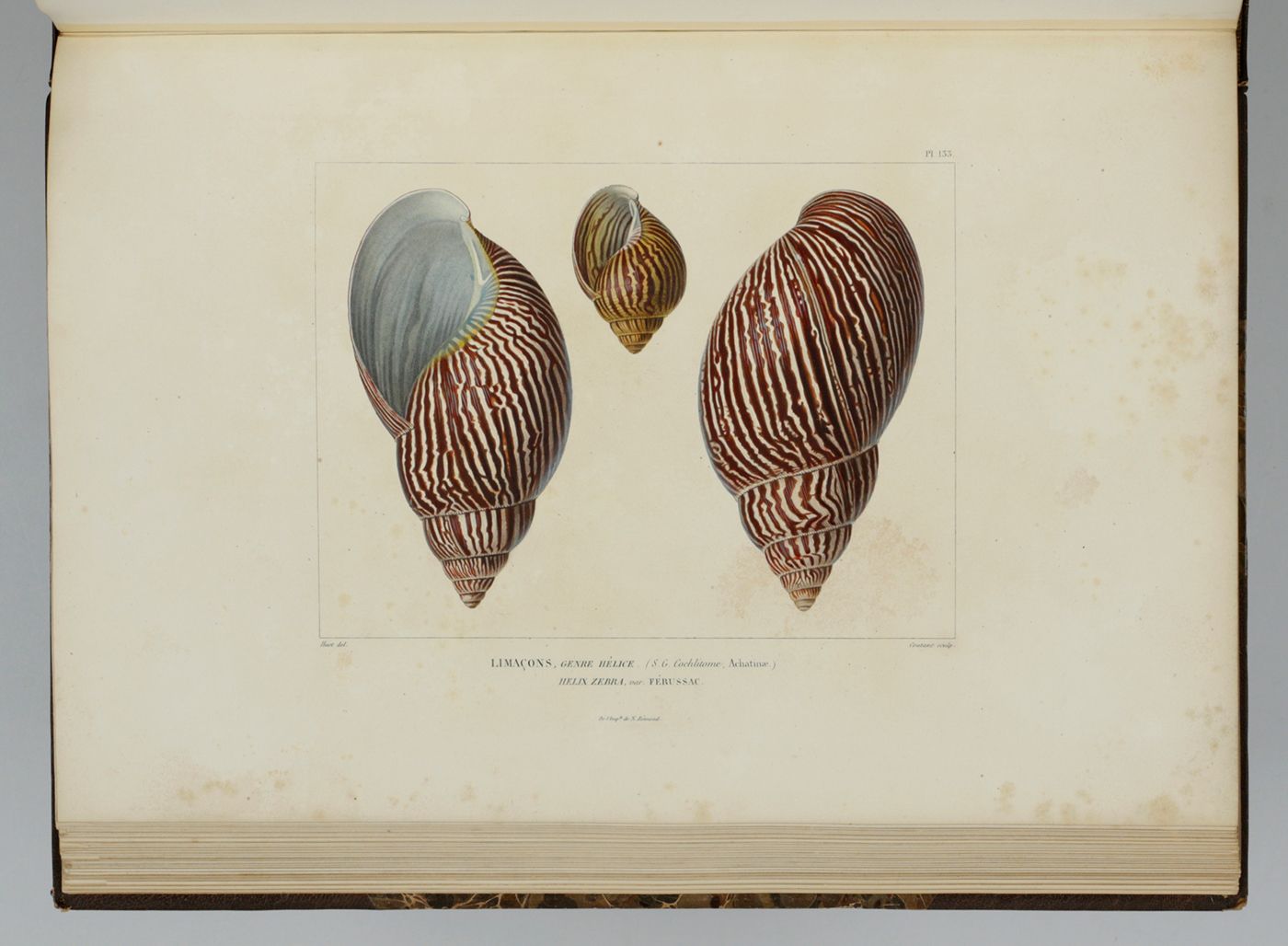
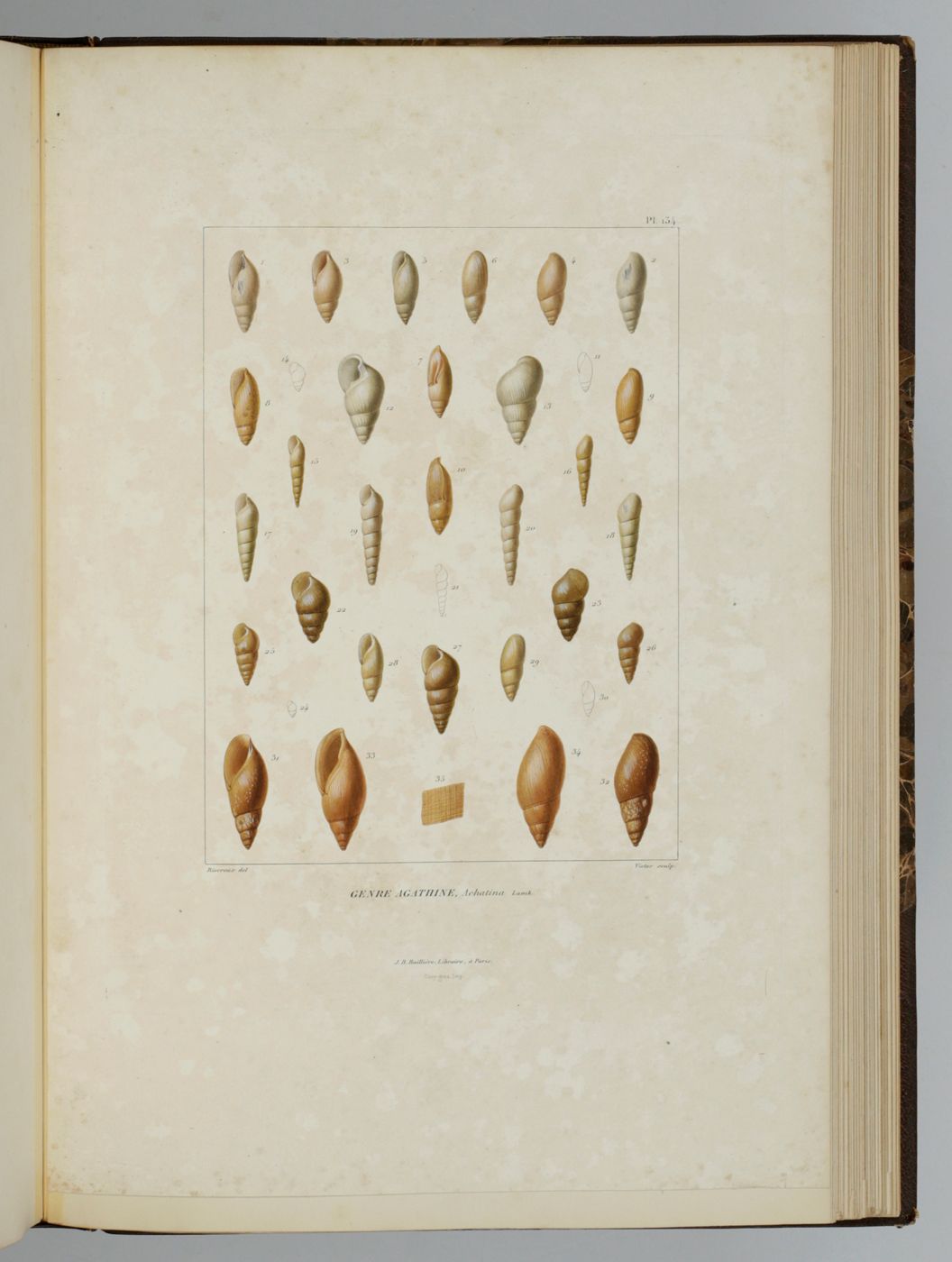
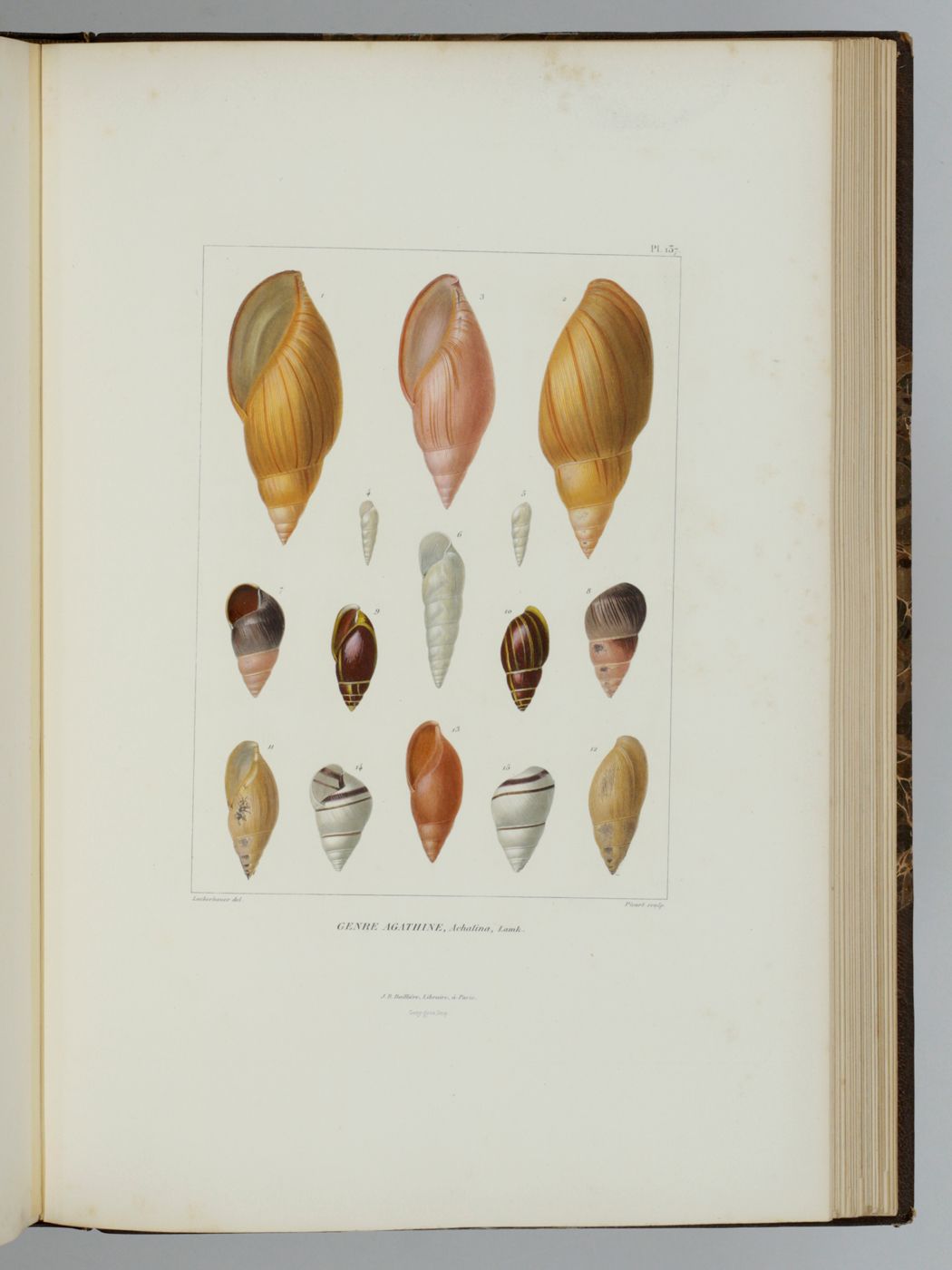
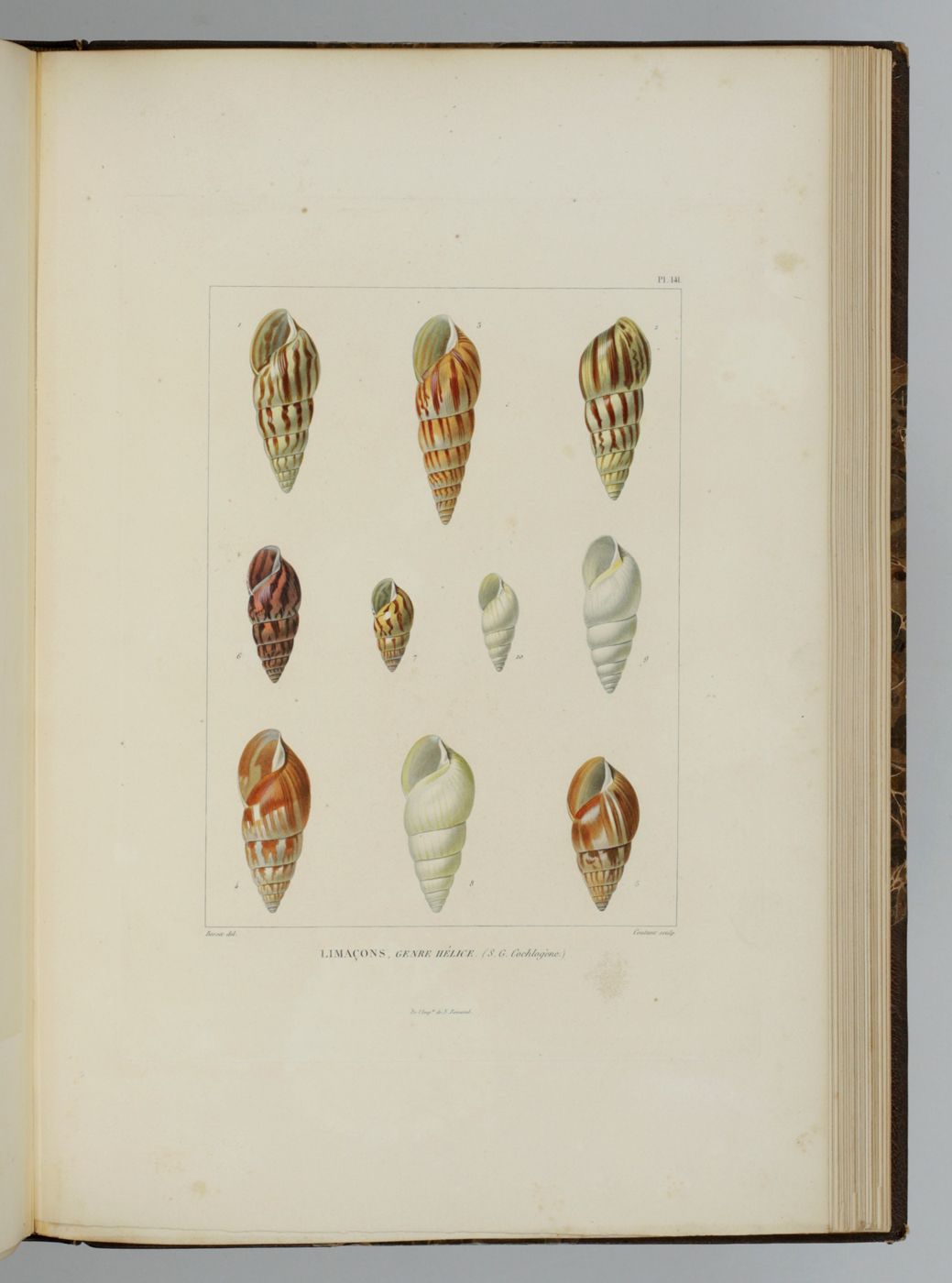
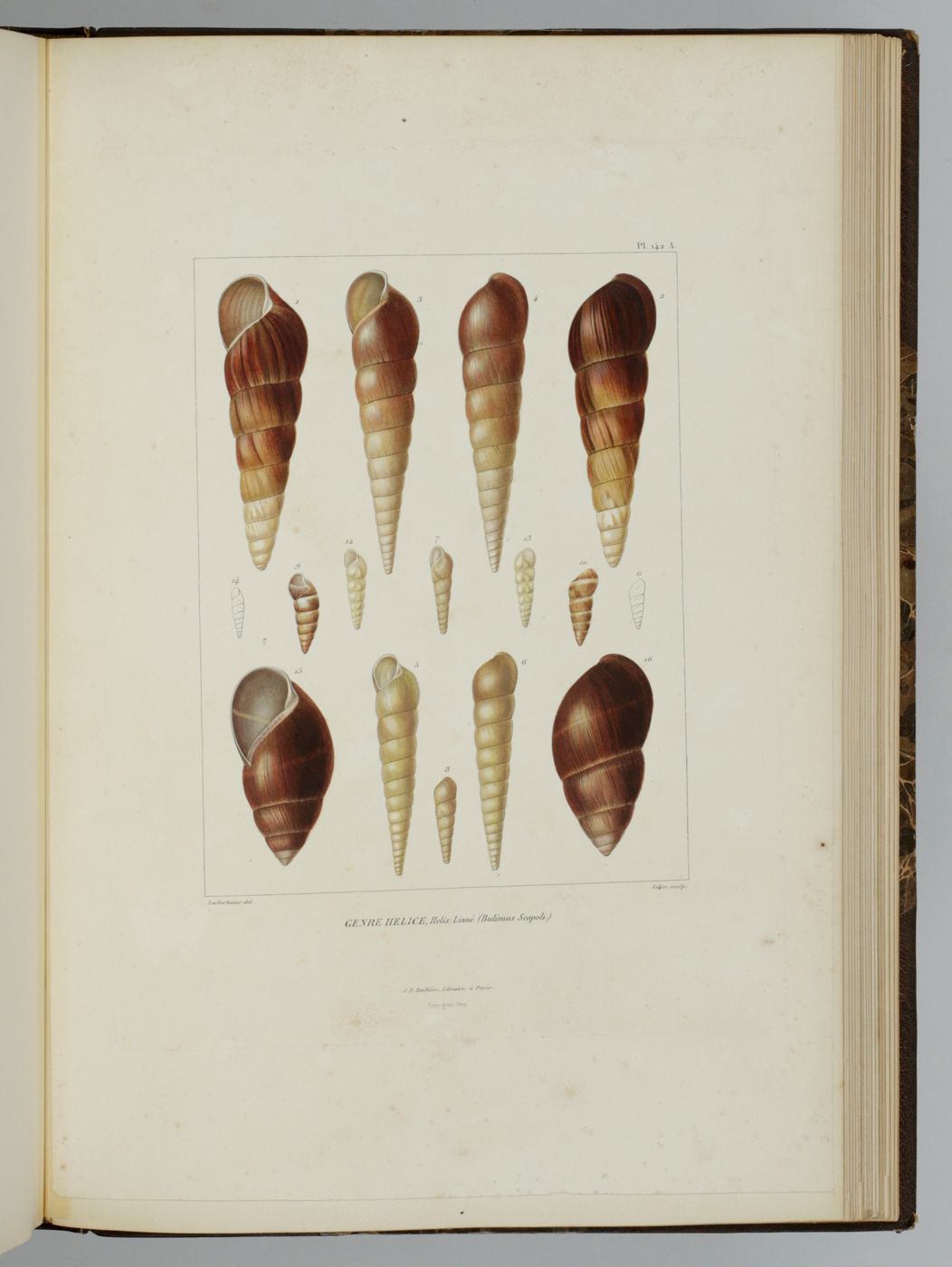
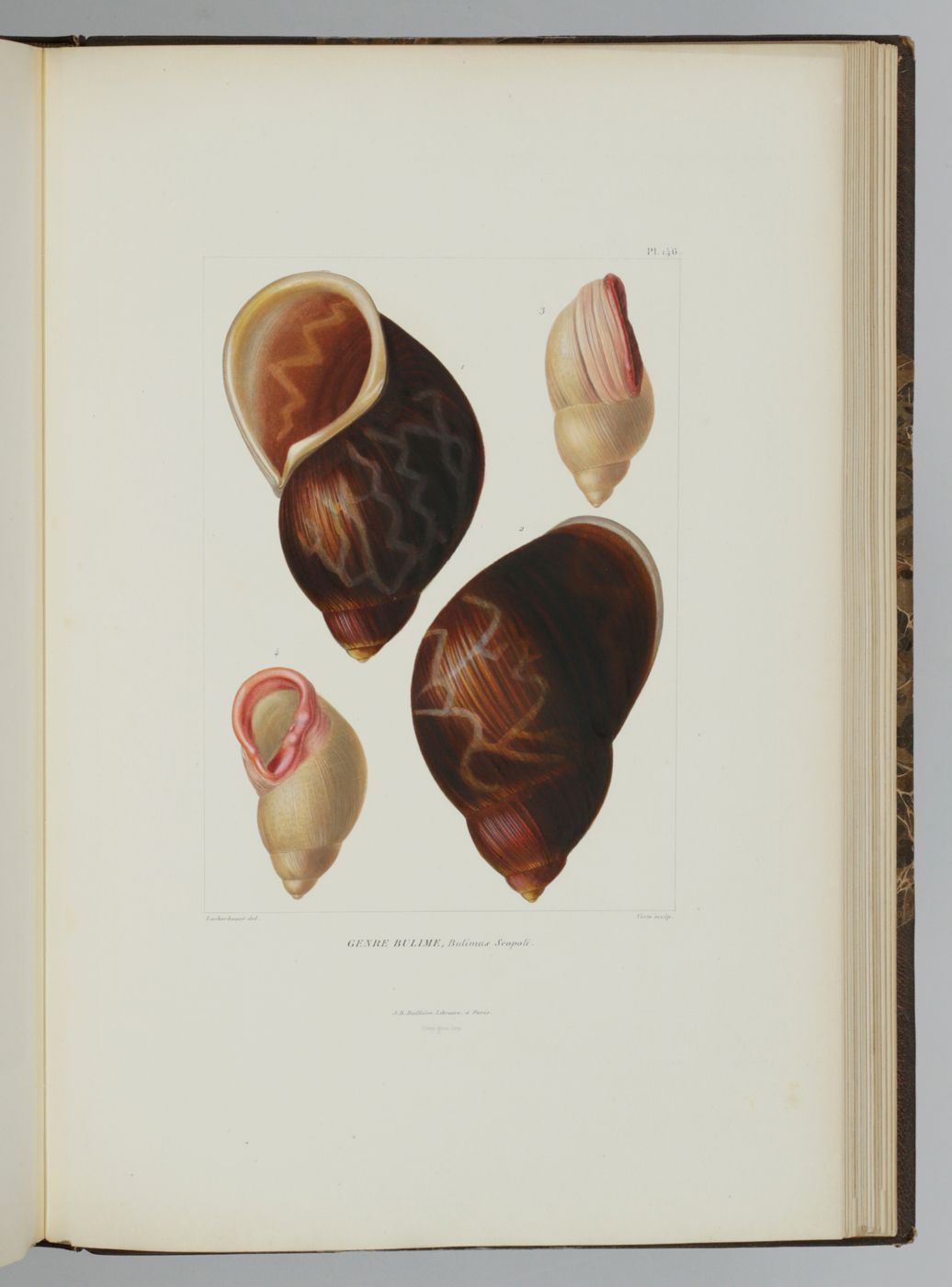
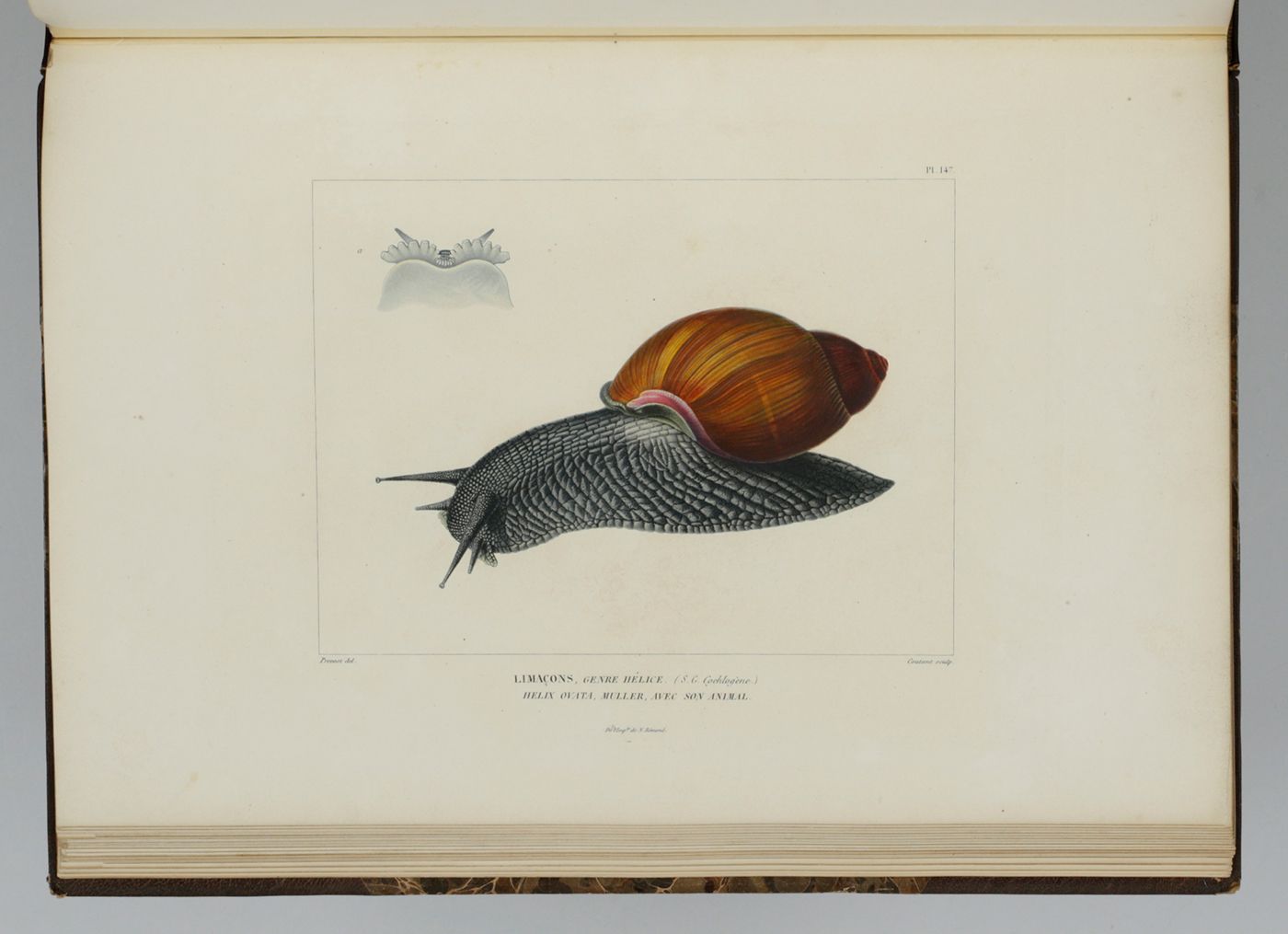
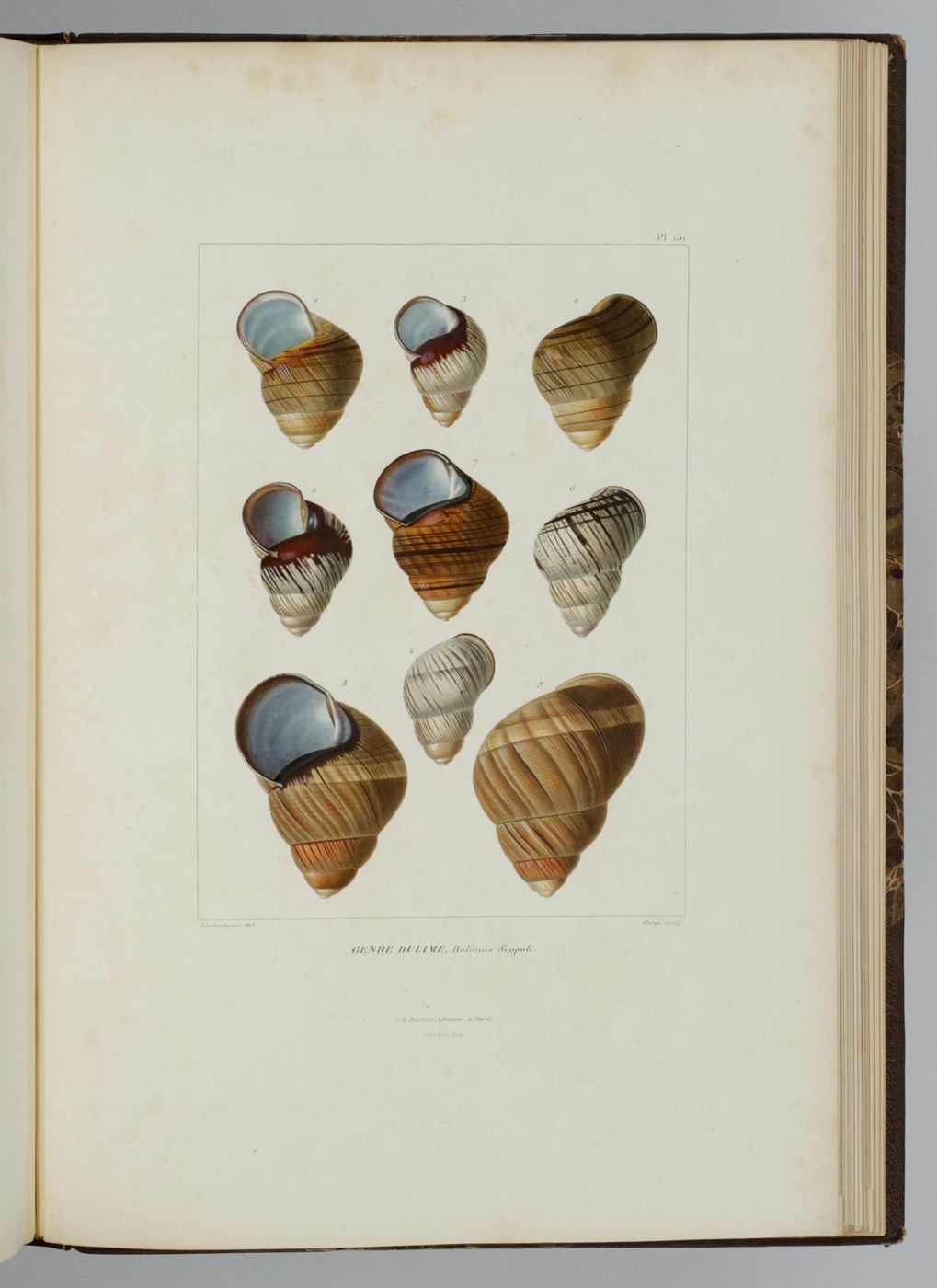
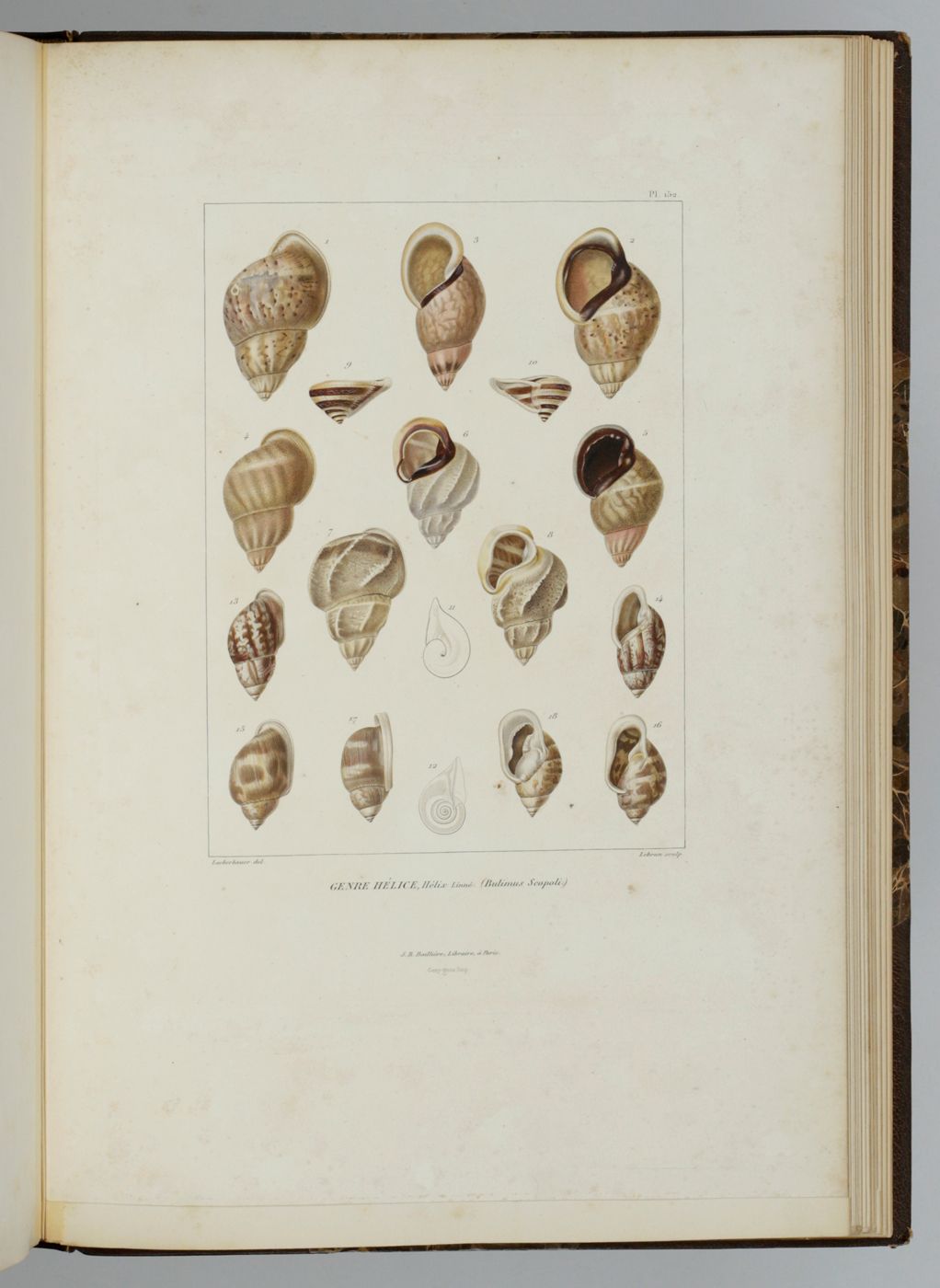
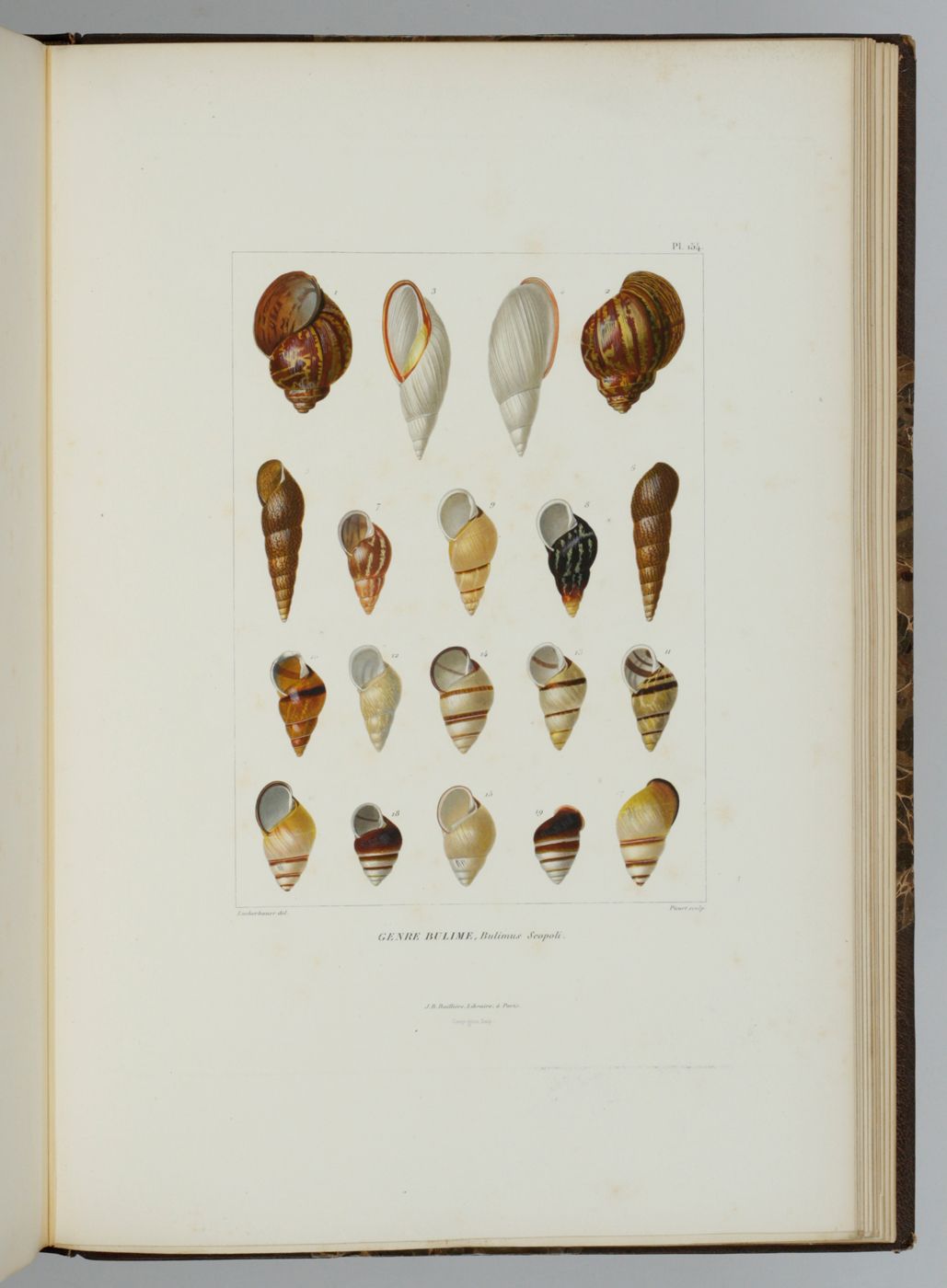
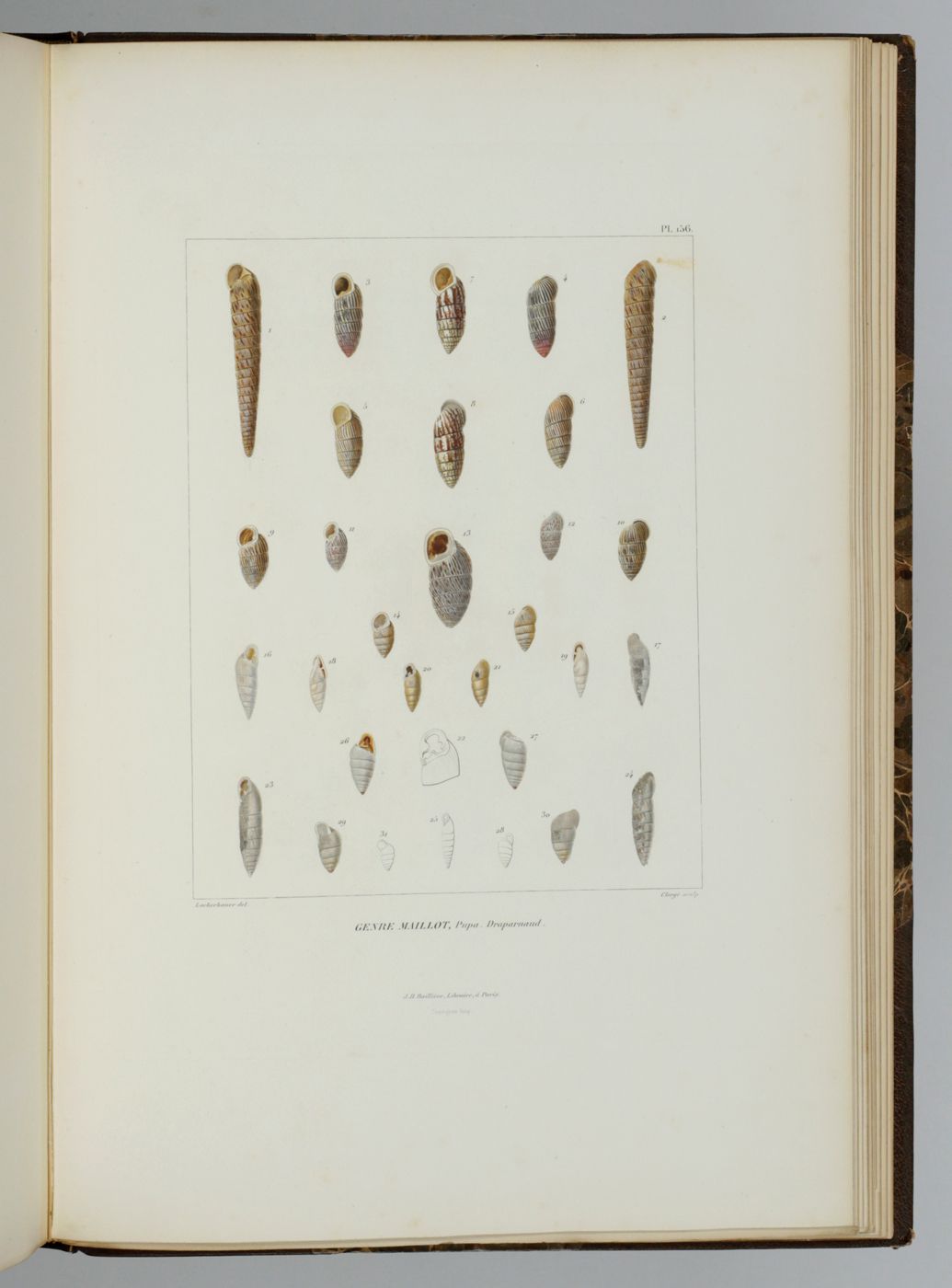
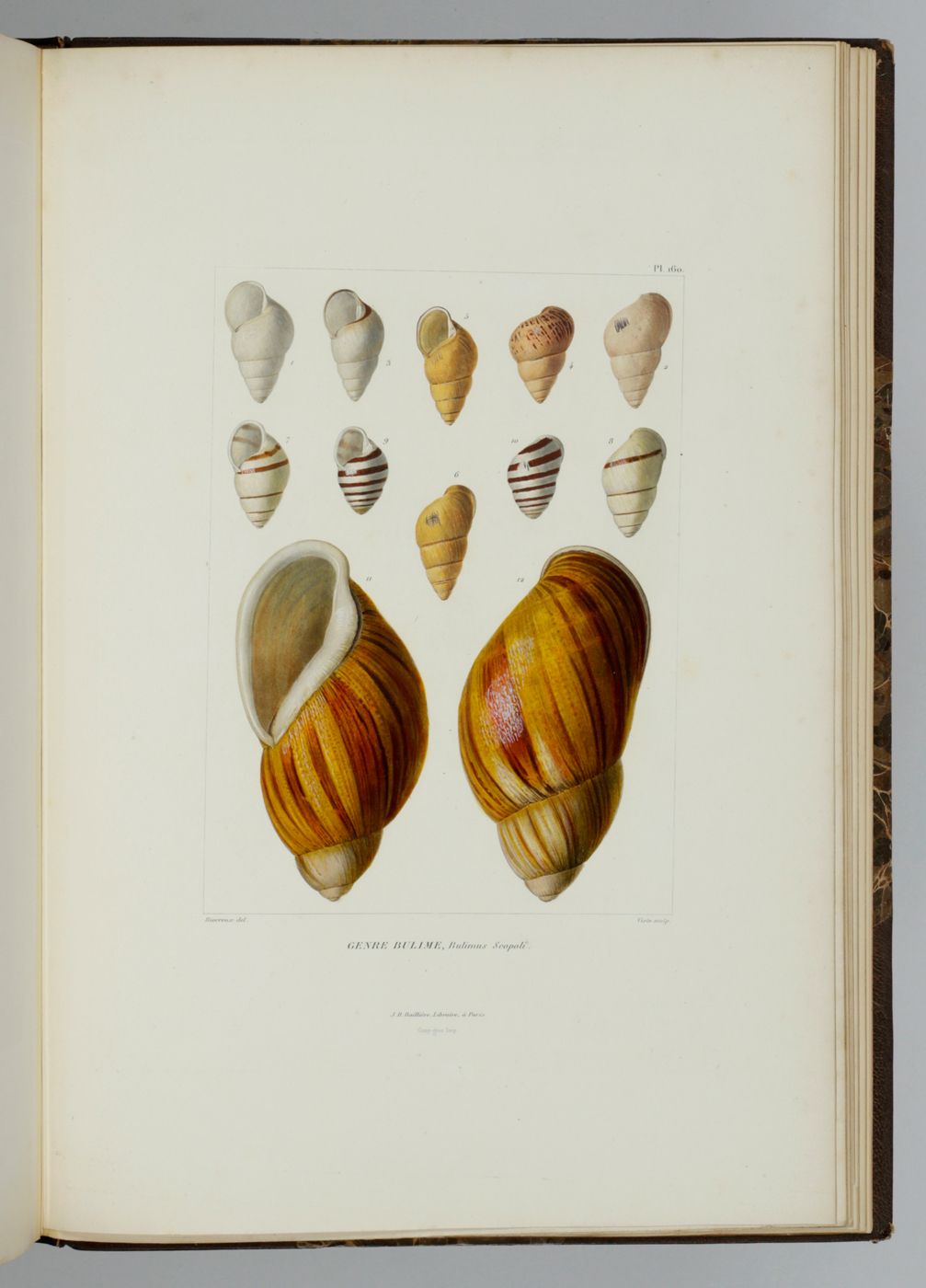
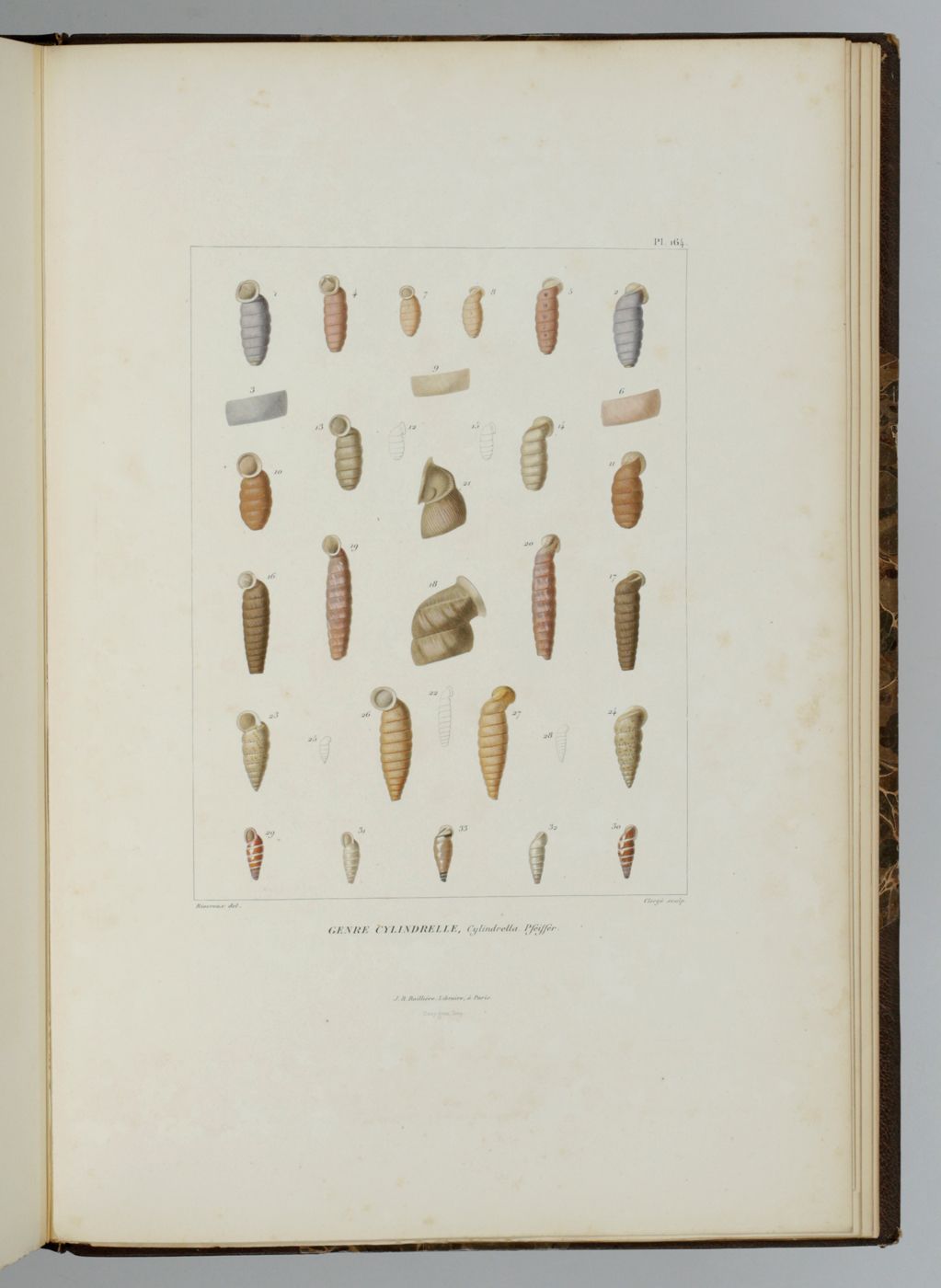
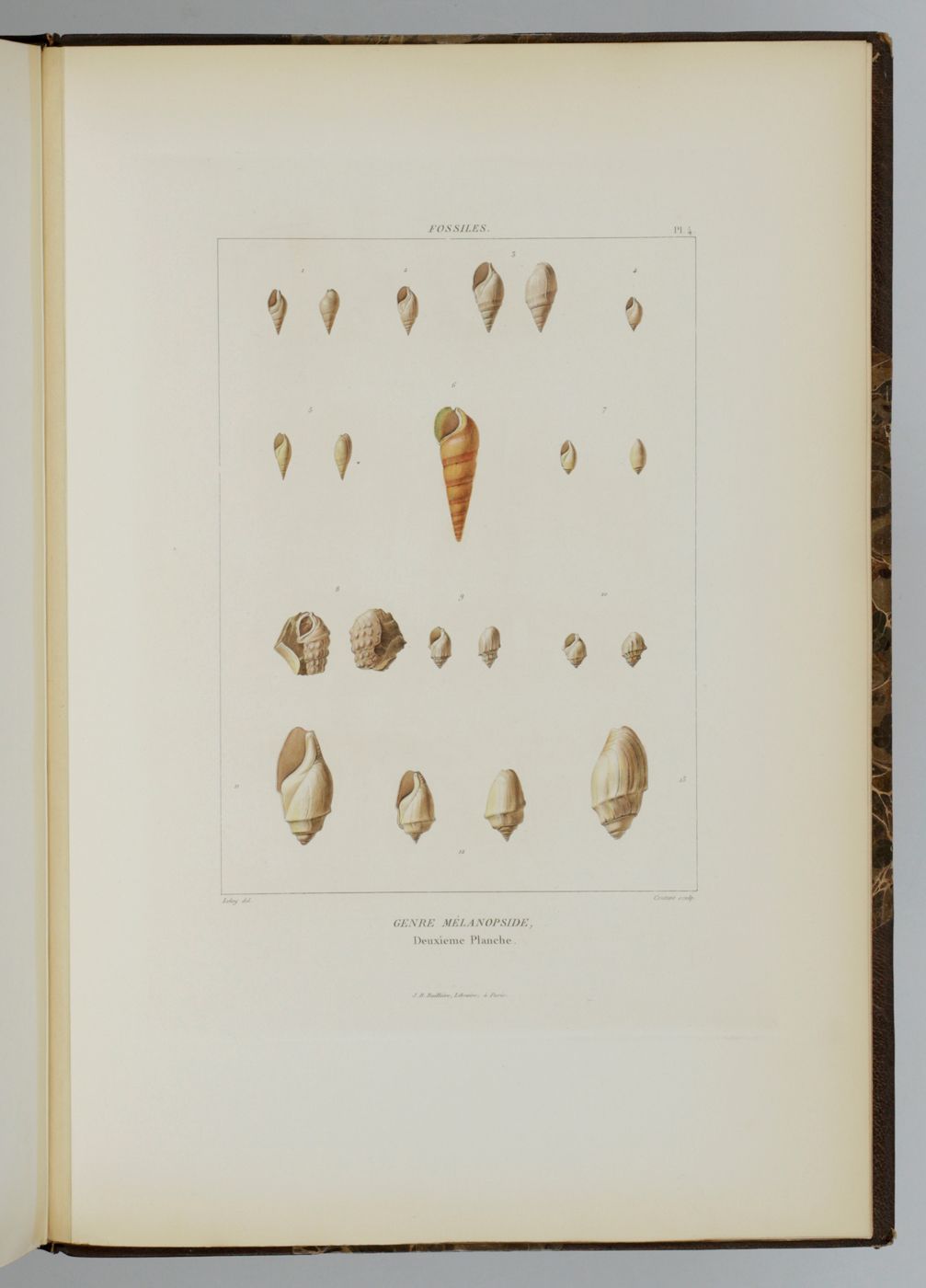
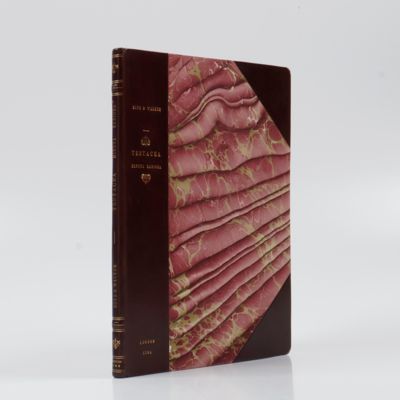
![Histoire Naturelle générale et particulière des Mollusques Terrestres et Fluviatiles. Tant des espèces qui l'on trouve aujourd'hui vivantes, que des dépouilles fossiles de celles qui n'existent plus; classés d'après les caractères essentiels qui présentent ces animaux et leurs coquilles. [Large paper copy. Text and atlases, complete].](https://schierenberg.nl/media/cache/product_main/79105/79105.jpg)
Férussac, [A. É. J. P. J. F. d'Audebert de] (Baron) and G. P. Deshayes
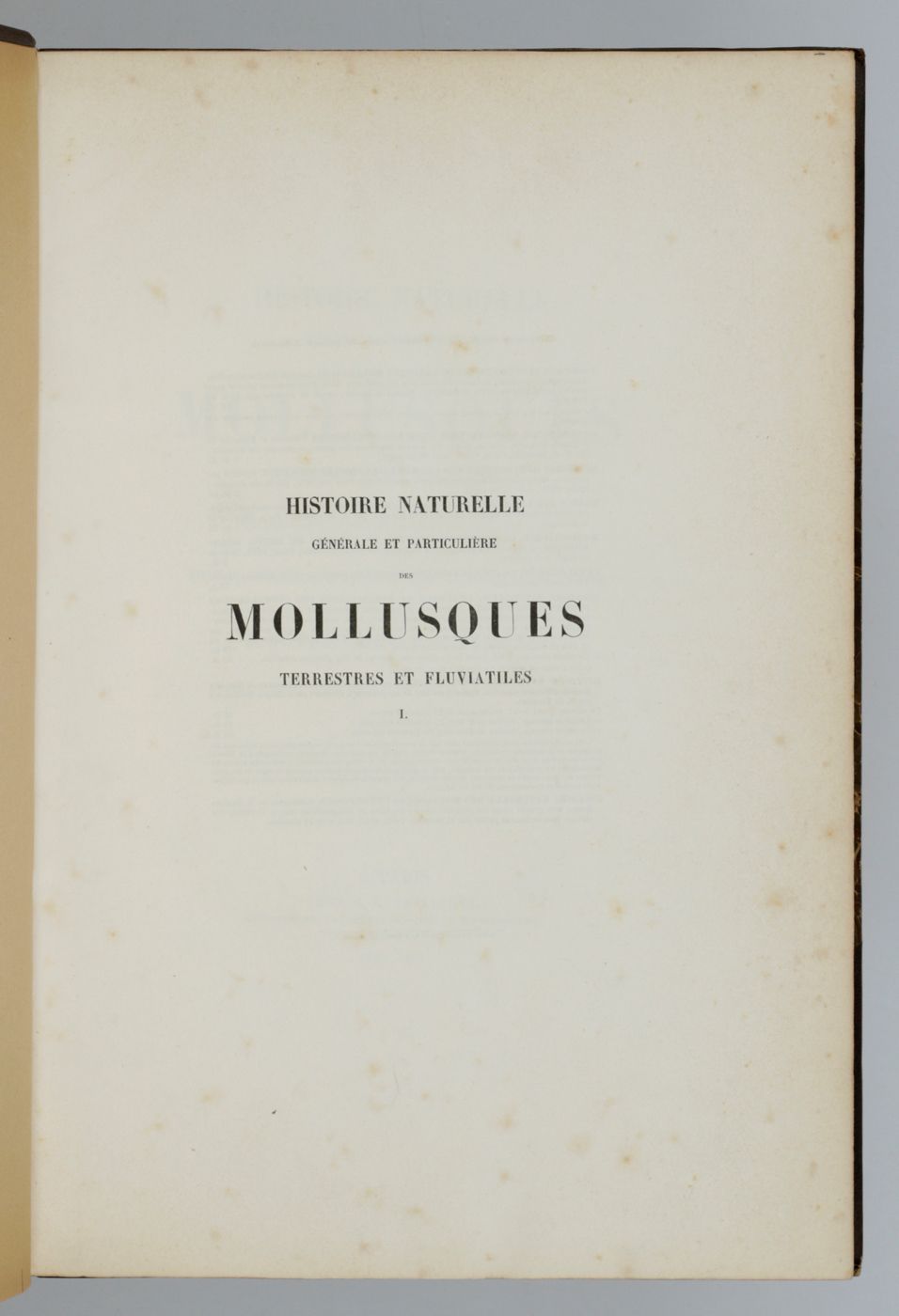
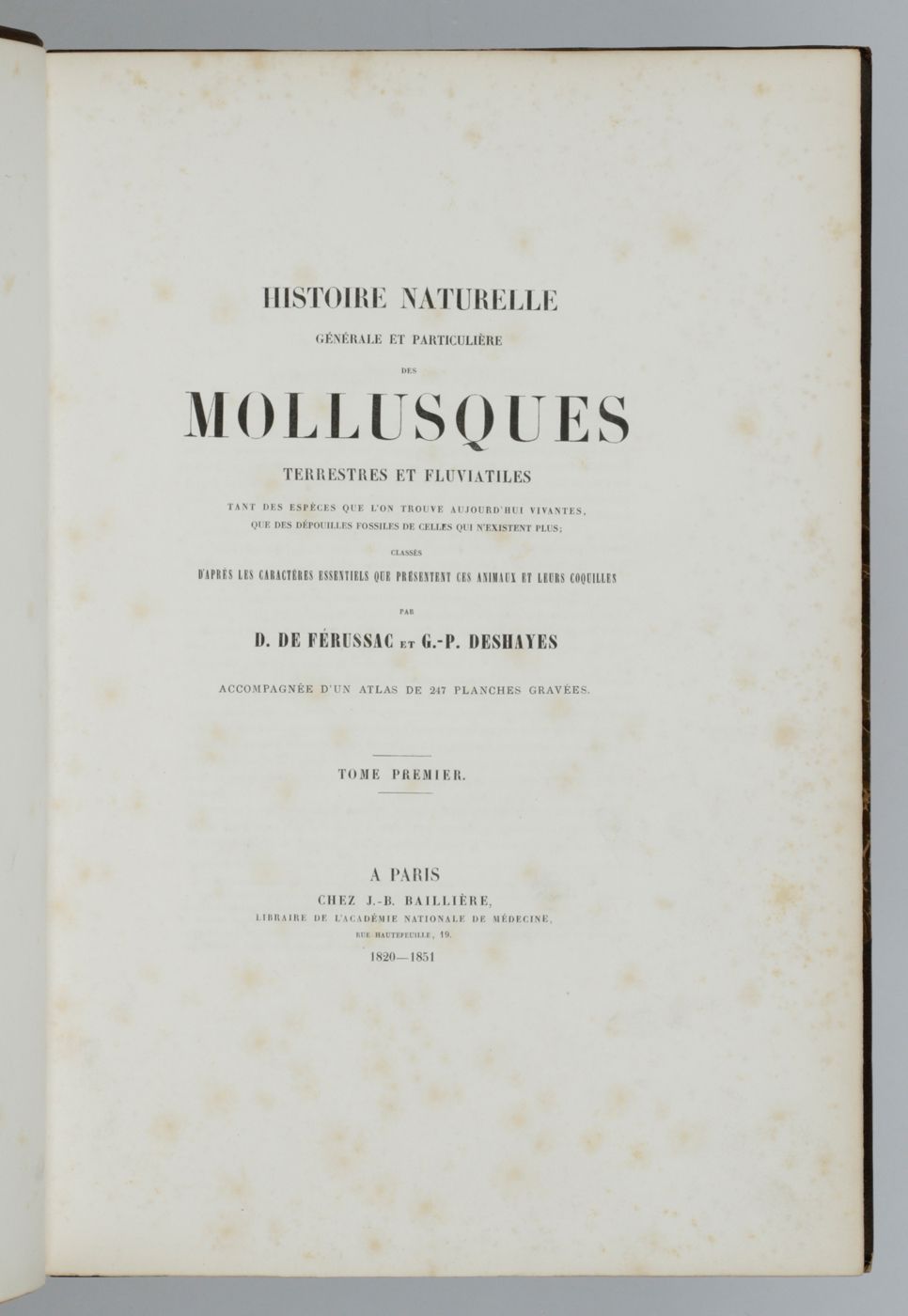
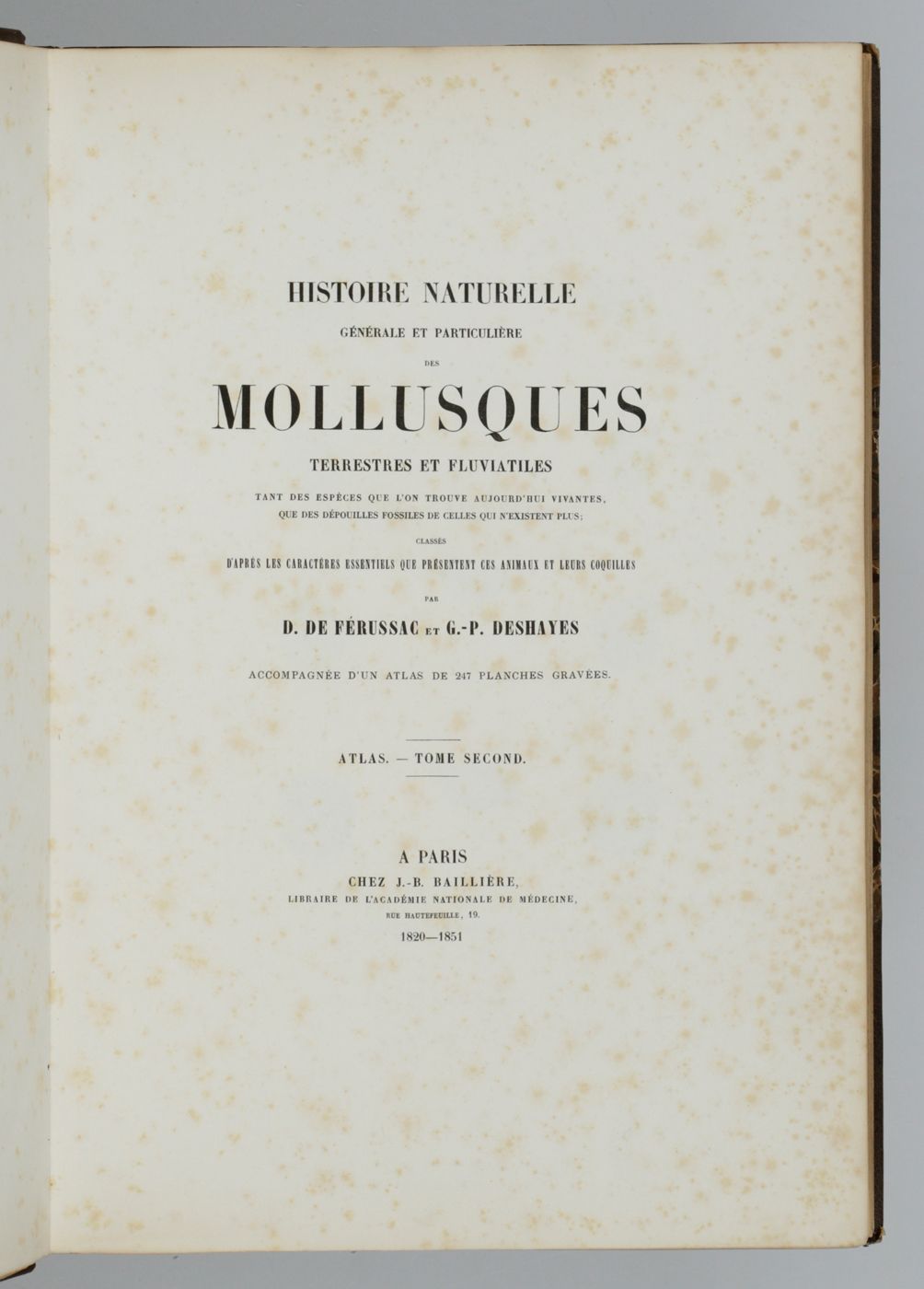
Histoire Naturelle générale et particulière des Mollusques Terrestres et Fluviatiles. Tant des espèces qui l'on trouve aujourd'hui vivantes, que des dépouilles fossiles de celles qui n'existent plus; classés d'après les caractères essentiels qui présentent ces animaux et leurs coquilles. [Large paper copy. Text and atlases, complete].
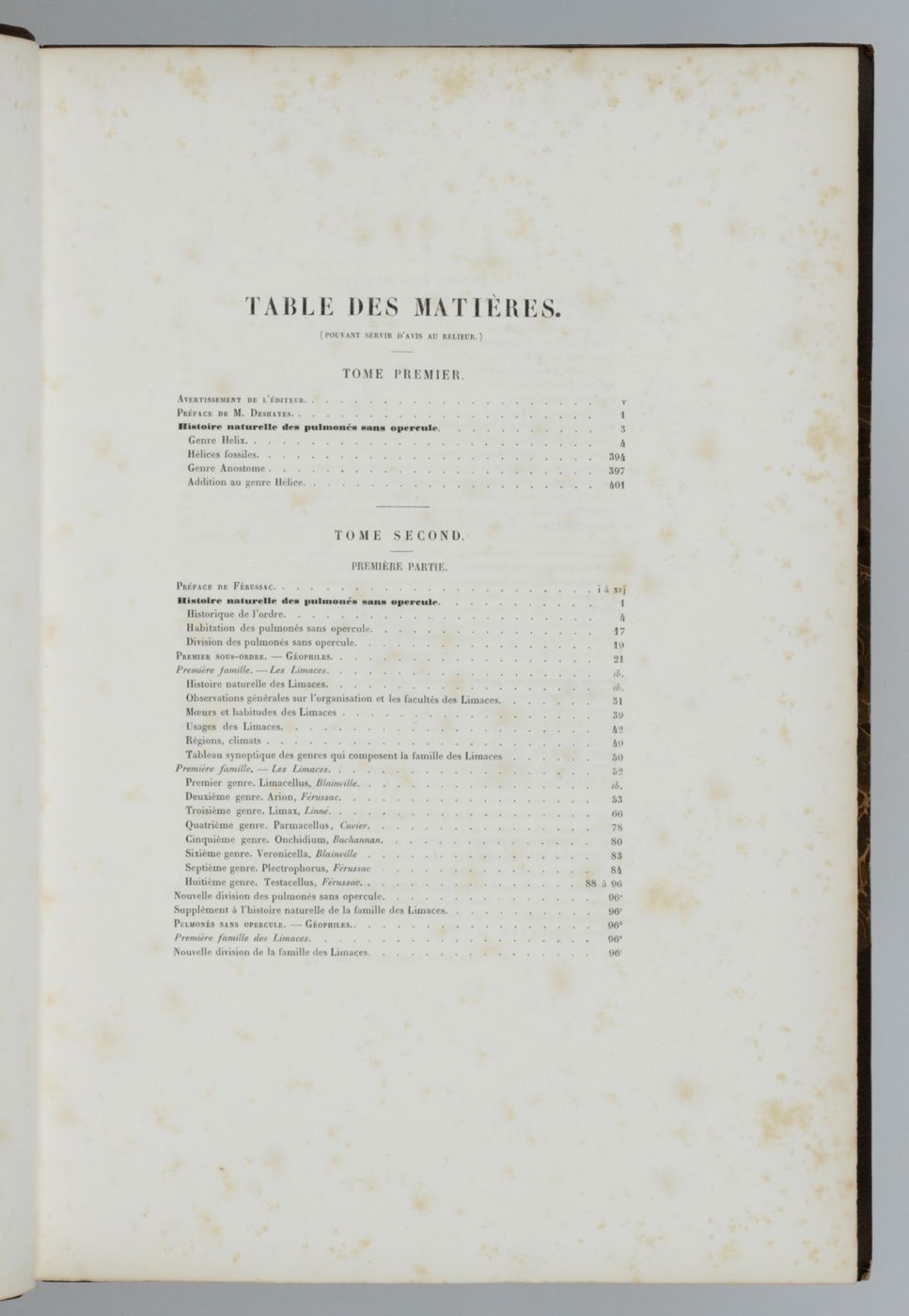
Paris, J. B. Baillière, 1820-1851. In four volumes. Folio (42.5 x 30.0 cm). Four half-titles, four title pages, 950 pp.; (I: [v-viii, 402; II: xvi, [1]-184, 96a-z [i.e., 25; letter w omitted], 96α-96λ [i.e., 11], 96.1-96.24 (i.e., 24), 260, 22, [ii]); 248 engraved plates on paper stubs [Atlas I: 1-69K; Atlas II: 70-166, 1-5; 127A, 127B, 127A-127B], mostly printed in colour, some finished by hand. One plate plain, as intended. Uniform 19th-century half brown morocco over marbled boards. Spines with five raised bands, and gilt titles. Marbled endpapers. Top edges gilt.
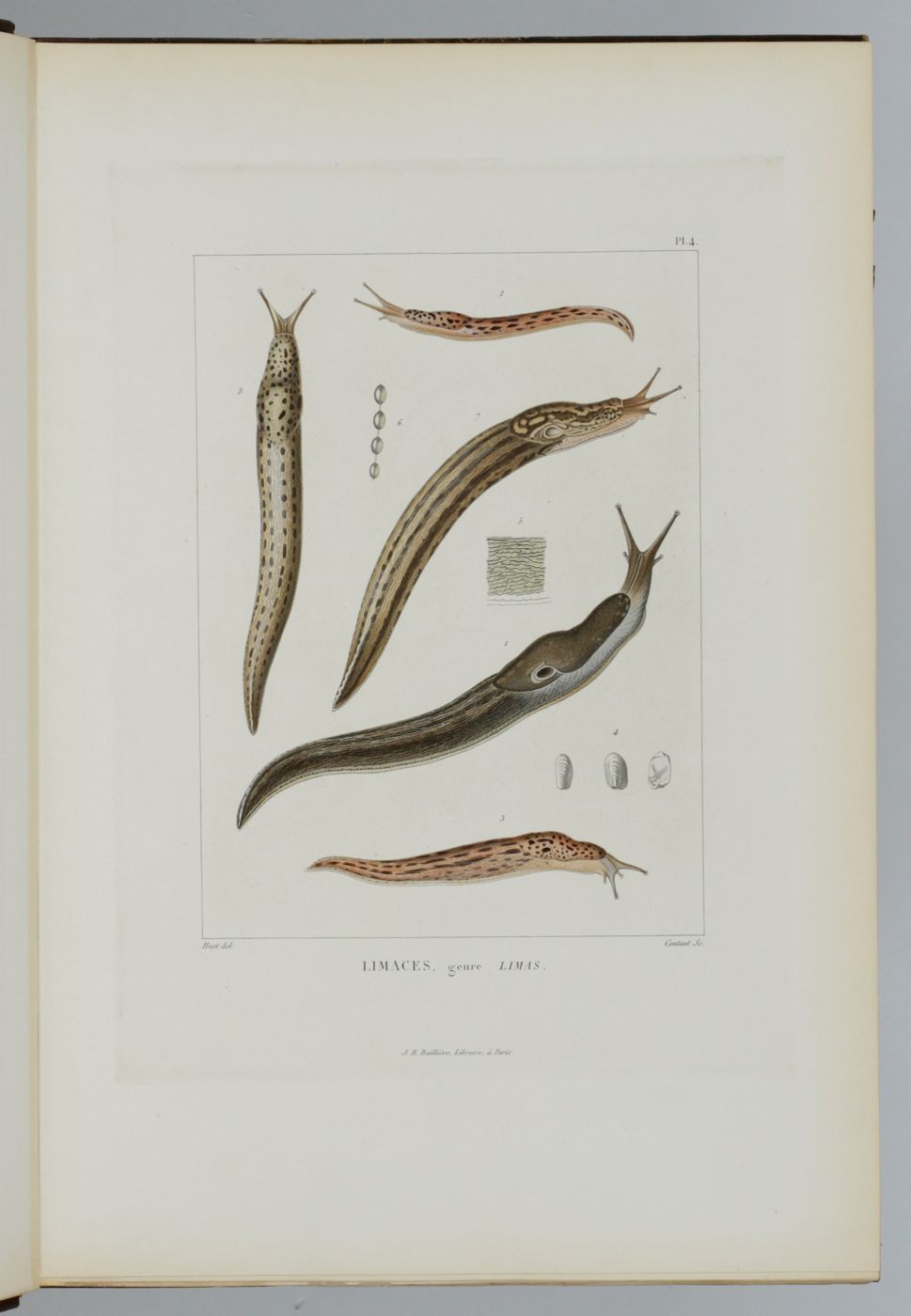
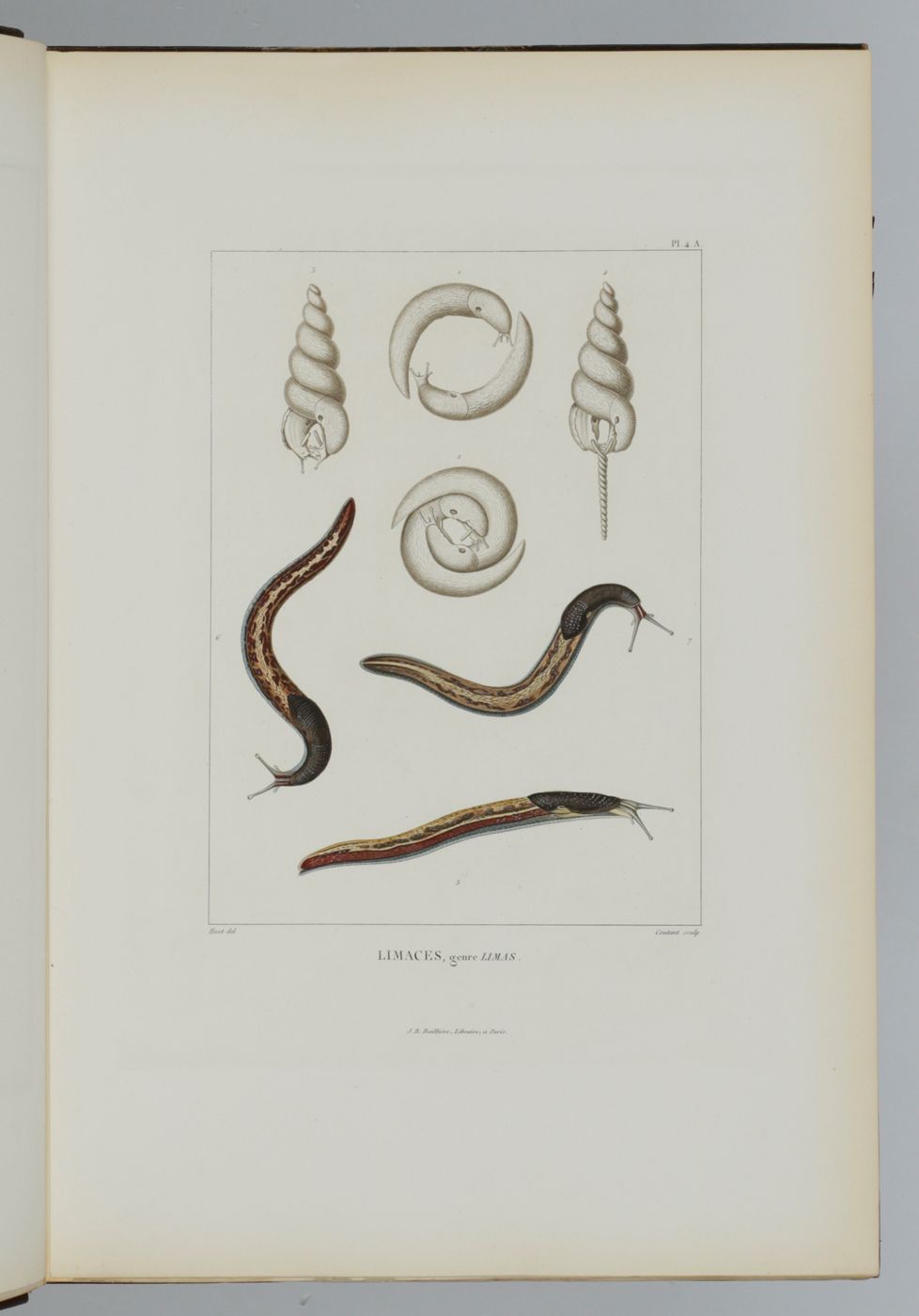
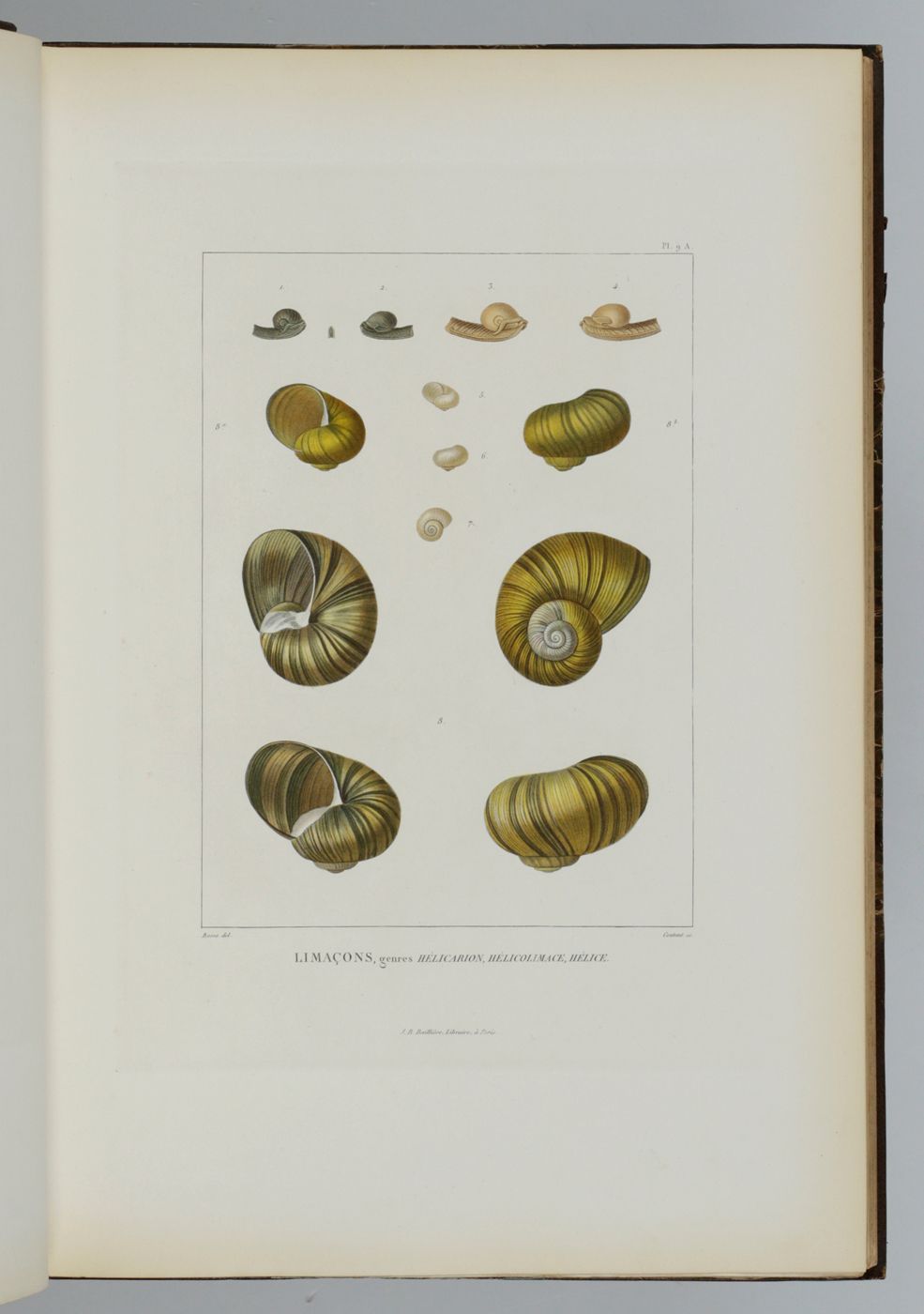
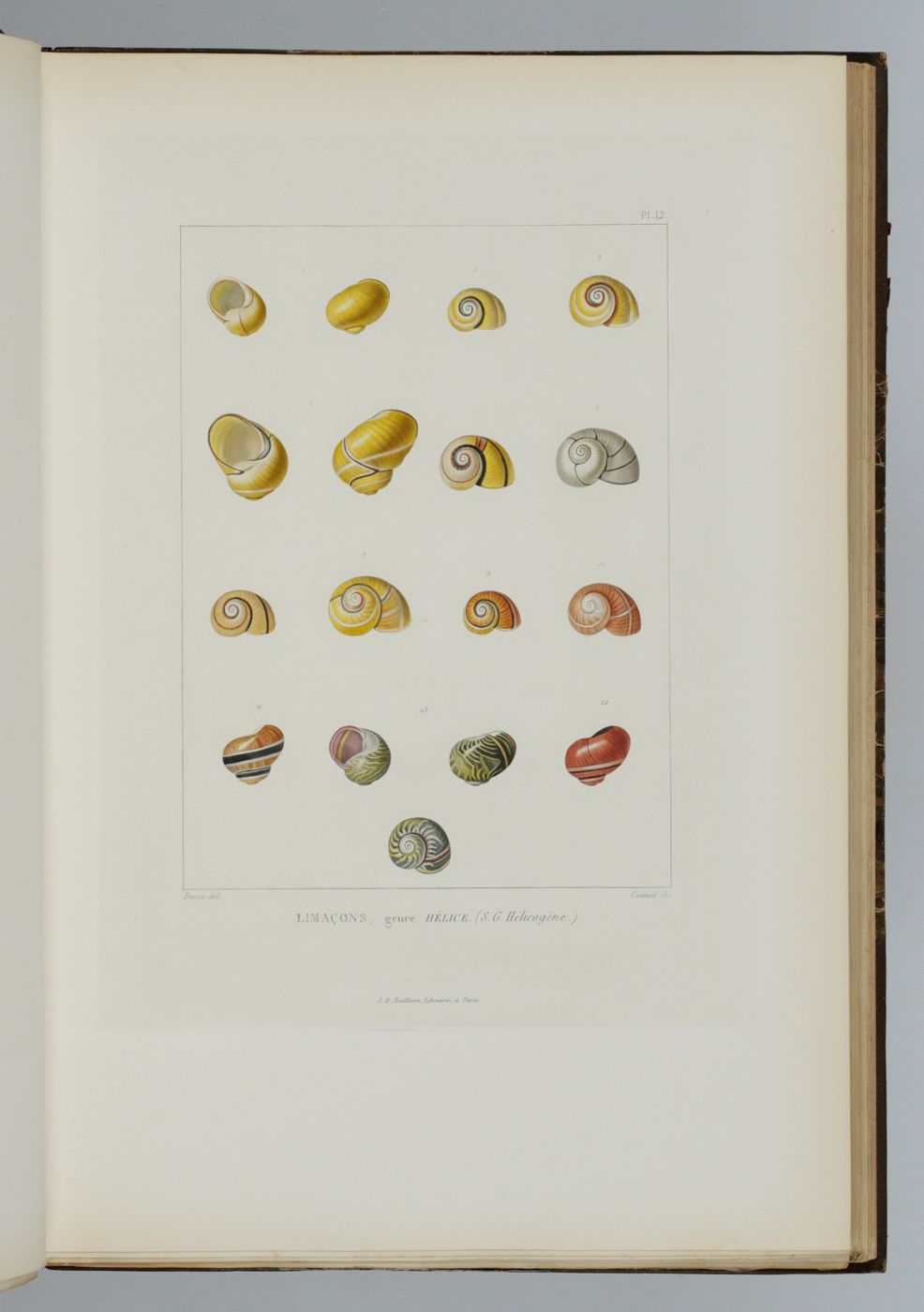
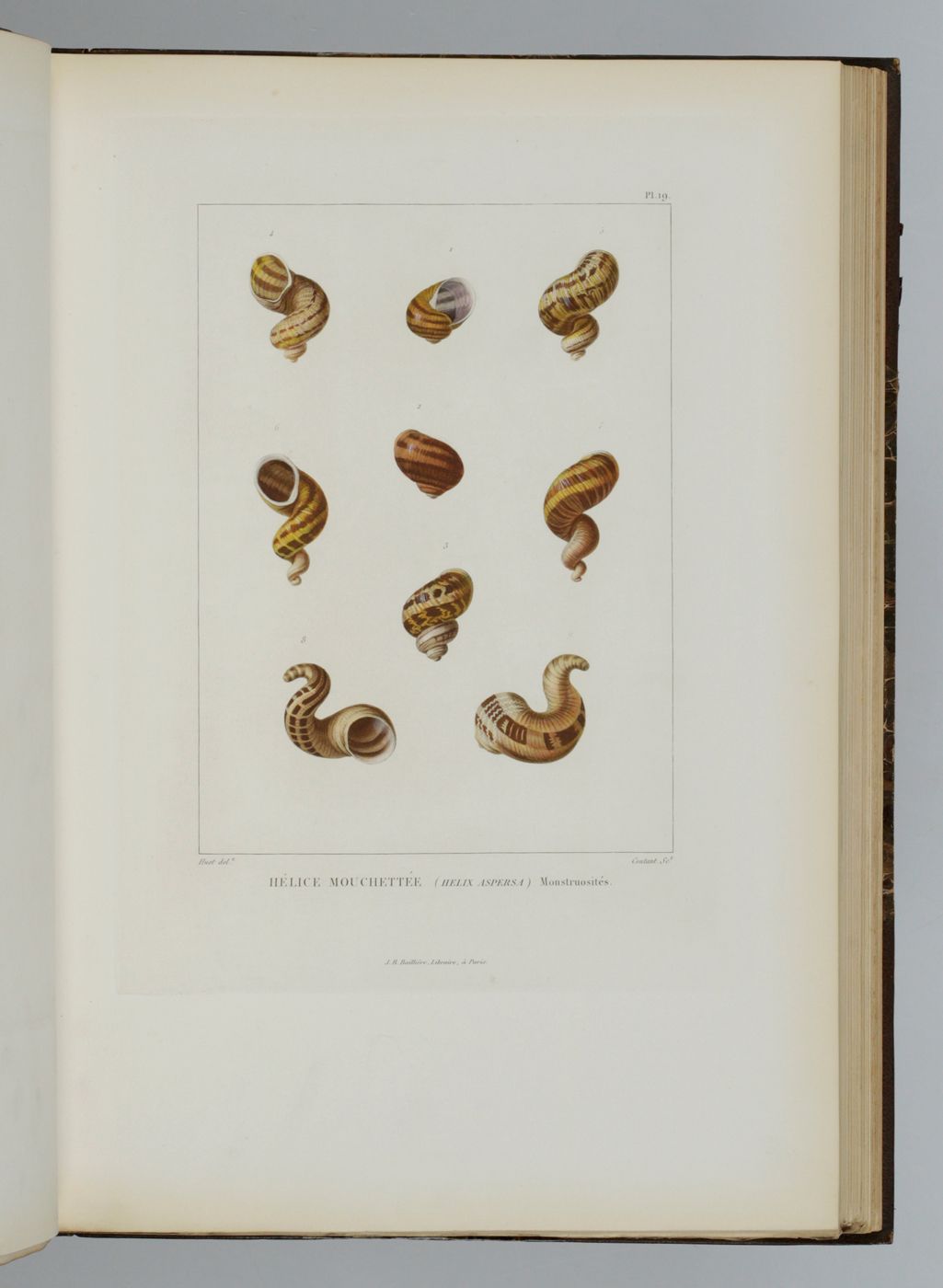
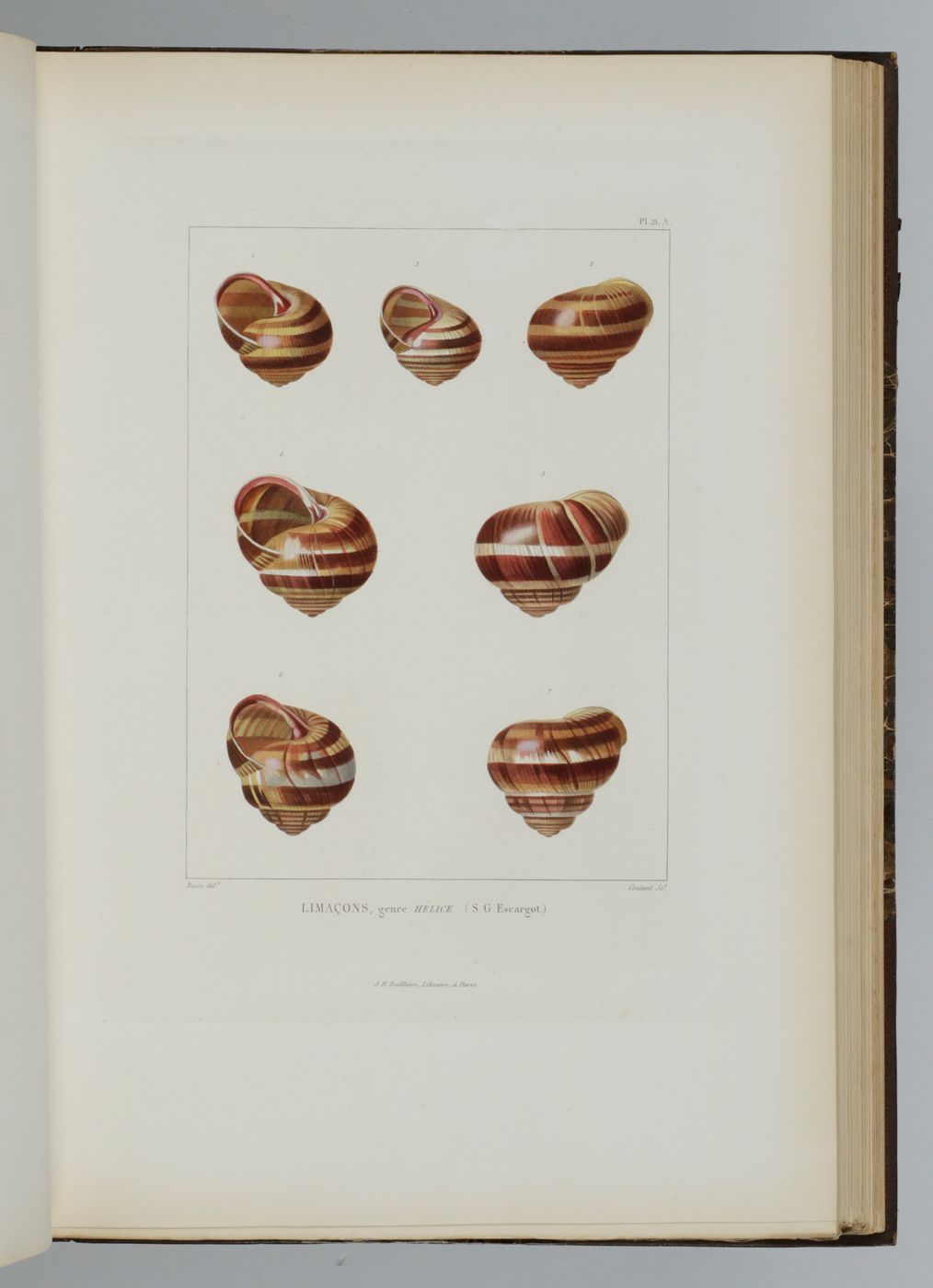
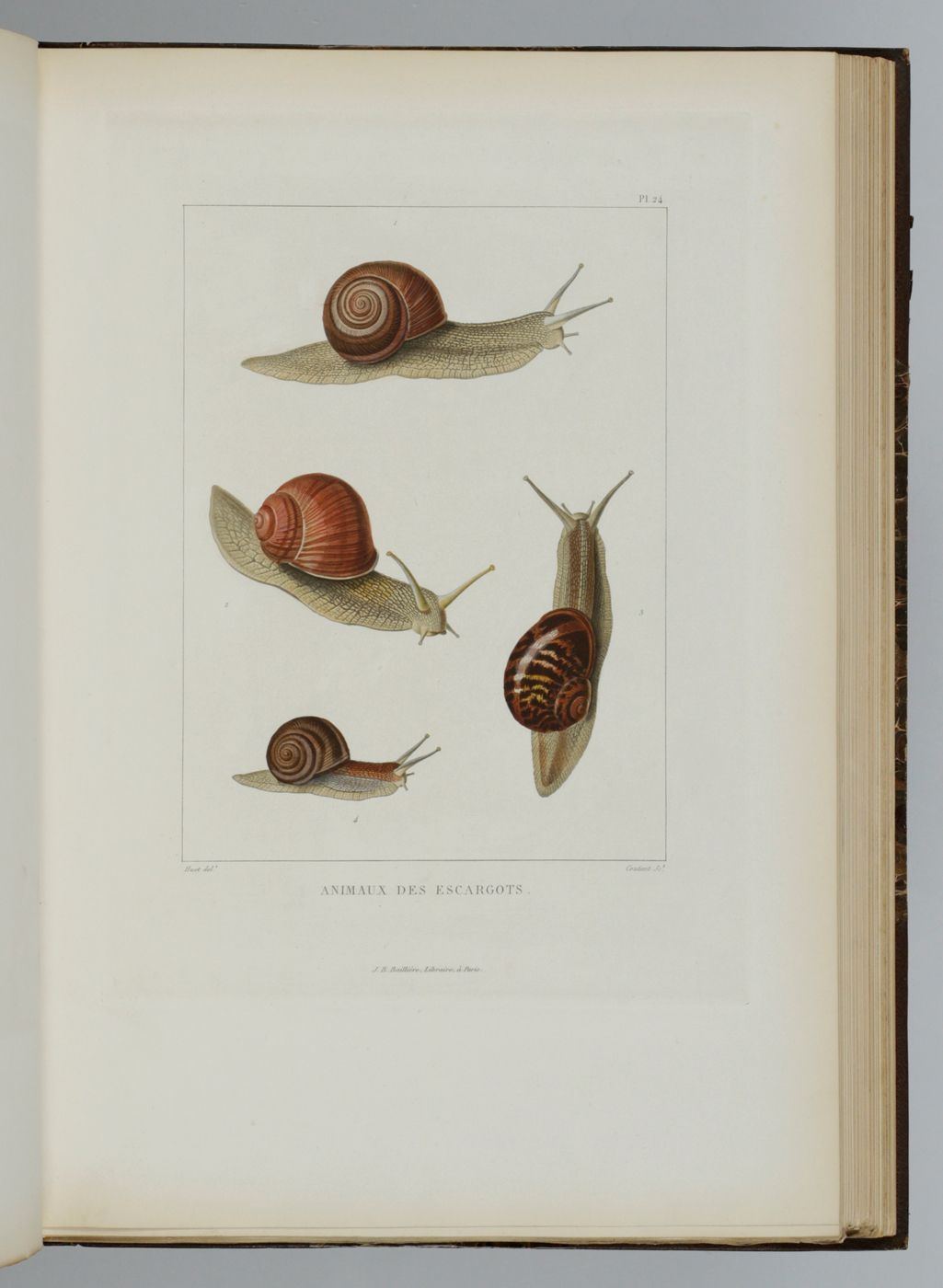
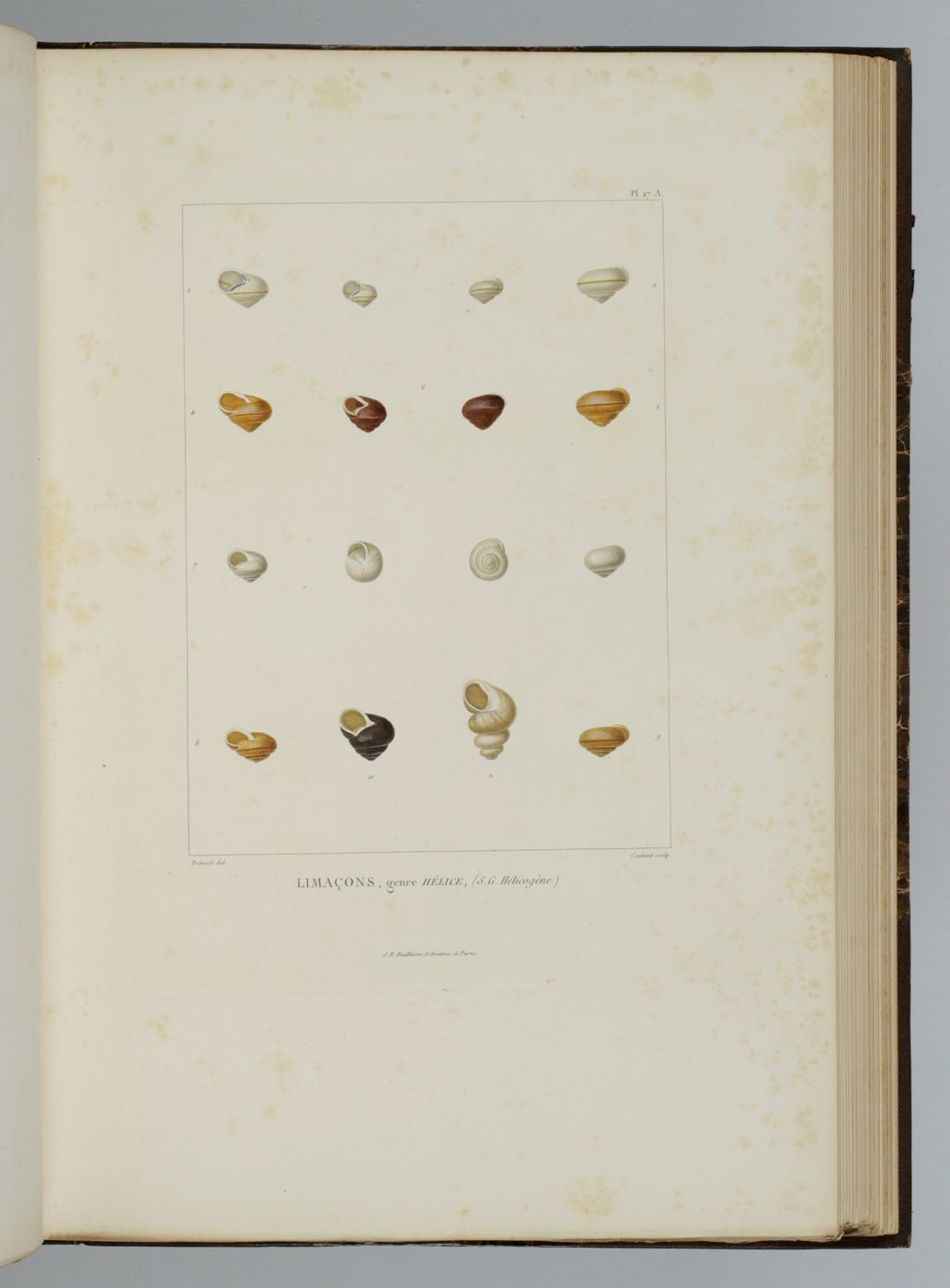
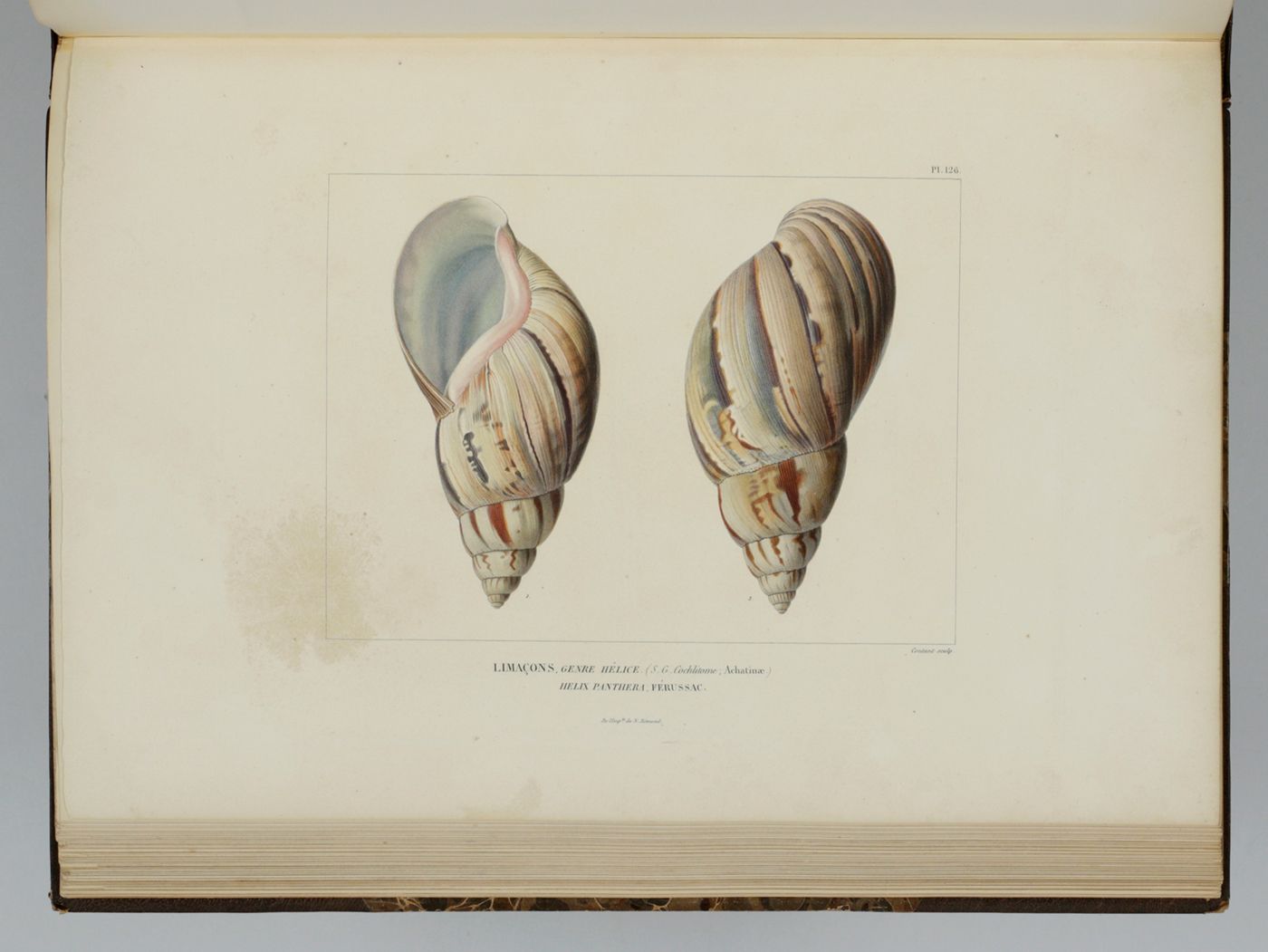
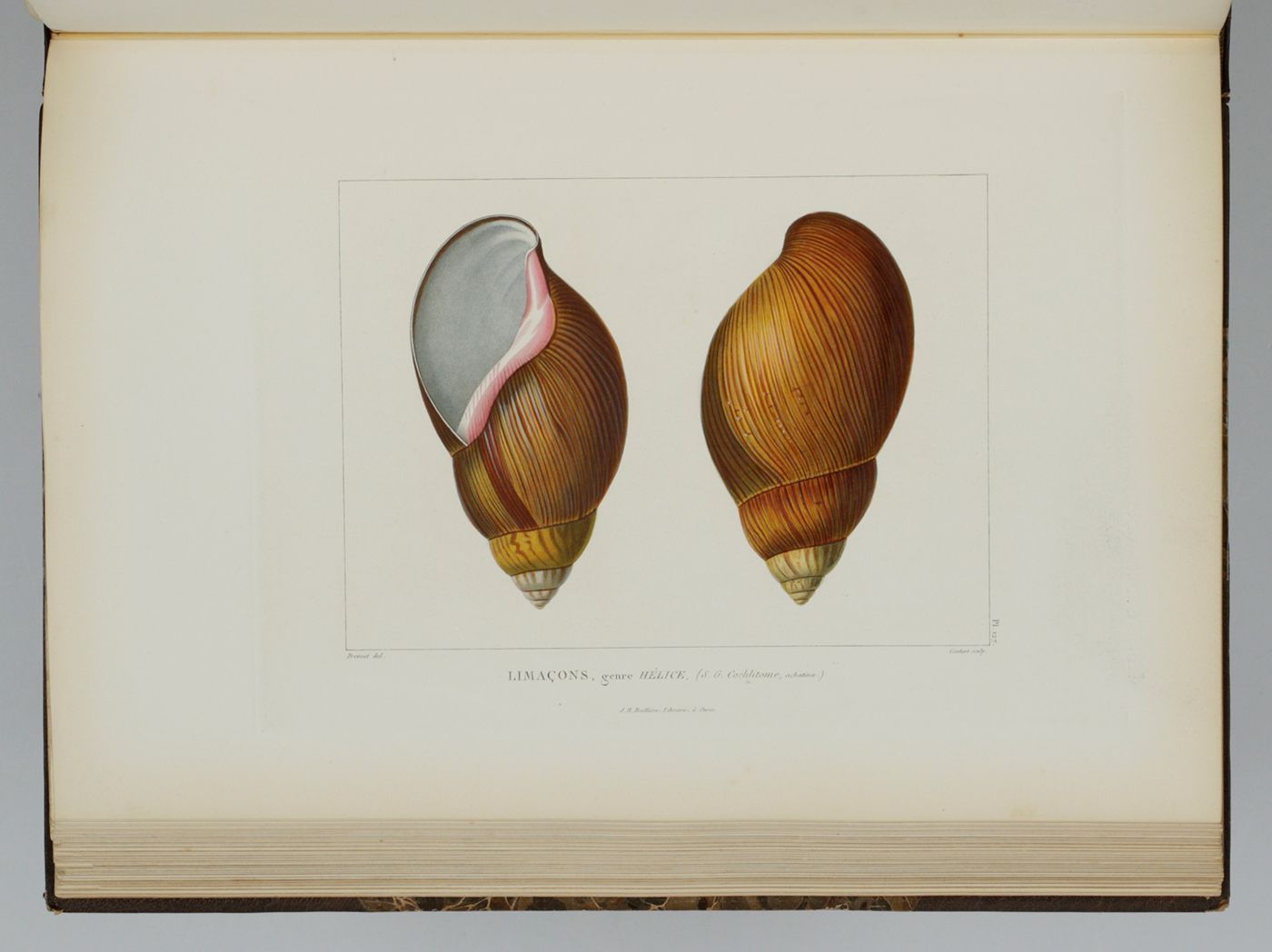
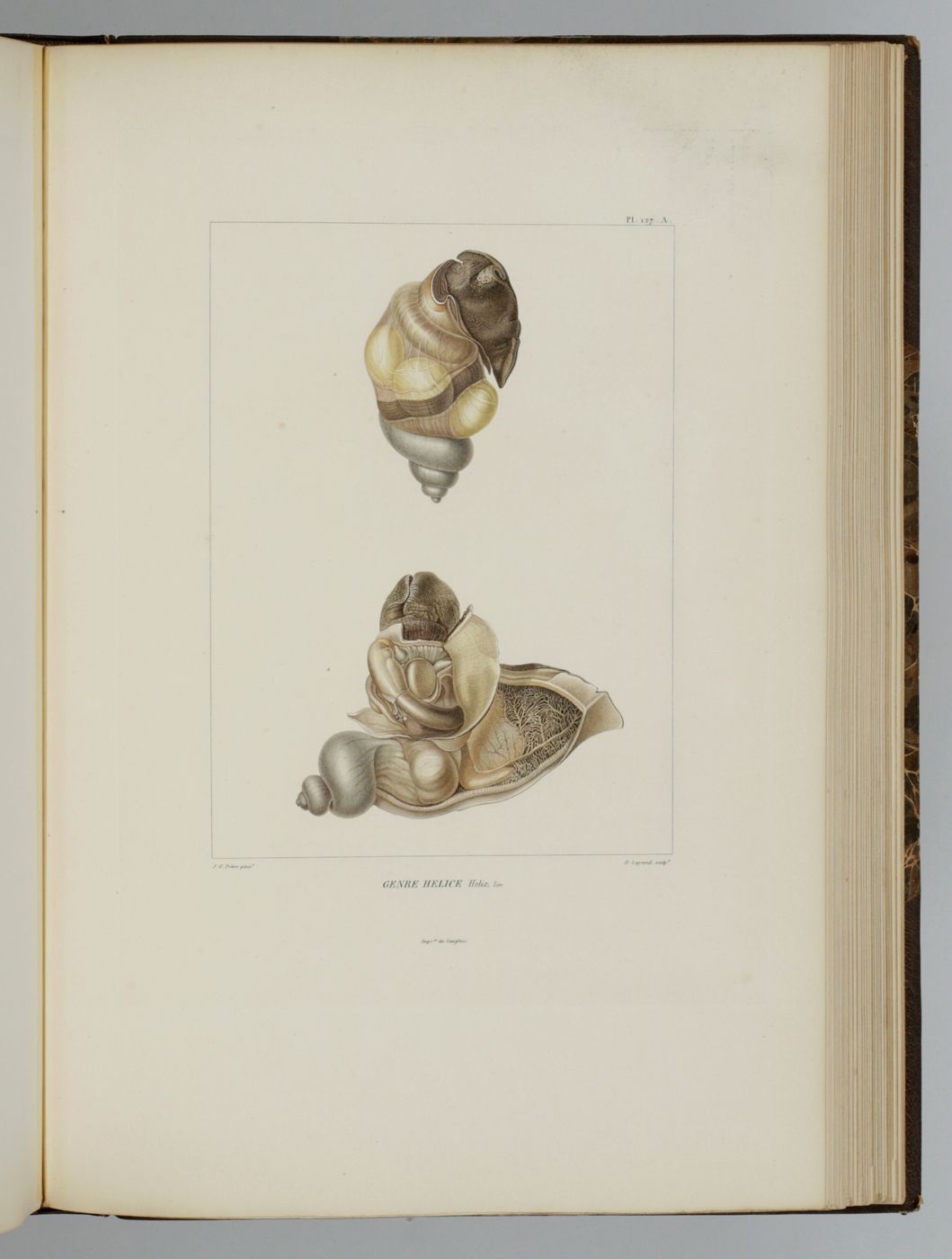
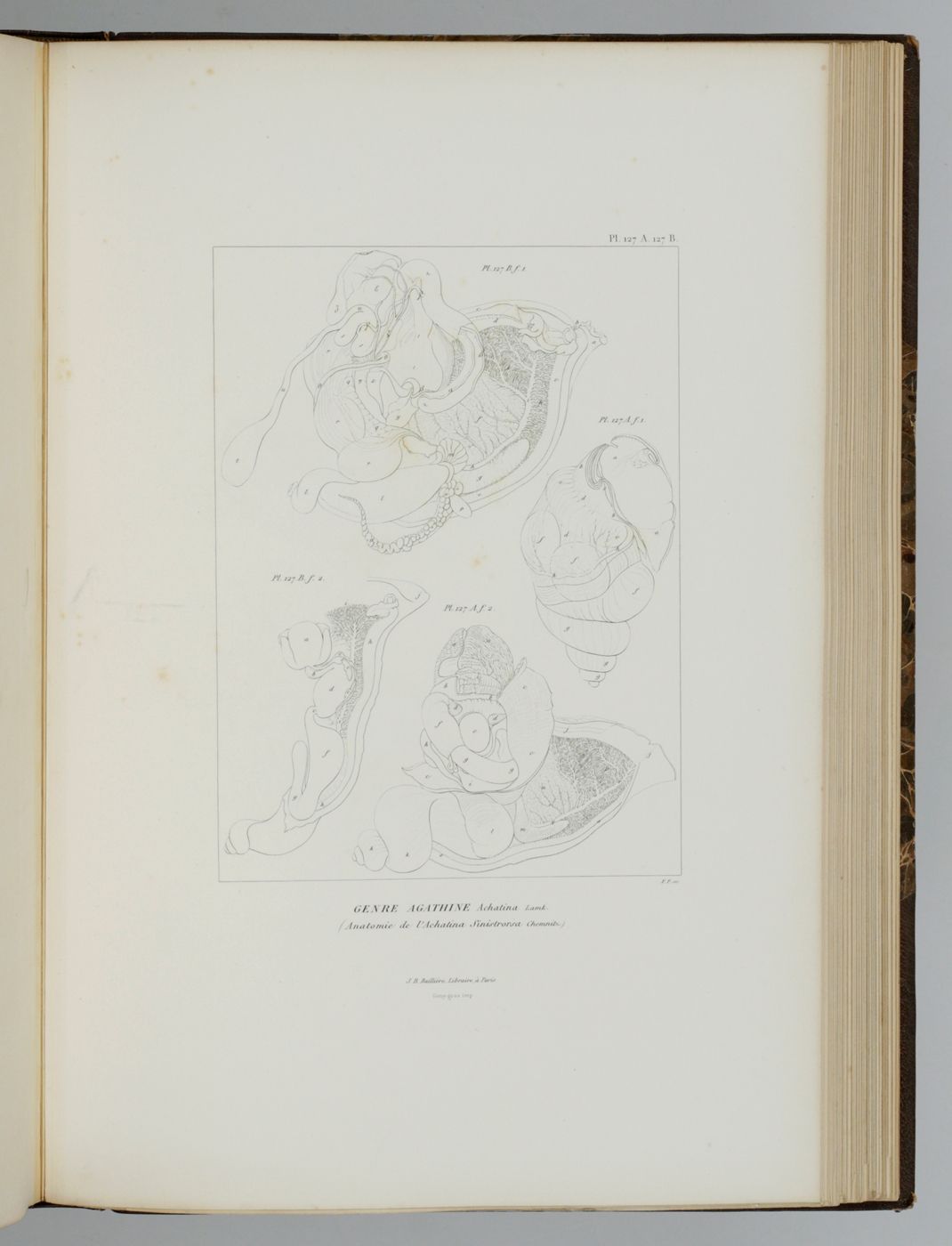
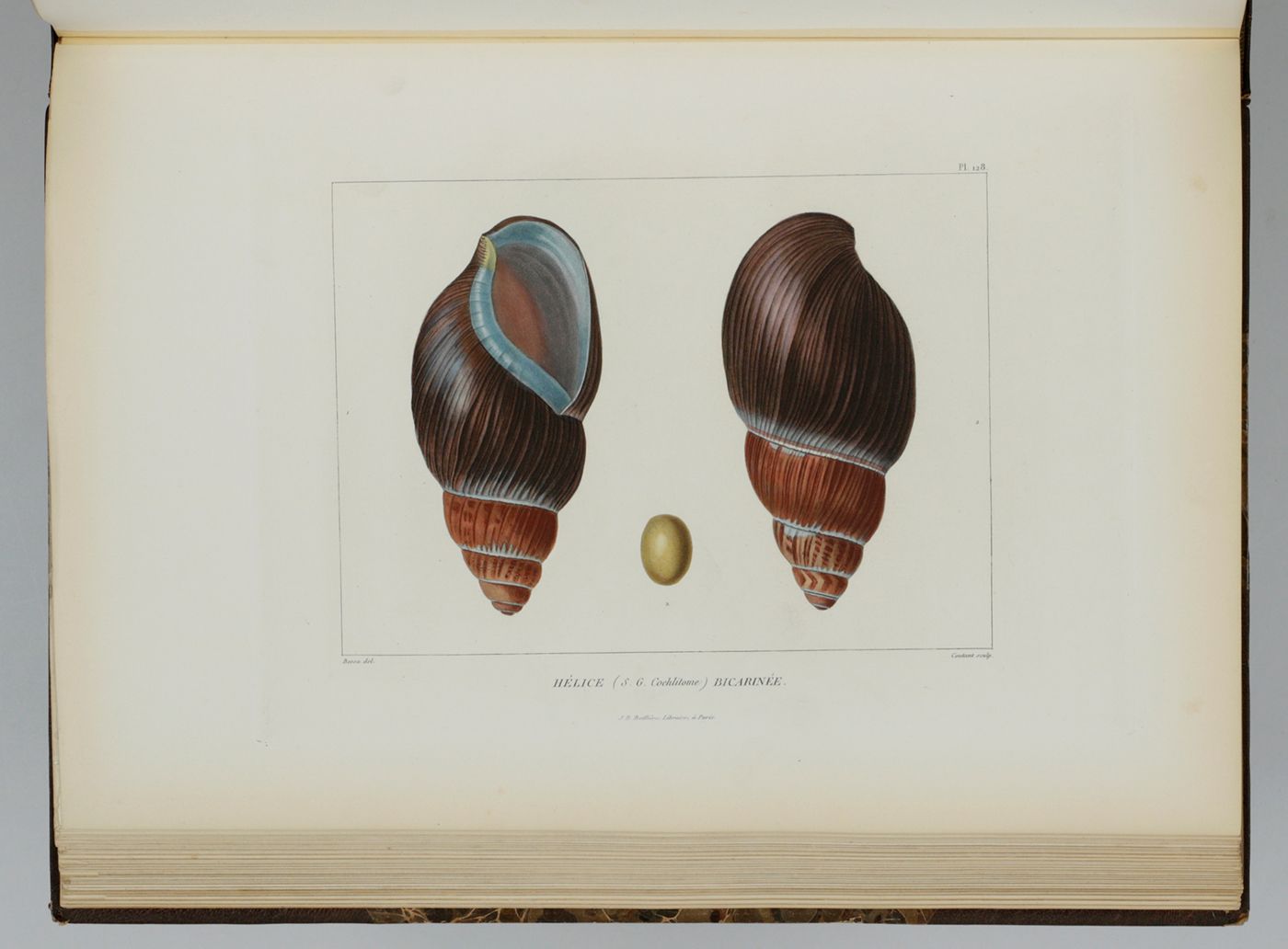
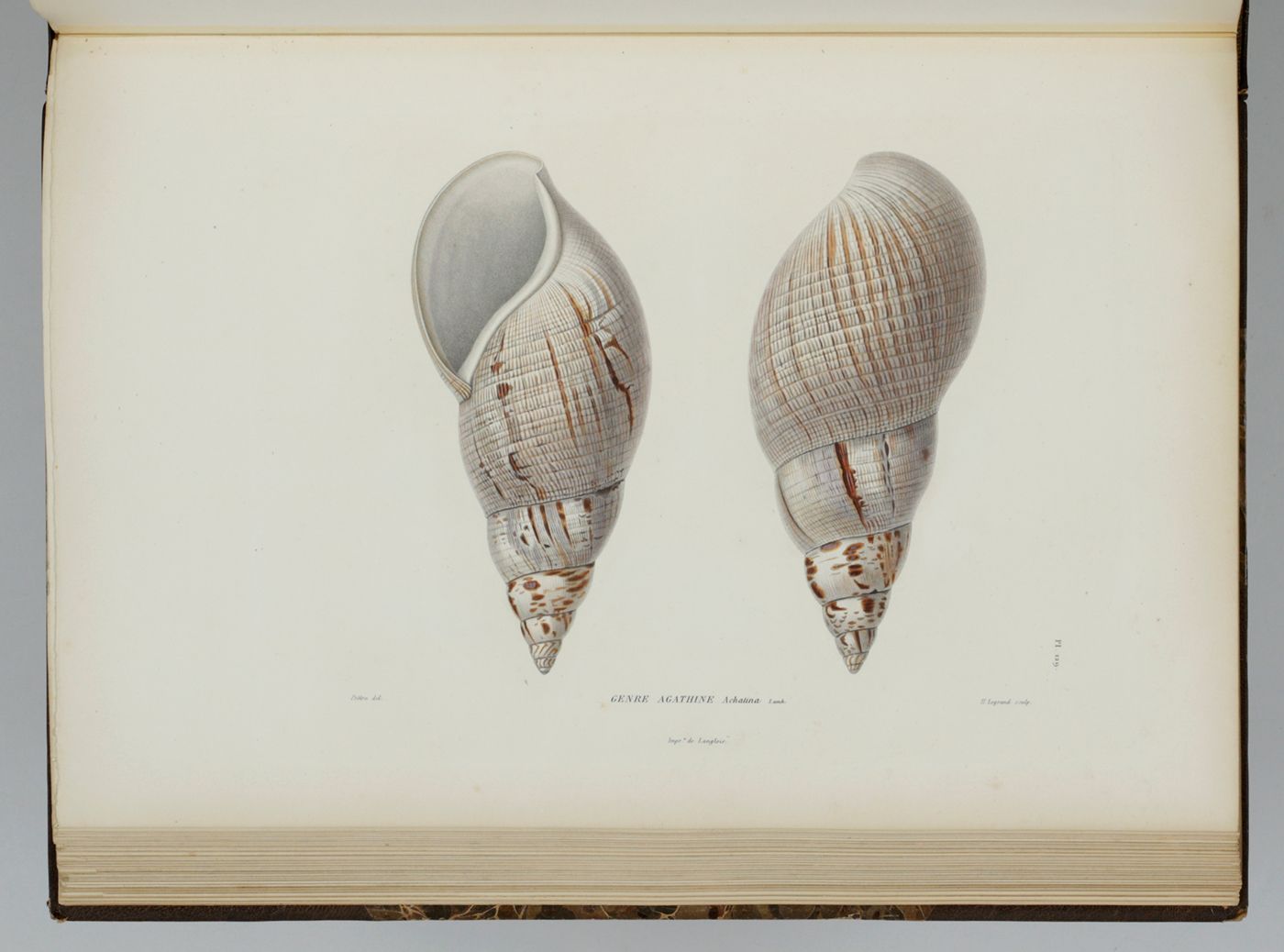
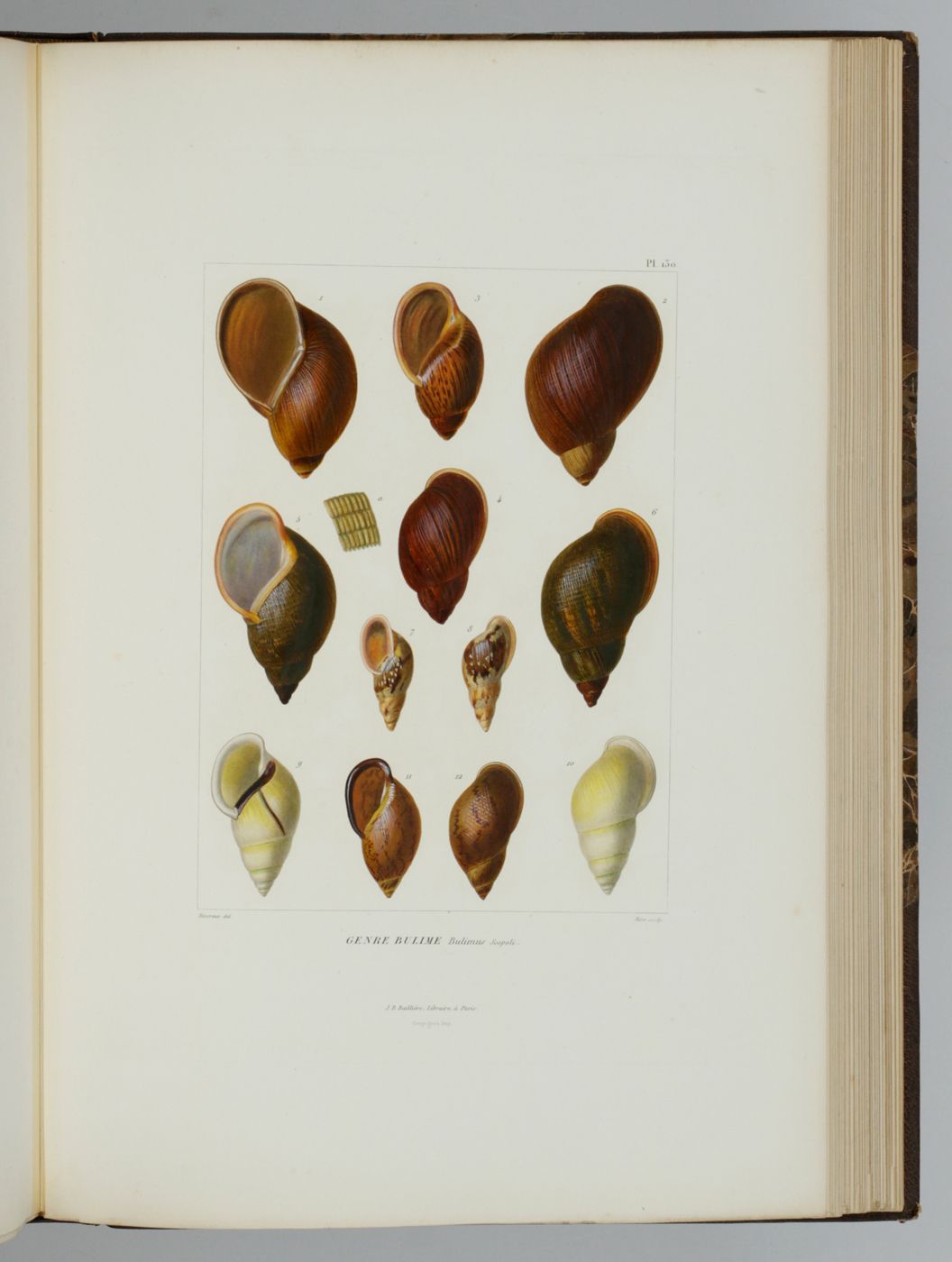
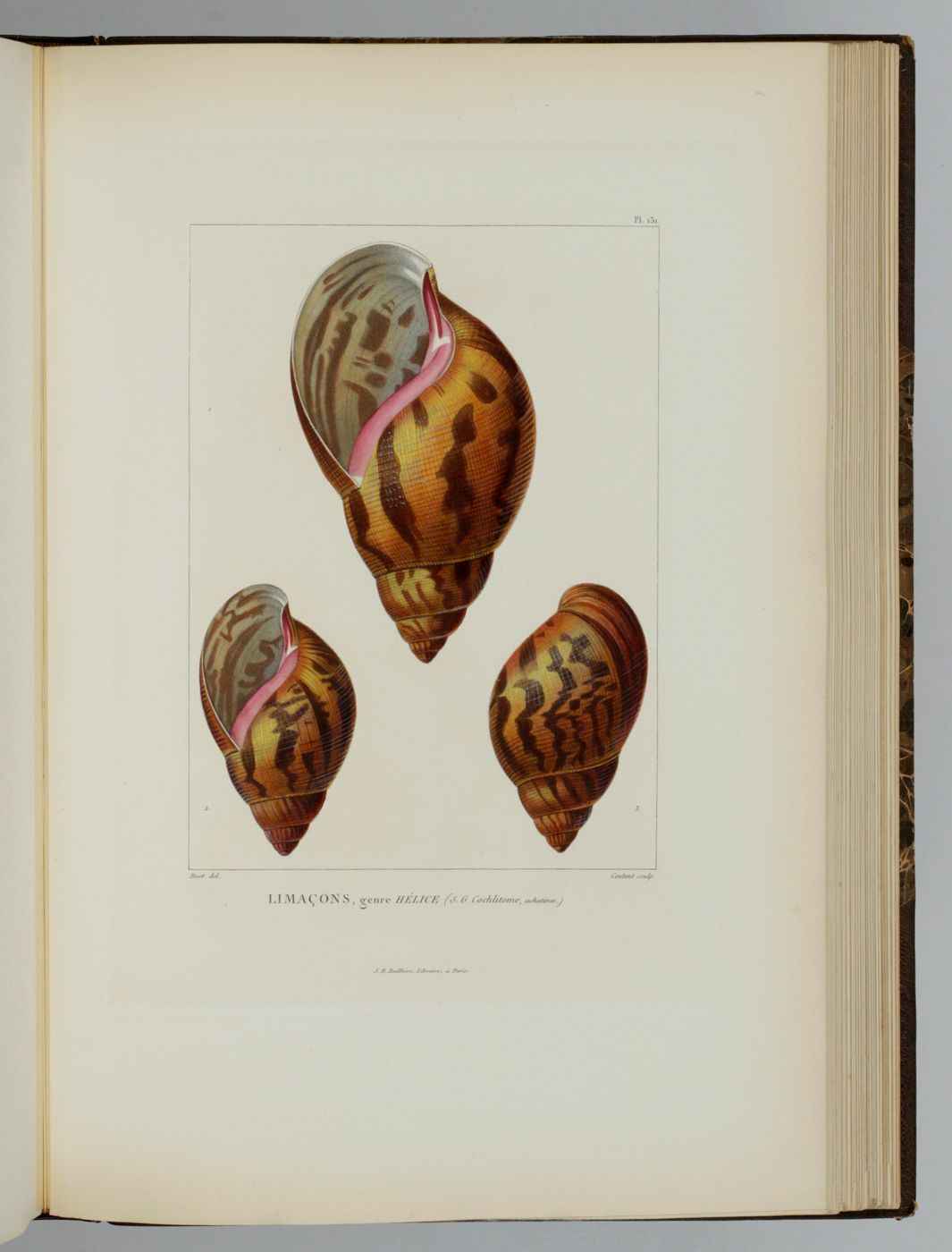
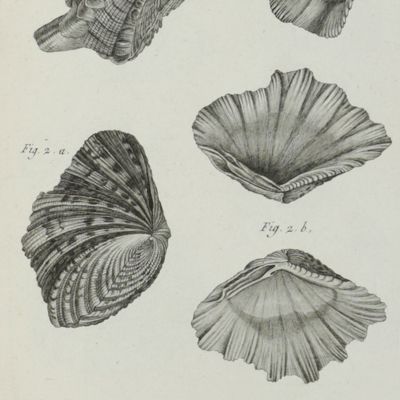
A fine, large paper, complete copy of one of the rarest and most beautiful conchological works, being the first author's magnum opus. "Posterity is grateful to Férussac for some of the most beautiful and accurate coloured figures of non-marine molluscs ever published" (Dance, p. 91). This work has a long and complicated publishing history and is rarely found complete. The first 28 parts, by the French malacologist André Étienne Justin Pascal Joseph François d’Audebard, Baron de Férussac (1786-1836), appeared between 1820-1832, containing 162 plates and 128 pages of text. In 1838, the French malacologist Gérard Paul Deshayes (1795-1875) issued another 6 instalments. "The death of the publisher and departure of Deshayes to Algeria brought the work to a temporary halt. In 1848, the publisher, Baillière convinced Deshayes that the work should not remain unfinished; 8 more instalments were published. Deshayes is responsible for the greater part of the text, and 85 plates" (Junk). This is "the last and one of the finest examples of French colour-printing by Langlois, the printer responsible for some of Redouté's finest work" (Junk). Among the illustrators we find the creme-de-la-creme of French natural history artists, including Prêtre, Blanchard, Huet, Prévost, and Bessa. The great Swiss-born French natural history artist Jean Gabriel Prêtre (1768-1849), arguably was one of the best French natural history illustrators of the 19th century. He illustrated several of the most important and beautiful travel, exploration and natural history publications, including works by Ramon de la Sagra, Alcide d'Orbigny, Paul Deshayes, Frédéric Cuvier, Antoine Risso, René Primevère Lesson, André Duméril, Isidore Geoffroy Saint-Hilaire, and others. Several bird species and a lizard were named after him. Pancrace Bessa (1772-1846) was a French natural history artist, best known for his botanical illustrations. He was a student of the great engraver Gerard van Spaendonck and worked alongside Pierre-Joseph Redouté, some of whose influence shows in Bessa's detailed and delicate treatment of his subjects. He was a regular exhibitor at the Paris Salons between 1806 and 1831. The rare anatomical Plate 127A-127B, not called for by Nissen, is present here. It brings the total plate number to 248, whereas the title asks for 247. The five plates showing fossils were separately numbered 1-5. In fact, plate and text numbering is complex, as often with works by Deshayes. Plate 55 wrongly numbered 4, Plates 89 and 90 wrongly numbered 2 and 3; all three corrected in an old hand; a few plates in the end a bit smaller, apparently as published. Some foxing internally (as usual); otherwise, very good, the colouring bright and accurate. Dance, S. P. A History of Shell Collecting, p. 91; Junk Cat. 278, 131 (another set); Nissen ZBI 1348.

Recently Viewed
![image for Histoire Naturelle générale et particulière des Mollusques Terrestres et Fluviatiles. Tant des espèces qui l'on trouve aujourd'hui vivantes, que des dépouilles fossiles de celles qui n'existent plus; classés d'après les caractères essentiels qui présentent ces animaux et leurs coquilles. [Large paper copy. Text and atlases, complete].](https://schierenberg.nl/media/cache/product_thumb/79105/79105.jpg)

![image for Revision du nummulitique Égyptien. [AND] Nouvelle contribution à la paléontologie du nummulitique Égyptien. [AND] Étude complémentaire sur la paléontologie du nummulitique Égyptien. [Complete].](https://schierenberg.nl/media/cache/product_thumb/76656/76656_x.jpg)
![image for Histoire naturelle générale et particulière des mollusques terrestres et fluviatile. [Original full colour plates].](https://schierenberg.nl/media/cache/product_thumb/78398/78398_x.jpg)
![image for Aux amateurs de grands vins de Champagne en Belgique. [AND] An original drawing by Massonet.](https://schierenberg.nl/media/cache/product_thumb/71386/71386_x.jpg)
![image for Monsterboek Geboortekaarten. Nieuwste modellen - fijnste kwaliteiten. [Birth Announcement Sample Book. Newest designs - finest quality].](https://schierenberg.nl/media/cache/product_thumb/79027/79027.jpg)
![image for Problema Gol'dbakha. [IN] <em>Novyy metod b analitichkoy teorii uisel</em>. (Goldbach's Problem [IN] <em>A new method in the analytic theory of Wisel</em>).](https://schierenberg.nl/media/cache/product_thumb/76467/76467.jpg)